Article | Adaptive Spaces
Business Insights | Behind Felicity Marshall’s unique strategy for creating bespoke workplace solutions
From transforming workspaces at Warner Bros. to high profile offices spanning over 50,000sqm, Felicity Marshall knows how to create workplaces designed to energise people and bring them closer to business goals.
September 8, 2025

Find ways to elevate your workplace
Click Here
Talent at an early age comes in many forms. Some can play Beethoven by the age of four; others manage to build a nuclear fusion reactor in their garage by fourteen.
Felicity Marshall might contest such real-world comparisons of gifted individuals, but there’s no denying her own unique talents growing up in the humble family home.
“I drew floor plans of my bedroom in an A3 sketchbook when I was a kid. I distinctly remember moving furniture around before I physically could. I’d wedge myself between the wall and furniture and push things around with my legs to rearrange my bedroom,” she reminisces.
Given the mental conditioning during her formative years, it’s only fitting that Felicity would become CBRE’s Pacific Head of Workplace Consulting. The parallels are most evident in her work with clients, where she’s responsible for breaking down complex data to deliver exceptional workplace experiences through a human-centered approach – an equal contribution from both the “left and right side of the brain,” as she describes it.
“I think like a creative, but I’ve loved mathematics ever since school. Both help me find bespoke solutions to the challenges and complexity I see in creating workplaces fit for the future.”
“The two biggest issues I see in today’s workplace are an over-reliance on past models when the way we work has significantly changed, and neglecting change management as a sustained effort. It sounds cliché, but there really is no one-size-fits-all when it comes to creating the perfect workplace.”
On a broader scale, Felicity says that the common challenges can also include:
“Your people are your biggest asset; they need to be front and centre to your real estate decisions. Being with CBRE means you get the benefit of knowing we understand both.”
It’s this genuine love for strategy and design that has led Felicity to a leadership role at CBRE, backed by her impressive track record for delivering visionary strategies for clients across Australia, New Zealand, and the UK.
Her biggest job to date involves transforming the head office campus for an iconic Australian brand located in Sydney with an office footprint spanning over 50,000sqm.
That’s all she can reveal for now, but what’s more important are the innovative ideas she's applied through the diversity of her projects, all with the common goal of creating world-class workplaces that put people at the forefront while maximising experience and optimising space.
In the UK, Felicity developed workplace strategies for radio stations filled with broadcast studios, as well as the Warner Bros. workspace which housed production studios. In Australia, she helped not-for-profits like the Cancer Council halve their office footprint so they could put those savings towards more life-saving causes.
It’s an impressive breadth of clientele, and it reinforces the notion that navigating change applies to businesses of all shapes and sizes.
“Change is part of every business. If you're not changing, you’re not growing,” she says.
“Our expertise adapts to what clients need. It could be a light touch - as simple as strategic advice for their teams to run with and deliver themselves, to delivering the full end-to-end implementation of a workplace change.
“We flex to match what the client needs and what’s going to give them the most value.”
“There is of course an operational underlay to supermarkets,” she reveals. “Making sure space was optimally planned could have a multi-million dollar impact on the bottom line for a store, but the part of retail design I loved most was the psychology of space.
“Being at this supermarket’s scale, you had access to a raft of analytics that went into shopper demographics and behaviour - and therefore - how you could maximise sales through clever space decisions.”
Just as spatial psychology influences shopper behavior, it plays a powerful role in shaping the employee experience. A well-designed workplace doesn’t just support operational flow - it fosters engagement, collaboration, and wellbeing.
When environments are intentionally crafted to align with how people work best, they can reduce stress, improve focus, and even enhance team dynamics. The ripple effect is measurable in the form of higher productivity, lower turnover, and a culture where people feel empowered to contribute meaningfully.
These same principles apply to her role today when it comes to leveraging data and analytics to create better workplaces. A concept that she says is inherent in CBRE’s process.
“Every project is informed by data. It's what we do with that data to make sure that it's always forward facing. That means using that data to extrapolate and find meaningful ways to plan for the future - without assuming the same trends are guaranteed.”
A foundational element of CBRE’s approach is ensuring change management is considered from the first conversations of any project.
“We’re not just crunching numbers; we’re listening and challenging the status quo. Leadership workshops, interviews, and employee engagement sessions give us the real story. Surveys help us spot patterns, but it’s those candid conversations that reveal what people think.
“At the same time, we’re running quantitative analysis - daily rhythms, headcount shifts, occupancy forecasts. It’s about blending the human experience with hard data to shape smarter, more responsive workplaces.”
Felicity and her team compile these data points to know what the future should be from a recommendation perspective, while providing the tools to give leaders a level of comfort that their workplace decisions are grounded in business needs.
It can be a complex challenge conceiving strategies for a diversity of clients, but she understands why all the finer details matter.
“People are the number one cost of a business. Your real estate is a tool to get the most out of people, attract the best talent and minimise attrition.
“The end goal isn’t just about future proofing your business; it’s future proofing your investment against how the world will change.”
Felicity Marshall might contest such real-world comparisons of gifted individuals, but there’s no denying her own unique talents growing up in the humble family home.
“I drew floor plans of my bedroom in an A3 sketchbook when I was a kid. I distinctly remember moving furniture around before I physically could. I’d wedge myself between the wall and furniture and push things around with my legs to rearrange my bedroom,” she reminisces.
Given the mental conditioning during her formative years, it’s only fitting that Felicity would become CBRE’s Pacific Head of Workplace Consulting. The parallels are most evident in her work with clients, where she’s responsible for breaking down complex data to deliver exceptional workplace experiences through a human-centered approach – an equal contribution from both the “left and right side of the brain,” as she describes it.
“I think like a creative, but I’ve loved mathematics ever since school. Both help me find bespoke solutions to the challenges and complexity I see in creating workplaces fit for the future.”
The real challenges of modern workplaces
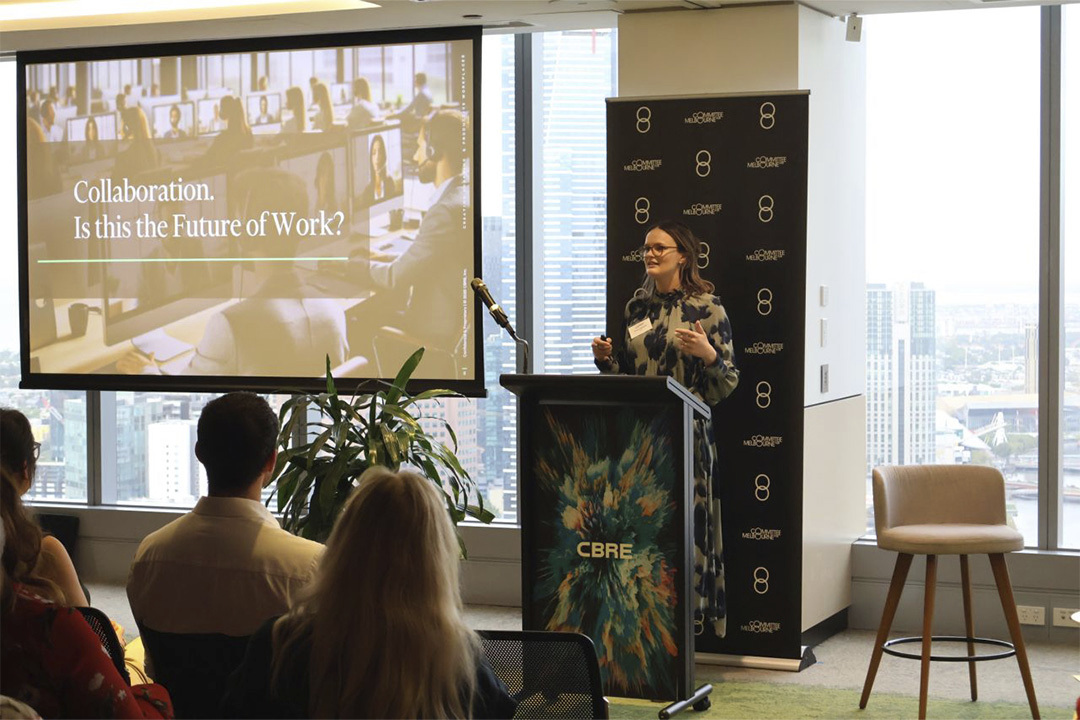
“The two biggest issues I see in today’s workplace are an over-reliance on past models when the way we work has significantly changed, and neglecting change management as a sustained effort. It sounds cliché, but there really is no one-size-fits-all when it comes to creating the perfect workplace.”
On a broader scale, Felicity says that the common challenges can also include:
- Businesses making modern workplace decisions based on trends rather than considering their specific business needs and where they want to take their people
- A lack of understanding of how a workplace can be leveraged as a tool for your business and its people
- The reliance on post-pandemic style workplaces that no longer match the work styles of today
“Your people are your biggest asset; they need to be front and centre to your real estate decisions. Being with CBRE means you get the benefit of knowing we understand both.”
From book smarts to smarter workplaces
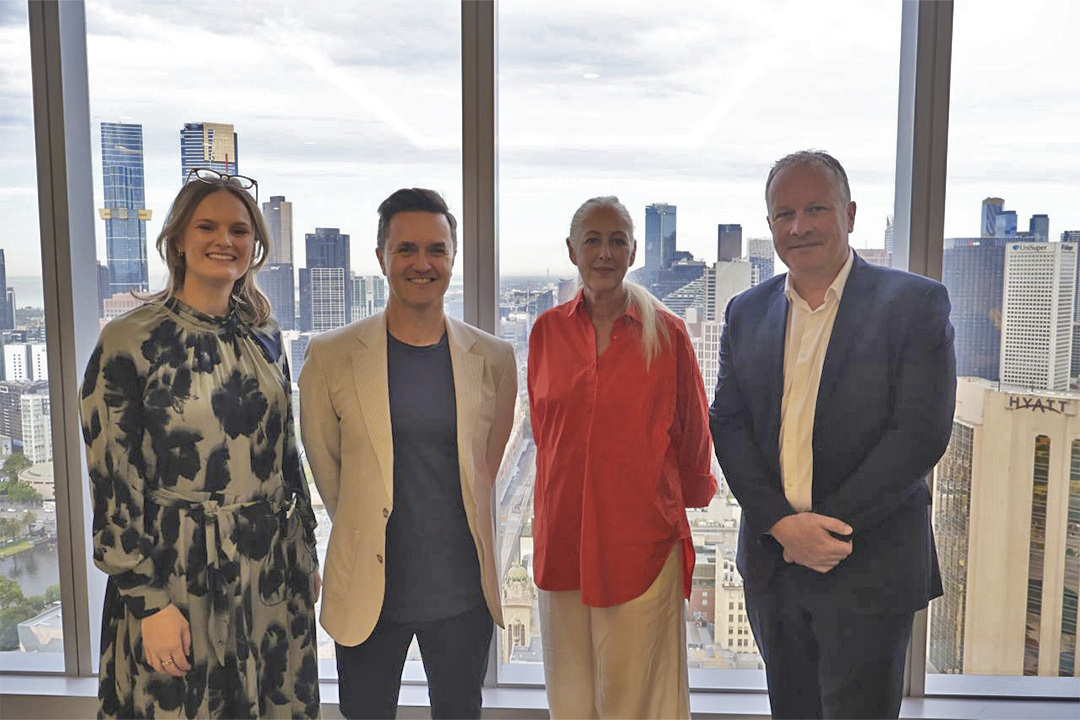
It’s this genuine love for strategy and design that has led Felicity to a leadership role at CBRE, backed by her impressive track record for delivering visionary strategies for clients across Australia, New Zealand, and the UK.
Her biggest job to date involves transforming the head office campus for an iconic Australian brand located in Sydney with an office footprint spanning over 50,000sqm.
That’s all she can reveal for now, but what’s more important are the innovative ideas she's applied through the diversity of her projects, all with the common goal of creating world-class workplaces that put people at the forefront while maximising experience and optimising space.
In the UK, Felicity developed workplace strategies for radio stations filled with broadcast studios, as well as the Warner Bros. workspace which housed production studios. In Australia, she helped not-for-profits like the Cancer Council halve their office footprint so they could put those savings towards more life-saving causes.
It’s an impressive breadth of clientele, and it reinforces the notion that navigating change applies to businesses of all shapes and sizes.
“Change is part of every business. If you're not changing, you’re not growing,” she says.
“Our expertise adapts to what clients need. It could be a light touch - as simple as strategic advice for their teams to run with and deliver themselves, to delivering the full end-to-end implementation of a workplace change.
“We flex to match what the client needs and what’s going to give them the most value.”
Perfecting the psychology of space
Understanding the psychology of space is a concept that Felicity was exposed to early on in her career. One of her very first jobs involved looking after retail store development for a major supermarket chain.“There is of course an operational underlay to supermarkets,” she reveals. “Making sure space was optimally planned could have a multi-million dollar impact on the bottom line for a store, but the part of retail design I loved most was the psychology of space.
“Being at this supermarket’s scale, you had access to a raft of analytics that went into shopper demographics and behaviour - and therefore - how you could maximise sales through clever space decisions.”
Just as spatial psychology influences shopper behavior, it plays a powerful role in shaping the employee experience. A well-designed workplace doesn’t just support operational flow - it fosters engagement, collaboration, and wellbeing.
When environments are intentionally crafted to align with how people work best, they can reduce stress, improve focus, and even enhance team dynamics. The ripple effect is measurable in the form of higher productivity, lower turnover, and a culture where people feel empowered to contribute meaningfully.
These same principles apply to her role today when it comes to leveraging data and analytics to create better workplaces. A concept that she says is inherent in CBRE’s process.
“Every project is informed by data. It's what we do with that data to make sure that it's always forward facing. That means using that data to extrapolate and find meaningful ways to plan for the future - without assuming the same trends are guaranteed.”
A foundational element of CBRE’s approach is ensuring change management is considered from the first conversations of any project.
“We’re not just crunching numbers; we’re listening and challenging the status quo. Leadership workshops, interviews, and employee engagement sessions give us the real story. Surveys help us spot patterns, but it’s those candid conversations that reveal what people think.
“At the same time, we’re running quantitative analysis - daily rhythms, headcount shifts, occupancy forecasts. It’s about blending the human experience with hard data to shape smarter, more responsive workplaces.”
Felicity and her team compile these data points to know what the future should be from a recommendation perspective, while providing the tools to give leaders a level of comfort that their workplace decisions are grounded in business needs.
It can be a complex challenge conceiving strategies for a diversity of clients, but she understands why all the finer details matter.
“People are the number one cost of a business. Your real estate is a tool to get the most out of people, attract the best talent and minimise attrition.
“The end goal isn’t just about future proofing your business; it’s future proofing your investment against how the world will change.”
Get in Touch

Workplace Consulting
Create a thriving workplace through user-centric design, delivery and management strategies that drive business performance, inspire your people to remain productive and increase employee engagement.