Kathryn House
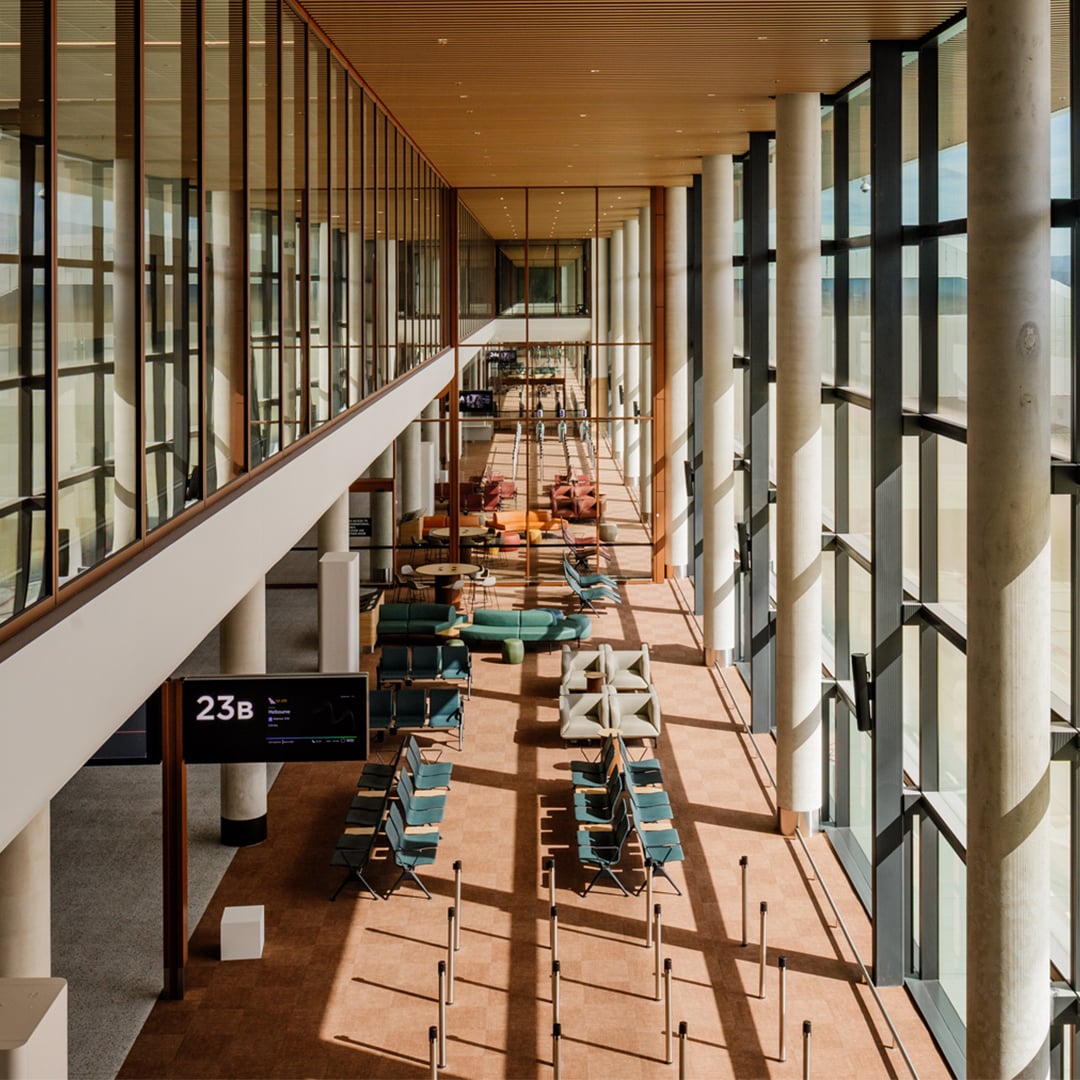
Hello, and welcome to Talking Property with CBRE. I'm Kathryn House, your podcast host. And in this episode, we're taking to the runway to talk about airports. More specifically, the powerful engine they provide for long-term property value, place making, and economic growth as some of the most land rich assets in Australia. We'll be discussing two very different examples. One is the soon to open Western Sydney International Airport, WSI, Sydney's new 24-hour, curfew free airport opening for cargo flights in late July and passenger flights at the end of October. WSI is set to transform Western Sydney and anchor Bradfield, Australia's first new city in more than a century. The other is Essendon Fields in Melbourne, a privately owned airport that has evolved into a billion-dollar mixed-use precinct housing more than 330 businesses while keeping aviation at its core.
Max Wilson
It's a social success as much as it is a business success, and, certainly every decision we make is about how do we do not just what's best for the airport, but what's best for everybody around us.
Kathryn House
That's Max Wilson, General Manager, Commercial Property at WSI.
Peter Funder
We don't think about it just being an airport. What we think about is, we're essentially a suburb, and within that suburb, we have an airport. And so what we're being able to do is attract different tenants to build their businesses at Essendon Fields and allow them to grow.
Kathryn House
And that's Peter Funder, General Manager of Development for Essendon Fields. I hope you enjoy our conversation. Thanks for joining me, Max.
Max Wilson
Thank you, and hello.
Kathryn House
And thank you so much for taking the time out to join us too, Peter.
Peter Funder
No problems, Kathryn.
Kathryn House
So, Max, it's an exciting time for Western Sydney International, which has been described as one of Australia's most transformative infrastructure projects. But beyond the runway, it's also a massive property story with logistics, commercial, education, hospitality, and residential planned for the surrounding land. Can you give us a quick rundown on the airport vision and what we can expect in its opening year?
Max Wilson
Certainly. It's very much a long-term vision for the region more so than the airport. The airport happens to be at the centre, or the centre of the flywheel, of all the benefits that will come. So what we're seeing this year is our investment in cargo coming to the fore with cargo operations starting in the middle of the year, and that's a soft opening to the airport, then passengers are a little later on in this year. Longer term, that one to three years is very much about stabilising the asset, working on the property. We have thirteen and a quarter hectares under development right now, out of a total of about two hundred and forty hectares of development land. The airport itself is on seventeen hundred and eighty hectares, so about twice the size. It's quite a large land mass. And it's very much designed to be a mixed-use precinct that's a gradual build from zero at the start into an airport that's ultimately in 50 years capable of being as big as Heathrow. So it's a very gentle start to a very long journey.
Kathryn House
Very exciting times. And, Peter, Essendon Fields. Over a hundred and five years old. It was Melbourne's first airport, privatised in 2001 and now one of the most integrated, airport-led property precincts in the country. What was your long-term vision for turning this into more than just an aviation asset and perhaps worth explaining the difference between Essendon Fields and a typical passenger airport. I believe you have one-third of Australia's business jets domiciled on-site.
Peter Funder
Yeah, Kathryn. So originally, Essendon Airport was Melbourne's first airport. And when Tullamarine opened in 1970, you know, all the major passenger movements moved from Essendon Fields to Tullamarine. And then around 1996, the airport was actually privatised and our owners, the Fox family and the Beck family, bought the 99-year lease. And essentially, it was just a pretty dilapidated airport and not much else besides the airport function. And, you know, our owners had the vision to create this economic precinct that leveraged the aviation uses but also brought in a range of diversity of other development uses. So, you know, across the park at the moment, we've got industrial, retail. We've got the largest automotive precinct in the Southern Hemisphere. We've got a hotel. We've got 40,000 square metres of office. We've got a DFO, a discount factory outlet as well. So, you know, the diversity of assets and property types across the precinct has really created this community. And sitting behind that is the backbone of the aviation itself. And so Essendon Airport plays a really important role in the aviation community. You can think about Melbourne Airport being where the passenger movements and the big cargo is. We've got Moorabbin Airport, which is about training and education, and Essendon sits in the middle, where we serve the general aviation sector. So what that means is, you know, we're the home to the emergency services. So we've got Vic Police Air Wing, Air Ambulance, Royal Flying Doctors. You know, over the fire season, a lot of the aircraft are based here. And we also, as you said, we have a third of Australia's private jets domiciled here at Essendon Airport. And what that also means is we have regional service centres, servicing those aircraft as well. So we're creating this ecosystem where, you know, businesses are feeding businesses. And so what's really important to us is, you know, driving employment and then also creating a great place for those people to work.
Kathryn House
So, Max, WSI is a major greenfield airport and the first for Australia in more than 50 years. How has that influenced the way that you think about property planning and placemaking, and how much of your placemaking advantage will come from the fact that you can design that connectivity and amenity upfront?
Max Wilson
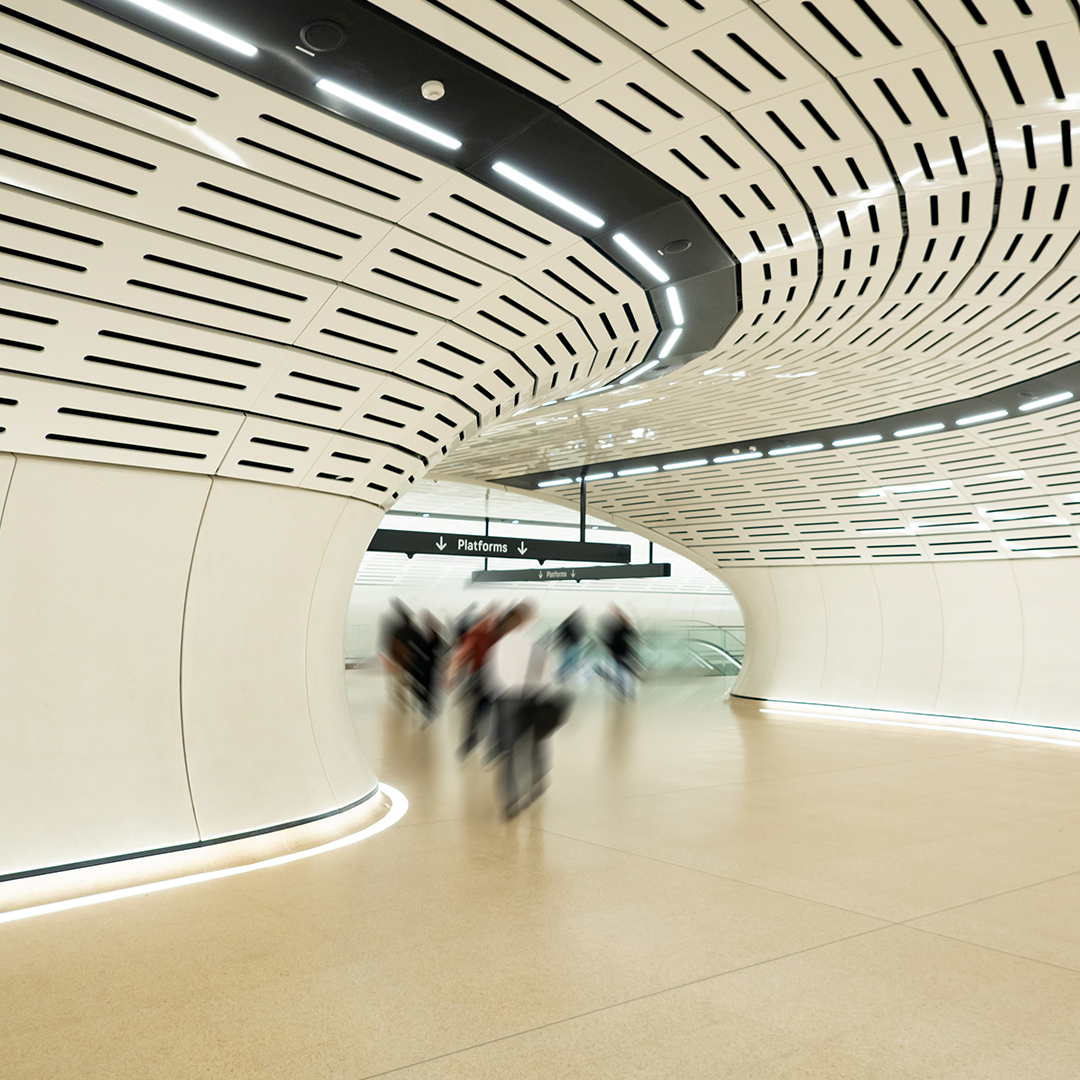
The airport is sitting at he major junction of what is three levels of government investment. So the airport's really, really well placed in terms of connectivity through a toll free M12 to the major M road network in Sydney. And when you normally do a development you always think about it where you're in this city, you're in this suburb, you're in this part of the suburb, you're in this block, and you're then down into your buildings. We've been really lucky that the governments have come together with a long-term commitment to provide the infrastructure we need to be successful, including upgrading the Northern Road. And what we've got is really good road infrastructure. We've got two metro stops currently in delivery on the airport, one dedicated for the terminal, one dedicated in the business precinct. So we're well positioned from an infrastructure perspective. The piece about how we fit into the city is really interesting. Because it's a greenfield airport, we're also sitting in the middle of this broader state government initiative called the Aerotropolis. So they're actually building a new city around us. So, effectively, we don't have those knowns, so the flexibility makes it really interesting. And what we've done from an airport perspective, we're really zeroing in on what we need to sustain the airport initially, with a view that we're able to flip and change and redevelop as demand grows. But to some extent, it's a difficult question to answer, being Sydney's first 24-hour, seven-day airport where I think we haven't seen how that will impact and change the way Sydney behaves. And I think that in itself, as that question gets answered over time, we'll see how we then start to fit into what will effectively be a new architecture for Sydney.
Kathryn House
So, Peter, you mentioned earlier the whole idea of community, and it's certainly a community that's being developed in Sydney as well. But from an Essendon perspective, how important is it that all these users kind of work together to create that community? So, you know, your hotel, your retail, your office, and your aviation users.
Peter Funder
Yeah. Well, when we think about Essendon Airport, we don't think about it just being an airport. What we think about is we're essentially a suburb, and within that suburb, we have an airport. And so what we're being able to do is attract different tenants to build their businesses at Essendon Fields and allow them to grow. And key to that is attracting tenants across different types of uses. And what we're really focused on is, say, for example, you know, we've got commercial office tenants within the park. You know, what amenity are we providing them? What open spaces are we providing them? What retail amenity are we providing them to ensure that they can come and not only do their work, but enjoy the precinct as well. So we've got childcare centres. We've got medical centres. We've got a dentist. We've got shopping centres. We've got Coles. We've got LaManna, which, I mean, you probably haven't heard of LaManna, Kathryn. It's a bit like Harris Farm, you know, sort of gourmet supermarket. It's an institution in Melbourne.
Kathryn House
Sounds good!
Peter Funder
It's fantastic. It's a good way to, you know, spend a lot of money. And so, you know, being able to create elements where everybody coming into the precinct aren't just coming for a single purpose. They can do things like drop your car off to get serviced, then go and get a coffee, maybe do your supermarket shop, and then go back and get your car. You know, we've got entertainment uses. We've got a Bounce on-site, so, you know, kids' parties. And so how do we layer in those different types of experiences so it feels like you're actually coming into a suburb. You're not just coming into an airport.
Kathryn House
So, Max, you're just starting that journey with bringing users into the Western Sydney International precinct, and you formed, as you said, that partnership with Charter Hall for the first stage of a mixed-use business precinct. What types of businesses are you seeing gravitate towards Western Sydney International in these early stages, and which tenant types do you think are valuing airport adjacency the most?
Max Wilson
We chose Charter Hall after going through a public process for two reasons. Charter Hall have a very long-term view of assets under management, which is ideal as a partner from the airport because of our longevity on the ground. And what we're seeing is, we're seeing the tenants that are the traditional warehouse logistics. We're seeing wholesale trade, hotels, service stations, fast food, and retail. And what we've done is we've chosen to keep our powder dry in terms of the commercial office component for now because that will fit in as we grow. We don't need to have that at the beginning. But as Peter said, the airport is a destination location. It's a suburb all unto itself. So when we come to the airport, we don't want people to necessarily think they're coming to an airport, but they're coming to a destination. And the hotel, the entertainment aspects of that will become more prominent over time. You know, we are placed in the third largest economy in Australia, so it's a very busy place. It's growing very rapidly, and we are seeing a general shift from the inner east, and inner west, gradually west, particularly around the warehouse logistics, those sort of and they're all taking advantage of the same infrastructure the airport is.
Kathryn House
So, Peter, at Essendon, you're seeing really strong leasing and job creation and major aviation tenants like Textron, Bombardier, and ExecuJet. And you mentioned you've got this auto mall as well, which features nine out of Australia's top 10 selling car brands, which have sold cars worth an estimated billion. What do you think is driving that sustained interest from tenants in Essendon, and what are businesses telling you about why they want to be in an airport precinct rather than, say, a traditional employment zone?
Peter Funder
Kathryn, we've got around 330 businesses across the precinct, and those 330 businesses currently employ around 6,000 people. And, you know, our vision is really to grow that, you know, over time to 20,000 people working at Essendon Fields. But when I think about Essendon Fields and I think about the businesses that are here, one stat that really sticks out in my mind is our vacancy rate. So our current vacancy rate across the entire precinct is less than 1%, which is amazing. And so that says to me that when businesses and, you know, people decide to relocate their businesses to Essendon Fields, it means that they're not leaving. And, you know, this is a great place for them to set up their business. And the reality is within this part of Melbourne, the north-western part of Melbourne, you know, nobody really has an offer like us. And we've invested a lot in, you know, making sure that when people come to Essendon Fields and they work here, they enjoy it. They have a good time. It suits their business. And there's a strategic need for them to be here.
Kathryn House
So it becomes very sticky from an occupier perspective.
Peter Funder
It's very sticky. And I think what we're competing with, and Max will have the same thing in Western Sydney, because we own everything, we're able to curate it. You know, it's not like we're a landlord that owns a block of land in a council. You know, we are effectively the council, and so it gives us the ability you know, we own the roads. We own the parks. We're here to service our tenants. And so to be able to provide that level of service and ensure that, you know, when we're thinking about who do we bring in, which tenants do we want to target, we are consciously thinking about, well, does that suit our existing tenant mix, our existing tenant profile? What's it going do to you know, is it going to drive visitation from the community, or is it just going be an insular use that doesn't contribute much? And so being able to sort of be a master developer gives us that ability to kind of program it and ensure that every decision we make is a positive step to what we're trying to create here.
Kathryn House
So from that curation perspective, Max, what do you think your measures of success will be in those first three years of operation? And I guess what non- aviation uses, property milestones, or partnerships will matter most?
Max Wilson
Peter describes it really, really well when he talks about a stickiness with the tenant. The airport at Western Sydney is growing from zero, so it's going to be a moderate start up, progressive build. At year three, obviously, we'll want to have seen increased flight volumes. We'll have completed the first stage of our development. There's not a month or even two weeks that goes by that we're not having someone reach out with a new opportunity. And like Peter, we're assessing opportunities based on whether or not they're the right fit for us. And we take the same view as Peter does. We're the master developer. We want to own everything on airport, which gives us the ability to curate. And what we really are aiming for is to have high satisfaction from not only our tenants, but our neighbours, the people who come onto the airport and use it as a destination. So they really are driving our early thinking on that. And I'm very sure that by year 10, when we've got a significant passenger volume, the 24/7 has settled into Sydney, which has always been one of those 'we're not sure about what it will do'. You know, we'll be able to flex, change, make different decisions, and that flexibility means that we're well placed to support not only ourselves, but also the broader business around us. And for us, it's about economic growth and jobs in the region more so than it is, just what happens on airport.
Kathryn House
So there has been some talk about a potential hotel under supply in the early stages around Western Sydney International. How's that shaping your thinking around early-stage development priorities, and what's needed, I guess, to underpin the airport's success?
Max Wilson
Yeah. It's an interesting question. We've been in the market looking for a hotel provider that's a right fit for us. We haven't found that just yet, but we'd certainly have a hotel in the business precinct as one of our early activations. Long term, the hotels will be required like they do at all airports. We're actually pretty well serviced for airports off-site at the moment for what we're seeing in the early years, so we probably don't come really under pressure for another couple of years to have delivered that hotel. And hotel's, always a very interesting space hotels. There are hotel developers. There are hotel operators. There are not too many hotel developers and operators together, and that makes it difficult to get a good partnership. And, well, you gotta get it right when we do this first one, so it's about the right partner at the right time.
Kathryn House
Yeah. Absolutely. And so in terms of Essendon Fields and your measures of success in the next three years, what will they be? I've read that you've got something like 595,000 square metres of land in planning or available, which is the equivalent, I think, of more than thirty MCGs?
Peter Funder
Success for us, Kathryn, is obviously, you know, developing that land as quickly as possible. So that's one function of our business, so trying to build out the airport with diversity of uses. And I always talk about diversity of uses because I think for all these sort of master plan, mixed-use communities, the success of these is about diversity of use. You can't be singular in terms of focusing on a single asset class. And so whilst we, you know, we're looking to develop out the remaining parcels of land, you know, we're very focused on ensuring that our existing tenants, you know, their businesses are successful. We're supporting them, and we're, you know, just continuing to create a really sustainable ecosystem across the precinct.
Kathryn House
So, Max, you've already touched on this when you talked about Western Sydney in that broader regional context, but maybe you could expand a little on that and, I guess, the role you see Western Sydney International playing in that broader Western Sydney region growth.
Max Wilson
We certainly see that we have to be successful, and we become the catalyst for the growth for Western Sydney. We have, just around the airport, we have very significant developments going on around us, which are all there for the benefit of the economic development of Western Sydney, but they do rely on the airport working well. And from an airport perspective, we're really looking at making sure that we are growing our domestic and international passengers, because on the back of that comes more cargo, comes more opportunity to move cargo. You know, we're talking about having about 300,000 tonnes a year of cargo through the airport by 2030. Our first cargo shed is complete and being fitted out, and we'll be ready to go for the middle of this year, as I said before. And by about 2045, we're starting to look at getting up to around 600,000 tonnes of cargo. But what we're seeing with the airport is, to the curating fact, we're seeing people who are in the medical field. We're seeing people who want warehouse logistics support. We're seeing people who need to be at the junction of major infrastructure. So what we are is curating a mix of tenants that support both the airport's growth, but the region's growth as well.
Kathryn House
And, Peter, I mean, Essendon Fields, you're at the nexus of Melbourne's north-west growth corridor. What role do you see Essendon Fields playing in that region's future growth prospects?
Peter Funder
Well, currently, because of our proximity to the freeway network, we can access about 1.1 million people within 15 minutes. And the north-west corridor of Melbourne is the fastest growing corridor from a population perspective in Australia. And so, obviously, what we can offer them is jobs, a great place to work. But in addition to that, we provide retail, entertainment. So it's really about, you know, becoming that economic engine for the north-west of Melbourne.
Kathryn House
So if we look ahead, and this is a question for you both, and maybe I'll start with you, Max. But what does success look like in 10 to 20 years for your airport and precinct?
Max Wilson
I think our success really is shaped by local employment, the amount of jobs we are able to bring to the Western Sydney region. Our current population is about 2 1/2 million people that we reach. It's targeted to grow to about 3.2 million over the next few years. So it really is a growth engine. Our job is to be part of that growth engine. We will generate, and statistics tell us, at about 820,000 jobs across the region by 2036. So big employment catalyst, they'll be up to 8,000 jobs on the airport alone, for example. So I think it's a social success as much as it is a business success. And, certainly every decision we make is about how do we do not just what's best for the airport, but what's best for everybody around us.
Kathryn House
I like that - social success. And so, Peter, what are the success factors for Essendon in the next 10 to 20 years?
Peter Funder
I think first and foremost is we want to continue to operate a safe and viable airport that continues to support the general aviation industry. That's really important to us. And then on looking outside of the airport, it's, you know, continuing to develop out the land, you know, realising our vision to deliver 20,000 jobs and continuing to create this ecosystem that's self-sustaining across the precinct.
Kathryn House
So looking at it from another perspective, with projects of this size, there are always challenges along the way. And I'd love to know, you know, what's the one lesson other cities or airport owners could take from your experience? Max, maybe I could throw to you first.
Max Wilson
Yeah. It's a difficult one to answer. There's not too many greenfield airports being developed around the world, so it's a really interesting, question. We're seeing pretty much similar themes that you see around the world. Airports are in high demand. I think, traditionally, the growth and expansion of airports has really been fairly lineal, but the world's just getting smaller. Airports are playing a much bigger role. There's a lot more cheaper travel. And efficiency of the airports is becoming really, really, really important. At Western Sydney, we've invested heavily in technology, for example, which means you come into the terminal, you can drop your bag through the same bag drop whether you're going to Singapore or Auckland or to Melbourne or to Brisbane, and the baggage handling system does it for you. So really backed ourselves in on technology and efficiency, and we're starting to see other airports also investing in the more cutting-edge technology. So I think that that's one of the lessons where technology is your friend, but sometimes it's easier to do it upfront than it is to retrofit it, of course. But I think the other thing is is that our airport and the lesson probably for me as a long-term property person is that the commitment required for an airport to be successful really does require all levels of government be committed over a protracted period of time. That's been one of the reasons WSI is coming into existence. So it's been a long commitment over multiple governments, and the infrastructure is, you know, is the demonstration of everybody's commitment to it.
Kathryn House
And, Peter, any lessons that you could share from Essendon's perspective?
Peter Funder
I think, most importantly, by having a bold vision about what you want to achieve, And then, you know, flowing from that is making sure that you set up your master plan that enables it to be delivered and you've got inherent flexibility because you're not sure what's going happen over the next five years, let alone 10 or 20 years. And then, you know, then you get into the nuts and bolts of things like infrastructure. Have you got infrastructure set up so it's going to be able to enable you to grow and realise that vision? Who are you speaking to? The utility authorities, the government, you know, your road connections, all those kind of things you need to think about. And then once you sort of solved all that, then it's about how you curate the precinct. You know, for us being, you know, a truly mixed use precinct, it's about making sure you've got diversity of use. And I've said diversity a lot of times, but that really is the key to success because that's how you create the ecosystem. And it's also how you create a really resilient property, because you're not just focused on one asset class. And if the market turns, we've got the ability to, you know, follow the market. And, you know, if the industrial market comes off, we can focus on retail. If that comes off, then we've got office. So having that diversity is just so important from a long-term property perspective.
Kathryn House
It's probably a really good segue to one of the last questions I'm going to ask, but airports are often viewed as these long-term, defensive infrastructure assets, which are attractive to investors because of their diversified revenue streams, inflation linkage, and and high barriers to entry. So it's maybe a cheeky question, maybe first for you, Max. But given that strong investor interest in airports, would there be potential to privatise WSI in the future?
Max Wilson
I think the first part of the answer is Peter's absolutely correct. They are wonderfully diverse assets, which makes them very attractive to investors over a very protracted period of time. I think the ultimate answer for WSI is that the government will make all those decisions in their own good time, and our job in the meantime is to deliver a great asset for Western Sydney.
Kathryn House
Very good answer. Peter, so would there be potential for a stake in Essendon Fields to come to the market at any stage?
Peter Funder
Well, unfortunately, for most people, it was privatised t25 years ago. So I think most people have missed the boat on that one. So, yeah, I think our owners are in for the long haul. They're both committed and passionate about this asset, and they're actively involved.
Kathryn House
Well, Peter, it has been great to chat today. Really interesting to explore Essendon Fields. I'm going to have to actually go out and look at it myself ...
Peter Funder
You’ve got to come to LaManna.
Kathryn House
I know. I've got to come to LaManna. And I think the other interesting thing was I when we were talking before the podcast and you said so many people don't actually realise that, you know, what you are controlling around Essendon Fields is part of the airport, and they don't necessarily see that from the outside in.
Peter Funder
Yeah. So that's one of the challenges is how you take away people's preconceived notion that it's just an airport. So, you know, creating branding and having retail activations and certain uses that encourage not just workers and people interested in the airport, but people coming to do their everyday shopping and daily needs is, super important.
Kathryn House
And, Max, such an exciting couple of months ahead. How's it going to feel to see that first plane take off and land?
Max Wilson
It's going to feel really good. It's been a wonderful journey of a bit over four and a half years, constantly amazed and surprised by what people can achieve.
Kathryn House
Yeah. And cracking some champagne when it finally comes to fruition.
Max Wilson
Just one or two.
Kathryn House
Well, thank you again for joining and to our listeners as well. Whether it's a privately owned aviation first precinct like Essendon Fields or a government-led city shaping project like Western Sydney International Airport, I think the message is clear that airports are no longer just places you pass through. They're places where economies grow, businesses cluster, and value compounds over decades. I hope you enjoyed this latest episode of Talking Property with CBRE. If you like the show and want to check out more, please subscribe if you haven't already. That way, you won't miss our upcoming episode on data centres. And we'd love it if you could rate or review the show to help other people find us. Until next time.