Kathryn House
Hello, and welcome to Talking Property with CBRE. I'm your host, Kathryn House, and in this latest episode, we'll be talking about Brisbane 2032. The Olympic and Paralympic games will be one of the most significant catalysts in Queensland's property history. But how prepared is Brisbane? Where are the genuine property opportunities emerging? And what key challenges is the market facing? From supply constraints and construction costs through to timing and legacy risk.
Tom Broderick
If you look at, say, 2029, if we're thinking $11 billion to $12 billion of direct Olympic infrastructure, that might only equate to about two to two and a half percent of total construction activity in the state. So it's not as significant as maybe people are talking about. There's a lot of other infrastructure that's going on around the state.
Kathryn House
That's Tom Broderick, the Australian Head of Office and Capital Markets research at CBRE and the main author behind a new report, Brisbane 2032: Separating the Real Estate Myths From Realities.
Ally Gibson
Across the Olympic cities that we looked at, ADR grew by an average of about 140% during the games’ month with a 17-day window of the games. So I don't see any reason why Brisbane will be any different. If we look at that, it's about an average rate increase to about $700 a night and for an average hotel, that's almost a $1 million revenue uplift just across the games period alone.
Kathryn House
That's Ally Gibson, CBRE's National Head of Hotels Research, who'll be discussing what the games mean for accommodation, tourism, and hotel performance.
Mitchell Wilton
In the next four years, there's about $117 billion worth of government funded infrastructure in Queensland. The Olympics is represented at about $7.8 billion, but it's not the full story because you've got the athletes' village on top of that. You've got several arenas, Gold Coast and Gabba, they're in addition. So when it comes to Olympic facilities, they're in the the order of above $10 billion.
Kathryn House
And to complete our lineup that's Mitchell Wilton, a Managing Principal of CBRE's Development & Infrastructure team. I hope you enjoy our conversation. But just before we dive in, I also wanted to give you a quick heads up that in light of recent events and some of the current uncertainties, we're bringing forward our Q2 House View podcast with Phil Rowland and Sameer Chopra. So that will be going live on April 16. Now let's get on to our Olympics deep dive. With CDRE's Brisbane 2032 research report hot off the press, who better to have on the show than one of our Talking Property regulars and a key author of our new report, Tom Broderick. Welcome, Tom.
Tom Broderick
Hi, Kathryn.
Kathryn House
And we also have Ally Gibson joining us to talk all things hotel and I think making her Talking Property debut. Hi, Ally.
Ally Gibson
That's true. Thanks, Kathryn.
Kathryn House
And, Mitchell Wilton, I think this is the first time we've had someone from our Development & Infrastructure team on the show. Welcome.
Mitchell Wilton
Great. Thank you. Glad to be here.
Kathryn House
Now, Tom, to lead us in, let's look at the big picture with the Olympics being a catalyst and not the whole story. From a research perspective, what does Brisbane 2032 actually change, and what was already in motion well before the Games announcement?
Tom Broderick
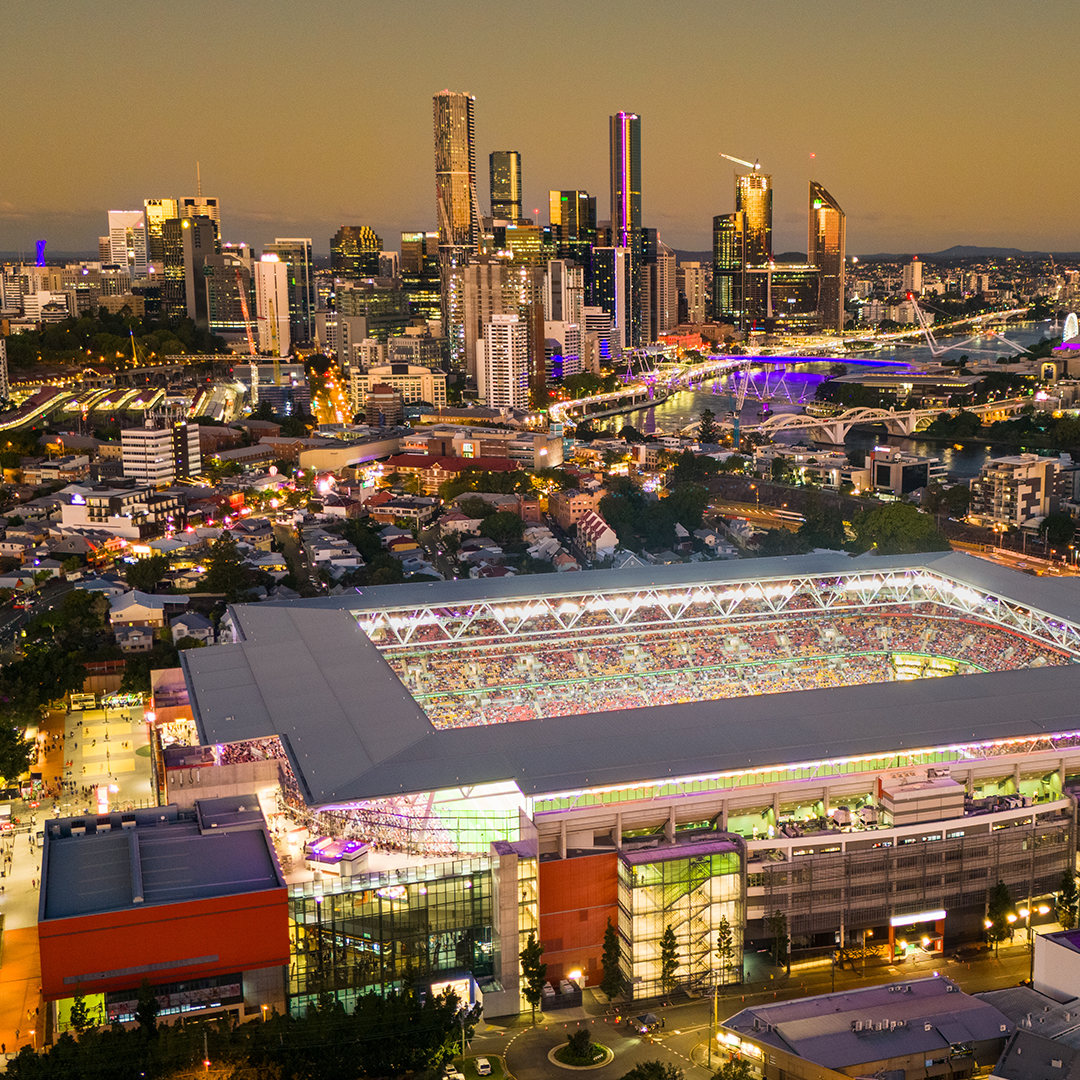
Yeah. So, Kathryn, when I have a look at the infrastructure that's being rolled out for the Games, I think it's really just bringing forward projects that the city required anyway. So for example, the stadium, our existing stadium, the Gabba actually has an AFL game tonight. Collingwood's coming to town. It's a big game, usually a sellout. They'll probably get 35 to 36,000 people at the game. If Collingwood was going to Adelaide or Perth, we'd be talking over 50,000 people going to the game. So it doesn't really make any sense. Brisbane's double the size of Adelaide. So why do we have such a smaller stadium? So I think from a stadium perspective, we're in desperate need of a larger stadium, and the Olympic stadium will post games be able to have a capacity over 60,000, which is great. Similar for the Athletes Village, Lendlease has been slowly building out the RNA Showgrounds. We're in desperate need of additional residential housing in this city. So it's really just bringing forward, I think, residential development that was going to occur in that location anyway.
Kathryn House
So you've done a real look in the new report about other Olympic games that have been held around the world in recent years. How do you think the Brisbane Olympics is going to differ from, say, the Paris or LA experience?
Tom Broderick
Yeah. So while we were writing the report, we spoke to our colleagues in both Paris and LA. Paris has obviously just hosted the games a couple of years ago, and LA is right in the middle of planning for their games in 2028. I think both are very different to Brisbane's experience. Paris didn't build a stadium. They did build an athlete's village, which has now turned into kind of an urban village, which has been sold down to private investors and also includes some social housing. LA hasn't really built much at all. They're doing a small refurbishment to the Coliseum, which will be the Olympic stadium, but they're using existing student accommodation at UCLA. So we're building a lot more than those two Olympics. But as I mentioned, this is kind of infrastructure that we probably need anyway for the long term.
Kathryn House
So on that infrastructure front, Mitchell, what's being built at the moment is very significant. And from a delivery standpoint, how challenging do you think this pipeline is in the current environment?
Mitchell Wilton
Yeah. There's a little bit of a just set the scene with the volume of the Olympic work. In the next four years, It's about $117 billion dollars' worth of government funded infrastructure in Queensland. The Olympics is represented at about $7.8 billion, but it's not the full story because as Tom points out, you've got the Athletes' Village on top of that. You've got several arenas, Gold Coast and Gabba. They're in addition. So when it comes to Olympic facilities, which we we need, they're in the order of above $10 billion. Beyond that, there's $40 billion worth of rail and road projects, $20 billion in hospitals. We've got major energy infrastructure through central Queensland. So the constraints on our industry is just not about the Olympics. The Olympics seems to get a lot of the attention, and the truth is it's quite a glamorous place to work and tell your friends and compare, but it's it's an industry wide challenge when it comes to government infrastructure, and we're not even talking about privately funded infrastructure, housing, commercial, industrial, residential. So there's significant challenges on the wider delivery and property markets in Queensland.
Tom Broderick
And, Kathryn, also, I mean, we've put some numbers around what Mitch just spoke about. Like, we did a bit of a forecast out of total construction investment in Queensland. And so if you look at, say, 2029, if we're thinking $11 billion to $12 billion of direct Olympic infrastructure, that might only equate to about two to two and a half percent of total construction activity in the state. So as Mitch mentioned, it's not as significant as maybe people are talking about. There's a lot of other infrastructure that's going on around the state.
Kathryn House
So what do you think that all means for your commercial and residential sectors that are competing, I guess, for labour with all of these major infrastructure projects?
Mitchell Wilton
Yeah. Certainly. I think the first thing people think of, they think of the large construction companies, the tier one construction companies, but it goes down the supply chain. So I like to bring it down to almost a subcontractor level. So every major project relies on a myriad of subcontractors. Very few projects are self delivered by the big companies. Those subbies, they're the trades that apply across all these projects, whether you're an electrician, you're a plumber. You can work on everything. You could be a residential carpenter, but that can also mean you're a form worker for construction concrete pours. So the challenge there is there isn't enough labour, skilled labour, and they're going to follow where the money is. And, look, traditionally, government projects have paid better. So I would suspect that, when it comes to private residential, commercial, it's you know, there are some projects of high value, and, you know, there's some great residential buildings going up on the river that will attract very, very good, revenue, so they would probably stack up. But it's a bit of a conundrum, I guess, that we're going to be raiding some of the industries that pay less, but, as a city, we need that infrastructure to be built as well.
Kathryn House
So you talked a little about residential there, Mitchell. Residential's always in the headlines, Tom, and Brisbane has outperformed nationally since the 2032 announcement. I was interested to see in the report that the Brisbane House Price Index has outperformed the national index over that time by about 37%, and vacancy rates are incredibly low. How much of that outperformance has been Olympics driven, do you think?
Tom Broderick
Yeah. It's interesting. The most recent monthly figures came out for March, and Brisbane was once again up 1.8% for the month compared to 0.6% for Australia. So Brisbane house prices continue to rise above the national average. How much of that is related to the Olympics? I think there's definitely been some kind of speculative investment from interstate investors, off the back of the Olympics, but there's a lot of other factors at play. We've had very healthy population growth since we got announced as the Olympic city. In 2021, we were looking very affordable to both Sydney and Melbourne. We've probably lost a bit of our competitive advantage in that space. Like, we're more expensive than Melbourne now. But I think the other factors, we've got a robust employment market at the moment, and I think the final piece is lifestyle, Kathryn. I don't think any of us in Brisbane have dusted off our jumpers yet. I don't think the people in Melbourne could say the same thing.
Kathryn House
I'm very jealous down here in Sydney at the moment. So the report also suggests that post-Olympic residential slumps are more myth than reality. What does the data show you from cities like Sydney, London, and Paris?
Tom Broderick
Yeah. I think this is the number one question we've received over the last four years. There seems to be kind of a consensus amongst investors in commercial property that 2023 will be a tough year for Brisbane post games. So we looked at a few different things to kind of gauge whether that's happened in other Olympic cities. I don't think there's any evidence in the residential sector that there's a slump post games. We looked at every Olympic city's house prices since Atlanta. Looking at four years prior to the games versus four years post, actually, the growth was better post games. The average was 42.5% growth post games versus 23.3% growth in the four years prior. So no evidence on the residential side. Office is interesting. We had a look at Sydney. The demand did go negative post games in Sydney. I think the only thing to point out, though, September 11 happened 12 months post games, and also the dot com crash was around that period. So both of those impacted financial hubs like Sydney. So how much was related to the actual games ending? I'm not sure. Atlanta was the opposite. Atlanta saw improved demand post games. So bit of a mixed bag for office. What we do know for office is that the Olympic Committee and there'll be project space, they'll be occupying a reasonable amount of space in the lead up to the games, which will be handed back. But I think as Mitch has mentioned, like, there's not going to be a lot of supply around that period, so I'm not too concerned on the office side of things.
Kathryn House
Ally, bringing you in here, there have been a lot of headlines about hotels and whether we are going to have the supply that we need for 2032. So is South East Queensland ready for this influx?
Ally Gibson
Yeah, look, Kathryn I think the answer really depends on how you look at it for SEQ. So there's probably three key angles to consider here. The first is the IOC's minimum requirement. So they say we need 41,000 rooms and that's for stakeholders, spectators and all the workforce. So across SEQ, we've got an inventory base of about 54,000 rooms. So technically, like, yes, we clear that threshold, but then if you narrow down to Brisbane specifically, I think it looks a little different. We've only got 23,000 rooms and we will be hosting a majority of those stakeholders and spectators. So I think the pressure in Brisbane is going to be quite significant. And then I think the third big talking point in our industry at the moment has been the government identified requirement. So they say we need another additional 40,000 rooms across Queensland by 2045. Now if you break that down, that's about 2,000 rooms a year, roughly 20 hotels, which is virtually impossible in the current climate7 And we've looked at that hotel development pipeline across Queensland and optimistically, we can see roughly 700 rooms coming online, so about a third of the government's target. But we also can't forget the Airbnb market. So I think there's somewhere between six to 12,000 rooms that add to the equation. So that's an interesting point, but there's also a lot of new regulations coming into effect. So I believe properties are going to start requiring permits, 24-hour contact with guests, and increased property rates as well. So I think that landscape will change significantly by 2032.
Kathryn House
So looking at the data, how does our inventory compare to previous host cities at this point in the cycle?
Ally Gibson
Yeah. Look, I think as Tom said, there's been a lot of mature markets that have hosted. So you've had, you know, London and Paris that have had double SEQ's inventory five years out from the games, more than sort of four times Brisbane. But if you look at markets, I think that are a closer comparison like Atlanta, they had virtually the same amount of inventory five years out, about 50,000 rooms. And then you've got markets like Athens and Rio. They both had sort of smaller inventories than Brisbane alone. So it's not without precedent, I guess, for a market or a city of our scale to host successfully. I think Sydney is probably the closest or the most relevant comparison to us, but it was 30 years ago. So there was far less global travel, far less global spend, and they had an inventory base of about 25,000, five years out from the games. But I think what's worth noting here is that all of these markets lifted their inventory by about 25% across the board. So for Brisbane, by the games, we're expected to see another 5,000 rooms come online and it's certainly a number I don't think we're going to reach organically.
Kathryn House
And is that being impacted by feasibility pressures?
Ally Gibson
Yeah. Look, absolutely. Feasibility challenges, we all know they're acute. So it's not just construction costs for hotels. It's prolonged approvals are a massive issue. We've got endemic delivery delays and we've got now sustained high interest rates. So in Brisbane specifically, we've also got all that added competition that Mitch mentioned all across the public sector projects. So we really think this is probably one of the most difficult feasibility climates we've ever seen for hotels specifically. And I think if the government, if they want to reach their target requirement, they will need to provide some incentive for hotel developers. So if we look back historically, the only time we have seen some solid development activity in hotels for Brisbane was when they implemented an infrastructure freeze in 2012. So I think current conditions being as they are, we would need to see much more incentive to really get anything out of the ground. And I know there's been sort of alternative accommodation options also proposed. So we've had the cruise ships providing floating accommodation, but I know there are logistical and sort of docking issues associated with that. And the other thing for hotels, I think, is that they are structurally harder to develop than a lot of asset classes. So, you know, you can't sell off the plan like resi and that puts them sort of higher up that risk curve. What we are seeing though, I think, which will, you know, give the market some dynamic is that developers are finding ways to sort of derisk. So they are doing branded residences or they're using mixed use residential alongside their hotels. So we've seen that, at the Mondrian on the Gold Coast at Burleigh, Hotel X in the Valley, and also Kirra Beach. So they just completed their resi apartments that will help sort of support that hotel component.
Kathryn House
So, fast forward to the games time itself and hotel performance, how material is the Olympic month when it comes to a revenue spike for hotels?
Ally Gibson
Yeah. Look, I think this is where it gets exciting for hotel owners and operators. So the biggest upside for hotels is, unlike your passive investments on a fixed lease, we can reprice daily with nightly demand requirements. So during a period like the Olympics, that earning power is going to be extraordinary. Across the Olympic cities that we looked at, ADR grew by an average of about 140% during the games month or the 17 day window of the games. So I don't see any reason why Brisbane will be any different. If we look at that, it's about an average rate increase to about $700 a night, and for an average hotel, that's almost a $1 million revenue uplift just across the games period alone.
Kathryn House
And just to wrap us up on the hotel front, one of the things that I found really interesting in the report was this whole idea of the post games tourism legacy. And I'm really curious to know, why do hotel markets often perform better after the Olympics than during the event year?
Ally Gibson
Yeah. I think it's an interesting one, Kathryn, because it's quite a counterintuitive finding. So a lot of people avoid the host city in the lead up to the Olympics due to all the disruption, and then during the Olympics itself, obviously, due to the increased cost. So the event year, if you look at it across the rolling 12-month average, it's not always a standout performer. That real spike in the legacy tourism concept is that sort of three years post the games. So Tokyo Olympics, someone was telling me yesterday, you know, the global reach was anywhere from, you know, three to six billion people. So that scale and that exposure really puts a city on the map and people do. They add it to their travel list. So when we looked at the data, I'd say Beijing was probably the clearest example of where that tourism legacy peaked around three years post gains. And as Tom mentioned, you know, while Sydney would seem like the most obvious local comparison for us to look at, the data's quite distorted there because of the dot com crash and and 9-11. So our view really is that Brisbane, that sort of real upside window, is going to sit in that 2034 to 2036 period.
Kathryn House
So, Tom, back to you. One of the things I'd like to explore as well is around investment confidence. So Queensland's share of national property investment has risen since the games were awarded. Is that an Olympic factor, or what's driving that confidence?
Tom Broderick
Yeah. It's, again, it's a hard kind of stat to pin down. As you mentioned, since we've been announced, we've been getting about 21% of national investment volumes across commercial sectors. In the 10 years prior to being announced, we were getting about 19%, so it's increased by about two percentage points. I think, definitely, the Olympics announcement has put Brisbane on the map for offshore investors. But similar to residential, there's other factors at play. Strong population growth. We've got high infrastructure spend, as Mitch has mentioned. And we've got a very low supply outlook across basically every commercial sector. So that is just going to lead to rental growth and kind of solid total returns for investors. I think the final component is that Queensland is probably benefiting a little bit from the tax changes that have happened in Victoria as well, investors considering Queensland above that market. So I think it's definitely a combination of factors, Kathryn.
Kathryn House
Now before we move to wrapping up, I'd love to get a couple of final takeaways from all of you. Tom, while we're on the investor piece, at a high level, where do you see the biggest opportunities for investors, and where are some of the real risks?
Tom Broderick
Yeah. I think the biggest opportunities are definitely in existing assets. This is not just a Brisbane and Queensland phenomenon, but existing assets look cheap versus their replacement costs right now. And so I think that's definitely the opportunity, particularly given what we've mentioned around a lack of supply across sectors moving forward. In terms of the risk, we have to deliver a lot of projects in a short period of time for this Olympics. Brisbane's only going to get one opportunity to do this in our lifetime. So, we want to showcase our city in the best light, and we don't wantt to be showing half-finished projects. So, that I think is possibly the big risk.
Kathryn House
No pressure there, Tom. Mitchell, final takeaway from you. What will it mean for a city of Brisbane's size to host the games, and what kind of legacy do you think it'll leave?
Mitchell Wilton
I mean, I look back at the previous host cities, and they're all major gateway cities known to the world. I mean, you've got to look back to, like, Antwerp and Saint Louis in the early 1900's to not have the premier city of that country hosting the games. So I'd imagine a sizable proportion of the world's population had never heard of Brisbane prior to the announcement. You know, when they're thinking about where they come and study in Australia, where they want to come and invest, you know, it's Brisbane will get on the initial shortlist, so we're going to be considered for all those factors. And in my personal opinion it's up to the Queenslanders, the Australians, the challenge is with us to be able to deliver that. So, you know, we will be considered going forward. It's just how we respond post games to being a credible alternative to Sydney and Melbourne.
Kathryn House
And what about you, Ally? For hotel owners and operators, what should they be doing, say, now, not in 2031 as the Olympic Games is looming?
Ally Gibson
Yeah. Look. The list is long, Kathryn. But I think if you're an existing owner, now is the time to be investing in all that cosmetic refurbishment. So your rooms, your guest facilities, your F&B, that's going to allow you to drive that rate uplift prior to the games and then capture that legacy tourism peak. You know, as Tom said, what we don't want to see is elevated room rates for poor product. It does not add to the visitor experience or a city's legacy reputation. So if you want to really capture, I guess, that supply demand dynamic, you know, you need to grow that rate organically now. And also expanding your portfolio, again, existing assets, as Tom said, they're trading anywhere in for hotels 30% to 50% below replacement costs. So the development pipeline's thin and the demand story, I think, for Brisbane in the hotel sector couldn't be more compelling. CBRE Hotels, we lead the transaction activity across the Brisbane market and we are hearing on the ground that there's a clear shift in that pricing expectation. So the challenge though now is, I guess, securing that stock. You know, there are very few sellers willing to sell. So if you can secure an asset, you may as well pay what seems like a lot now but by 2032, it might look quite cheap.
Kathryn House
Well, Ally, it's great to have you on Talking Property. I'm going to have to get you to come back.
Ally Gibson
Thanks, Kathryn. It's been great to be here.
Kathryn House
And, Tom, I really did enjoy the report. It goes into so much sort of detail, particularly around how Brisbane compares to other host cities. So, great job on getting that report out.
Tom Broderick
Thanks, Kathryn. Exciting times for Brisbane.
Kathryn House
Very exciting. And, Mitchell, thank you so much for joining. I know it was a little bit of a last-minute ask, so I really appreciate you coming on.
Mitchell Wilton
Not at all. I think, next year, we're going to be so busy building things, I might not have time to slip off for an hour or so to do these podcasts. Brisbane is going to be very busy next year.
Kathryn House
Indeed. Well, there's so much more I think we could have explored, so I will include a link to the Brisbane 2032 research report in our show notes. I guess what's clear is the Olympics aren't just about venues and timelines. It's also about how well cities convert a moment into momentum. To our listeners, thanks for tuning in, and make sure to follow us on your favourite podcast hosting platform. Until next time.