Kathryn House
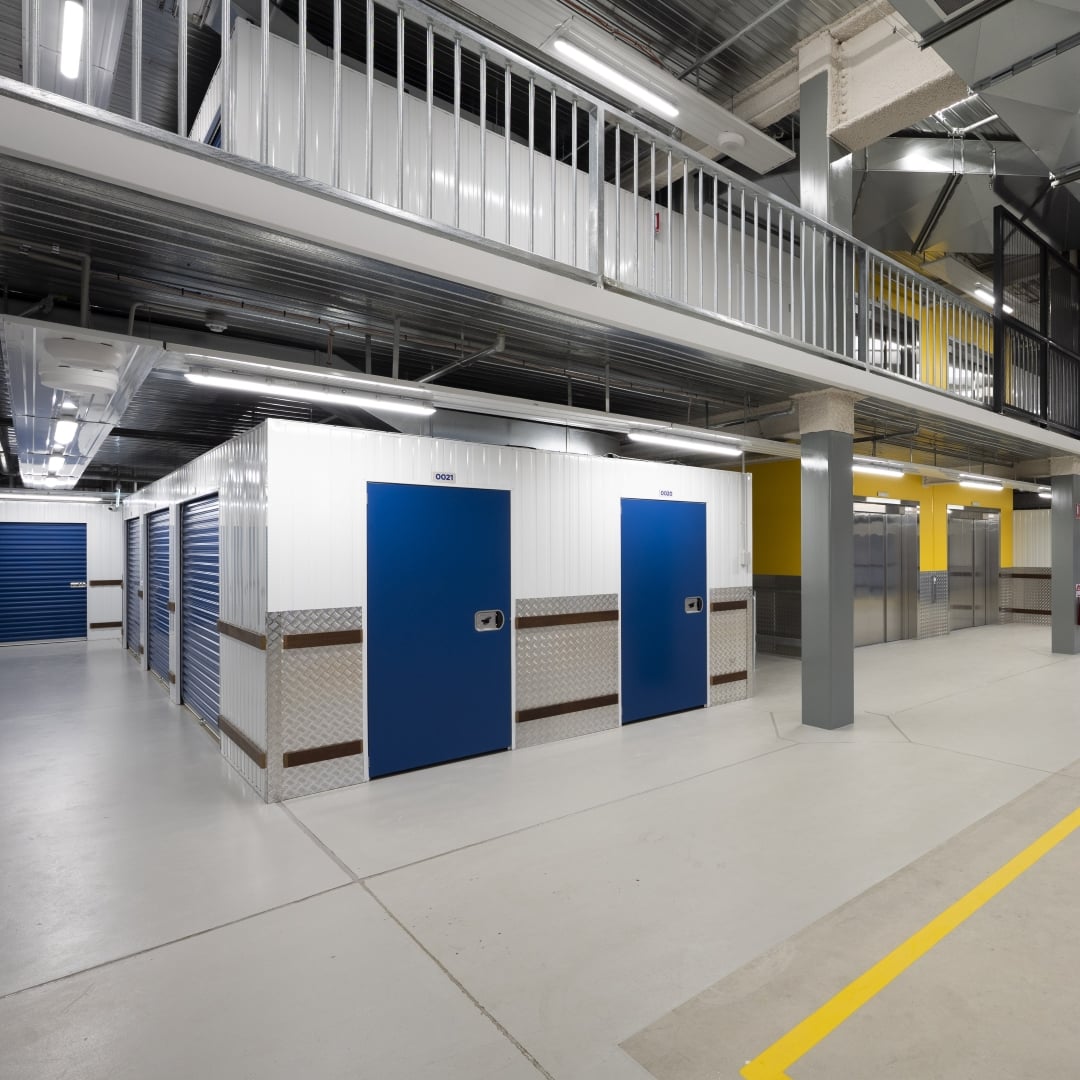
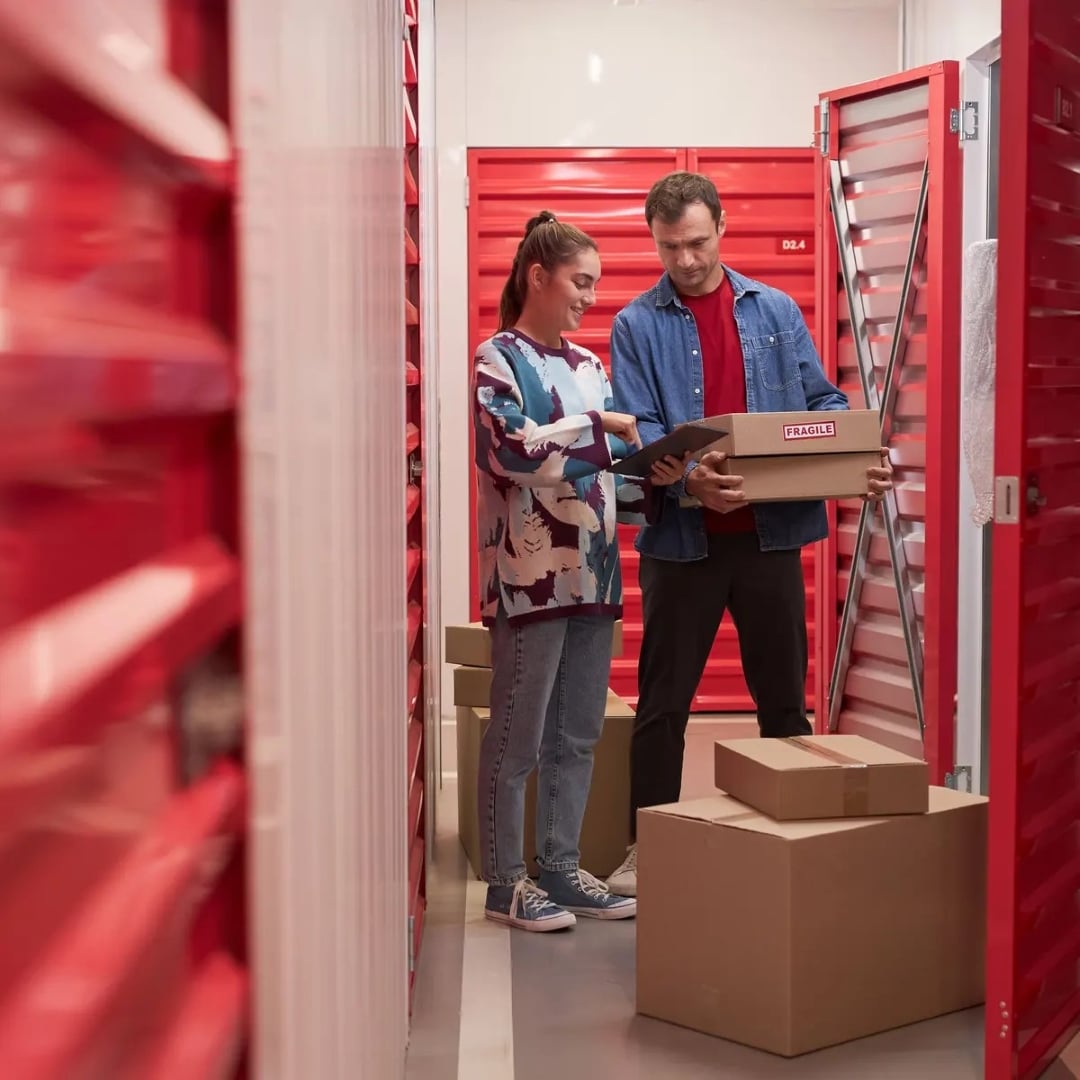
Hello and welcome to Talking Property with CBRE, I'm Kathryn House, your podcast host, and in this latest episode, we'll be exploring the groundswell of interest in self storage. There are more than 3,000 self storage facilities across Australia and New Zealand, which are home to the possessions of more than 500,000 people. It's a sector that's been making headlines after a surge of local and global investor activity and one that turns over annual revenue in Australia of circa $2 billion.
Nikki Lawson
The resilience of the self storage market in Australia post Covid has, from a self storage sector perspective, put Australia on the map. Investors are always looking for where something's mispriced and the asset class is really starting to make a name for itself.
Kathryn House
That's Nikki Lawson, Abacus Group General Manager, Self Storage and fund manager for Abacus Storage King, one of Australia's top three self storage groups. Abacus Storage King is a fully integrated owner, operator and manager of a more than $3.4 billion portfolio comprising 128 facilities in Australia and New Zealand, as well as 19 development sites.
Sam Kennard
Our ambition is to grow within our means and our capacity. For me, it's more about building a portfolio and buying locations and building assets that are high quality, well located, resilient to competition, in the best locations.
Kathryn House
And that's Sam Kennard of Kennards Self Storage, another of the country's top three players and Australia's self storage pioneer. Over the past three decades, Sam has transformed what was a small family business into a $4 billion plus empire with 126 locations. This includes Kennards' recent acquisition of National Mini Storage in New Zealand in that country's largest self storage deal. I hope you enjoy our conversation about what's next for the self storage sector amid a wave of buyer interest, growing consumer demand and digital transformation.
Kathryn House
Nikki, thanks for joining Talking Property.
Nikki Lawson
Thank you. I'm delighted to be joining you, particularly talking about one of my favourite topics.
Kathryn House
Yes, indeed. And Sam, great to have you on the show.
Sam Kennard
Hi, Kathryn, thanks for having me.
Kathryn House
So, Sam, for those who don't know the Kennards' story, can you give us a quick lowdown on the company's history? I believe your father was quite the entrepreneur who founded the company in the 70s after a trip to the US.
Sam Kennard
Yeah, that's right. I mean, the origins of our family business go back to the hire company, which was started by my grandfather in 1947. My dad took over from him and was quite entrepreneurial. And in one of his tours to the US when he was learning more about hire, one of his equipment hire buddies in the US took through the suburbs of Los Angeles and showed him self storage in about 1972. It was very early stage development then in the US and he just loved the idea and came back and built you know, 100 or 100 and something storage units behind the Kennards hire yard at Moorebank in 1973.
Kathryn House
And I hear that you learned the ropes working in your school holidays.
Sam Kennard
Yeah, pretty much. I did that both in the hire company and also later in the storage company as that became my dad's stronger interest. I would go to one of our storage facilities or storage centres and clean roller doors or clean driveways. For some of my summer holidays. I was labouring as we were building new buildings and I was sort of cleaning out the construction or driving the forklift or numbering the storage units, you know, putting the A's and B's and unit numbers on the storage units.
Kathryn House
So it's the real grassroots.
Sam Kennard
Yeah, pretty much.
Kathryn House
So Nikki, tell us a little about what took you into self storage. From looking at your background you've had some pretty diverse roles over the past 25 years, including senior positions with Unilever and Yum!. What took you into self storage?
Nikki Lawson
Yes, look Kathryn, at face value they might seem unrelated, but we talk about our competitive advantages as Abacus Storage King around being our irreplaceable portfolio, and we used to say the same things at KFC. We talk about sector leading operating metrics; vitally important at KFC, whether it's seconds at the drive through or it's seconds to respond to someone inquiring for storage. We talk about leading platform. KFC we did the same. The systems that we've got in place and how vital those are. And our iconic brand. Same thing. You know when you're in an industry where you constantly need to be attracting customers, it doesn't matter if it's fast food or storage, the strength of your brand is so important. And then probably the most important thing for any multi-site retail business is people leadership and the quality of your people. You know, it's not real until it happens at the site. Whether that's the self storage site or the fast food site, and having incredible people at the coal face of the business. So culture and what you have in terms of culture becomes vital as well. So yeah, not that unrelated the two really.
Kathryn House
Yes. So it has been a pretty extraordinary year for transactions in the self storage game. I mentioned in my intro the National Mini Storage deal, Abacus Storage King was recently the subject of a takeover bid which didn't proceed. In June, Singapore's sovereign wealth fund GIC signed a $270 million joint venture with National Storage. And in July, global investment giant Barings forged into the market with a $200 million investment in Swift Storage. Ahead of that, BlackRock, one of the world's biggest investment houses, bought a controlling interest in $400 million self storage operator StoreLocal it's quite the list of deals. I know our self storage expert here did an analysis that showed this could be the biggest year for portfolio transactions in the self storage sector in Australia's history. Sam, what's your take on all this activity?
Sam Kennard
It certainly has been a centre of interest globally for money into our sector and I think that's recognised overseas. In the US, particularly, people are saying, God, everyone's interested in Australia all of a sudden on top of the ones you've listed, there's CapitalLand and there's Blackstone invested into Australia in 2020. So it has matured. I think they probably ran out of acquisitions around the world and they've realised how sophisticated probably Australia is as a self storage market, albeit a lot smaller than other parts of the world and suddenly they seem to want to come here at the same time. Yeah, certainly making it interesting and there is a lot of interest in anything that comes up for sale.
Nikki Lawson
Yes, building on that, the resilience of the self storage market in Australia post Covid compared to what happened in the US, I think has from a self storage sector perspective put Australia on the map. And a lot of that is just linked to the maturity in the US relative to the maturity of the category here. And it's never one factor, but I think the other big factor is investors are always looking for where something's mispriced and I think if you look at our business at the moment, I mean, when we announced our results, we announced our values at a weighted average cap rate of 5.45. If we were out in the market today buying what would be the average asset in our portfolio, we would be paying sub 5 as a cap rate. And then you turn to the listed market, which obviously affects us and National Storage more and our implied cap rate for the average of our portfolio, if you look at where the stock price is trading is a cap rate closer to 6.3, 6.4. So the misprice between the different areas of where assets can be obtained linked to, I think, the interest in the category, we've popped above the radar compared to the old days where, you know, the beauty of the Abacus Property Group was that we were a diversified REIT and the only reason we could borrow money to grow was because we had an office and a retail portfolio. I don't know, Sam, you must have paid cash for your first few stores because banks weren't lending to self storage. So, whereas you roll forward to today and the asset class is really starting to make a name for itself.
Kathryn House
And Sam, it's an interesting question and you talked about the two listed self storage REITs, Nikki. Sam, I'm sure you have people knocking on your door all the time. Would you ever take Kennards public?
Sam Kennard
No, I wouldn't. I think there's too much grief being public and I think everyone who's public probably regrets being public.
Kathryn House
So I won't put that to Nikki.
Sam Kennard
I'm pretty sure she'd give us a straight answer. But, you know, our ambition is to grow within our means and our capacity. So at one point we did have a partner from 2004 to 2008 and they were listed, it was Valad Property Group. That gave me a window into a listed world and I really was pretty happy not to be inside that. And once I got the opportunity to buy their share out, I had high conviction around remaining private and just growing at a rate that was sensible and sustainable for us. And for me, it's more about building a portfolio and buying locations and building assets that are high quality, well located, resilient to competition in the best locations. So that's more a priority for me than just growing for the sake of trying to deploy money for somebody else.
Kathryn House
Looking back at that mispricing, Nikki, you did recently navigate a takeover bid. What's your view on what's driving that huge amount of interest in listed players at the moment?
Nikki Lawson
Yeah, as I say, I think it's the mispricing in the market in Australia. There's a lot of discipline around having to get valued every six months and reporting those independently. And when the publicly listed stocks are not trading at those asset values and there's genuine belief in the value of them, there's a misprice and that drives interest. And I think the growth in the category, as I say, is still strong, so because it was kind of the major disruption of all disruptions happened when Covid hit. And I mean, that was a fantastic time for self storage all over the world. I think the difference was that formed almost an education event in the market in Australia, which step changed the use of the category within the market and we haven't stepped back from that. Whereas I think in the US it was always widely known, was suddenly more needed during that time and then people sort of fell out of the category again afterwards. So I think the belief in the Australian fundamentals as well. You've got interest rates starting to look like they're coming down. You've got all the sort of tailwinds that are attractive to the sector are sort of converging, which I think is resulting in where we are today.
Kathryn House
So we've talked a lot about the institutional interest. Is there still room for the mum and dad players? Sam?
Sam Kennard
There is, mum and dad or you know, sophisticated entrepreneur who wants to do development at a single site level there's certainly opportunities. The cost, the barriers to entry in terms of capital investment are high in the best markets. So mums and dads typically don't have the capital to come into Sydney, Melbourne, Brisbane in the urban areas. So they're probably more likely to be in a provincial area, I think to be in the market. Again that's not terribly attractive market for most institutions. So there's kind of like a bit of a divergence on interest. But I think the money that is coming in is doing both acquisition and in some cases, you know, they're doing some development. And development in self storage is quite hard for institutional money because self storage lead times to get a return are very long. You know, you've got to buy the land, get it approved, get it built, several years in that process, and then you've got to rent it up and there's several more years in that process. And if you've got money that has a five year clock on it or even a seven year clock on it, then it doesn't work very well for self storage, particularly if you need to build a portfolio because you can't do it all that quickly.
Kathryn House
Yeah, I suppose that's why it's been so attractive for groups coming in to buy portfolios so you can get that instant scale.
Sam Kennard
Yes, that's right, yeah.
Kathryn House
So we've talked a lot about the tailwinds for the sector. What about the headwinds? Are you seeing any real headwinds there, Nikki?
Nikki Lawson
Oh, look, I mean the headwinds across the property sector have been fairly well known, interest rates and what's happened there and movement. I mean we're reliant on disruption and movement of people or people being dislocated and needing somewhere to position themselves. But I think the other big ones, particularly for foreign capital, is around statutory costs and taxes. Governments, whether it's state or federal, there's been some big changes in that area over the last few years. And those obviously have a huge impact in terms of property portfolio. So I think statutories. And while we don't use a lot of electricity, rates and taxes, that part of the cost base has seen some growth as well as construction costs. So I agree with Sam. I think there's still room for mum and dad operators. I think the opportunistic capital opportunity that for those that got in sort of just before Covid had bought the ground and contracted and then saw the big increase in terms of rental yields and things that we got during Covid, there was huge money to be made in that window. I think that opportunistic capital as construction costs go up is probably not quite as attractive as it used to be. And then the last one, which is maybe a bit of an assumption of on a headwind for me, is as everyone dives into pricing systems, it's interesting where the market gets tighter and the pricing system's driving people to get the occupancy up. What you're seeing is street rates being affected. So, yeah, there's new supply and those kind of things happening, but it's also this big occupancy drive that a lot of the systems are talking to each other and driving, which can drive the whole market down at certain periods in time.
Kathryn House
What's your view, Sam?
Sam Kennard
So on headwinds in terms of how assets will perform, I think primarily you've got economic, you know, the conditions of the economy and consumers and if they're moving house and that sort of thing. So that matters a lot. We'd much rather a buoyant economy and people moving. And then there is the competition and supply side. I don't think often that there's an adequate analysis or proper understanding of the investment where people are coming in and they come into markets that are already substantially well supplied, well served, and they want to open another store and think they're going to rent up at the same rate, same price and the same velocity that they thought they could have in for the market was. So I do see some areas, and our market is lots of micro markets. It doesn't happen across the board, but you can get areas that actually have additional supply come in and occupancies will go from the high 80s to the mid-70s and prices will come down 20 or 30% because the competitors come in and they thought it'll just rent up because, you know, there's one down the road, you know, so I think people are developing like that, which is unfortunate. They're either naive or they just want to deploy money. And that's a headwind, I think, for investment earnings growth in the sector in some areas.
Nikki Lawson
And that probably goes back to Sam's earlier point just around the importance of location and location of your assets. Because as we look at supply coming on, selecting locations where you've built up a certain amount of sort of competitive barriers because it's hard for competitors to get in becomes vital in terms of where self storage is located. There is only a certain amount of supply that consumers can take up. And I think those organisations that more deliberately map the market and understand what size facility and how much territory can hold, you'll get a lot more resilience in terms of your income flows if that work's been done in the background. But the problem with that is sometimes it requires accepting a lower yield up front. And if you're, Sam says if you're not required to make returns on certain milestones, then you're more able to select what's right for the long term as opposed to just what the short term yield is. And it's part of the reason we've tried to maintain about 10% of our balance sheet is really around new developments because we know then at least we can continually supply the market with some short term yield and short term returns. But we're also investing for the long term in terms of building that future pipeline.
Kathryn House
One thing I found really interesting in doing a bit of research on the sector was that it seems to be hyperlocal. So people typically want to be within 15 minutes of their storage facility. How does that guide your investment and development decisions. Sam?
Sam Kennard
Yeah, that's right. It's a location sensitive business. Customers want to store their personal and you know, 75% of them are storing personal effects, and they want to store close to where they live, work or going to live. And so yeah, location matters. So what you look for are markets that have less competition and/or hopefully stronger attributes for demand. Higher income, higher density markets, higher proportion of renters because they move more often. Better demographics than lower population levels, lower income. That's not to say that low income people don't store. They do, they just store at a lower price. And it's more likely that in the lower income area you'll have more industrial kind of land nearby. It tends to go like that. So the Northern Beaches, for example, in Sydney is a higher Income area with a very limited supply of industrial or commercial land.
Kathryn House
It's probably a nice segue when you're talking about customers to look at the consumer side of things. Nikki, what's happening on that consumer front and the trends you're seeing, you know, which generations maybe are most using storage and why?
Nikki Lawson
Yeah, it hasn't changed much. You know, the biggest group of storers are still older, they're still wealthier.
Kathryn House
We have to hold onto things.
Nikki Lawson
Older, wealthier and they're retirees. You know, if you look at retirement and look, the CommBank data that we get through is more linked to the resi customer, which is sort of circa 75% of the business. But 60% of those customers are what they call wealthier, versus middle or budget customers. A quarter of those are retirees. 25% of storers tend to be retirees. So older, wealthier retirees. That said, we do find, certainly from the Abacus Storage King side, our share is higher with younger customers. And for a while there we were seeing stronger growth off much smaller bases with slightly younger consumers. I think with interest rate hikes and discretionary income coming under pressure, that has stalled a little bit, particularly with young families and that group of consumers who had new mortgages. So it'll be interesting to see once those interest rates come down whether that changes a bit.
Sam Kennard
Yeah, I think that's right. I think Covid, that was a great disruptor and we love change and disruption. So Covid was this great surprise to the industry that no one knew that was going to come, but it caused a lot of people to go through career changes and move back home with mum and dad. Sea change, tree change, kind of lifestyle changes, working from home, home gyms, all sorts of things that caused people to change the way they live. And I think that initiated a new demand for the younger users, younger storers. But I do think, I would agree with Nikki that it's backed off a little bit. They're probably a little bit more sensitive to cost of living pressure and probably have wound back a little bit the last couple of years.
Kathryn House
And there seems to have been, from what I've been reading, a blurring between business and personal use in self storage and more customers utilising units for both. And I know Sam, you've had, you know, some quite high profile startup businesses that have started out in your units. Has that been another driver, do you think, of the current interest in the sector?
Sam Kennard
Yes, it is a good kind of additional space for people to run side hustles out of. If you think, you know what I mean?
Kathryn House
Everyone needs a side hustle.
Sam Kennard
Yeah. So, you know, they can rent a space that gives them something to do if they're doing some sort of e-commerce thing and they're growing something. But they'll also probably put some other stuff in there as well, so they'll get a slightly bigger space. It's hard to know. We don't really know what's going on in the storage units. We don't have keys, we don't look at it.
Kathryn House
Maybe you don't want to know.
Sam Kennard
So it's kind of an anecdotal observations that we get these kind of things from.
Kathryn House
Yes. And I've heard it described as a very human business. So customers typically going through a life event. Is that what you're finding, Sam?
Sam Kennard
Oh, yeah, that's always been the case. Driven by a change. People who are moving house, renovating, having a baby, having a divorce, moving in with a boyfriend or girlfriend and they want to keep their stuff in storage as insurance as in case the thing doesn't work out. So they keep that in storage. Or it's seasonal businesses. So it's event driven, causing something to need storage and a personal use. Most of those events are temporary. So they then settle down into their new life. So they've moved house and they've moved into their new place. So the duration of the storage ends and then they just move out and get on with life. Businesses can stay, will stay longer because their decision is, well, I'll do because I'm going to serve this market and that will continue until I get a more permanent thing where I'm starting a business and then I'll grow into something else. They tend to be longer stays.
Kathryn House
Yeah. What is the average length of stay?
Sam Kennard
We look at the mean and the median. The median length of stay is a bit over six and a half months. And the mean is about 13. And we measure. Everyone measures differently on this. So you've got to be careful about who you're asking. But just to be clear, we measure the customers that have moved out. We don't count the customers that are still in there and other people kind of count them all or just count the ones in. So, yeah, that six and a half months is the median. So more than half the customers will move out before the seventh month, which is quite surprising to many people.
Kathryn House
How do you do your calcs, Nikki?
Nikki Lawson
Yeah. Remember, it's a relatively newer business so what you will do is, Sam talks about the move out, the longer you've owned the business, the longer your means will be. Now we just over six years ago we only had I think it was $666 million of assets in self storage. So the acquisition and the growth, redevelopment of the business has been significant over the last few years. But what Sam says about move out, we see half customers move out about the six month mark. So on average half the customers that have moved in move out at six months. And then it's interesting to start monitoring those that have been there longer than two years, because that's a different group. So you tend to look at two different sectors and how you treat those different sectors, which is, you know, how you play your existing customer rate increases relative to your street rates becomes a different game depending on which bucket those customers sit in. Though when you speak to the store managers, a lot of short-term customers, everyone thinks they're coming to store short-term and a lot of those customers end up storing or sort of realising the beauty of storage. We used to think of storers as hoarders, but actually storers think of themselves as being quite smart. It's one of the coping tools. It's almost like a dirty little secret there got in terms of how they navigate life and how it just helps them to get on with what they need to do without being weighed down by all their stuff. So whatever a customer says to us when they first move in, we never believe that that's going to be the answer in six months time. They've usually changed their mind by then.
Kathryn House
I know I recently had a storage unit and a lot of it was just to store all of my Christmas decorations because I'm a massive Christmas fan and my collection seems to get bigger every year.
Sam Kennard
Oh, we love that.
Nikki Lawson
I'm with you, Kathryn. Halloween and Christmas decorations was the main, was the starting reason for my storage.
Kathryn House
So the two of you were recently at the annual Storage Summit in Las Vegas. I'd love to know what you took away from that and any kind of big takeaways of Australia versus your global peers. Sam?
Sam Kennard
Yeah, I've been going for many decades. They have a couple of conferences a year in the US and they've gone through various cycles and there's a lot of interest in the sector in the US. The bigger guys, there are five REITs I think in the US now, you know, Public Storage and Extra Space are the biggest and they are really hungry. They're running out of assets to buy and get a reasonable return on. I think that's partly why they kind of poke around around the world trying to make things work. And I think the story out of the US is a bit of an oversupply gloom at the moment. There was a lot of development post Covid that's coming to the market and the economy's turned at the same time. So occupancies are down a bit, prices are down, there's very aggressive pricing coming out of the REITs to win customers to maintain occupancy. And then at an industry innovation level there's a lot of talk around AI, data management, revenue management sort of stuff as well as people are trying to work out how automated and unmanned facilities can actually work and can they actually provide the service solution to consumers that consumers want? That were kind of my takeaways.
Nikki Lawson
Yeah, I'd agree Sam. I guess the only additional will also be the stall happening on development. I think all those macro factors that Sam was talking about around rates coming down, oversupply and a bit of gloom, it's also not making the economics on new developments stack as strongly. So a lot of development pipelines stopped and I think a lot of hoping hinged on the fact that because new projects are stalling and not taking off in the next year or two, demand will catch up with supply and you know, things will be good again. So it's just a halting on that front as well and looking for growth. Where will growth come from?
Kathryn House
Sam, you mentioned the technology pace and automation. Do you have any particular views on that front where the industry is going to head in Australia?
Sam Kennard
Well, I think there's a digital solution that consumers always want. Online service payments, various things that consumers always want. The ability for technology to now do with security systems, to do access control, surveillance and certain things without people necessarily being there has improved and costs have come down. So that certainly makes it interesting to explore. Users of storage still largely want to have customer service, person-to-person customer service. A lot of people are still very unfamiliar with storage. It's often a first time use for them. They haven't used it before so getting in and getting into the property. Others understanding how to use it isn't natural to them. So I think there's a bit of a barrier to go there. Also at a particular scale you can't not have people because you've got to serve customers who do need service, they do need contact and the properties do need to be cleaned and washed and maintained and you need to stay on top of all of the stuff that happens on the property. So completely taking your hands off. I don't think on bigger properties is really going to be possible. There might be small remote, satellite-style, unmanned facility options available, but I don't think it's going to overwhelm the kind of larger stores, it's not going to take off for them.
Nikki Lawson
Yeah, and I think it depends where you're applying technology. You know, I think sometimes technology's mistakenly, oh, let's see if we can take up cost. And I think that's where some of the industry have gone wrong. I think when you're chasing customer experience, when you're chasing how do I make it safer for customers to store, how do I make it easier for customers to store? How am I more responsive to customers? I think those technology investments and timing them when the technology is ready are vital and that'll separate where customers gravitate to and the businesses that will be successful. I do also think the role of data in terms of everything that we do is, particularly as you're starting to look after bigger and bigger businesses, to stay on top of that and to keep the granular responsiveness in a business becomes more important. And it's technology not just applied customer facing, but people facing. You know, if we can make our people's lives easier and apply technology to make our people engagement, our people experience better, the returns on that side of the business are strong as well.
Kathryn House
So I've got two last questions for you. One's a bit lighthearted and one's a bit forward looking. So on the light hearted front, I must admit to having several times watched the television show Storage Wars, which has been described as a testosterone charged treasure hunt. And I loved one of the stories where a person paid $750 for a unit and found it had 6,000 newspapers from the day Elvis Presley died that were worth an estimated value of $90,000. Dare I ask what's the most interesting, outlandish thing you've ever seen stored. Sam?
Sam Kennard
Well, I think one of the most colourful ones was when I went to one of our stores in Melbourne and I discovered that there was this couple who come in, you know, within a few minutes of each other and stay there for an hour and there was an affair going on in one of the storage units. There was a mattress, bed and a candle and a rug and stuff in there.
Kathryn House
That doesn't sound very romantic.
Sam Kennard
No, really, she or he feels very special right now. So anyway, that's one of them.
Nikki Lawson
Building on Sam's theme, we've got a group that meet out at Gregory Hills. They've got a Dungeons and Dragons club. Every Saturday they meet, they've got a little table set up. But I think if you want to know the most interesting and we've got a store in WA where we've got an America's Cup yacht that is still sitting there from, I want to say 20 years ago.
Kathryn House
That's a long time to have something in storage. And on the more serious note, a bit of a forward look. Self storage at the moment is considered an alternative property sector in Australia. Do you see that continuing or is it going to move more into a core asset class. Nikki?
Nikki Lawson
Oh, surely it deserves a class of its own at some stage. We can't be lumped in with all these obscure sectors. I think as the interest grows, you've got to believe it'll get its own sector. It just is how big. You know, Australia is not a huge country. Even when we bundle Australia, New Zealand together, both our portfolios span both, I think the investment grade of the sector, it deserves a class of its own. It'll just always be what's the size?
Kathryn House
Yes. What's your view Sam?
Sam Kennard
Well, I think what we can pick up from some of the comments we've made today is the management intensity that self storage requires is not light. You know, you do need to win customers every day. Every month we have an attrition, a churn of customers leaving. So you've got to win the digital kind of win and perform digitally. When eyeballs are looking for storage you've got to win them and get them into the stores and then there's a customer service. So there's a training piece around your employees. So it is hands on, management intensive. It's not the same set and forget style leasing of an industrial or an office building or retail. So it has some unique factors around it that I do think make it different and people do underestimate that. They look at storage from the outside and they go, oh, this is a building and it looks very quiet. They do look quiet. They're big icebergs, right? They're niche, not much happening. But actually there's a lot more happening than people appreciate. But if people to look at investing in it, it would be, I'm not one of these, but it should form part of a portfolio of wider property assets. You know, I'm dead long in storage, you know. But others, you know, might say, well I will take 10% in storage and take a piece of one of the REITs or both of the REITs or something, as well as office or retail or something. And I think it's proven through cycles, the GFC or Covid, that it's actually a very resilient sector. Like it is proven to perform through different cycles really, really well, despite not having leases in place and despite the factors that make it kind of what you would think was somewhat vulnerable. It's actually very sound.
Nikki Lawson
Yeah. And that links to the granular nature of all the millions of reasons why people store. You know, one of those reasons is the cycle's down and a different reason the cycle's up. So, you know, when property prices are through the roof, you know, people aren't buying, but then they're renting more or people are trading up or they're trading down and all those things create a disruption. It's when there's no change. If we're going to go into a decade of zero change ahead, that might be interesting, but it feels like change is happening more and more rapidly around us.
Kathryn House
Yes. And what's next for Abacus Storage King? What's your view for the next year or two of where you're going to take the fund?
Nikki Lawson
We still see plenty of opportunity on the table, both around the portfolio as well as on the platform. We look at the portfolio, we've mapped the market, we know where the next chunk of assets are that we want to build or the territories that we want to invest in. And the refreshing of our asset base, which we've been really deliberate around over the last sort of three or four years, continues to be a high priority for us. I think as supply increases, consumers are going to get more discerning, they're going to have more choice and the quality of the assets and the convenience of the location are going to become more and more important. So I think from the propco side, that's important. And then the other big opportunity for us is on the platform. We've had a brand that's Australia's most recognised, has been and continues to be, and we'll keep investing in that brand and building that brand strength to help us generate those inquiries that Sam was talking about that we need for the business. And then in terms of our operating systems, the just professionalising and introducing more sophisticated revenue management systems as well as people systems. You kind of have to do customer, people and revenue together, because the interplay, I think, between those three is really important. So investment in systems is still a high priority for us.
Kathryn House
And what's next for Kennards Self Storage?
Sam Kennard
We've integrated the National Mini Storage acquisition in Auckland. We're about to go through the rebrand, We've done all the back end and the people side of that is now done and so we'll be back to our plan of development. Our principal method of growth in our business for the duration from when my dad started it is acquisition of land and development. So we'll continue on that path. Since those first generation assets I've gone back to many of those and demolish and rebuild on those. So I've gone and demolished a single-storey building and built multi-storey buildings. So it's intensification of use where first generation assets are underutilising land. And then phased expansion of existing stores that we intended to build anyway to grow. So that's how that's our BAU really.
Kathryn House
Yes. Well it does sound like it's going to be another exciting few years for self storage having had this chat and I know we've been trying to do this for a while now, so thank you so much for joining Sam.
Sam Kennard
Thanks Kathryn.
Kathryn House
And thank you Nikki for joining Talking Property.
Nikki Lawson
Yeah, thanks Kathryn.
Kathryn House
To our listeners, thanks for tuning in to this latest episode of Talking Property with CBRE. If you like the show and want to check out more, you can follow us wherever you get your podcasts. That way you won't miss upcoming episodes, including a download on the recent Property Council of Australia Congress in Perth. And we'd love for you to rate or review the show which will help other people find us. Until next time.