Kathryn House
Hello, and welcome to Talking Property with CBRE. I'm Kathryn House, your podcast host, and I'm excited to kick off a two-part series to zero in on Australia's office sector. I'll be getting perspectives from four of the country's leading office owners, IFM Investors, Charter Hall, GPT, and Dexus, to get a feel for the current market drivers and how they expect the office sector to evolve in both the short and long term.
Amanda Steele
For the office sector, what really challenges me is that we don't have enough supply. And so the construction challenges in Australia are huge. The cost of construction continues to grow, and the limitations on new product coming onto the market is a challenge.
Kathryn House
That's Amanda Steele, head of property for IFM Investors. Amanda leads the development and implementation of enhanced asset management strategies across IFM's entire real estate portfolio, which includes $8.3 billion in office assets.
Fiona Denison
We've just concluded nearly 300,000 square metres of leasing this year across the Charter Hall portfolio, and we are not seeing any wholesale reduction in space.
Kathryn House
And that's Fiona Denison, head of office asset management for Charter Hall. Fiona leads a team of 19 asset management professionals across a circa $30 billion dollar office portfolio. The portfolio encompasses 116 CBD assets that are home to over 1,300 tenant customers. I hope you enjoy our conversation, and make sure to tune into part two of our series on August 20 when I'll be speaking to Matt Brown of GPT and Andy Collins of Dexus. I'm now joined by Amanda Steele of IFM Investors. Amanda, it's been almost two years since I had you on the show, and thanks for coming on. I know how busy you've been lately and that you've spent some time on country.
Amanda Steele
I have been on country, Kathryn, but it's so nice to be here. So thank you for inviting me back. I must have done something right 2 years ago to get an invitation back, but I have just been up in Arnhem Land with the CBRE team doing some fantastic work on country in Gunbalanya, and we've co-funded the building of a women's weaving space. So
Kathryn House
Oh, brilliant.
Amanda Steele
Different kind of property.
Kathryn House
Yes.
Amanda Steele
That we're talking about today, but a really rewarding fantastic program.
Kathryn House
Oh, it would have been fabulous.
Amanda Steele
It was warmer than we're here.
Kathryn House
So we're not talking about that today. We're talking about the office sector. We caught up to discuss, you know, what we would be talking about on the podcast, and you mentioned that the Australian office market has surged.
Amanda Steele
Yeah.
Kathryn House
Can you talk us through what you've been witnessing?
Amanda Steele
Yeah. And it's so nice because for so long, office was on the nose. It was all about industrial and retail and the poor office team, you could just see them weeping in the corner. But, actually, we're having really great results. Our office sector is doing incredibly well at IFM Investors. And across the board, we're hearing from both domestic and international investors that that's a sector to watch, that it's really well priced at the moment. There's a lack of supply and the quality stock, and I really do mean that great A-grade, prime quality stock in best locations, is exactly where people want to be.
Kathryn House
And Brisbane. Brisbane seems to have come up the the ladder.
Amanda Steele
I love it. It's my home state. Brisbane has done incredibly well. I just cannot believe how much that market is surging. And it's not just the Olympics. There are more and more really big international headquarters that are locating there. And, of course, the Australian occupier market as well want more and more space in that Brisbane market. There has been a lack of supply, and so they are highly sought after those great quality assets that you have in that market.
Kathryn House
And a more favourable tax regime?
Amanda Steele
Yeah. I think the Queensland Government have really listened to industry. And so there are other states that have tried to tax their way out of being in a bad position.
Kathryn House
We won't mention.
Amanda Steele
We won't mention. But particularly the property sector. But I do think that the Queensland Government are listening more to Australian property. And as a result, the tax regime and the planning is far easier to work with in the Brisbane market.
Kathryn House
So turning to office leasing incentives, it's something that's been getting a lot of airplay. Our global head of research, Henry Chin, was in town, and he was a little shocked and said we had some of the highest incentives globally.
Amanda Steele
Yes, yes.
Kathryn House
Why is that so? And do you expect that to change in the short to medium term?
Amanda Steele
I would love it to change, and I know Dr Henry Chin said, "You've gotta stop it." I just wish it was that easy. I just wish we could stop those high incentives. Look, it's a very interesting aspect of the Australian market. It's unique to the Australian market, and again, when you talk internationally, people are like, what are the incentives? They're quite shocked by it. The interesting thing in Australia is that we have a densification of ownership. And as a result of that, like we've got a limited number of owners. When you look at New York, for example, there are multiple owners. There are individual owners of big, big office assets. But in Australia, it's a real REIT market, so you've got a really significant ownership structure. And what that has resulted in, which is positive and negative, is it's very transparent. It's one of the things that European investors love, really transparent market in Australia. They really love to talk about the transparency. But what that means is everyone knows what rent you're charging, what incentive you're getting. There are no secrets in this industry, which we all know. And so that incentive market is like leasing. Like people just know exactly what incentive was paid for what deal in every market. So when there is that lack of supply or when there is an asset in a location that's not the right location, the incentive becomes the lever that people pull. There were some bad deals done with incentives in some markets that have struggled absolutely in Melbourne, and no one likes it when those incentives get out of control. I think the good owners that have really great amenity in the right location are seeing those incentives pull back. We're certainly seeing those incentives pull back. But, yes, it's just an anomaly in the Australian market, and it's not going away anytime soon.
Kathryn House
Well, if we're talking about things that are making headlines
Amanda Steele
Yes.
Kathryn House
Another area is AI. Particularly when we're seeing newspaper headlines talking about the AI Armageddon.
Amanda Steele
I know.
Kathryn House
But what are you seeing from the IFM perspective? Is it an Armageddon?
Amanda Steele
No. I don't think it is an Armageddon. There was a report done from a university in Melbourne about Australians being the most fearful of AI than any other OECD country.
Kathryn House
Isn't that interesting?
Amanda Steele
It's fascinating. And it bothers me because Australia needs a lot more innovation. You know, our productivity is suffering. We can see that, The Productivity Commission reports on it all the time. And one of the areas that we need to focus on around productivity is new technology and new ways of working. So look, I don't think it's an Armageddon. I don't think it's useful for the media to be reporting those kinds of headlines as well because people get really worked up about it. There's definitely been questions to us around, you know, what's your exposure and risk with AI? Like, how many of your office floors will be empty because AI will replace jobs. And we're not seeing that. We're really not seeing that. And when Dr Henry Chin was out, we were talking about the San Francisco market and how that market, which was so flat for so long, post COVID.
Kathryn House
And you wouldn't have thought it would recover anytime soon.
Amanda Steele
I really didn't think it would. It was just, it was abysmal. But it's booming again because of AI. There are a lot of new AI companies that are taking up space. So I don't think it's the end of the world. We're not seeing a shrinkage. We have software companies. Of course, we do. We love them. But, actually, what we're finding is those B and C grade assets in the, you know, the submarkets, they're the ones that are suffering because it's that back of house that will be replaced with AI. So you're looking at administrative roles, accountancy roles. A lot of those have been offshored. But where you have that administrative in the B and C grade assets, they're the assets that will have the impact of that AI shrinkage. But then I also think you'll see the growth. You'll see that growth in office space being taken up in prime and A grade stock with great amenity because there are more and more companies that can see the opportunity of AI. I think from IFM real estate perspective, we're investing heavily in having our team skilled in how to use AI and really understanding the opportunity that it provides. The reality is those that are using AI well also know that you have to have a human in the machine. It cannot just be run by the robots of the world.
Kathryn House
Which is a good thing.
Amanda Steele
Which is a good thing, Kathryn. I think that that creativity can't be replaced by AI. And so the more and more we have that critical thinking and the ability to imagine different futures, that's where AI can't compete with the humans.
Kathryn House
So let's turn to sustainability, which is something you are very passionate about.
Amanda Steele
I am.
Kathryn House
How is sustainability factoring into occupier and investor decision making?
Amanda Steele
Yeah. I think that there was an expectation that it was going to die. You know, it's not interesting anymore. We're not gonna talk about sustainability. We're not gonna talk about ESG. I think the interesting thing with ESG, sustainability is the language always changes. When I first started a thousand years ago when I was young and pretty, it was about corporate citizenship. Like, that's language that's not used anymore at all. But the focus on ESG, it still remains, I think, and I've always maintained that great ESG performance is a proxy for really good management. So you're looking at creative ways of managing a building. You're looking at more efficient ways to build and manage a building. And so generally, you're seeing lower operational costs as a result. So, no, I don't think it's the end of ESG. Our European investors are very sophisticated, and they're demanding the knowledge around how we're performing on ESG. And, you know, not just do you have a NABERS rating or eye on the GRESB survey, but, you know, what's the cost per ton of carbon, what are your offsets? You know, very sophisticated requests for information. And, of course, the domestic super funds that, you know, we have a long and happy relationship with, they expect it. Like, it's absolutely a standard request for them.
Kathryn House
So, Amanda, IFM has a really high net promoter score, or NPS. For our listeners who don't know what an NPS is, can you explain how that's calculated, and what's differentiated IFM?
Amanda Steele
Oh, look. It's something that I'm really proud of. And when I say I'm proud of, I'm proud of the team. They've worked really hard on it. Net promoter score is a global measure around a stakeholder's ability or desire to promote or support. Yes. I would recommend your product or I would recommend your service. So it's very well known established by brands and products and services. We've started testing our net promoter score for all of our asset classes. And this year, we're at positive 25. Our peer set is at positive one. Like, that is a massive gap.
Kathryn House
That is a huge gap.
Amanda Steele
Huge. Really, really proud of it. It comes from the fact that we've really focused on one of our strategic pillars is partnership. And I mean partnership, not relationship, because I do think we often talk about partnership, but we just mean, mate, let's have a beer. But true partnership where you deeply understand your key stakeholders' needs and what the gaps are and how you can assist them. And as a result, we've had a fantastic result in our Net Promoter Score growth. Had a big jump up this year as well, and it really speaks to trust. You know, it shows that our tenant partners trust us, and trust always delivers growth. And that's a great result for us.
Kathryn House
So one final question. I could keep talking all day.
Amanda Steele
I wish you would.
Kathryn House
One final question. What's keeping you up at night when it comes to the office sector?
Amanda Steele
Yeah. Look, there's a lot that keeps me up at night, but that's probably my age. For the office sector, what really challenges me is that we don't have enough supply. And so the construction challenges in Australia are huge. The cost of construction continues to grow, and the limitations on new product coming onto the market is a challenge. So how we resolve that needs to be really thought about carefully with government and with construction companies and with industry as a whole. We need to really kick start both the productivity on the construction sites, the challenges that we have in the supply chain, and new ways of construction as well. So, yeah, that's the one that really is a big problem that I don't see an easy way through.
Kathryn House
I think we've been talking about it for a while now, and I agree no one's really got the magic bullet.
Amanda Steele
No. Unfortunately not.
Kathryn House
So, Amanda, thank you so much. We're not going to leave it this long.
Amanda Steele
Good!
Kathryn House
Really appreciate you coming in, giving us your view on the office sector. Next up, I'm joined by Charter Hall's Fiona Denison. Thanks, Fiona, for coming on the show.
Fiona Denison
Absolutely my pleasure. Thanks for having me.
Kathryn House
So, Fiona, we had a great chat when we were preparing for the podcast and one of the things we spoke about was the evolution of the office as an experiential space. Can you talk us through that?
Fiona Denison
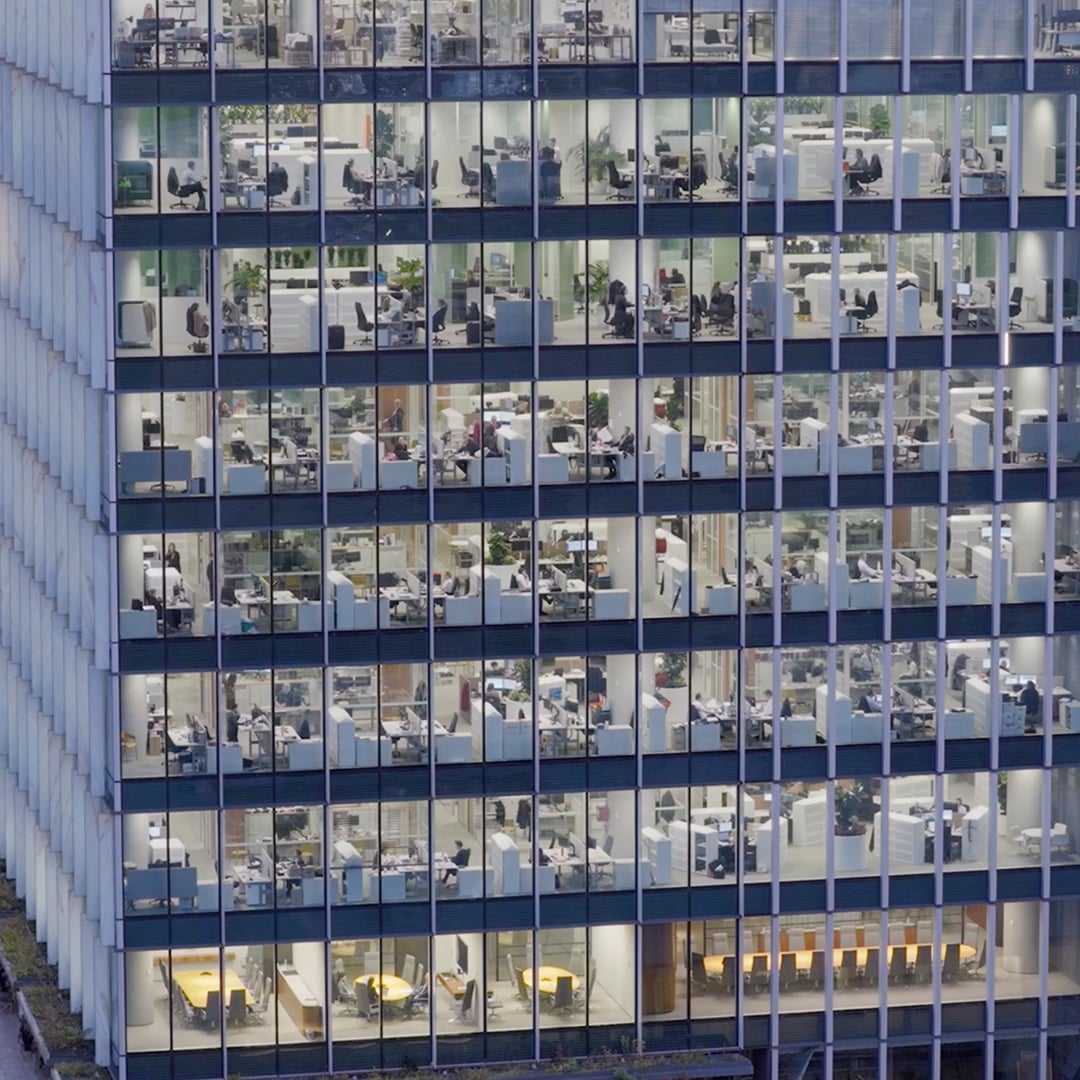
I think the, the barbecue conversation about, you know, what do you do for work, Fiona? It's changed dramatically over a few decades that I've been in the industry, and now I tell people that running a portfolio of office buildings is like running a hotel. There's just desks not beds because the experience has completely changed over the years. And it is thankfully, you know, for all of us that do dwell in office buildings, it is far more experiential than it's ever been. Meaning there's this, now, this wonderful ecosystem of different spaces to be part of every day. It's not just about coming in and going to the same desk every day. It might be the cafe at the bottom of the building. It could be the end of journey amenity that I need to go to, you know, at lunchtime or after work. It could be a business lounge that I might wanna dwell in or book a space in if there's so much more to the office than there ever has been. Thank goodness, because it's not anywhere near as boring as it used to be, that's for sure.
Kathryn House
Do you think it's driving a real, you know, everyone talks about bifurcation at the moment, bifurcation in rents, and is it really accelerating that? And so it's much more about the haves and the have nots?
Fiona Denison
I think it most definitely is, and we've seen that more so, you know, it was a thematic before COVID, to be honest. It's not a response to COVID. That's my view of it anyway. The evolution of the office has been happening for a couple of decades, definitely, as a place of experience and somewhere to come that is just way more than just coming into a desk every day, as I said. And I think that the rents definitely go with it. It's very simple for me. It's, you know, when you are fundamentally overlaying a lot more experience and amenity into a building, then it costs more to go there. And we're not seeing any pushback on that cost from our customers, especially those that are trying to attract and retain the best talent in the marketplace now, which is more often than not, we hear that all the experiences in an office are now part of the armoury to attract the right talent into a business and have that talent stay long term into a business as well. So rents just go with it.
Kathryn House
And is that from like right at the top down to your new graduates?
Fiona Denison
It is, most definitely. In fact, one of the things we really enjoy doing at Charter Hall is just being deeply curious with the customers that we are in business with, and some of the professional services firms that do have a high intake of graduates are now telling us that the graduates are interviewing them. It's not the other way around. So the graduates are asking them, you know, what are you offering inside the tenancy? What are your social sustainability principles? Do I get an ice bath or an infrared sauna at the bottom of my building? You know, what is it that I'm coming here for? What are all the additional, you know, over and aboves than just coming in and and working at my desk every day? So we're seeing decision makers now in a lot of our customer bases. We are with either the heads of sustainability or the heads of people and culture who are making the decision right alongside the CFOs and the CEOs, of course. So we do find that the decision making on what accommodation a company is going into, there's definitely that decision is spread in many parts of the business. Once upon a time, it was a CFO, firmly a CFO and a CEO, and it was possibly where the CEO lived would demand where that company went to in terms of, you know, the ease of getting in and out it would be. But now it's in some instances, it's definitely from the graduates through the business that are making the decision on where these companies will be.
Kathryn House
And so you mentioned ice baths, and we did talk about this when we were planning for this. I mean, is that something that tenants are actually using? Or is it like the tick in the box?
Fiona Denison
I think, you know, ice baths is one of the extreme examples, I guess. But you've got buildings now with, you know, reformer Pilates studios, with golf simulators, basketball courts. I've heard pickleball courts of late, all sorts of things. So I do feel that some of this is part of the marketing. You know, how do I stand my building out in the pack, and what can I say, and what can I put on the marketing material that's gonna guarantee me that inspection that you never know could lead to the lease that you didn't think you were going to get? So is it essential to have an ice bath in a building? I don't think it's essential to have an ice bath, but I know that we have been recently having some very detailed discussions with the customers in our Chifley precinct, and the expectation of the end of trip and wellness amenities at Chifley, the expectation from our customers is the most heightened I've seen in our portfolio. Understandably, these are, you know, customers that if we're talking about rents, these are strong rents that they will be paying at Chifley. So it's the over and above. What am I getting? What is my over and above? So, yes, might we have ice baths? Maybe. Might we have infrared saunas? Maybe. But certainly, the expectation of what these amenities are gonna deliver. It's just all these little over and aboves now that will be some of the deciding factors as to where a company will wanna house their talent.
Kathryn House
Yes. And I guess these tenants not wanting to necessarily have those third spaces in their own tenancies, but within the broader building.
Fiona Denison
Definitely. And it's, I think we've just concluded nearly 300,000 square metres of leasing this year across the Charter Hall portfolio, and we are not seeing any wholesale reduction in space. We've had about 6% of those transactions that have reduced space, but are the customers using their space fundamentally differently to the way they used to, most definitely is the answer. And, yes, we are finding that town hall amenities or training rooms or boardrooms to a lesser degree, but they are definitely wanting to use those amenities as a service for hire rather than necessarily them taking up large lumps of space in their tenancy that are inefficient in terms of spaces they use every day. So most definitely the business lounge amenity and what that offers to customers is fundamentally so much more important than it ever was.
Kathryn House
And it's interesting that you talk about that there hasn't been that real reduction in space that occupiers are looking for, and I spoke to Amanda Steele earlier about the same thing, and they're observing that at IFM as well. So you're seeing these headlines, but it doesn't seem to be translating at this point, you know, with that impact of AI.
Fiona Denison
No. We're certainly not seeing it presently. Over the last four years, I think we've just hit roughly 1.2 million square metres of leasing across this portfolio. I was looking at the statistics in the last 24 hours. And of that 1.2 million square metres, it is 7% that we've seen where they've taken a smaller amount of space. Now are there customers that are changing the way they work? Are there customers that are reducing their footprints, the larger Australian corporates? Yes. There are. Absolutely. But it's not a wholesale trend across all of the leasing that we're doing by any means. Like I said, they are fundamentally using space far differently to the way they ever have. And that's been evolving for decades though as well. You know, you can remember the corner office and the workstations against the core, and nobody had equity to views and things like that. You know, that changed when we went to an activity based working style. So the office has continued to evolve, and now it's more collaboration space that we're seeing fundamentally across our portfolios is there is a lot more space for people to be together and work together for improvement in productivity. We're also seeing when we're having discussions, you mentioned AI, such a topic, such a topic in the market at the moment. We're not seeing and I think it's reasonably early days in an office footprint sense. We're not seeing that impact in any way other than positive at the moment. Could that change over time? Of course, it could. We're watching international markets. San Francisco is one of them where we're trying to see if there's any trends coming out of the states with AI. And at the moment, the trend continues to be the take up of space, not the wholesale reduction of space. We recently were also we had a great CEO event where we were with a lot of the CEOs in the major corporations that we have in our portfolio, and we were talking about AI. It was a very vibrant discussion, I've got to say.
Kathryn House
I like that, vibrant.
Fiona Denison
It was, it was really vibrant. And the opinions on AI and how it will affect how businesses are running is widely different depending on what industry they're sitting in, of course. That was very interesting to hear most of the C-suite talk about where they've had productivity gains, if you like, by using AI for some functions in their businesses. For every one person that that might affect, they might have to put another two people on in the area of risk and compliance. And, cybersecurity is another one. That they were saying that there's not a wholesale reduction of humans. It's a shift in what humans are doing rather than a wholesale reduction. A lot of them are also talking about the cost of tokens being really prohibitive. One, CEO of a major bank actually was mentioning that that what they budgeted for 12 months of tokens in the AI space, they'd used in the first three months of the year. And once people get hooked on what AI can do, it's inevitable that they keep wanting to do more and more with it. So I think it's so early days for AI. Will it change the office? Yes. It'll change the office, but we've been through this before. We've been through waves of different ways that people use the office. So it's gonna be very interesting. If anyone's on these podcasts and tells you they know what's going to happen as a result of AI, I think they're fibbing to you, Kathryn. I don't think they're telling you the truth.
Kathryn House
The other thing that we had a good chat about when we were doing our planning was sustainability and this sort of need to electrify office buildings. How much of a focus area is that for Charter Hall and how much are tenants zeroing in on electrification?
Fiona Denison
Yes, it's a large focus area for us, very large. We've got, 28 buildings now that are fully electrified across our national portfolio. We've got another four in train at the moment, and we have audited the whole national portfolio for electrification. Does that mean we're throwing plant and equipment away before the end of its useful life? No. It does not. Does it mean that certain products in certain markets either need to be electrified or they need to have a pathway to electrification? Most definitely. And for us, it comes back directly to the type of tenant covenant that we would like to have in our portfolio. We're a funds management organisation. We manage other people's money every day. We wanna do that in the most risk averse way we possibly can, which means having great tenant covenants in our asset. And that might be state government, Federal Government, or blue chip corporates. And they are the type of organisations that need to move into a net zero environment. And it might not be today, but there needs to be a commitment in most of the major leases that we've done in the last three, four years. A commitment to electrification or a pathway to electrification has most definitely been part of the negotiations, fairly essential. Again, it does come back to that tenant covenant that we're aiming for as well. But, you know, the valuation community is recognising this now in a valuation sense that a fully electrified building with good covenants is going to attract a sharper cap rate. So it does pay you back.
Kathryn House
And you've seen that?
Fiona Denison
We have. We have. We have. In my favourite market, which is Melbourne. Yes. I can't say the asset.
Kathryn House
Your soft spot market.
Fiona Denison
My soft spot market is definitely Melbourne. But we have literally had that one on one conversation with the valuer. And it came down to a combination, not just electrification, but it came back to a combination of great covenants, long WALEs, fixed increases, fully electrified asset that's pointing into a sustainable future for the covenants of the future. So that's where we're seeing it pay us back in a cap rate sense. Occupancy, of course, but a cap rate sense as well. So it does make good financial sense, but it can be costly. So we always have to weigh up the advantages and disadvantages of doing that.
Kathryn House
And so you've mentioned Melbourne. We're not gonna do any Melbourne bashing. It seems to be very precinct based as well. So, you know, people talk about Melbourne and it's not just one homogeneous market. Are there particular markets, within markets that Charter Hall's focused on right now? Where do you see the best opportunities?
Fiona Denison
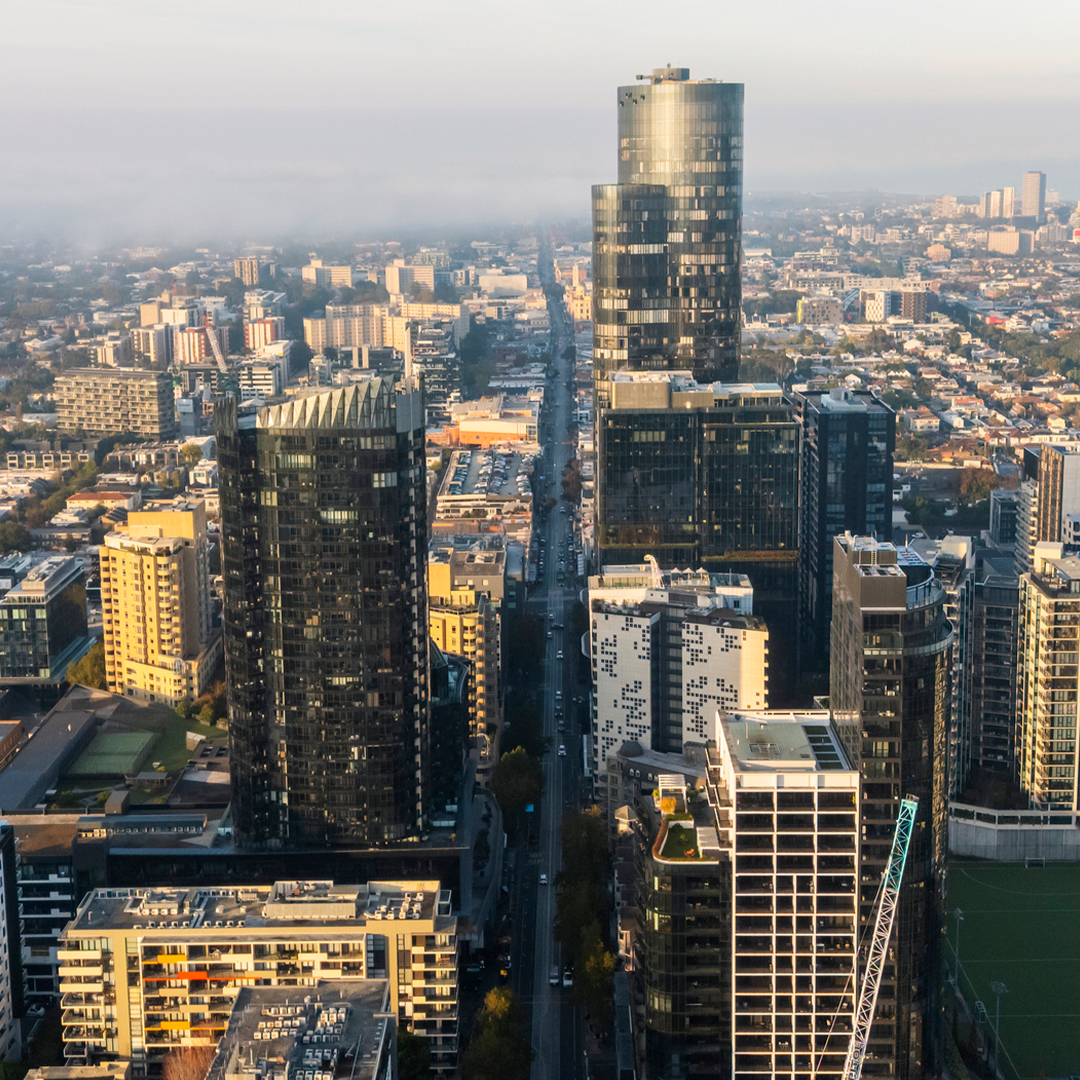
That's a great question. That's a question we're regularly asked by the capital that's placing their faith in us. So every CBD market has markets within markets, lots of them. Melbourne is definitely one. So is Sydney, so is Brisbane. You know, we see markets within markets everywhere. Melbourne is definitely a more challenged market from a vacancy perspective at the moment, and there's, you know, roughly 1 million square metres available in Melbourne at the moment, and about about 40% of that sits in the western core of Melbourne. So that's a a particularly challenged part of Melbourne for various different reasons. East End is a market that is really, by standard, it's quite full in comparison. So if we're talking about rents and bifurcation of markets, you could go from one end of Collins Street to the other, and you'll see widely different rents. You'll see very different occupancy rates, lots of different incentives up and down Collins Street. So, yes, if you were in Melbourne at the moment and you would like to have some vacancy in your portfolio, the East End of Melbourne would be where you would like to have that vacancy, I have to say. And I think my soft spot for Melbourne comes back to well, I am Melbourne born and bred. So I do live in Sydney now, but I am Melbourne born and bred. So that's part of the soft spot for sure. But I think I have watched the humans in Melbourne, specifically the humans in our team, who have been absolutely in the trenches in the last few years. Been a really tough market in Melbourne. And I'm in awe of how they show up every day. They show up every day. They perform you know, the market's roughly 20% vacant at the moment, and we've got a 4% vacancy in our portfolio. And it's it's hard work, and it's grit, and it's resilience, and all those wonderful words we hear. But I feel like Melbourne in particular, people have had to show up completely differently in the last four years. So I'm very proud of the results that the whole Charter Hall team has been able to deliver out of the the Melbourne office in particular.
Kathryn House
And so I've got a big last question for you, Fiona. Let's fast forward five to 10 years. What's the biggest change you expect to see in the office sector?
Fiona Denison
Oh, that's such a good question. I do feel that this office as a place of experience, that thematic is gonna continue, and we will need to continue to evolve our office products. Where you can see almost everywhere in the country, in the next five years in particular, the supply demand conundrum is going to be very interesting to watch because the economic cost to build anything at the moment is just, it's frighteningly high and it's certainly not going down. So it does mean that there will need to be repositioning and really great adaptive reuse of existing products in the market to meet the demand. New stock may not be able to meet that demand in the next five, maybe in in Sydney in particular, in the next five, maybe seven or eight years. It's gonna be really tough to meet that demand. So great, well positioned existing stock that has had the right investment in it, I think will continue to really prevail in the next five or so years. We will need to continue to ensure that experiences are at the forefront of the stock that we're delivering or repositioning in the market. And I think a thematic that's been around forever is how deep the relationships are with the customers because we all know that the office is evolving and continuing to evolve. So having a a partnership approach with your customers is going to prevail again over these, you know, these next five to 10 year wave, I would have thought.
Kathryn House
Yeah. And it's probably gonna really shift that stay versus go question. Like, it won't be as easy to go, so how you have those kinds of conversations?
Fiona Denison
Definitely. And there's just there will be less places to go, I think. There will always be stock available, I think, in the market. But not having this wave of supply that each market has always gone through, not having that wave of supply in the not too distant future is going to mean that those existing relationships become drastically important because, you know, yes, there'll be a lease, but hopefully that's in the bottom drawer. And you sit around a table and have a chat and work out what it is. You know, how can we ride whatever this next wave is? How can we do this together? In our case, we like to try and do it across multi markets as well if we've got great relationships as, you know, take them into different markets and help out wherever we can. But it is going to be really interesting and and what disruption, if any, AI causes to that, whether it'll be a positive disruptor or a negative disruptor, that that's all up in the air as well I think. So no, it's never dull. Office is never dull, that's for sure.
Kathryn House
Well, you did make that really interesting comment when we were speaking earlier about disruptions, you know, test how people use the office space. So it is going to be a fascinating period, I think, in the next five to ten years.
Fiona Denison
Yep. Definitely so. I completely agree with you. But that's good. Bring it on. We don't wanna be bored.
Kathryn House
No, never boring.
Fiona Denison
Never boring.
Kathryn House
Thank you so much for coming on the show. I think there's so much more. I think we've just, it's the tip of the iceberg, So I will have to get you on again, but, you know, really appreciated you joining Talking Property.
Fiona Denison
My absolute pleasure. Thank you. Thank you for having me.
Kathryn House
And thank you to our listeners as well. I hope you enjoyed part one of our office series. If you like the show and want to to check out more, you can follow Talking Property wherever you get your podcasts. That way you won't miss part two of our office series featuring Matt Brown of GPT and Andy Collins of Dexus. Until next time.