Kathryn House
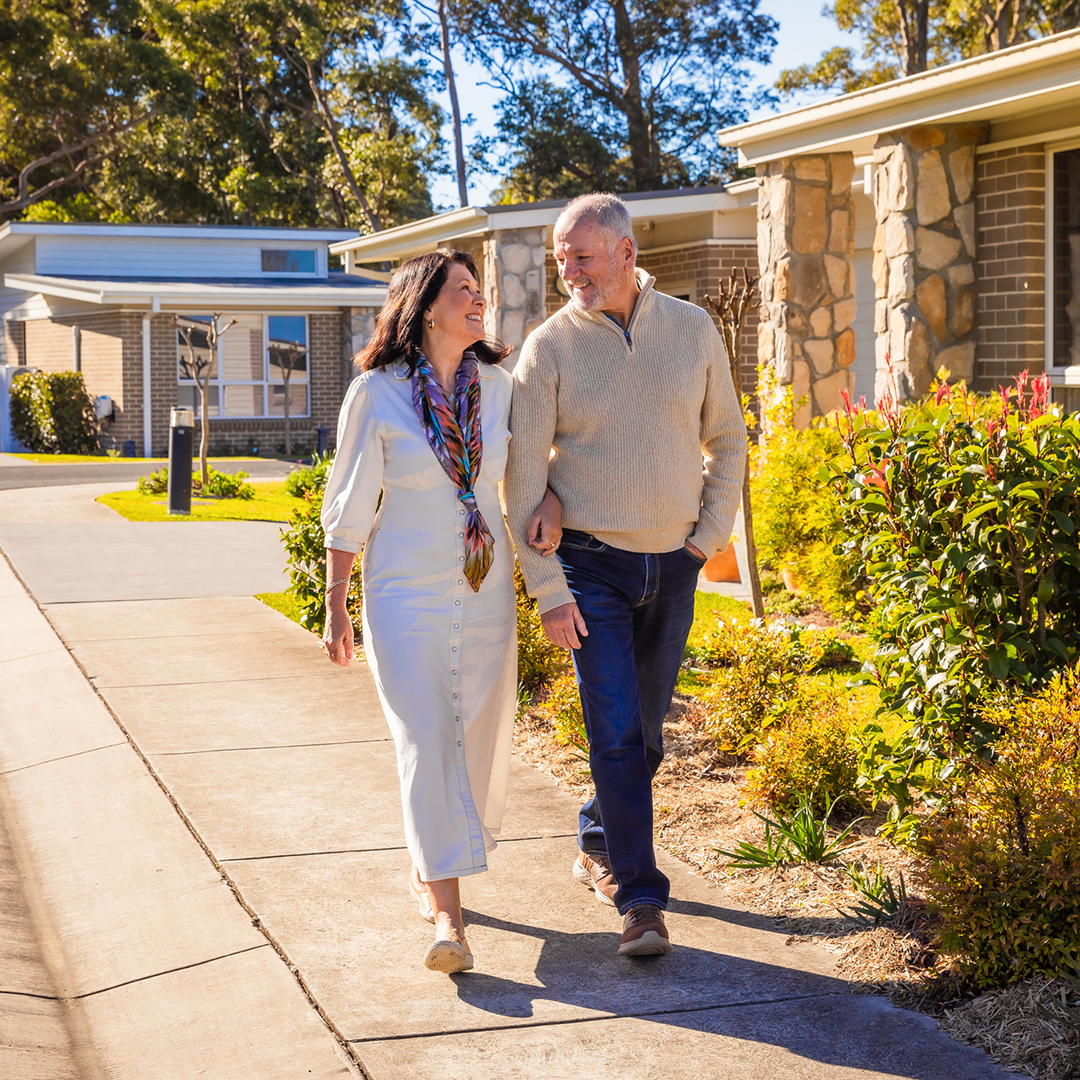
Hello, and welcome to Talking Property with CBRE. I'm Kathryn House, your podcast host, and in this episode we'll be doing a deep dive into Australia's senior living sector, zeroing in on retirement living, as the sector enters a new phase of growth and transformation. CBRE's latest research estimates that Australia's senior living sector, encompassing retirement living, aged care, and land lease communities, is worth around $150 billlion. But ownership remains highly fragmented, with CBRE pinpointing the sector as one of Australia's most under institutionalised real estate asset classes. That fragmentation is creating opportunities for consolidation, platform growth, and capital deployment as a series of high profile transactions drive the sector's evolution. These themes were front and centre at the recent Mingtiandi Australia Forum in Sydney where investors and operators discussed the growing importance of scale, operational expertise, and management platforms in driving performance across the senior living sector.
Daniel Mrsnik
We think that the demographics are here to stay. They're irreversible that won't be changing anytime soon, so it gives a long runway for operators and investors to capture the strong returns that are coming out of this sector.
Kathryn House
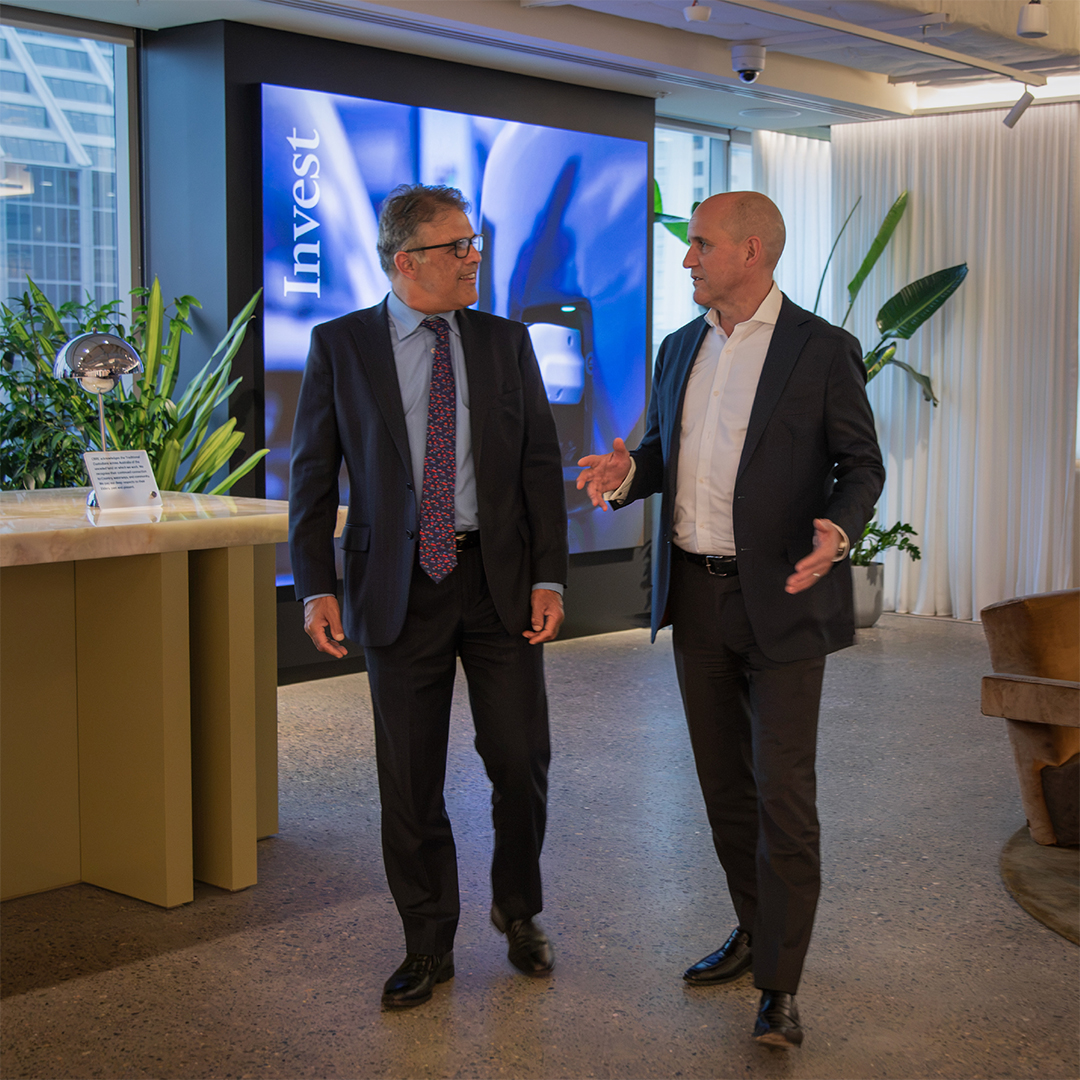
That's Dan Mrsnik, a senior investment analyst within the Aware Super Property team, who was one of the panelists on Mingtiandi's senior living session.
Paul Martin
The reality of the retirement living business and the villages within it is this is a human business. It's a service offering.
Kathryn House
And that's Paul Martin, acting CEO of Keyton, one of Australia's largest retirement living platforms, and one in which Aware has a 75% stake. I hope you enjoy our conversation.
Kathryn House
Dan, welcome to Talking Property. It was great to see you on stage last month at the Mingtiandi conference.
Daniel Mrsnik
Thanks, Kathryn. Great to be here and keen to talk about seniors living and our exposure as a major super fund in Australia.
Kathryn House
And, Paul, thanks so much for joining the show to give us the operator perspective.
Paul Martin
Yeah. Great. Thanks for having me, Kathryn. Looking forward to it.
Kathryn House
So let's get into it, Dan. You've been speaking to a lot of investors about senior living recently. What's the top question you've been getting from investors when retirement living comes up in conversations?
Daniel Mrsnik
Thanks, Kathryn. Yeah. Just probably maybe to start, just to sort of set the scene from an investor perspective, we've been investing in the sector since 2017 across two positions. The first being Oaktree Retirement Living, where we hold a hundred percent ownership interest, and then Keyton, where we own a seventy five percent interest. Obviously, us being one of the largest investors in the sector with around $2.4 billion of committed equity, we generally get a lot of inbounds from new capital that are seeking exposure into the Australian seniors living sector. What I can say now is a lot of investors are now more informed, and the stigma around the deferred management fee model is less of an issue. They're more worried about how do I get scale, what are the best entry points into the sector from a passive investor and don't want the platform burden, and what are some roll up strategies versus developed to core strategies?
Kathryn House
Yeah. I think there was one thing that was really interesting for me from CBRE's recent senior living report was just how under institutionalised the sector still is. I mean, why do you think that's the case?
Daniel Mrsnik
We think it's been generally less institutionalised for a number of reasons, and it can come down to, I think, how the sector's probably less evolved when compared to other living sectors. But what I will say in the last couple of years that has definitely changed from a regulatory aspect, from an operator aspect, and from also the amount of new capital entering the sector. We think there's a great opportunity for new entrants to sort of do a roll up strategy in this sector with a number of small operators that are able to, a) firstly, you can get access to those portfolios, and b), you can roll it up into a platform level investment and get scale benefits.
Kathryn House
And, Paul, what changes have you been seeing in that institutional interest?
Paul Martin
Well, from a Keyton perspective, we have seen an increasing level of interest from sophisticated investors, both Australian based and international, looking for a broader exposure into the living sector of which the retirement living subsector is a large part. There's been increasing understanding and awareness of the financial model and the underlying risk and return equation associated with retirement living as an asset class. So it's been great to see more and more investors reaching out directly to us, our peers in the sector reaching out to Daniel and Aware Super and others, wanting to talk more about how they take a stake in retirement living.
Kathryn House
So do you think that fundamentally, is it a demographic story, an investment story, an operational story, or maybe a combination of? I was reading an interesting story today which talks about the fact that Australia is increasingly going to become a care economy.
Paul Martin
Yeah. I think it starts as a demographic story to touch on the initial part of your question there, Kathryn. We all know that the Australian society is aging. This discussion is timely in the sense that the Australian Government's Intergenerational Report has just been released, and it talks about over the next 40 years, people aged over 65 will make up almost a quarter of Australia's population. That's up from 18% today, and those statistics are not dissimilar to statistics from CBRE and other commentators. So to me, that provides significant demographic tailwinds that supports the sector. So that goes to your point about is this a demographic story? Yes. Yes. It absolutely is. That creates an investment rationale that supports a greater level of institutional investment in this sector. And then ultimately, to deliver a service, the retirement living sector needs a great operational platform to deliver a great service to residents and customers who want to buy in to independent living.
Daniel Mrsnik
Just to add to Paul's point, from the investor perspective, there's very limited opportunities. And we think for investors to get scale in this sector, the investable universe is actually quite small. So when you're able to invest into larger platforms, the ability to generate a higher return just outside of the property and thinking about more from an operational perspective how to drive alpha and operational advantage, we think that there's a great advantage in investing in platforms where you can get exposure to the sector, but you can also get exposure to management teams that have the capability to deliver the services that residents require.
Kathryn House
And it's quite difficult, really, if you look at the level of new senior living stock that's being delivered relative to the demand. How is that going to play out? And is that one of the reasons why Aware is so interested in the sector, that supply demand equation?
Daniel Mrisnk
Yeah. So I think that's a there's an interesting stat out there. I think it's from the PCA where they talk about there's over 27,000 residents on a wait list. And what's really interesting, of those 27,000 residents, 80% of them are on a wait list for a product less than a million dollars. So when you think about where construction cost is sitting today and access to land and access to even land availability, where residents want to be, it becomes a very limited opportunity set to actually develop product in the right place, and obviously for the cost return metrics as well. So we think existing operators that have this large portfolio will have natural tailwinds to basically ensure that there will always be inherent demand for this type of product, and operators' ability to invest into the product from a CapEx perspective is quite favorable. So we think that creates quite a moat from an investable universe perspective for investors that are long in to the sector.
Paul Martin
Great point, Dan. And to touch on the supply side of that dynamic, the retirement living sector sees itself as a significant part of the housing stock solution for Australia. We know that we have a lack of appropriate affordable accommodation across Australia, whether that be for seniors or more broadly. The retirement living sector can play a significant part in delivering stock to market to service a demographic and a customer set that has very specific requirements. But there's a double benefit here if we're able to unlock the appropriate planning conditions to provide incremental supply into the sector. The double benefit is that older residents can sell their large scale homes in the middle ring. That sort of style and scale of product is no longer necessary for their circumstances. They can exit those properties with minimal or lower transaction costs by moving into a retirement living, and that middle ring housing stock is then freed up for families, and the housing stock is obviously more fit for purpose for that demographic. So the retirement living sector, we see ourselves very firmly within that solution to some of the housing supply challenges that Australia is currently facing.
Kathryn House
Are you seeing, Paul, that there's a lot of different products out there at the moment? We're talking about aged care. We're talking about retirement living. We're talking about land lease and over 55's. How do you feel that that product range is evolving, and where do you see retirement living fitting into that?
Paul Martin
I see those three asset classes as having a very distinct place in the market. Land lease have positioned themselves as a sector, as a lifestyle alternative. Obviously, the economic or financial model underpinning both the resident position as well as the operator position in land lease is very different to retirement living, probably less evolved, but retirement living offers both a physical product in the form of a unit or an apartment or a villa with the comfort, security, and amenity offering that comes with the community environment that a retirement living facility offers. That provides community, that could provide security, that provides safety, and it provides a level of care which does not exist within the land lease context. However, retirement living is independent living by definition. It is not aged care, and that is a common misconception, I think, amongst many both customers and more generally. Retirement living is not aged care. Generally, retirement living operators do not provide care within their facilities, or if they do, that's in a very separate adjacent facility. So each of those three subclasses have a distinct place in the market.
Daniel Mrsnik
And I think from an investor perspective, all three sectors are exposed to an irreversible demographic tailwind, which we can all appreciate in Australia, and really that's a global trend we're seeing more broadly. Retirement living really offers a strong balance between demographic demand, operating opportunity, and resident outcomes. It's also the largest sector in the seniors living space, so that allows investors to get scale quicker when compared to land lease or aged care. With aged care, it's a different form of product, and there's obviously more reliance on government funding, workforce availability, and, obviously, highly regulated. So from an investor perspective, does that meet from a reputational risk perspective? Land lease is a more up and coming sector, and we do see that sector more exposed to development risk. Obviously, the environment we're going into is quite challenging from a margin perspective, construction availability perspective, and builder perspective too. So we do see that retirement living offers that intersection where it offers the balancing returns, but also offers an operating model that is favourable to the customer, but also offers great risk reward benefits to the investor.
Kathryn House
Are we seeing different trends, Dan, in Australia to what we're seeing globally when it comes to senior living?
Daniel Mrsnik
I think if I think about the US, it's definitely more of an established sector, and there's different models in the US that Australia doesn't have yet. So there's concepts as active lifestyle. There's a rental model in retirement living. So that gives Australia an opportunity for the model to evolve over time, and we do think the model has to evolve as the next generation comes through. So if you think about the generation today in retirement living, it's the baby boomer population. They want product that is close to amenity. The ability for that customer base to pay is definitely there, but that may change over time as the next generation comes through. As younger Australians are unable to purchase a house, that capital might not be there, and the deferred margin fee model has to evolve and has to change. So we do see that as an opportunity for the sector to change over time. Being invested into the sector for quite some time, we know that operating models have changed and they will evolve as customer trends change as well.
Paul Martin
That's a great point, Dan. Just to add, over time, the retirement living sector have already evolved the underlying financial model or contract type that is offered in market. Historically, the deferred management fee or the DMF model has been the predominant contract type. And to be fair, it continues to be the predominant contract type taken up in market. However, based on consumer expectations, based on evolving, financial circumstances of those, end users and desires for flexibility, considerations around the next step into aged care and/or providing a financial return to their next of kin, residents are considering different contract models. Keyton as an operator implemented what we called alternative contracts nearly a decade ago that included, in addition to the deferred management fee arrangement, included prepaid and bond type arrangements, which appeal to different customers depending on their underlying financial circumstances or their financial drivers. And other operators have evolved that as well, and Keyton continues to do so. But as a sector, we continue to monitor those trends and, evolve the contract and financial model.
Kathryn House
So, Dan, from Aware's perspective, where would you place senior living versus some of the other living sectors? Obviously, the Mingtiandi conference, you know, went across all the different sectors. Is senior living today where perhaps purpose built student accommodation was ten years ago? Where where do you think it sits in that whole spectrum?
Daniel Mrsnik
Yeah. I think there's a lot more interest in the sector because the dynamics are changing the living sector. So I think as as an investor, you know, sitting on the investor side, there's a lot of foreign capital and domestic capital that wants to be invested in the Australian living sector. What investors are now starting to find, particularly with build to rent, is that the risk return reward is just not there from a development perspective. And there's very limited product type from a built form BTR for investors to get seen, so they have to take development risk. So what that is creating is that investors are looking at alternate ways to play the living sector, and they've looked in the purpose built student accommodation space, which is done very well. And then now they're also looking at the favourable dynamics that are occurring in the seniors living space. We think the seniors living space offers a great risk adjusted return. Keyton has been one of the top performers in the Aware Super Property portfolio to date over a one, three, and five year time horizon, which just shows that the dynamics in this space are extremely favourable for investors to capitalise on. So we see seniors living sitting in the realm of being a great investment in the living sector and offers scale benefits where you might not necessarily be able to get to in the built to rent space.
Kathryn House
So, Dan, you've already touched on this, and it was about this whole idea of the operational intensity of retirement living and the whole idea of what can drive alpha. Can you talk a little bit more about that, and what does drive alpha in the retirement living space?
Daniel Mrsnik
Yeah. If I think about the way Aware Super generally invests in Australia, we've been predominantly a direct platform investor. So what that allows us to do is to invest into platforms like Keyton, like Oaktree Retirement Living, like our diversified Aware Real Estate business here in Australia. And we're able to direct strategy. So it gives us the control to ensure when things aren't going right, we can change the business plan. And when things are going well, we can optimise and obviously get a great outcome for our members. We think generating alpha is a key part of our performance here at Aware Super, and we do that in a number of ways outside of the property level. There might be strategic bolt ons that we do within Keyton. There might be portfolios that we acquire. There also might be times where we look to divest portfolios because that's the right thing to do from an investor perspective where we're trying to optimise the portfolio as well. So investing in a platform gives us more than a number of levers to ensure that we generate a return that is good for our members and gives us a diversifying effect outside of just a propco exposure as well.
Kathryn House
I mean, it's interesting that you talk about divestment because, Paul. Keyton is actually divesting some villages at the moment. I think it's eleven villages across three states. How are you thinking about asset sales and capital recycling as part of the growth strategy for retirement living?
Paul Martin
Yes. We are, Kathryn. We have announced that Keyton is selling eleven assets across our portfolio through 2027. That has come off the back of a detailed review, which in fact we conduct both on an ongoing basis but also annually to understand where our portfolio is positioned, where our strategy sits, and how best to optimise that portfolio to align with those strategic objectives. And that decision with respect to those eleven villages was clear with respect to our drivers of ensuring that we have appropriate geographic clusters. We have scale where we have the capacity to continue investing, reinvesting, whether that be in expanding or redeveloping existing villages or in making incremental acquisitions in those locations. But, ultimately, it is about getting our portfolio in the best locations from a market perspective in context of investment potential and ultimately return potential, but also the ability to drive operational efficiency and scale in those locations. So we are consolidating our platform in our major, largely metro locations so that we can deliver at scale in the locations where we have that strong footprint. To your growth point, that sets us up over the longer term. Once that transaction is progressed and completed, that sets us up to reinvest in our platform, be that in redevelopment, be that in property improvement, be that in new acquisitions from a development perspective, or in pursuing, acquisitions of new or established villages, I should say, but new to Keyton.
Kathryn House
How are construction costs playing into that? Because, obviously, there's so much talk about how high construction costs are. Has that changed your philosophy around what you're pursuing in terms of acquisitions versus new developments, etcetera?
Paul Martin
Absolutely. That's a great question. We within our business and within the retirement living sector, we have seen cost pressures as has been widely reported and people are seeing in the broader community. Construction costs are increasing materially in particular, locations, especially Queensland, in particular has been a market where construction cost increases have been particularly problematic. That means, obviously, you focus your effort and attention in locations where you can deliver a product and a service that can deliver return that is commensurate with the investment. It means that your underwrite or the assumptions that you're taking when you're making an acquisition or you're making a decision to commit a development project must be aware of the inflationary environment that we're moving into, and it is critically important that when we are letting contracts to pass off that risk that we have appropriate risk transfer to protect ourselves as a business and our investors from future cost pressures. From an acquisition perspective, it has meant that we're focusing on the markets where the markets and the sub locations, actually, where we think we can deliver product at the high to premium end of the market. Because when you sell at those higher end prices, you have a much greater potential to cover the sorts of cost pressures that we are seeing in the market.
Kathryn House
Yeah. That's interesting, Dan. I'd love to hear your take on that because I think we're seeing that across all of the living sector segments that it's that top end of the market that makes the most sense at the moment from a feasibility perspective with construction costs. But does that mean that we're going to be just developing a top end solution for retirement living?
Daniel Mrsnik
Yeah. That's a great question, Kathryn. It's we're we're seeing across the board, not just obviously in the living sectors, but all sectors. So agree. I think that's, you know, obviously, where the metrics make sense is in locations that obviously attract a higher sale price in this instance for the retirement living sector. So what that does create is, like I talked about it before, is that these established villages have more of a value to an investor, and there's more pent up demand from a a resident perspective as well. Development has been challenging across a number of our investments. I'd point to Oaktree Retirement Living where they operate more in the regional markets and have been affected by these cost pressures probably at a greater extent compared to Keyton. So what that means is that we need to evolve the strategy, and development might not be the right thing to do at this point in the cycle, but there will be a time where development makes sense, when the metrics change back into our favour and development continues to go on. So what we do think is that the way we invest as well gives us the ability to turn off the tap on development when the metrics don't make sense. And when it makes sense, we can turn the tap back on. And to Paul's point, you know, we look at alternate ways to grow. So the alternate ways to grow could be reinvesting back into the portfolio. It could be doing strategic transactions to get more retirement villages where we have a clustering effect and we can get efficiencies and scale. But, yes, particularly in the build to rent sector, we generally are seeing a number of pressures there where they are lower returning, and a development might only get you a 10% IRR, which from a risk trade off perspective is not feasible from an investor perspective to invest in.
Kathryn House
So if we're looking at the retirement living sector, CBRE's report and something I found quite interesting saying it presents the biggest consolidation runway in Australia in corporate real estate at the moment. Is that something that you're seeing? Do you see some real M&A potential there?
Daniel Mrsnik
Yep. We do. And I think we've seen a number of transactions occur over the last two years. So if I think about the leading company's purchase of Aveo, that was the largest real estate transaction in Australia's history. So that's a testament to the sector that investors want to invest into the sector. We've also seen Retire Australia trade to Invesco, and we've also seen our recent reinvestment into Keyton of buying Lendlease's remaining 25.1% interest in Keyton. So there's definitely a demand for investors to invest in the sector. From a roll up perspective, there definitely is a great opportunity to roll up incumbent operators. And there's still a lot of mom and dad operators in the sector who have one or two villages, which presents a great opportunity for existing operators to overlay their operational capability onto these assets and ultimately provide a better resident outcome. So we do see that as an opportunity in time, and we expect there to be more greater interest in different types of capital into this sector. What we've seen in the aged care space is that there's a number of private equity style investors invest into that sector. We do see that overlay coming in time into the retirement living sector as investment into the sector looks very attractive from that type of capital where they prefer to do a roll up strategy and look to exit through a trade sale.
Kathryn House
So if we look more at the operational side of things, Paul, and this, I guess, comes into play with, you know, you still got some groups that have maybe one, two, three versus the sort of portfolio that Keyton has. How important are you think these areas like management, engagement, marketing, sales in driving returns when it comes to retirement living?
Paul Martin
Yeah. They are critically important, Kathryn. The reality of the retirement living business and the villages within it is this is a human business. It's a service offering that is delivered through a product underpinning or a physical asset unit underpinning. So a strong operational team that have care as a focus of their day to day work is critically important to deliver a service that customers or residents value here. So I'll come on to your comment about sales and marketing, which is also important. But at a headline, we need to deliver as a sector a great service to customers so they continue to have a good experience, so that they refer that experience to their friends, family, etcetera. Typically, we get over 25% of our new sales coming via resident referrals. So the quality of the operational team as the face of our organisation to ensure that we have resident advocacy is critically important to our success. That leads, of course, to sales and marketing. Now naturally, the business commercial outcomes are driven by maintaining high occupancy, maintaining sales velocity on an ongoing basis. I go back to my point about the strength of our resident advocacy or resident referral rates is a significant driver of underpinning those sales rates and sales outcomes and our ability to continue driving price in terms of those sales, which is both good for the operator, good, of course, for our investors, but also good for the residents who are, I guess, a partner in the context of the price appreciation in their unit. So it's a win-win for everyone. In context of that human element, which is delivered by our operational teams, it is critical to provide appropriate well-being and support services. Notwithstanding that the sector is about independent living, those softer support services that we provide through the village is important to resident experience. And Keyton has some fantastic statistics and has achieved some fantastic outcomes that we are tremendously proud of with respect to our health and well-being outcomes. In our survey from 2025, we achieved a health and well-being, positive score on health and well-being of almost 90%in our resident, satisfaction surveys. And that is critically important, as I said, to achieving, the sorts of referral rates that we want to achieve, which are critical to our success as a business.
Kathryn House
So if maybe just ask a few looking ahead questions before we wrap up. I'll go to you first, Dan. What opportunities excite you most about the senior living sector today?
Daniel Mrsnik
I think it's the consolidation opportunity. The senior living sector provides great opportunity for operators such as Keyton and more the largest scale operators to consolidate over time and ultimately then provide better resident outcomes and better investment returns to their investors. We think the demographics are here to stay. They're irreversible. That won't be changing anytime soon. So it gives a long runway for operators and investors to capture the strong returns that are coming out of this sector. We think the sector will, like I said, continue to evolve over time as resident needs change, and the next generation comes through the seniors living space. We see the seniors living sector as a real core part of our portfolio, and accounts for around 15% of our equity deployed globally. So we're a big believer in the sector, and we've seen it in our investment returns to date.
Kathryn House
And, Paul, what do you think if we're taking a bigger leap forward, what do you think the senior living landscape's going to look like in, say, 2035? Is it going to be vastly different to what we're seeing now?
Paul Martin
Yeah. I think that question is underpinned by the point that we have the strong demographic tailwind, so that leads to greater demand. That also leads to greater scale across our business and across the sector. But we have a customer base that is becoming increasingly discerning and have heightened expectations with respect to the quality of the home that they're living in, but more importantly, the quality of the service that they are getting. So my expectation, casting our minds forward to 2035, is that we have a more sophisticated, bigger scale operation and a bigger scale sector with significant institutional investment, which has enhanced that level of sophistication and our ability to provide a fantastic service and continue to evolve and improve both our product offering and our service offering. Importantly, my hope and expectation is that the sector becomes an even more trusted provider of housing accommodation to older Australians and part of that housing supply challenge that Australia faces today.
Kathryn House
And, Dan, if we were recording this podcast again, say, in five years' time, what do you think would have surprised investors most during that period about the evolution of senior living?
Daniel Mrsnik
We think it'll become more of a mainstream sector. We think there'll be more institutional investment into the sector because of the strong tailwinds. So I think that will surprise people the most. We also think the model will continue to evolve over time. So you'll see different contract types that suit the new resident needs, and we hope to also see more transparency in the sector. So continued advocacy of the retirement living sector to be a real force for drive around a real housing solution for Australians when we need it the most.
Kathryn House
Well, thank you so much for joining Talking Property, Dan. It was really great to get your retirement living insights.
Daniel Mrsnik
Perfect. Thanks for having me.
Kathryn House
And, Paul, it's been fascinating to hear how the trends in institutional investment and, really, the operational expertise are all coming together to reshape the retirement living sector. So thank you so much for joining.
Paul Martin
Thank you, Kathryn. I've enjoyed the opportunity. Thanks for having me.
Kathryn House
To our listeners, thanks for tuning in. If you like the show, you can subscribe through Spotify, Apple Podcasts, or your favorite podcast platform, which means you won't miss our next episode, which is our quarterly House View podcast with our Pacific CEO, Phil Rowland, and Pacific Head of Research, Sameer Chopra. We'd also love it if you could rate or review Talking Property to help spread the word. And if you have any questions or feedback on today's show, you can drop me a note at any time via
[email protected]. Until next time.