Kathryn House
Hello and Happy New Year. If you're a regular Talking Property listener, welcome back for our first episode of 2026. If you're new to the program, I'm Kathryn House, CBRE's Talking Property host. And to kick off the year, I'm excited to be sitting down with four Australian property leaders to get their thoughts on the future opportunities and challenges. For this same prediction series last year I zeroed in on Australia's new property CEOs who'd been in the hot seat for less than 18 months. This time around I'll be getting perspectives from four distinct groups. A leading superannuation fund, a global investor, an Australian fund manager and developer, and a group with a big private wealth following.
Campbell Hanan
One of the challenges we face in the last three or four years is we had this extraordinary inflation in the cost of building things. We had an extraordinarily significant infrastructure spend by governments at state and federal levels, energy transition underway, data centres and everything to do with AI at exactly the same time that we had a need for housing.
Kathryn House
That's Campbell Hanan, Group CEO and Managing Director of Mirvac, an integrated property group that develops, owns and manages residential, office, retail and industrial properties. Mirvac has $22 billion in assets under management and a substantial development pipeline valued at around $29 billion.
Anjana Moran
When we look at long term demographic tailwinds and demand and supply, unsurprisingly, the two sort of categories are beds and sheds. But more specifically, I think within that we see really great opportunity in seniors housing or retirement living.
Kathryn House
And that's Anjana Moran, Senior Portfolio Manager, Property Investments, at Aware Super. Aware is one of Australia's largest not-for-profit industry superannuation funds and a $200 billion global asset owner with a core objective of delivering strong, risk-adjusted returns for its 1.1 million members. I hope you enjoy part one of our Property Predictions series and make sure to tune in to part two on January 29th when I'll be speaking to Ruben Kaneshamoorthy, Head of Australia for Brookfield Real Estate, and with Jason Huljich, Centuria Capital's co-founder and joint CEO.
Kathryn House
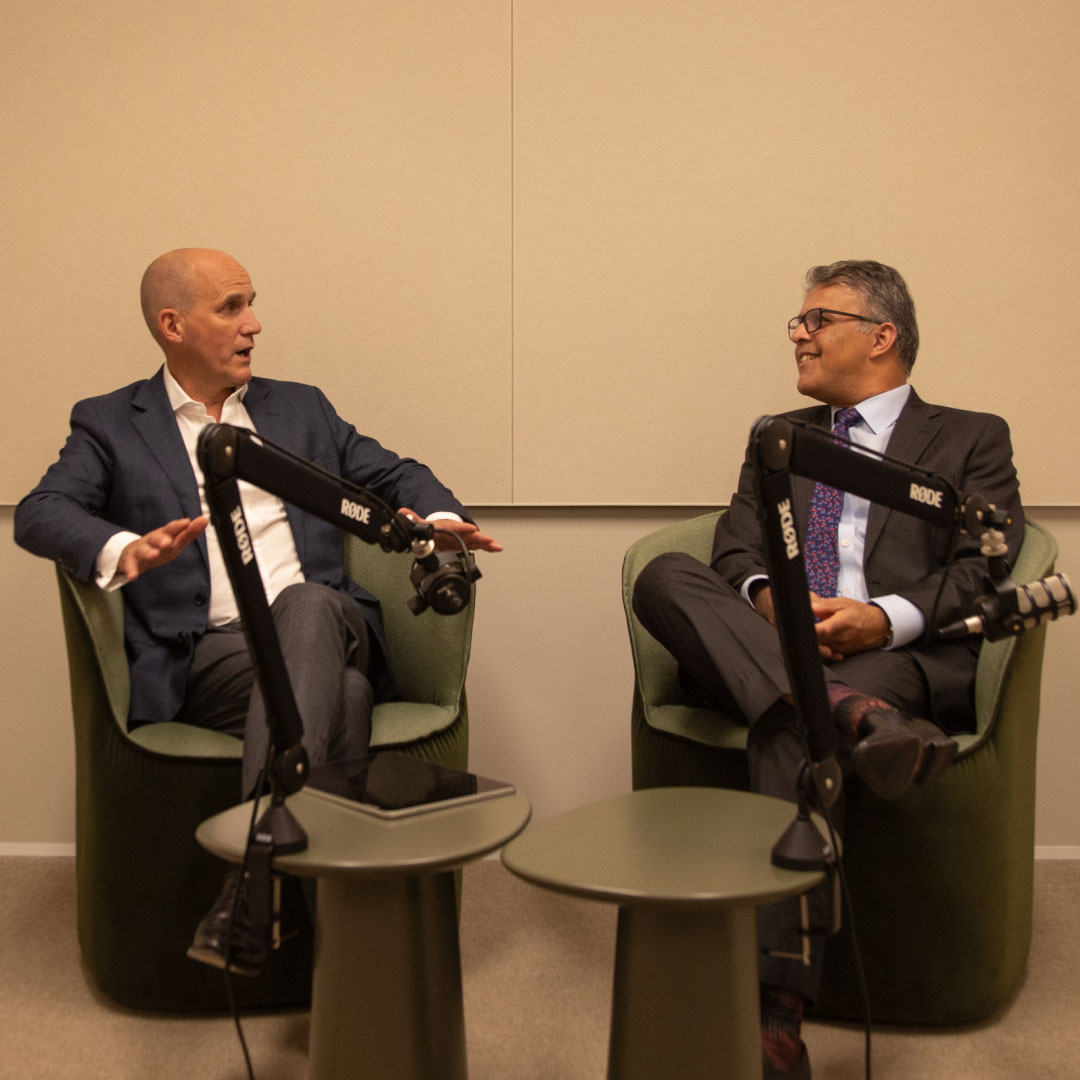
To kick us off, I'm joined by Mirvac's Campbell Hanan. Thanks Campbell for coming on the show.
Campbell Hanan
Thanks Kathryn.
Kathryn House
So, a big opening question, but I'd love to hear where you see the best property market opportunities in 2026.
Campbell Hanan
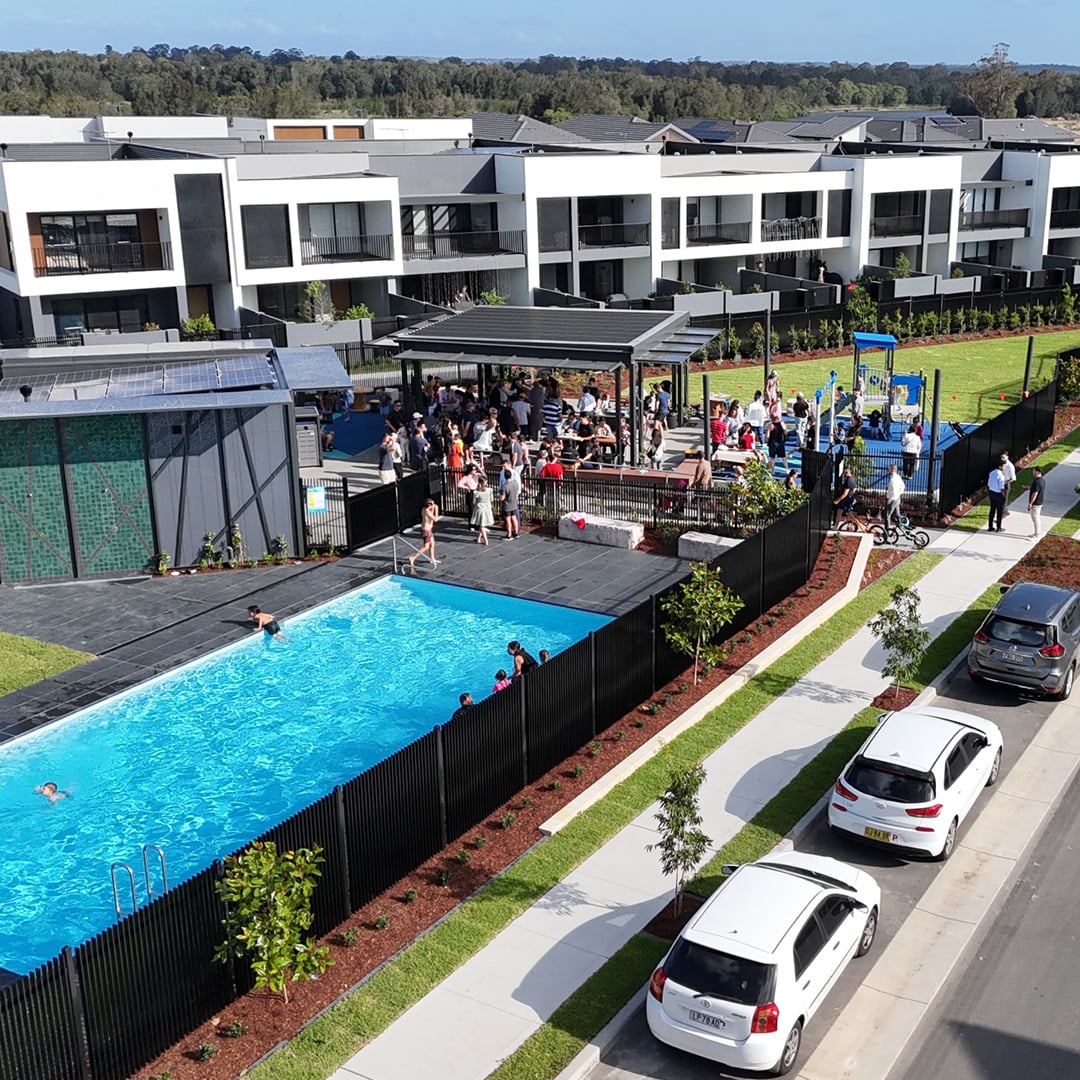
Thats a bit of a tough one. I think we're moving into quite a different real estate environment than what we've seen for at least the last 15 years, where I think for the first time in a long time, we're not going to get a lot of free kicks from interest rates and bonds to help in thematic investing. And it feels to me like we're moving into one of those markets where the quality of what you own, the location it sits in is, is going to dominate the return profile. And ultimately, when we look at real estate opportunities from a Mirvac perspective, we're trying to find those opportunities where we see the best opportunities for inflation in rent. And they are now becoming very specific around location and quality. For us, we're very focused on land lease. In other parts of the world, it's known as manufactured housing, and this has got a whole lot of thematics supporting it. And the tailwinds of population growth, the tailwinds of huge issues in affordability, are making this particular asset class quite interesting because it separates the ownership of the house from the ownership of land, where the developers get a development profit on the sale of a house, but they get an ongoing rental stream once the house is built. So in Australia it's an over 55s product. We bought an interest in the fourth largest player a few years ago called Serenitas and we're consistently seeing mid teen return profiles coming from this asset class. The other area that we're pretty focused on is build to rent. And again using some of those similar thematics, where we have first home buyers hitting their late 30s, where you have a third of the population now renting, where affordability is becoming a huge challenge. We think anything which has a rental side to it makes really interesting investing opportunities. And when I look at the vacancy sitting across the major markets of Australia, you're talking about 1.3% vacancy in Sydney, Melbourne, Brisbane, which is again very attractive for rent growth.
Kathryn House
I've heard you talk about rentvesting?
Campbell Hanan
Yes, rentvesting. And rentvesting is essentially, we've seen this quite a bit in the last six to 12 months, where people will rent close to where they work. And for us that's our build to rent assets in close proximity to CBDs. But then they're investing where they can afford to invest so that they feel like they're entering the real estate markets, but they don't necessarily have to live where they're investing. So it's that first step into the market.
Kathryn House
So I'm also curious to get your views on what has the potential to be a game changer for the industry in the next 12 months. Or on the flip side, one of the industry's biggest challenges.
Campbell Hanan
Look, I think one of the really interesting opportunities, and this is very sector wide, is whether we can see some changes in ASIC legislation around RG97 for our superannuation funds. So RG97 is specific to superannuation funds and essentially measures the fees or asks each super fund to report the fees that they pay, so that members, when they're making investing decisions, get a sense of how expensive, expensive it is for some of these investment asset classes. One of the challenges for super funds when it comes to real estate is that stamp duty under the definition is considered a fee rather than being considered a tax. And so a lot of the fee budget is eaten through superannuation, which impacts the ability of super funds to invest in Australia.
Kathryn House
And so they're more likely to invest in living overseas.
Campbell Hanan
Well, just more likely to invest overseas, full stop. And I think that at a time where capital is really important in all asset classes, it's just important that we have a legislative and regulatory setting which allows Australian super funds to participate in the Australian real estate sector.
Kathryn House
So with the industry also focused on areas that are ripe for transformation, I'd love to get your thoughts on where you see any transformational opportunities.
Campbell Hanan
Yeah, look, I think the areas that again, we are most focused on from a transformational perspective is the cost of construction. So one of the challenges we face in the last three or four years is we had this extraordinary inflation in the cost of building things. And really, when you take a step back, coming out of COVID we had an extraordinarily significant infrastructure spend by governments at state and federal levels, at exactly the same time that we had energy transition underway. At exactly the same time we had this huge take up of data centres and everything to do with AI, at exactly the same time that we had a need for housing. And so you have four very big drivers of demand for construction activities and just not enough supply of labour. So the consequence of that is we saw very significant inflation in the cost of building around the country. And that's made it now very, very difficult for feasibilities of any kind to stack up. And it really doesn't matter what you're building, whether it's industrial, office, retail, build to rent, anything, we're now all navigating what returns we need when the cost to build is significantly higher. So one of the real areas that we've been focused on is how do we improve the productivity of construction? How do we think about innovation, particularly in modular construction, driving more consistency in designs and standardisation, really leaning into productivity, and all of those things. So all of those have been a really important opportunity and potentially a transformation event for the industry if we can crack the code on building more productively than we have in the last three or four years.
Kathryn House
Absolutely. Because I think everyone is so focused on leaning into solving the housing crisis, but hard to do that when construction costs are where they're at.
Campbell Hanan
Yeah, that's exactly right. And I think that the mentality sort of works a little bit like this. That if you decide that you can no longer afford to buy a house, but you'd like to buy an apartment, but the cost of buying a new apartment is 20% more than the cost of an existing apartment, the reality is that you'll buy an existing apartment before you buy the new apartment off-the-plan. And so the supply side ends up being constrained, not because there's any mechanics happening other than the fact that affordability has become a challenge. And particularly when you measure that affordability against an existing asset of a similar type down the road, maybe a few years older.
Kathryn House
Yes. So to close us out, what market trend or issue has been building momentum that you think everyone will be talking about in 2026?
Campbell Hanan
For us, it's probably modular construction. So, right now we have in one of our projects in Western Sydney, we have a full volumetric house being built. This house was built fully completed in a factory setting. It's in five different pods. Those pods arrived by truck to site. And the first two days we've actually put the structure together. And we were talking about something where the kitchens, bathrooms, everything is finished. The only thing we need to do is add furniture. And we think this whole prefab sector is just ripe for innovation and change, because this is going to be a great way for us to tackle the cost of inflation in construction.
Kathryn House
And I was talking to Stuart Penklis, who heads your development team, and he was saying that often people can't even pick it and think that the modular is, you know, even a higher quality than not building modular.
Campbell Hanan
Well, look, I think that's the test. You know, modular houses, and depending on where they're made, they're built in a factory setting where you've got tolerances which are down to 0.1 of a millimetre. And so you have an extraordinary quality setting, putting them together and then how it sort of looks as a finished product. There's a whole lot of design element for that. And Mirvac, as a business with a deep and rich history in design, has certainly spent a huge amount of time trying to get these designs right. And I guess you're 100% right. With this new one that we're building out in Western Sydney, it'll be fascinating to see if people can actually pick that it's a modular house or not.
Kathryn House
Absolutely. Well, Campbell, thank you so much for joining Talking Property. I really enjoyed the chat. I'm looking forward to seeing some of your new projects coming to fruition. And I saw that you were recently named preferred developer for the Blackwater Bay site next to the Sydney Fish Market. So that's going to be an exciting one.
Campbell Hanan
It sure is. And look, thanks Kathryn for your time. I appreciate it.
Kathryn House
Thank you. Good luck for 2026.
Kathryn House
I'm now joined by Aware Super's Senior Portfolio Manager, Property Investments, Anjana Moran. Welcome to the show, Anjana.
Anjana Moran
Hi, Kathryn, thanks for having me today.
Kathryn House
So I've just spoken to Campbell Hanan about where Mirvac sees the best property market opportunities in 2026. So I'm really interested to hear what Aware Super has in its sights.
Anjana Moran
Yeah, great question. You know, we are very much long-term investors and so I'm always loathe to put out a trend forecast or anything like that, but I think that when we look at long-term demographic tailwinds and demand and supply, which both of those really underpin our strategy and the sectors that we focus on, unsurprisingly, the two sort of categories are beds and sheds. But more specifically, I think within that we see really great opportunity in seniors housing or retirement living. That's a sector that we currently have quite a bit of exposure to and we continue to have conviction in those demographic tailwinds. So when we think about developed countries around the world, the aging population, fun fact is that 2026 actually marks the year that the oldest baby boomers turn 80. So you know, don't you sometimes feel like it's still 1995 and it's a bit of a shock to the system. So I think for us, you know, that's a sector that we continue to see opportunity in. It's a resilient sector. It's not one for us that has been booms and busts, but just a really steady performer since we first invested in 2017. And now we have two platforms in Australia that we invest in, Keyton and Oaktree, and we're looking potentially opportunities offshore in that space as well.
Kathryn House
It's interesting you talk on that offshore piece because Aware's been looking at diversifying for some time now. You opened your first London office in 2023. You recently did a big industrial deal in the US which fits with your beds and sheds theme. So maybe it's a good segue to talk about how you view domestic versus offshore investment.
Anjana Moran
Yeah, absolutely. So I've been at Aware for 11 years and when I first started we really just had a domestic portfolio and I think when I started we were maybe $40 billion as the fund as a whole and today we are over $200 billion. So I think as we have grown and we've got more scale, we've become more active investors. We've definitely seen the benefits of diversifying beyond our home market. So I think today we're about 65% in Australia and the remainder offshore. I think for us it's a diversification story. So it is ensuring that we've got a well balanced portfolio, hence, you know, moving a bit more of our allocation to the UK and Europe. Really that started as we had set up an office there and had people on the ground, which has given us really great access to local deal flow. And similarly now, you know, we're looking at, we've made some initial steps back into the US with the recent industrial joint venture that we did with Goodman. We've got a multifamily joint venture as well with lendlease that we've been in for about six or seven years. I think the other opportunity for us as we look offshore is getting access to sectors that might be classified as alternatives in Australia, but they're actually a bit more established and mature offshore and so we're able to access sectors that would be a bit more fragmented here or maybe a little bit less institutional quality. So I'm thinking of things like, you know, multifamily. We have been invested in resi in Australia for a number of years, but we were able to sort of take stakes in more established multifamily operators in Spain, in the UK, in the US, where this sector has been around for a lot longer and as we think about other quote unquote alternative sectors, you know, things like self storage, that's a sector that's quite fragmented in Australia and beyond one or two big players. It's very much a mum and dad almost operation of, you know, owning individual assets and would require a bit of a roll up to get to scale. And so that's something interesting for us as we look to the US in particular where there's just more flavours of those sectors and even in living, you know, we focus very much in Australia on that classic multifamily, you know, high density apartment living. In the US there's so many more variations. So there's middle income housing, there is single family rental, which is effectively, you know, standalone homes or townhouses developed around a master planned community. So it's just providing that diversification and, you know, the opportunity to grow into new markets as the fund grows.
Kathryn House
Yes, well, I was reading something that Aware was potentially looking at having 50 to 60% of its portfolio offshore within five years. So it's going to be quite an exciting period.
Anjana Moran
Yeah, definitely. And I think that's right in terms of that target goal. I will say, however, as our fund is growing, we still see opportunities to deploy in Australia and that will always be our home market and one where we think that we have a competitive advantage in terms of our profile in the market and ability to sort of access really interesting opportunities. But yeah, it's definitely going to be balanced with looking externally as well. The other area I did not mention was also developed Asia. That's so close to us geographically, but we just have no exposure. And again, countries like Japan just provide really great diversification for what we've got already in the portfolio.
Kathryn House
So it's good that we've talked about the opportunities, but it's always interesting to look at the challenges as well. Or, alternatively, what you might think has the potential to be an industry game changer. So what do you think? Challenges versus game changers?
Anjana Moran
Yeah, so I think this fits into both categories and it's probably not going to be a controversial response, but I think AI is an obvious one for us and it's twofold. You know, I think even in our own work and we see it being used, you know, in other applications, but just creating those efficiencies and productivity gains is going to be a game changer for us, not just over next year, but over the long term. But I think with that it also poses questions around the nature of the workforce. So when we've had, you know, in prior generations, you know, going through industrial revolution and changes in the way that we use technology and automation, it's meant there's increased productivity, but there's also been sort of new jobs created out of that. I guess the question for us, and it's still to sort of, it's got a little way to go, is what does that mean for the workforce going forward? Does it mean that you can have the same number of people doing more and does it mean there's going to be again new jobs created or is it just is actually going to have a bit more of a meaningful impact in terms of the actual, you know, rate of employment which then as you look at those impacts on property, a natural question to ask is around office space and what does that mean for companies in terms of needing a bigger footprint or you know, maybe cutting back on space. And then I think it then ties into just a general trend in the market around bifurcation. So I think over the past 10 years, I think if you've been in the right sector and you've made those right sector calls, that's kind of contributed a lot to outperformance or underperformance. But now I just think it's a lot more granular and it's a stock picker market where being in the right office, having the right amenities, being in the right location and just having the right design is going to differentiate between the outperformers and the underperformers. So I think AI is a big one. The other aspect of AI as well is, as we think about changes to consumer behavior as well. So obviously we've got increased online shopping that's been taking place. But if we think about what are the drivers of industrial, for example, one of them is around consumption and the demand for products and people wanting to buy more and have it sooner. If we start to think about those flow on impacts around employment with AI, and you start to think, well, is that kind of middle income that's been the engine of consumption, is that going to slow down as well? So these are big questions and I don't have the answers but definitely the things that we think about. But I think what we take away from all of that kind of uncertainty is going back to, you know, you want to be in the best-in-class assets within a sector so the ones that you think will be more resilient. And so in industrial it's being in those buildings that have higher clear heights, that have the power capacity to take on automation, that are in infill markets close to consumers. So those are the sort of things that we think about.
Kathryn House
And speaking about that retail angle, you have been buying retail, I saw that you took a stake in Home HQ on Sydney's lower North Shore. How does that retail piece fit into your strategy?
Anjana Moran
Yeah, I mean retail's been a really interesting one. I think that we pivoted out of retail as in, you know, your sort of traditional shopping centre which we had invested through funds fortunately just sort of prior to Covid. So relative to the benchmark and some of our peers we were underweight. But I think, again,for the right type of retail we see an opportunity there and so Artarmon is you know, large format retail. It's in a catchment which is sort of very strong from a socioeconomic perspective. There isn't a lot of other competing assets for people to shop at. There's also an opportunity there to improve things on the asset management front. And so that's an interesting example of, you know, where we would go back into retail. And that's alongside Barings, who have been a long term partner of ours, and through Aware Real Estate, which is a direct investment platform that we set up about four years ago. The other interesting way for us to access retail is through mixed-use developments. And that's something that I think will be more prevalent. It's almost like there's going to be a blurring of the lines we feel around those traditional sectors because if you think about getting people back to the office, for example, you want to have those amenities, you want to have the retail, the food and beverage, potentially a gym, maybe a creiche. And so the other opportunity that we've recently closed on with Aware Real Estate is a mixed-use precinct in Brisbane. So that's got office, that's got retail and it's also actually got a cinema currently. So I think we'll increasingly see those types of opportunities and even in industrial, because we're seeing increasingly that it's not just a shed that people go, okay, well we want to consolidate, we want to have an office there, not just our kind of last mile or sorting facilities. So that's something that, you know, I think interests us is more of that sort of mixed-use precinct.
Kathryn House
So it's a live work and play.
Anjana Moran
Yeah, exactly, yeah.
Kathryn House
So maybe final thoughts. Do you think there's a market trend or issue that everyone's going to be talking about in the next 12 months?
Anjana Moran
I think what's been interesting is real estate has had a tough couple of years and obviously off the back of increased interest rates, the difficulty in making developments stack up from a feasibility perspective. And so there's all these sort of latent positivity about, you know, these next couple of years are going to be the vintage for real estate. But I think it's still been a bit slow in terms of the transaction activity. So that's going to be an interesting watch point for us over the next year. And I think the other aspect is just from a macro perspective. There was an expectation probably even six months ago around, okay, we're going to be coming into an easing interest rate cycle. But we're seeing around the world, you know, inflation is printing at very healthy numbers, and so I think we're not going to bank on lower interest rates at all when we're underwriting things. So I think that that geopolitical, macro contribution is going to be elevated for a period of time. And so that's going to be an interesting period to invest in because from a fundamentals perspective, we feel like, okay, there's been a rebasing of valuations and we're sort of like, yep, we're ready to go. But then, you know, when you're underwriting opportunities, you definitely want to be on the conservative side around the macro. So I think that's going to be the main thing for us to watch over the year.
Kathryn House
I hope you enjoyed part one of our Property Predictions series to kick off 2026. If you like the show and want to check out more, you can follow Talking Property wherever you get your podcasts. That way you won't miss part two of our Prediction series featuring Brookfield's Ruban Kaneshamoorthy and Centuria Capital's Jason Huljich. Until next time.