Kathryn House
Hello, and welcome to Talking Property with CBRE. I'm Kathryn House, your podcast host, and in this latest episode, we're going to be looking at one of the unsung heroes driving productivity in offices. It's seen as a given that great tech and flexibility are central to a highly productive workplace. But could art be a powerful tool that's sometimes overlooked? A growing body of research points to the material impact that art can have on wellbeing, creativity, and even output, with one recent UK university study highlighting productivity gains of up to 32% from an art enriched workplace.
Shehan Wijayawardana
Clients commenting on it all the time. It's a real conversation starter, and it helps differentiate the experience from the moment they arrive. Clients come into our space for a variety of different reasons and allowing you to break those emotions up and discussing art really helps drive a further connection.
Kathryn House
That's Shehan Wijayawardana, National Operations Project Manager at global law firm Mallesons. Shehan recently oversaw a major transformation of Mallesons' Governor Phillip Tower headquarters in Sydney, which includes numerous artworks.
Emilya Colliver
Looking at something quite beautiful and thoughtful, you know, provokes and resets the mind, and it really does stimulate imagination as well. When people are surrounded by creative thinking, they think more creatively as well.
Kathryn House
That's Art Pharmacy founder Emilya Colliver, who has worked with leading corporates such as Deloitte, Mirvac, Charter Hall, and most recently, Mallesons, to transform their workspaces using art as a strategic tool for culture, branding, and talent attraction.
Jenny Liu
If people are going to make the commute, the office has to earn it. It really needs to feel like a place you genuinely want to be and not somewhere you're obligated to be, and art can play a big role here. You know, it can make the space feel human and distinctive.
Kathryn House
And that's Jenny Liu, a Director in CBRE's Workplace Consulting team. Jenny led the change management program for the Mallesons' project and is at the forefront when it comes to advising corporates on engaging workplaces. I hope you enjoy our conversation. So Shehan, welcome to Talking Property. You recently took me on a tour of your new offices, and both the art and the harbour views were stunning.
Shehan Wijayawardana
Thanks, Kathryn. It's great to be here. The harbour helps, of course, and I guess was one of the main reasons why we decided to to stay put. We've been in the building for thirty years, and Mallesons has a close relationship with this building. So what's really struck me once we moved in was how much the space just feels alive and welcoming. The art gives the office a sense of energy and identity that you don't always get in the corporate workplace. It's not just something you walk past anymore. It actually shapes how people experience the space and how you feel when they come into our office.
Kathryn House
Yeah. I can imagine. It was very impressive when you took me around. Emilya, thank you so much also for joining today. I must say, I love your email sign off in which you describe yourself as Chief Amazement Officer and the Art Empress of Light Bulb Moments.
Emilya Colliver
Yes. I've always got lots of ideas all the time. So it's, and it's a good opener, right, for people to think more creatively in their life.
Kathryn House
And Jenny, welcome back to the show. I always enjoy getting your workplace perspectives.
Jenny Liu
Thanks, Kathryn. Great to be back.
Kathryn House
Shehan, so if I could start with you. If we go back, can you tell me what inspired Mallesons to use art as such a central feature of your new offices? From the conversation we had on our tour, the decision seemed to be made more toward the back end of the project?
Shehan Wijayawardana
Yep. That's right. It definitely wasn't art for art's sake. The project was always about creating a workplace that reflected who we are as a firm and where we were heading. That was paramount in our decision making, especially during the design process. You're right that art came into a sharper focus later in the project once the base design was locked in. At that point, we started asking, what's missing? What's the deciding factor? And what's really gonna make us stand out as Mallesons and as an Australian firm. And the answer was personality in storytelling. Art became the way we express our culture, our values, and our connection to place, particularly here in Sydney and nationally.
Kathryn House
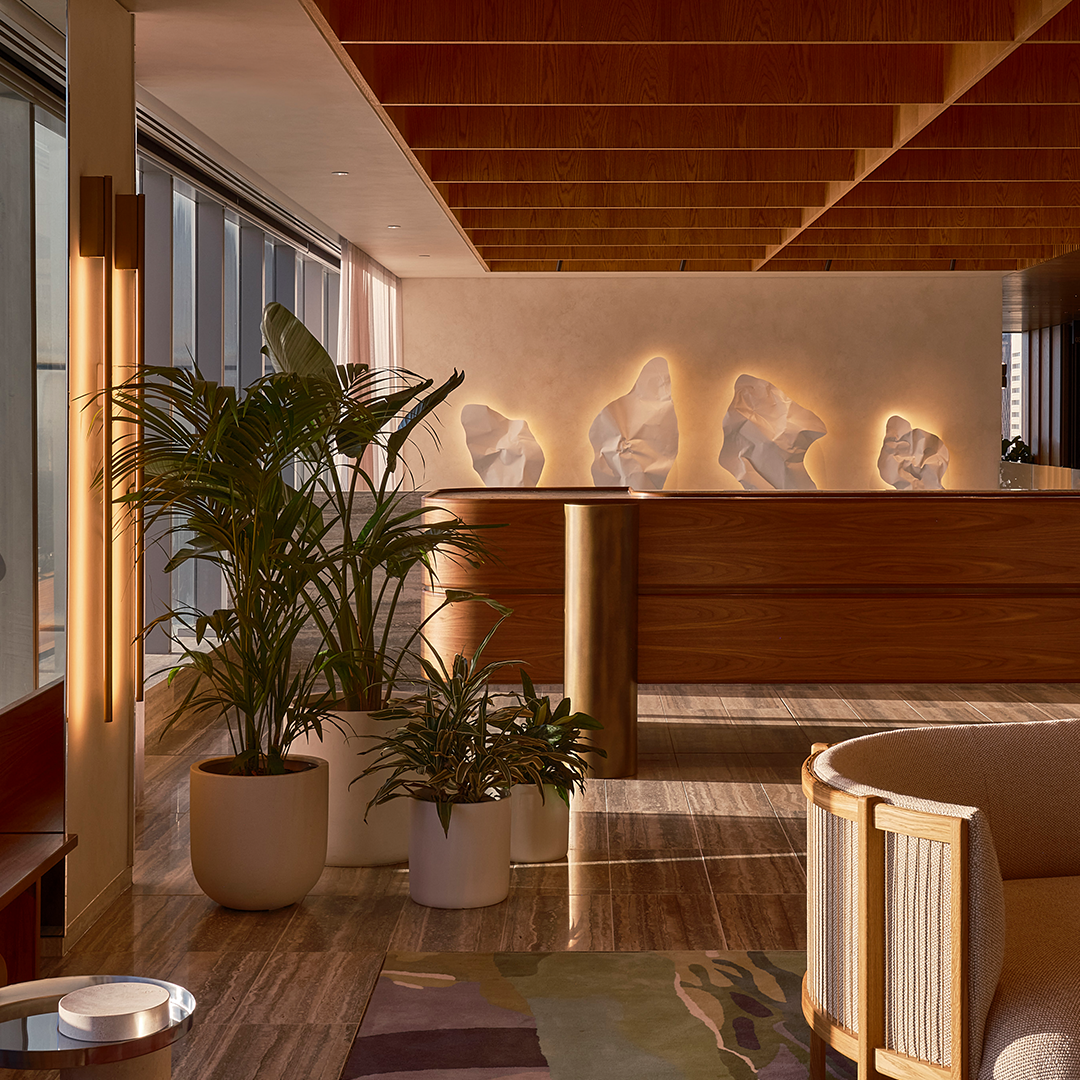
Can you give our listeners a feel for some of the artworks? I know one that really stood out to me was the large scale void installation behind your reception desk, and there seems to also be quite a strong focus on local artists and First Nations representation.
Shehan Wijayawardana
Yeah. That's right. One of the really powerful things about the collection is its range. Obviously, thanks to Art Pharmacy and Emilya and her team for, really canvassing and broadening their scope to look outside of just the standard. The void installation by Jonathan Ben Tovim behind reception is a great example. It immediately sets the tone the moment you arrive and invites the connection and conversation. And that's actually one of the discussions had with our partners in our art group, was having a piece that you could sit and look at for a while and start to discuss a bit more about it. And the materiality was a key factor in terms of our principles and designs. So that foyer piece by Jonathan really helped. There was also a very deliberate focus on local artists and First Nation representation. That wasn't just about aesthetics or ticking a box. These works tell stories. They connect people to country and contemporary Australia. And they give the space a depth that goes well beyond the traditional corporate fit out.
Kathryn House
Emilya, why is, say, diversity, which Shehan's been talking about and that storytelling piece so important in a workplace context?
Emilya Colliver
Yes. This is a great question. I think there's definitely a mood that. I mean, we've been doing this for for a very long time, but I think probably in the last, you know, maybe three to four years, I've seen a real drive towards that. In Australia, it's such a diverse culture, culturally, linguistically diverse, LGBTQI. I mean, you walk down the street, it's if you look at the demographics of each location, it's so different, and I really think the art represents that as well. I think a lot of the time, if you are just using artists over and over again, it's yet quite homogenised. So really thinking about when when we put a collection together, especially like Mallesons, which was such an honour to work with the team there. We've got some fond memories of those, boardroom meetings. I'm sure you do as well, Shehan. And it was it was a really beautiful story of how this came together, all about the storytelling, the layering of the values of their organisation. And that's how we start that. Like, what is the values of your organisation? And then really think about that and then expand the artwork from that. I think it's in our DNA as as an art consultancy to do that. We don't really try and use the same artist over and over again. And if we do, we will say to the client, look. We've used them in this project just so you're aware of that as well. So particularly that Jonathan Ben Tovim piece was just such a standout, which actually came back to sustainability, which is also part of, Mallesons and and what they do.
Kathryn House
And you mention the boardroom conversations. Probably a great segue to you again, Shehan. Like, can you talk us through how you brought your partners into this whole art selection journey, and how involved were they in making those choices?
Shehan Wijayawardana
Very involved, in a good way. It's a collegiate effort and a group effort. There there really isn't any egos in play, and it's very much a guided journey rather than a free for all. From the onset, we were conscious that this needed to feel authentic to the partnership and the firm, not something that was simply imposed at the end of the project. We brought on partners, but also senior associates and our brand manager. So it was a larger group than just what you would think is just a partnership. And it's sharing their curatorial intent, the stories behind the works, and how the collection tied back to our culture and firm's identity. So, you know, the context was really important. And once they understood the why, the conversation shifted from not just about just their taste, but the impact it has to our people and our clients as well.
Kathryn House
Did that whole idea of taste lead to a lot of debates through the process?
Shehan Wijayawardana
Absolutely. And, you know, touching back on it is that collegiate approach, you know, respecting each other's opinions, hearing the whys behind their reasoning in of their selections, and that back and forth that Emilya and the team, sat in countless meetings on really produced the results we have now. And, you know, in shortlisting pieces and providing feedback really was a great process run by her team.
Kathryn House
Emilya, when you're talking about your team, it'd be great to just take a little step back. And if you could talk to us about the the genesis of Art Pharmacy and, I guess, the shift that you've seen over time from art being, you know, that nice to have to being this sort of strategic workplace infrastructure.
Emilya Colliver
Yes. So I suppose the genesis of Art Pharmacy has really been okay, we've been around for about 14 years now. And I worked my previous career in London was working for big galleries, so where I was actually waiting for people to turn up to purchase art. I worked for the museum for a while and, Chinese antique dealer. Coming back to Australia, I'd wanted to move actually back into the museums like an institution. But, it was actually really hard for me to, you know, get my foot in the door. So I sort of started and really grew what we were sort of doing because I thought, well, actually, I don't want to just see art in the galleries. I want to see art in the everyday. So that's been really, you know, our mission and really thinking about the artworks actually like in this, in Mallesons, for instance, like, the clients that come through there that are, you know, that are making a lot of decisions. The whole idea of artists maybe to soften that to really bring a surprise and delight and different references as well from the background, which I really love when I put together, like a corporate art collection. But there is a real shift I'm finding at the moment from having that nice to have artwork. It's really, you know, that whole idea of storytelling and who you are as an organisation. I think this art collection at Malleson really does focus on their firm and and how they selected the artwork. It was just such a beautiful process.
Kathryn House
Do you typically get much boardroom pushback when you're talking about art? Because I can imagine that there would be certain people in the discussion who are, you know, lovers of art and others who aren't. And how much debate do you get? How much pushback do you get?
Emilya Colliver
Well, that's a great question. And so the great thing about when we worked with Mallesons, there was, within the committee, they really knew their art and their history and their art collector, so it was really great to work with. When you have people that really understand art, it's amazing because you can start pushing back with them. If you have a low tolerance of art, it's actually, it's not harder, but it's you've got to try and find their taste and actually what they want. You actually have to give them a lot more choice, I guess, in a way. Because if you have like, some knowledge of art, it does sort of help understand the direction that you're going in and you can go on a journey. So it really depends on what who you're working with at the time, but I think it's healthy to push back. But it's most always about return on investment. But I think, you know, the answer really is, it's like good lighting or the chairs, how you measure it. I think that having artwork in these offices, it does soften it. And there are studies that that have come out around this. But, again, it really depends on the company and who you're working with. And to be honest with you, I always ask the CEOs or the managing directors. Whenever I work with anyone at a certain level, I say, tell me about your CEO. Do they buy art? Do they buy art for their home? And if they say no, then I sort of have an understanding because it really does start from the top. It has to be a value for an organisation to actually include art. And you can see that when sometimes someone does a fit out and then they buy a couple of pieces and they just put the artwork in there. Like, with the collection that we've done with Mallesons, it's been really thought through, very purposeful. We had a really great narrative. We're all on the same page and, you know, we have essentially birthed this amazing art collection that is going to stand the test of time for years to come.
Kathryn House
I was about to ask Jenny too, because you talk about ROI, and that is, you know, I'm sure the first question that you often get asked, Jenny, like, if I'm going to put some of my budget towards art, what return am I going to get on that? And maybe some of it is not as obvious as people might think. I mean, what are the conversations you're having with occupiers?
Jenny Liu
I think these days, the conversation has really shifted. It's moving away from, you know, should we have art to how do we use it in a way that actually really means something to the organisation. And it usually comes back to three drivers, culture and identity, talent attraction and retention, and also the overall workplace experience and what we're trying to achieve. Because people want a place they genuinely actually choose to come to, not because, you know, it's a place they have to go to. On return on investment, people ask all the time, you know, but you rarely measure art in a neat little box. We look at a mix of engagement, utilisation, dwell time. You know, how long are people spending looking at the art, but also sentiment. And I'd say art is a multiplier. It can really lift the impact of great design, hospitality, and technology. So instead of trying to isolate the art, I think we need to watch the behaviour change. You know, are people choosing to stay longer? Are they proud to bring clients and family members in? You know, do they have a real sense of pride in their workplace when people come into it?
Kathryn House
Shehan, it's still early days, I guess, for Mallesons, but can you measure the ROI as yet? What's the feedback you're getting from your people? And I think when you gave me that tour, you also mentioned the client reaction has been quite strong.
Shehan Wijayawardana
Absolutely. It's still early days. We're not talking about hard productivity metrics yet, but, you know, qualitative feedback has been extremely positive. Staff, you know, walking out of floors for the first time, even now, talking about the office, how it's feeling, more inspiring and more human, it plays a factor. And clients commenting on it all the time. It's a real conversation starter. It helps differentiate experience from the moment they arrive. Clients come into our space for a variety of different reasons, and allowing you to break those emotions up and discussing art really helps drive a further connection. We are still at hospitality, and we pride ourselves in hospitality. And some of those nighttime events or lunchtime events that we have, the art helps break the ice sometimes, between clients and us. So there's no real metrics yet, but the feedback has been extremely positive.
Kathryn House
And I really liked that you mentioned that certain clients are requesting certain meeting rooms when they come in, which is really interesting that they're having such a response to a certain room.
Shehan Wijaywardana
Absolutely. I think that's to do with, you know, all testament too, you know, Cox and the design team there of creating those unique experiences to our clients, and, you know, pairing that with the art and the selection of art in those rooms softens experience, provides another talking point. The art was also selected really for, in some of the meeting rooms, because of our video conferencing and sometimes recordings in meeting rooms. And what we were trying to avoid was recording a video with just a blank wall behind you. It's having a meeting with a piece of art that, again, softens the space, but also can be a talking point. And I think that's done really effectively.
Kathryn House
Emilya, in my opener, I mentioned studies which have highlighted the impact of art on wellbeing, creativity, and productivity. Why do you think art has that impact?
Emilya Colliver
I think the factors of just what Shehan was just saying about that, just softening. I think there's a lot of hard conversations they're having out in the news at the moment, and I think having art does soften that. The idea of wellbeing, creativity, and, you know, the idea of productivity is that softening, but it really gives your brain that idea to stimulate. And it's not when you look at a painting, a picture, it tells a thousand words and that's the same thing. Some people love art, some people don't, but I think it reduces that mental fatigue as well. And looking at something quite beautiful and thoughtful, it provokes and resets the mind. And it really does stimulate imagination as well. When people are surrounded by creative thinking, they think more creatively as well. And, you know, I find that sometimes I'm in front of my computer so often, I'm like, how do I get to this point? And actually I was like, no, let's go and make something with my hands or go to an art gallery and get inspired. Go for a walk in nature. It's the same idea. So bringing that artwork, those plants, those softer environments into the workplace actually does soften it because it's like we do work in these hard places and it's that idea of masculine environment bringing the femininity in, but I think art reminds us that problems can be solved in unexpected ways as well.
Kathryn House
So, Jenny, post COVID, there has been a really heightened focus on the workplace experience and making coming to the office worth the commute. What role do you think art plays in this and what else are clients focusing on when it comes to the workplace experience.
Jenny Liu
So I think post COVID, if people are going to make the commute, the office has to earn it. It really needs to feel like a place you genuinely want to be and not somewhere you're obligated to be, and art can play a big role here. You know, it can make the space feel human and distinctive. It signals culture, the moment you walk in. It can also create moments of surprise, give people something to talk about, and really helps the workplace feel welcoming rather than purely functional. More broadly, we're seeing organisations really think about lifting the employee experience through whether it's hospitality style amenity, great food, coffee, more sensory human centered experiences and events, and intentional programming. So the office feels really active and connected. And this is something Mallesons, I think, has done particularly well, you know, bringing all those elements together, the art, the hospitality, the design, the amenity, the programming, all working together as one coherent experience.
Kathryn House
Shehan, can you talk us through what you have done on that front? Some of those levers. I know when you were showing me around, it was things like your cafe and free dinners. You know, what's been working well for you?
Shehan Wijawardana
Yeah. Definitely. You know, mirroring Jenny's comments, the people are far more intentional now when they do come into the office, and art does play a large role. I do remember when we opened our cafe, we're still working through finalising one last piece of art and framing, and it was missing at the time on day one. But come day two and three, when we did install that last artwork in the cafe, the reactions was, oh, that's what it was missing. There was something missing on that wall, and now it just really fits in. And, you know, just hearing those comments was great, but art creates those moments of pause and connection, especially in our cafe. And talking about levers, it really is, our cafe was one of our main drivers. We did have a internal cafe, which was also open to clients, but the connection really wasn't there. And we knew the cafe was a heart of our organisation, our firm in Sydney. So doubling the size of the cafe, providing additional, you know, commercial kitchen features and food offerings really has driven that connection. It really is a focus for our staff, but if a client did want to walk down the stairs and come down, we'd be more than happy to accommodate them as well. So it's been really positive.
Kathryn House
Emilya, there's been a lot of discussion about the different generations in the workplace, and I think this is the most generations we've ever seen working in offices at the same time. While I was researching for today's podcast, I came across an art of the workplace study in the UK and it was commissioned by a long time corporate arts patron, Brookfield Properties, and surveyed three thousand office workers. They were aged eighteen to in their sixties. What I found really interesting was the younger age bracket who were really embracing art. So 75% of the 18 to 29 year old cohort wanted to work in offices that had a lot of art, and that seems to also be reflected in the rising level of younger people buying art personally. Is this something that corporates should be factoring in, do you think, when it comes to that war for talent?
Emilya Colliver
Definitely. And, we've worked with, Deloitte for quite a few years, and this is something that they are seeing as a trend as well. So it is actually the discussion in the workplace about the younger generation, the expectation of art, plants, you know, meals as well. It's just one of those. So, I think that generation, you know, does buy art personally, and they have a visual literacy that expects their workplace to match. I suppose because, you know, the birth of Instagram and the whole idea of, lifestyle, which I suppose if you weren't on that 20 years ago, there's a different expectation now. And I can see it even with my daughter, the aesthetics that she has. It's we are living in a different world. But I think art also signifies the organisation's value. So when you walk in and I could do this all the time because I'm in a lot of corporate spaces. You can just tell if an organisation does value their workforce through their furnishings, the way that they invite you as, you know, the the hospitality. It is really now it is very competitive out there for these large organisations to keep staff because people do move around quite a lot as well. But it really does say, we invest in culture, not just the outputs, but I think art is a cultural cache of most young people these days. They go to events on the weekends. They're, you know, art events, music events. So there is a big, push for culture, and I think that's actually making its way into the workforce. And we have been doing a lot of work with CBRE, and that's not just a trend outside of actually just in the corporate spaces. A lot of international firms we're actually finding and asking for mural pieces. A lot of the international organiastions coming into Australia, they're actually asking for art.
Jenny Liu
Yeah. Emilya, that client that we're talking about, you know, they had some great ideas as well. And I think when art becomes participatory or when you involve your people in the art, so they ran some focus groups on storytelling. You know, we asked them what they wanted in the artworks, what they wanted to tell in terms of their purpose and their relationship to the community. And they had some great ideas around how they actually wanted to incorporate their customers and clients and patients into the process of creating art or representing how their patients, you know, with particular illnesses and diseases would feel during their medical sort of treatment. So really interesting ways of approaching art. And another client of ours that we work with, the technology client, you know, they integrated their families actually, just part of their family day. They gave them some patterns and things, and they contributed to, like, a mural piece, you know, within parameters. And it was really a great way just to represent the organisation.
Emilya Colliver
And it's sort of the activity, because it also stays there, and they have these memories. And I think that's a really great way of actually including art in the workplace. As long as it's done really well because it can turn, you know, you have to sort of manage that through an artist or through a space. And I've seen that, that whole idea of actually asking the actual organisation to, work together. I think that's something that we're seeing as well, going back to the organisation saying, what do you value here? Would you like to sort of be inclusive on this activity or a mural space? We've seen that as well, and it can be done really well.
Kathryn House
So, talking about murals and extending that, are there sort of any other emerging trends you're seeing, Emilya, when it comes to workplace art?
Emilya Colliver
Yes. So I think artist furniture is starting to enter the artist brief, this is in the public realm, so we do some work as public art. But, like, seating, paving, wayfinding, and design that from the outset, and architectural boundaries between artwork and the building is disappearing. So looking at the facade, screens, structural elements are more of a cultural expression rather than just actually putting an artwork there. It's actually integrated into the environment. And also the idea of handmade counter movement, like, being tactile. And I think the Malleson collection was really about materiality, and we're seeing that really move into that direction. I think with AI and technology, and if you actually wanna see the handprints, like the Sam Gold at Mallesons, this beautiful ceramic piece, you can actually see somebody's handprints in there. It's made from ceramic. It was thrown into a kiln. You know, it's the idea of the handmade, that is definitely a trend that we're seeing. Digital art on screens. So we've noticed this before. A lot of, developers will put, like, big screens in in the public realm or in spaces and actually don't think about the actual content. So we've we actually have a digital art library, Sugar Glider Digital, which really thinks about, like, digital art that rotates and responds to tell a living story by artists. I remember I saw the chameleon lizard, and it really didn't represent Australia. You really want to see Australian content. The biophilical and especially in digital is really on the rise. So the idea of calming, softer feminine spaces, because we are working in these high energy environments. So when you're looking at a screen or looking at art, you want it to sort of be soft. You don't want anything hard or sharp or makes you feel a little bit cringey. It has to be a softness. And probably the large thing is, you know, that what I mentioned before is that corporate art collection, really building intentional collections that really reflect their values and support our economies as well. So really the idea of the artist ecology, like looking after the artist. So when you come and work with us or any art consultant, you know, it's actually giving back to the artist. So thinking about even this art collection that we put together for Mallesons and others, the way that we work with our artists, it's actually going back into the artist pockets as well. So building that artist ecology, I think, is really important and a big trend for organisations.
Kathryn House
So, I might ask just two final questions. Jenny, is art becoming standard in premium offices, or will it remain a differentiator?
Jenny Liu
I think in premium offices, it's increasingly expected, but the maturity has really lifted. It's moved beyond, you know, art on the walls. The best workplaces actually treat art as part of that place making that Emilya talks about. Right? Integrated into the design narrative, the brand expression, the way finding, the overall experience of the space. I think the real differentiator is whether it genuinely means something to the people. You know, what story does it tell? How authentic does it feel to your people and place? And whether employees experience it or just walk past it. The best examples, I would say, is where we bring artists in early as we talked about, link the work back to purpose and wellbeing, and make it participatory where we can. And the reason it works is simple. You know, it gives people that break from screens that we talked about, a a break from their day to day. It really allows us to shift the headspace into curiosity and really creates those emotional anchors, you know, memory, meaning, and belonging. So for me, I think arts moved away from that nice to have extra to a real integral part of the overall workplace strategy. You know, because when people have choice, it's that human layer that really will bring them back into the office and make them want to be there.
Kathryn House
Yeah. I was saying to Shehan when he took me on our tour that he needs to get all the artists in and have a, you know, a client event so that people can actually do all that, have the storytelling element and actually meet the artists, I think that would be fabulous. And if you do that, you have to invite me.
Shehan Wijayawardana
Noted.
Kathryn House
And one final question, and this is, people say that art is subjective, potentially, Emilya, you might have a different opinion on that but, what type of art do you tend to prefer and why? Jenny, you wanted this question so I'm going to make you go first.
Jenny Liu
Personally, I'd say I gravitate towards work that's tactile and immersive. I love photography. I love culturally anchored pieces. I love art that carries a sense of history or connection to the natural world. Gosh, if I'm naming names, I like the photography of Steve McCurry. I like the immersive experiences by artists like Yayoi Kusuma, but also some of the stuff by TeamLab, I think is pretty cool.
Kathryn House
And Shehan, what about you? Do you have a favourite artist at, you probably can't say whether you have a favourite artist at Mallesons. So maybe what type of art do you prefer?
Shehan Wijayawardana
I can say a favourite artist. Actually, to be honest with the the artworks because there's a variety of artworks. One that actually surprised me was a photography piece by Tim Georgeson. You know, it's it's hard to sometimes, when you're going through this processes of reviewing art on paper and not seeing it in person, to understand the, you know, the depths and the colours behind it. But then when you when you see it in real life, you I was really stunned by how drawn to it I was. But, you know, overall, I let my wife do a lot of the art collections at home. You know, usually a smart move on my end. But, you know, I do like the immersive artworks. I do like the Teamlabs for sure. But the materiality of artwork is is something that I always get drawn to. And I know I'm wearing black today, but I I do love colour. That's kind of my key driver is when when I'm looking at art, it's it's really I get drawn to the blends of colours and something bright. And that's just me and my ADHD as well in there too.
Kathryn House
Well, I do hear that you're on the hunt for a final hot pink artwork at Mallesons.
Shehan Wijawardana
That's right.
Kathryn House
Let's see how that pans out. And, Emilya, this is probably the hardest question for you because you live this every day, but tell us your favourite art form.
Emilya Colliver
I really love ceramics just because of the direction it's going in, and I haven't got any spaces to put many 2D framed artworks up. I also do like, fabric art as well, that idea of textile art. That handmade, I think, is quite interesting and even made with, basket weaving as well.
Kathryn House
Well, thank you everyone for joining today. It was a really great to have a really different discussion. So I don't often talk about this type of thing on Talking Property, so I really enjoyed it. Thank you so much, Emilya. It was great to have you on.
Emilya Colliver
Thank you so much. And, yeah, I mean, what a great discussion today. Who doesn't love art?
Kathryn House
Yes. And, Shehan, I really enjoyed the tour the other day. The offices look amazing, and I really do think you need to do that event and invite me along.
Shehan Wijayawardana
Absolutely will do. Thank you so much for today. It's been a really good chat.
Kathryn House
And, Jenny, thank you. I love having you on the show, and, let's talk about art a little more.
Jenny Liu
Sounds good. Thanks, Kathryn. Thanks, team.
Kathryn House
Thank you to all of our listeners. It seems that art is no longer just a finishing touch. It's a tool for performance, culture, and connection in a market where offices need to offer more than just a desk. Thanks for tuning in to this latest episode of Talking Property with CBRE. If you like the show, make sure to subscribe to Talking Property on your favourite podcast platform so you don't miss any of our upcoming episodes. Until next time.