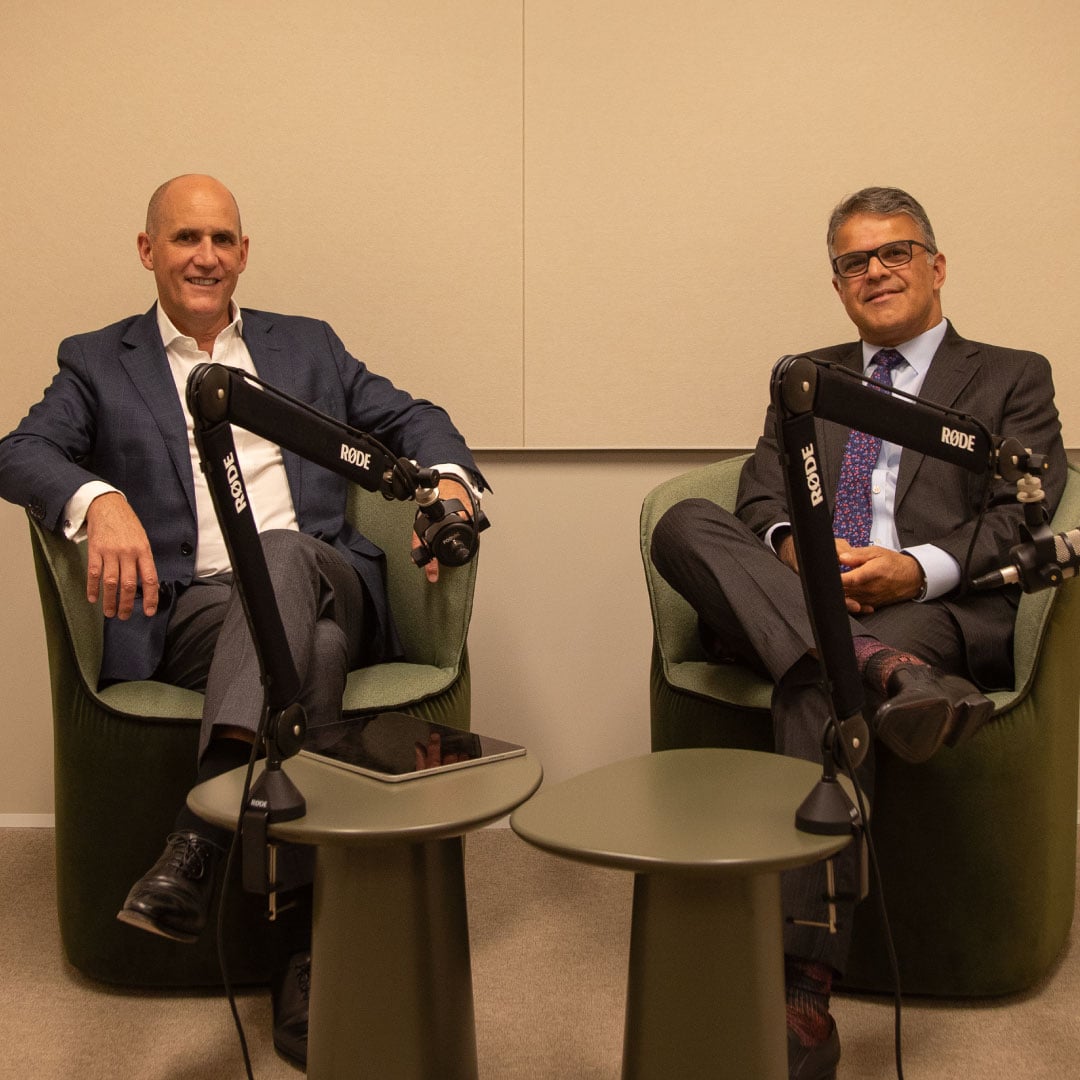
Kathryn House
Hello and welcome to Talking Property with CBRE. I'm your podcast host Kathryn House and in this latest episode I'm going to delve into what makes an office great. What are the key ingredients to ensure your people want to make the commute from home? How do you best future proof a workplace? And how do you cater to the multiple generations that are now in the workforce as Gen Zs overtake the Baby Boomers?
Michael Blitz
Before we moved in, it was being talked about as an opportunity for talent attraction. It really is a differentiator and can be a differentiator. You look at the offering to people both physically and from a hospitality perspective. It's one of the elements that's bringing people and attracting them to Ashurst. I'm really proud of that and I think it's something that we continue to focus on not just in Sydney but globally.
Kathryn House
That's Michael Blitz, the Global Director of Workplace for law firm Ashurst. Ashurst recently relocated its Sydney headquarters to 39 Martin Place, undertaking a workplace transformation over eight interconnected floors.
Jenny Liu
For Gen Z, the office needs to be more than a place to work. It really needs to be that hub for collaboration, social interaction, connection and learning. For baby boomers, it's also about productivity. A place to be seen, a place to be heard. A place that's practical and that works.
Kathryn House
And that's CBRE's Director of Workplace Consulting, Jenny Liu. I hope you enjoy our conversation around what's shaping the future of workplaces. Michael, welcome to Talking Property and great to have you on the show.
Michael Blitz
Thanks Kathryn. Nice to be here.
Kathryn House
And Jenny, I've been super keen to do a workplace episode for quite a while now, so I'm glad that we've been able to connect the dots.
Jenny Liu
Thanks Kathryn. It's great to be back.
Kathryn House
Michael, Ashurst is a leading global law firm known for outpacing change. Moving your Sydney headquarters to 39 Martin Place presented an opportunity to redefine your workplace. Perhaps first, could you take us through why you selected 39 Martin Place as your new Sydney location?
Michael Blitz
Kathryn, Ashurst or Blake Dawson Waldron, as it was when it was founded in Australia, has had a long association with Martin place for over 100 years, I think. So it was natural that we stay within the area. We occupied, 5 Martin Place and as part of any strategy to manage a pretty significant property portfolio, looked at options amongst the CBD and identified 39 Martin Place, which was a pretty big development at the time through Macquarie and Lendlease and looked at that as an opportunity to reestablish a new presence on Martin Place, but in a different way. Very, very different to 5 Martin Place. We hadn't been there for very long, but I think in that time, workplace evolved, particularly after Covid. So it was an opportunity to not start again, but redefine how we use our office in Sydney, which has led to many other things.
Kathryn House
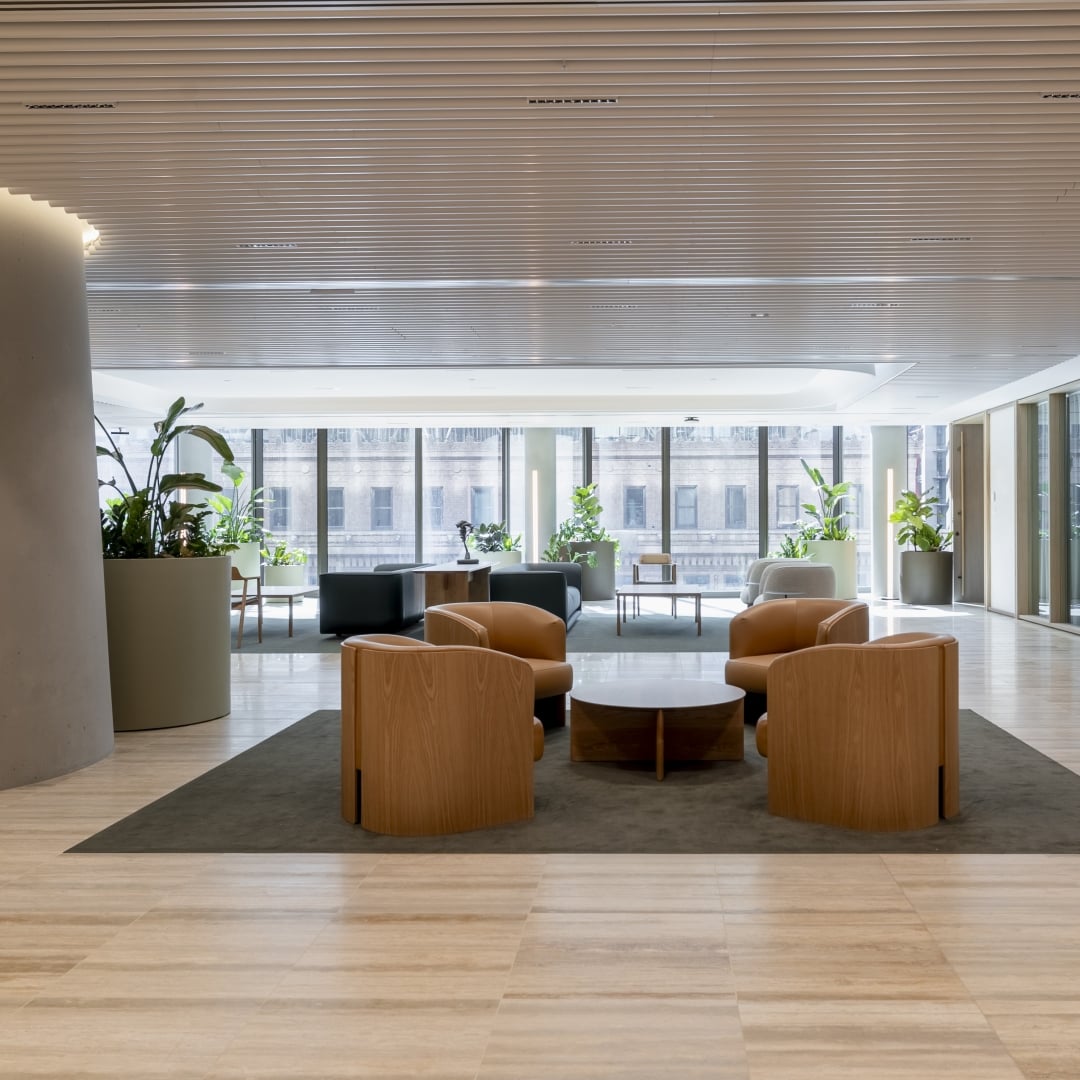
It looks fabulous. You know, it's such an open collaborative, not what you'd naturally expect from a law firm.
Michael Blitz
There are lots of traditional elements in there. But I think your comment before, what's bringing people back to the office? There are points of difference. There are points of difference from a hospitality perspective, both for our people and for our clients. But there's an awful lot of spaces in there that are still traditional sort of law firm and professional services. We've got lots of partners, lawyers and consultants that support us in Sydney, around Australia and the world. And it's fit for purpose for them as well as providing lots of opportunity for many other disciplines.
Kathryn House
So, Jenny, at what point did the CBRE team get involved and what role did you play in the transformation process?
Jenny Liu
So we commenced working with Ashurst in October 22, which was a really exciting time for them. Our role was multifaceted. We started by deeply understanding your workplace objectives, conducting in-depth interviews with leaders across the business to really understand specific opportunities and challenges. For us, we were responsible for the change management, so we crafted a really comprehensive change management strategy, and this outlined the current state versus the future state. You know, what were the gaps, and how we could bridge those gaps through targeted change management interventions. These included robust communication plans, employee engagement initiatives, training programs, leadership support and strategies to manage resistance, all underpinned by two-way communication.
Kathryn House
Michael, there's been so much talk about return to office. It still seems to be in the headlines all the time. How did this play into your planning processes and where do you think you got it right?
Michael Blitz
Return to office. Again, interesting. It is both a local and global problem for us as a law firm. For probably every organisation. We wanted to create a space to encourage people to come back. Mandates can do that. I don't think mandates personally do that as successfully as some might want. The draw card is bringing people together in spaces they feel comfortable to work and collaborate. Collaborate means different things to lots of different people. 39 Martin Place helped us do that. The change journey that Jenny spoke to, supported by our internal team, was very much about helping people understand that traditional ways of working have evolved. They evolved when everyone unfortunately went home for a decent period of time. And they have transitioned to a blend between office and home. We have that kind of guidance to our people globally. And the office is then a space that people should be encouraged to visit again willingly, but also drawn to because of connection, because of people, not because of place. The place I think is really there to help people in that environment. Supported by technology, of course. But it's spaces that really bring people together intentionally or unintentionally.
Kathryn House
So how critical was consultation during the whole process? I mean it was quite a long period of time that you were undertaking the move. What was the role that consultation played?
Michael Blitz
Consultation is a double-edged sword. You've got to be very careful about managing expectations but at the same time setting them. You've obviously got to manage time, cost and quality over such a long project. As Jenny said, CBRE's involvement started in October 2022. Ashurst's journey in Sydney for our decision commenced prior to that. So consultation is critical but it needs to be managed very, very carefully with key stakeholders, with consistent messaging as well as, I think, a degree of honesty. Not everybody was 100% comfortable and familiar with some of the themes that we were talking about. There were presentations to partners that Jenny and the team were involved in where we were helping with definitions of what does agile mean, what does hybrid mean? Some of these things are well known to us in the property industry. They are in some cases uncomfortable to others. So it's education, it's familiarisation, it's awareness. But then you hope in any project you get to excitement, and then you get to the people thinking about the opportunity that is available to them, and fingers crossed, hoping that they embrace it. A lot of our people in Sydney and with other projects we do globally really embrace it. And to your point earlier again Kathryn, there's a generational challenge where some embrace more than others. And I don't think it's really generational. I think some of its personality. Some of it is very much people driven around the work they do and thinking a new environment that changes a few things might not be able to help them as much as they were thinking it might.
Kathryn House
And some people embrace change more than others. I know I don't enjoy change, but once I get myself through that hurdle, I think that honesty piece that you mentioned is so important.
Michael Blitz
We've got partners in Sydney that have spent many, many years in enclosed spaces, be it internal or against the windows and those kinds of things. They are very much fans of and are now advocating for sort of sitting out open plan or otherwise with their teams and with their people. And we made a change around our allocation of space in Sydney like we're doing elsewhere with other projects. And it's about spaces for more people and different spaces as well as addressing the quite focused and the concentrated needs that a lawyer or a professional services consultant, those kinds of things, have.
Kathryn House
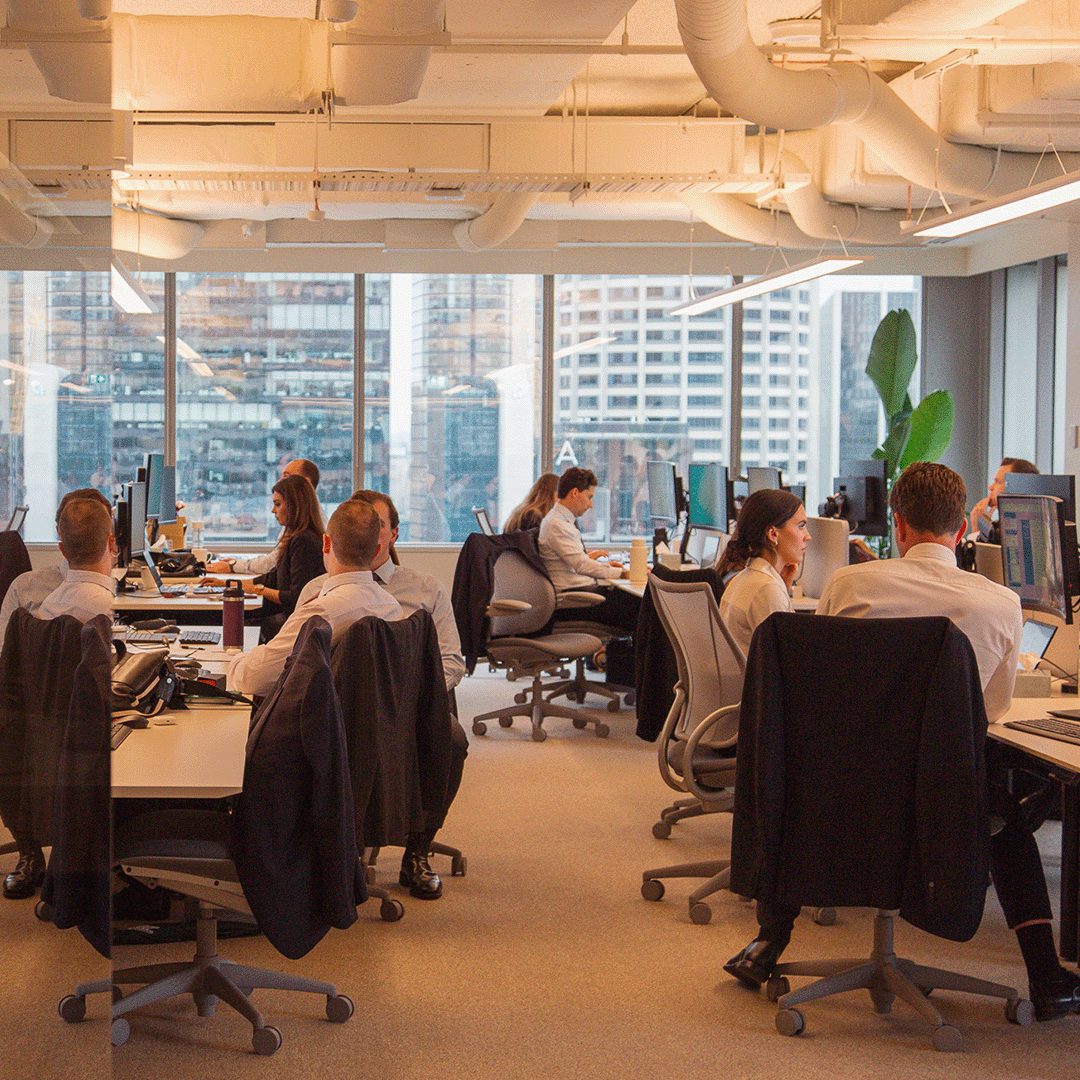
So Jenny, it was an interesting time for you because you were working on our CBRE Sydney office simultaneously. And I think one of the things that did slow our project down a little was that we decided to move our staircase. And it was a three-level staircase. We moved it right to the other side of the floor. It did hold the project up. But, you know, once we've now come together, it seems to have made a huge difference in how people travel through the office and creating those moments that matter. What do you think about how that staircase, what role that staircase has played, which seems so simplistic, but in how the new office works.
Jenny Liu
I think it's really made a difference Kathryn. So for CBRE Sydney, the move of the stairs was really a strategic decision we made to support greater connectivity for our people and really maximising those opportunities for casual collisions and serendipitous exchange. The previous stair location, as you know, just didn't work, right. It took up a lot of space. It cut through our client arrival floor. It created acoustic issues between the floors. You know, previously it was very steep. Yeah. And uncomfortable. We had the social hub right underneath the stairs. You know, it really created interrupted movement across the floor as well in the previous location. We reduced the footprint and sent it, as you mentioned, to the opposite end of the floor. And although this was a really costly and time intensive exercise, I think it's made a huge difference to the flow of the space and it has really led to greater connectivity for our people. The stair is now positioned to connect our working floors directly with our destination floor, the social hub and the client floor. And this intentional design decision has really resulted in increased interaction within our teams, which was the main objective. The new location, I think, is a clear winner here actually in our post move survey results, 85% of employees agree it delivers greater connectivity and encourages spontaneous conversations as people move between the floors. And everyone needs to come up to the social hub to get a drink of water or to heat up a meal, right. So it's been really great in that sense.
Kathryn House
And you've got that same interconnected staircase over many more floors at Ashurst. How much of a difference has that made?
Michael Blitz
I think stairs, a bit like Jenny just said, as a point of connection for people and a point of connection between spaces. I think stairs are pretty transformational. They have been for us in Sydney, to quote some people, that's probably one of their favourite things. We had a stair of sorts at our previous premises, which wasn't used. People defaulted to the lift. People, naturally, over a long distance anyway, rightly default to a lift as well as if you've got accessibility needs. But the stairs have encouraged connection. People are seeing each other that previously didn't where they were really, really limited or fixed behaviourally on their individual floor. That's been helped with an amazing terrace and cafe, a brilliant hospitality offer. So again, changing not just the place but what our offer is to our people. Bring them back to the office, when they're back in the office, giving them the opportunity for working away from their desk and away from traditional spaces. They're expensive to build. They obviously have consequences when you go to leave a premises. With a lot of our other sites globally, it's not as easy to put a stair in as it is in Sydney when you're doing a new build. It's something I love to consider. Unfortunately, in some cases we've got to give up on it pretty quickly. But from a way of connecting people, connecting space and creating opportunity for people to really think more broadly, as in vertically rather than just horizontally, however large their horizontal is, it's enormous.
Jenny Liu
I was actually going to say, I remember some of the early conversations that we had with teams. You know, even if they were located on the same floor back at 5 Martin Place, they would never actually have any reason to go across, right. And that was partly due to the ways of working, because people had allocated space, so you had no reasons to kind of transverse across the floor. I think the new way of working in the agile model really works in this new building. As well as the internal stairs and creating that connection.
Michael Blitz
Yes adjacency with the stair. You can encourage thinking behaviours around adjacency vertically, not just horizontally. So we've got in Sydney, common or practice groups that work very closely with each other horizontally. But then there is absolutely the opportunity for connection vertically. There's a lot of through traffic from the cafe on level nine down to, I'd probably say levels five and six, which are the highest in the stack. Then it gets a little bit more difficult. You find some people will actually get their steps up by walking all the way down to level two or three. And it's really nice seeing vertical movement, because you just don't see it in a lift and you don't get to see who's in. You don't get to have a conversation about what someone might be working on. You definitely don't get to have a conversation about what you might be able to help them with and vice versa.
Kathryn House
So let's go to the generational piece. We are definitely seeing some real generational shifts in the office. I read a really interesting CBRE report from the US on modern workplaces and actually sat down and talked to some Gen Z employees, Baby Boomers, about what was attracting them into the office and how the workplace could better support successful in office experiences. Jenny, I've heard you talking about the fact that the modern office really needs to be a chameleon to cater to these different generational needs and the diverse ways that people work. What are you finding in terms of what these different generations want?
Jenny Liu
We've definitely seen some significant generational shifts in the office and understanding those nuances is really key to creating a thriving workplace. My take on it is this. The key to attracting and supporting successful in office experiences across generations boils down to a few core principles. First, it's about creating that destination, right? For Gen Z, the office needs to be more than a place to work. It's competing with home, right? It's competing with other spaces. It really needs to be that hub for collaboration, social interaction, connection and learning. This TikTok generation is highly attuned to what the workplace says about them as well. They want to work for organisations that stand for something, with clear values, especially around sustainability and social responsibility. They want to see tangible examples of how these values play out in the workplace. They're drawn to spaces that offer a sense of community and opportunities for that spontaneous connection that we talk about. Put simply, what attracts people to the office is other people. For baby boomers, the value of the office, and this is generally speaking, right? It's also about social connection, but it's also about productivity. A place to be seen, a place to be heard. A place that's practical and that works. It's also about flexibility and choice. I think we really need to empower all our generations to design the workplace and the way they work for themselves and their personal needs and preferences and generational differences. The modern workplace has to offer a variety of different types of settings to cater for different work styles. This means a mix of open, collaborative spaces, focus areas, tech enabled meeting rooms and different event spaces. Different generations will have different needs and we just need to accommodate that. Thirdly, I think it's about the technology and amenities. We need technology that just works, it's easy, it's reliable. But then Gen Zs want the most up to date tech that supports collaboration, customisation and innovation. So having the balance of both. The workplace really needs to be integrated seamlessly with technology, right. That just needs to work in the background. And then we talk about amenity spaces like your great cafe, hospitality experiences, like what is going to draw you into your office.
Kathryn House
So what have you found, Michael, in the Ashurst office with your different generations and how have you catered for that in your new workspace?
Michael Blitz
I think, Kathryn, generation is an aspect to it. I think ways of working and the work people are doing, particularly with partners and lawyers. Some are working more collaboratively in the practice group they're operating in. We've got consulting services as well as traditional legal work and legal services. Some people are head down, concentrative work as an individual or small teams. I don't think that's a generational thing. I just think that is a need. There are others that are more open to sitting open plan and interacting and collaborating across two, three, four, five people. You don't necessarily need a meeting room to do that, but it's less disruptive if you do. From a generational perspective, I think it's leaders encouraging their people to work in the environments that have been provided to them and that we spend a lot of time, money and effort designing and building and thinking about, but knowing at the same time that they are predisposed to, as Jenny said, to more focus on technology or more focus on connection or more focused on best practice. And I don't think best practice is driven by us. I actually think it's driven by the user. And our challenge is actually designing as many spaces, working with architects and those kinds of things to help evolve best practice. Knowing that we've got to build it and we're making commitments for 10 or 12 or 20 years, operating sustainably. To Jenny's point, around generational focus, around efficiency and sustainability and future proofing, to do it properly, you've got to think about it. If you think too much about certain individuals and certain generations, you probably restrict yourself too much. You obviously can't please everybody. But at the same time, your thinking can't just be about people today. It can't be about Generation Z or millennials or those kinds of things. Or in fact a partner that's been with the firm 25 or 30 years. Their working practices have evolved. Jenny talked about technology, acoustics, all those kinds of things. Their operating model 30 years ago as a partner is not the operating model today, nor will it likely be the same in 20 or 30 years time. It's our job to think about that, but at the same time, support everybody today.
Kathryn House
Interesting. You mentioned future proofing and that you having to think so far ahead, you know, while the workplace trends are changing at hyperspeed. How are you building that into your client conversations, Jenny? The whole idea of future proofing.
Jenny Liu
So when we discuss future proofing with our clients or even when we discuss any workplace strategy, we really emphasise the following things. For us, it's thinking about what is the long term vision for the workplace, how does this align with their strategic goals and what are the anticipated needs and trends and changes. We look at different scenarios to help them plan for different potential futures like changes in workforce size, technology change, work styles, And then we try to build in flexibility into the approach and the design, right. And when we think about workplaces, when we move into a new workplace, that's really only 50% of the work done. It's about how we continue to use the space, monitor and involve the space so that it can change and building some elements of flexibility, like Ashurst have done, into their design so that it can evolve and change over time. It's all about agile design principles. It's about using data and analytics, making sense of it all and using that to drive decisions that allow us to track the performance of a workplace over time.
Kathryn House
And how much is the workplace a differentiator? Has it become a differentiator for Ashurst in Sydney?
Michael Blitz
I like to think so. Before we moved in it was being talked about as an opportunity for talent attraction. We know through a recent function we have for summer clarks and those kinds of things, it was incredibly well received. We're not the only firm, we're not the only company that's making investments. I won't say investments in premises, it's investment in people. It really is a differentiator and can be a differentiator. You look at the offering to people both physically from a hospitality perspective. It's one of the elements that's bringing people and attracting them to Ashurst. I'm really proud of that and I think it's something that we continue to focus on not just in Sydney, but globally. We're investing in a lot of premises at the moment with relocations in three or four other countries or we did a fairly insignificant, in the scheme of things, refurbishment recently for our office in Jakarta and that saw attendance from when we were pre refurbishment to post refurbishment jump a couple of hundred percent. So the office really is not just attraction, Kathryn, it's retention and it's then hoping that you're bringing those people in. They are collaborating, they are working together, they are helping our clients, they are developing personally and professionally and it's terrific to see numbers and photos and then your anecdotal outcomes.
Kathryn House
Interesting that you mention your offices in other parts of the world. Are the workplace trends different in different countries? Do you find there's much of a differentiation?
Michael Blitz
You talked about outpacing changes. Outpacing change means different things. At a local level, there are conversations that you can more comfortably have. Those conversations are not as easy to have, but they are still necessary. They're not as easy to have with every office and in every culture. There are more set mindsets behaviourally in some locations and it's not just again, law firms or professional services. We're looking at building in future flexibility to support sharing or agile working in all our projects, irrespective of there being a need to do it today. So going back to what we're looking at doing both generationally and talent attraction and retention and purely for the benefits longer term financially, we're building in the opportunity to work flexibly and introduce more collaboration and those really positive changes you can get physically, but not necessarily needing our people to do it now. And we'll factor that in with headcount growth and with a change journey and with education and familiarisation when we need to.
Kathryn House
And Jenny, it'd be interesting to talk to you on that global front as well. Obviously we have a global team involved in workplace. Are we sort of drawing on, you know, some of that global knowledge when we're looking at workplaces in Australia?
Jenny Liu
Yeah, I think so. And I think, look, Australia is pretty cutting edge when it comes to workplace. I think we're really progressive and especially in the legal sector. I get a lot of our global counterparts reaching out to us, asking us what's happening in legal sector in Australia and workplace generally. The great thing about CBRE is that the workplace team globally is over 750 consultants, right, that specialise in workplace strategy design and occupancy planning. We're actually really connected via teams. There's a channel called WISDOM which stands for Workplace Strategy Design and Occupancy Management. You can pop in questions and ask, you know, a particular client that you're working on or a particular sector, is anyone else working with this client or sector and what are they experiencing? And the knowledge share across region is incredibly powerful.
Kathryn House
and it must be difficult when you're working on a CBRE project. Do you find that because it's your own people, how different is that to working with an external client?
Jenny Liu
The difficult thing about it is you can't finish at the end of the project and leave, right? No, I mean, it's been great being able to work for CBRE and do what you do with clients to yoursel, right. And really demonstrate, I think, the capability of our team and what we do. So, yeah, it's been great.
Michael Blitz
It's also helpful having, to Jenny's point, having those external references, those external benchmarks, what other professional services, law firms are doing, what has worked and what hasn't, that reinforces for people that do not do what we do day in, day out, that we are progressing in the right direction. It might also tell us when we should be pulling back slightly or pulling back a long way. Again depending on the region and depending on the market. But that information that helps people unfamiliar with what we do, give them comfort and confidence and reference points can accelerate a project, can eliminate frustration, can significantly reduce some of the challenging conversations that might be ahead.
Kathryn House
So, looking at both our workplace here and yours at 39 Martin Place, Michael, what's your favourite part of the new office? What's created the most buzz?
Michael Blitz
It's not a favourite part. Again, credit to the consultant team who helped us achieve everything, not just on change with CBRE, but Architectus and many others. It is actually taking the opportunity or the aspiration and the design thinking and the hypothesis that we had in some spaces and then seeing them used that way. So it could be a piece of furniture, it could be a desk setting, it could be some of the rooms we've built that support that quiet, focused work. It's the cafe. It's actually seeing the spaces that we had on paper being used and being really, really used heavily and enjoyed. I walk around and I get a lot of satisfaction out of that.
Kathryn House
Jenny, what's the favourite part of this office?
Jenny Liu
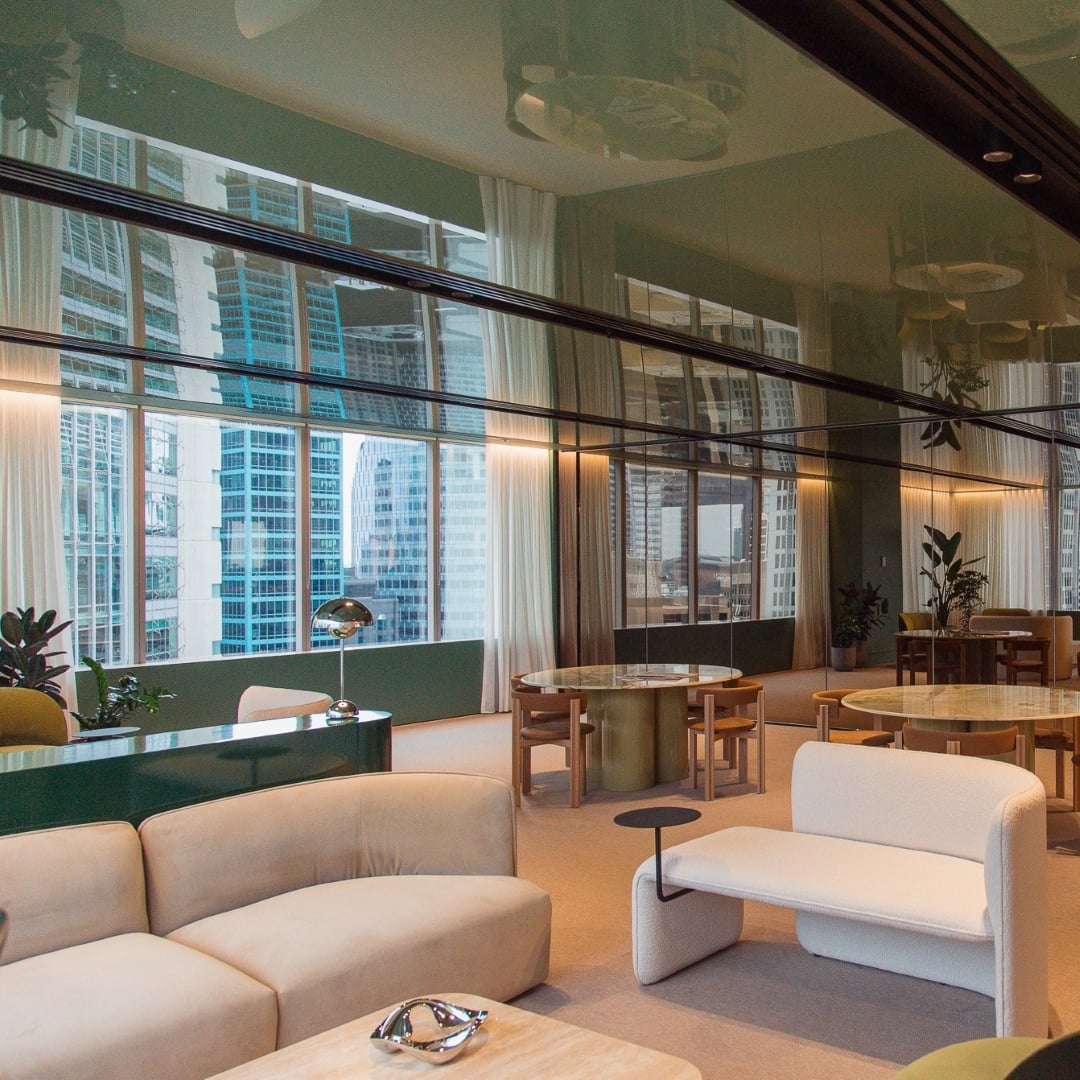
That's a tough one. I mean, I do like the stairs and the people I bump into on the stairs. But I'd have to say my favourite part is probably our level 21 social hub. It really feels like a beautiful restaurant. I remember somebody from Property Management actually said it feels like we're in Totti's, you know, but it's a great space. A lot of people use it not just for eating right, it's for all times of day. You see people connecting there casually over a coffee and it's just a beautiful space to be in.
Kathryn House
Yes, people having meetings there and it's not just being used for lunches. And this is probably a bit of a tough one. Final question, but how do you best measure the impact on productivity when you do an office move? I've heard Jamie Hodari, who's CBRE's global CEO of Building Operations & Excellence, describe it as smiles on people's faces. What's your measure Michael?
Michael Blitz
It was smiles on people's faces day one. And week one it was having anecdotal comments made. This is the best of the last three Ashurst offices I've worked in. We actually saw an increase in production. So our output for the month of May and June, which is great, which for me is a terrific measure, which means moving 700 people up the road didn't detrimentally impact the business, didn't impact the firm. In fact, we built from it. And then seeing the incremental increase in people coming back to the office and as I said, Kathryn, using the spaces that people didn't have before, or if they did have them before, they were in the wrong spot and weren't delivering what they could have. So I think the proof points are actually week one, day one, but a couple of months in seeing that people are working differently, they've embraced the opportunity that we gave them and then taking it to other offices and more projects.
Kathryn House
Jenny, what's your view?
Jenny Liu
So, measuring the impact of an office move on productivity requires a really holistic approach. We don't just look at numbers, but we also consider the human element and the overall business impact. Our key metrics when we typically do a change program include employee engagement and satisfaction. So pre and post move surveys, you know, we really want to get a sense of the effectiveness of the workplace, how people feel about the new environment. And this really helps us understand if the move or shift has created a more positive and productive atmosphere. In fact, for Sydney, in our post move results and pre move, our net promoter score, which is one of the key elements that we measure, soared up to 51 from minus 28. So a significant improvement in that net promoter score and really a testament to the impact of the innovative, people focused workplace that we've created. We also look at workplace effectiveness measures, operational metrics. You know, you can also measure speed to market and client outcomes, revenue generation, greater attachment, better outcomes for clients. In our post move survey results, we also had 92% of people say they were really proud to bring people into their workplace and showcase it to clients. So I think that's really a testament to the great space that we've created.
Kathryn House
Yes. And I did see lots of posts on LinkedIn. Another measure of success. Well, Michael, thank you so much for joining us and for all of your insights today.
Michael Blitz
Pleasure. Thank you for having me.
Kathryn House
And Jenny, I'm loving CBRE's new Sydney office and our new podcast studio where we're recording this today. And that's one of the things that's bringing me in more often. So great job.
Jenny Liu
Great to hear, thanks Kathryn.
Kathryn House
To our listeners. Thanks for tuning in. And make sure to subscribe to Talking Property so you don't miss our upcoming episodes. And if you get a chance, we'd also love it if you could rate a review Talking Property to help others find us. And please, anytime, come to me with podcast ideas at
[email protected]. Until next time.