Kathryn House
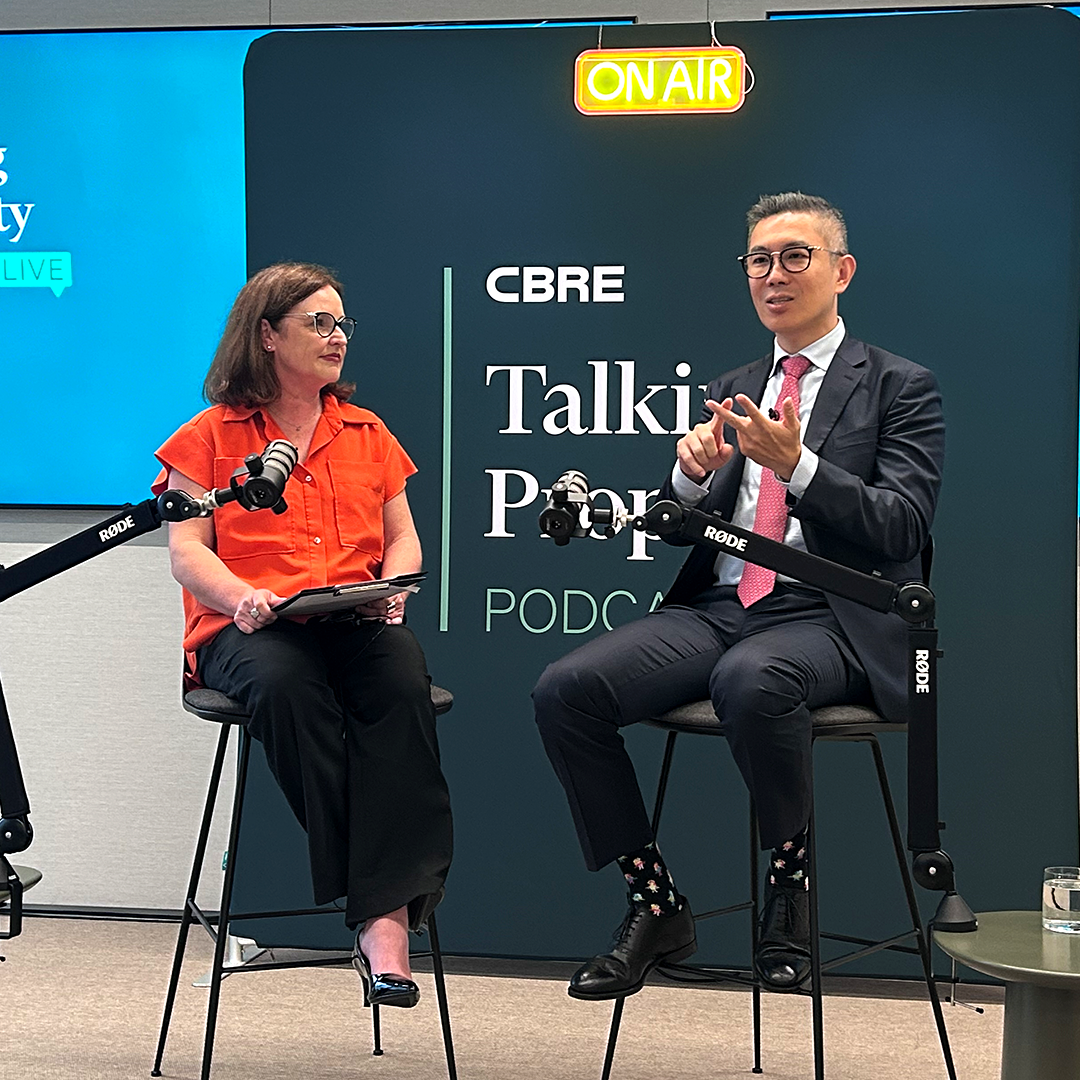
Hello and welcome to Talking Property with CBRE. I'm your host, Kathryn House, and in this episode, I'm sitting down with Henry Chin, CBRE's global head of research. Henry has traveled all the way from Dallas to Down Under to give us his insights on the global trends that are reshaping the real estate sector. Now this is the first time that we've done a podcast in front of a live audience, so welcome Sydney. We're also streaming this episode to our offices across Australia and New Zealand, and we're filming for YouTube. So I am a little nervous, but I can't think of anyone better to share the stage with than Henry. Welcome to Talking Property.
Henry Chin
Thank you for having me here. I am nervous but excited as well.
Kathryn House
So before we get into it. Henry, we've known each other for a long time.
Henry Chin
Since yesterday. Right. Just known each other since yesterday.
Kathryn House
Since you headed the APAC research team in Hong Kong. You moved to Dallas two years ago to take on a global role. How has that move? How are you finding Texas? And I believe you still don't own a pair of cowboy boots.
Henry Chin
No. It's not for me. I don't have a cowboy hat. They're ugly. And, I do not have cowboy boots because I have heard RM Williams is nicer. Right?
Kathryn House
Absolutely.
Henry Chin
It'll take a little later. And so, yeah, my life there is very, very different and I enjoy my work there because the market is so big. And then, but life is very different. I'm missing people here in Australia because I can walk on the street, the food is excellent, the people are excellent. In Dallas, I don't see any human beings on the street, so that's something I miss.
Kathryn House
Well, you have had a very hectic schedule since you arrived in Sydney, including doing the keynote at the Property Council's Property Leaders Summit.
Kathryn House
Have there been any surprises for you in the questions that you're getting from clients, particularly against this backdrop of politics and policy that's playing out here?
Henry Chin
Oh my god. You guys love to talk about politics all the time. I can tell you that in the US, we don't talk about politics as much as you guys do. And, politics create noises, but actually we look at the real estate economies, all back to the fundamentals. And one thing that surprised me is the hunger for your Australian real estate professionals to understand the global real estate dynamics, is so real. And I can tell you I that only been in the US for 20 months. I can talk about US markets. That just tells you real estate, It's not rocket science. It's so easy and so simple. And the trends, what we are seeing in the US and Australia, all linked. So this is fascinating to be here and to share my journey and share what I see on the global real estate market.
Kathryn House
So talking about that global perspective, there is a lot of macro noise right now.
Kathryn House
Interest rates, sticky inflation, the ongoing Middle East conflict. How resilient has real estate been against that backdrop?
Henry Chin
I have to say, let's revert back. Twenty months ago, when I moved to the US, I was very excited, very excited. The reason was, you know, come on, interest rates are coming down, economy is in recovery, and real estate should recover as well, so my life should be relatively easy. But I think about it, last year what do we have? The trade war, the tariff. This year what do we have? The conflict. And now also, AI can replace me at some point.
Kathryn House
Never Henry, never.
Henry Chin
And then so you can see all those noises are making my life a lot more challenging, a lot more exciting as well. But if you're looking at our business performance and real estate performance, I have to say 2025 was resiliently strong for our business and real estate. I think the momentum continue to come back on commercial real estate spaces in 2026. And we might see some speed bump, but nevertheless, recovery is on the way.
Kathryn House
So last time you visited Australia, Henry, you made a memorable comment that people continue to bring up that you thought that we were in La La Land when it came to asset repricing. Has your view changed?
Henry Chin
You guys might not be the champion of La La Land. And you guys are coming to third place. Number one goes to Hong Kong, two go to Singapore, Australia still number three. And, the reason I say that is, I was loud and clear during the Property Leaders Summit yesterday. Guys, you have repriced, but repriced is not enough. And you can continue to reprice but underlying, in my personal point of view, you need to reduce your incentive. Globally, I have never seen a market provide the incentive for 30 to 50 percent. It's shocking. And that translate into all the valuation issues there. So therefore, the market is coming back, flight to quality, occupier want to occupy the building, like where we are. Therefore, you have to reduce the incentive. And then, therefore, I have to say La La Land number three. If you don't reprice, if you don't reduce your incentive, you might come back to number one.
Kathryn House
So taking that into account, how are global investors viewing Australia and New Zealand right now compared to other markets like the US?
Henry Chin
Okay. I can tell you that when I was talking to the global capital allocators. Number one, people want to look at the repricing. Play the cycle. Real estate is all about cyclical investment. Given the current situation we are on now, I have to say US is number one. Because US has repriced so substantially, US economy is really resilient, and our interest rate somehow is lower than your Australian one and so therefore US become number one. And Australia, if you look at Asia Pacific per se, people want to invest into Japan, Australia, India, yes and no, Korea, Hong Kong, Singapore. So that's the market they are going to invest within Asia Pacific. But within the Asia Pacific market, all the money go to Japan as of now. But on a contrarian view, I will say I will sell Japan. I will buy more in Australia. But in order for global investor coming to buy Australia, we need to see more repricing. We need to see more rental growth. Unfortunately, it's not enough just yet. Once we've been through the cycle, I think you're going to see more of the global capital coming to Australia.
Kathryn House
So one of the megatrends that you've been talking about with clients revolves around supply and demand. How is that impacting real estate performance right now?
Henry Chin
I think we love to read the newspapers and, but especially younger generation always reading newspaper all the time. If you think about newspapers, it's always on the negative side because that's why you get your readership. Right? But I want everyone to remember real estate is a function of demand and supply. Demand is weakening because of the volatility we've been through. Right? But we don't have supply. You know, think about it globally we have no supply at all in office, retail, industrial logistics, we just do not have enough supply. So once we are back to the recovery track, come on, there's no supply. The only way to go, price is going to go up. And also, you know, vacancy is going to come down. So therefore, when I was talking to the occupiers, I said to occupiers, yes, you still got bargaining power, but you need to act fast. When I talk to investors, I think, well, things are not as bad as you thought because we don't have supply. So at some point, we're going to see price going to go up.
Kathryn House
So while we're talking about occupiers, there has been this ongoing flight to quality, globally and across sectors. How is it all playing out globally, do you think?
Henry Chin
Yeah. You can think about this. No amount of supply coming to the market going forward, and every single occupier is retailers, you know, office occupiers, and then 3PLs, manufacturers. They all want to be in the best quality buildings in good locations. And then it's coming through. So, therefore, you can see the good quality buildings, the vacancy rate is trending down. You know, incentive, it should be lower, and the rent should go up. And that is translating into the stronger momentum for performance. So good quality buildings in the key locations, we are continuing to see the better performance. Like average commodity stock, unfortunately. That's the reality we are facing now.
Kathryn House
So if we move to AI, it's in the news every day, and I know when we were talking earlier, you said that you were preparing a paper in the US on how this is going to impact different employment sectors. Which sectors are the most vulnerable do you think?
Henry Chin
Me, a researcher. So a lot of people thought that research can be replaced by AI, but I disagree because I think about AI, and I was looking at the productivity of the global economies. And, surprisingly, on the mature economies, G7, including Australia, we have lost our productivities for the past 25 years. And that was a surprise to me actually. But when I have a deeper dive about the productivity per se, we have to say we're also losing the populations. The population growth is not as strong as it used to be. So therefore, our productivity has declined over the past 25 years. As a result, AI does come into the market at the right time. Right? So we need to have bigger productivities. And, fortunately, some industries, we are facing some tough challenges. So repetitive, back-end work can be a lot more efficient by using AI. So those kind of repetitive jobs might be more exposed. But think about the other way. A lot of people are always arguing we have issues about financials, and legals, accountants, right? But you're thinking about your workforces. Those professionals they tend to be higher skill. So if you got a higher skill, you're easier for you to adapt the new AI. So therefore it's going to enhance your productivity on that part. Another story I want to tell you more on a personal conversation. My friend is a radiologist. Come on, he's a doctor. Right? So therefore, he shouldn't worry, but he worries so much about his job. He was telling me the machine can read the diagram better than him. I said that's your problem. Right? But now it's putting a joke aside. But I said to him, actually no. That means the machine can read a lot of diagrams for you, but you still need a human in the loop to diagnose the things. And also in the past, you only see three, four patients in the morning. But now because of AI, you probably can see ten patients in the morning. So therefore, you can see more patient. The quantity will be larger, and the prices should be lower. So your economy scale should be greater. So therefore, we shouldn't be so worried about AI. It's actually helping us to be more efficient. The scale should be bigger. That's how I read it.
Kathryn House
Well, we can't talk about AI without talking about data centres. They're also in the news here all the time and globally. But you said something interesting in a client meeting that I was at, and it was around that data centers that were built three or four years ago now could be essentially obsolete. How does the market adapt to that in the fast change?
Henry Chin
Wow. It's if you're reading on the newspaper, everything, demand and supply is definitely on imbalance now. Huge demand for data centre. Not enough supply. So that is good for investor for real estate. But the biggest challenge in our way of seeing is power accessibility. So power become front and centre of everyone's mind. How can you get power to fit into the data centre? And, I think a lot of public just do not want to walk a data centre next to us, you know, because they worry about all those kinda issues.
Kathryn House
Not in my backyard.
Henry Chin
Yeah. Exactly. I don't mind data centre, but just not closer to me. Yes. And, the second one is investor come into that space that they want to make the returns. The biggest worry is, as of now, it make a lot more sense. But if I build a data centre, hold a data centre for five years down the road, I don't know who is going to buy it. I don't know what the price is gonna look like. So that add on a lot of risk. Nevertheless, if you are a data centre operator on a bigger scale, I think it's going to be doing so well. But the biggest worry is you only operate one or two data centres, you don't have scale, I think you're going to be facing some tough operational risk going forward.
Kathryn House
So while we're getting into sectors, industrial & logistics, you shared some interesting views on that in some of your meetings and how APAC is advancing relative to other markets. Tell us your thoughts on industrial & logistics.
Henry Chin
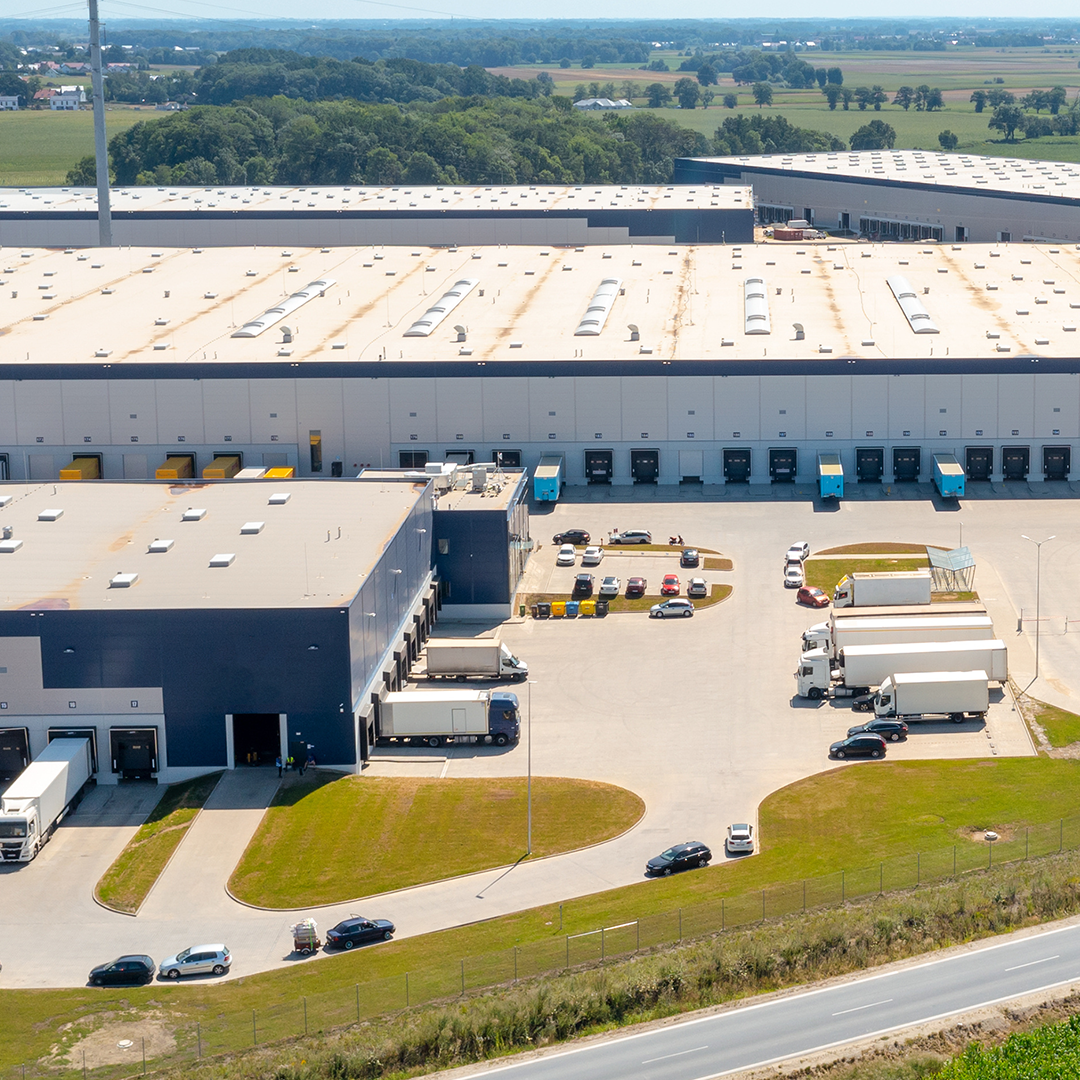
I have to say Asia Pacific industrial logistics, we're well ahead of the US, automations, everything, you guys do the better job. We do the better job. No. You guys. We. Okay. We do the better job than the US. And, funny enough, given the demand supply dynamics, I think we were quite negative in the US because US had an oversupply situation in 2024. However, and given the current situation, trade war, reshoring, manufacturing, all the things that we are seeing on the newspaper, funnily enough occupier are coming back to take more leases particularly for modern facility stock. So modern facility stock seems outperform the older stock. And, so therefore I have to say, and modern facility stock particularly people pay attention for power because you are competing with data centre. Automation. And the third one is cold storage. That's the trend what we are seeing in the US and Europe. I have to say in Australia, automation, you guys are pretty much ahead. We also had decent cold storage facilities here. The only thing is missing is the power. So going forward, you are going to see the Logistics stock, which was built after 2020, will outperform the older stock. And that's what we are seeing in the US. So sooner or later you're going to see US, we're talking about oversupply, oversupply since 2024, but we do believe 2027 become undersupply because everyone's a flight to quality. So this is something we are looking at. That's what our current view is.
Kathryn House
And what about retail? What are you seeing playing out on the global stage when it comes to the retail market? We've seen a really strong rebound in investor interest here against a lack of supply.
Henry Chin
Yeah. I, and everyone knows me, I'm a shopaholic. Right? I love shopping.
Kathryn House
Just not for cowboy boots.
Henry Chin
They're ugly, actually. They are not cheap, by the way. And, so I think retail is coming from zero on the way to hero. And the fundamental is getting stronger because of a lack of supply. And based on our forecast globally, retail and offices are outperforming the other asset classes. And, so most of retail and offices got a stronger total return coming from stronger rental growth. And but I have to say retail is not for everyone. And, most of retailers they want to fly to quality, they are in expansionary mode, they want to look at the prime stock, that's in limited supply. So that's what we're seeing. But think about consumers. I am old so I don't shop in TikTok but clearly the TikTok becomes such an influential channel for retailers, for consumers to do that. So going to the retail is going to be understanding the consumer is front and centre of everyone's mind. So I have to say in Asia Pacific where they're at. And then I think the Asia Pacific research team, Sameer, they're creating three a and three f. So three a for retail, winning formula should be air, art, and amazed. That's why you have three components for people to come to your shopping centre. Three f is fitness, I think Americans need more fitness. And, family and pet. And because I think the family pet is very important for the modern life. And the other f is F&B. So F&B, I think Australians, 12 years ago you guys was asking me, Henry did you eat dinner in shopping centre? I remember. I said of course that's a stupid question. But you guys didn't eat dinner in shopping centre, but now look at you. You guys have dinner in shopping centre. So F&B option is also very, very important. So the winning formula for retail is three a and three f. Retail's from zero on the way to hero.
Kathryn House
And all about experience.
Henry Chin
All about experiences and flight to quality.
Kathryn House
So if we flip back to productivity, and that drop in productivity. There's still a lot of discussion about hybrid working, return to office. Is that playing into the productivity argument?
Henry Chin
Yes and no. Come on. Globally, only two nations talk about return to work. You guys are one of them. I cannot resist to tease the Victoria government. It's killing me. And of course you ask me, hybrid working is here to stay, but thinking about going forward, the people who are going to outperform, outstanding in the future, is people who have strong communication skills. By working from home, you're talking to your pet. Sorry to say that.
Kathryn House
I've got two pets. I talk to them all the time.
Henry Chin
Oh my god. But they don't react to you, right? So therefore, I do think hybrid working is here to stay, but I do think people should come to the office more often. Five days a week is too much, to be frank. Three or four days a week engages your colleague, talking to your clients, actually enhances our productivity and also stimulate our brand. And I think this is something is very very important. But guys don't be so harsh on yourself. I think we look at productivity at G7 versus Australia. You guys are right in the middle. I think Italians are negative.
Kathryn House
It's because they like their siestas.
Henry Chin
And they love to drink and sleep and shop. Anyways, drama, too much. Anyways, you guys are doing decent job. But, again, thinking about it, all coming to work together, I think it'll be a lot stronger.
Kathryn House
So I tagged along with you to a Charter Hall presentation that you did. And you said one of the hardest things about being a researcher at the moment is forecasting human behaviour, given everything that's happening in the world right now. How do you deal with that from a research perspective?
Henry Chin
We always relate back to the fact. And, also, you know, because we do not have a crystal ball to forecast the future. So basically sometimes what we do is to to look at the scenarios. This is our base case. This is upside and downside. So that will give the client a stronger view about what what they think a possibility is going to happen here or there. Just a different example. A lot of people were asking me about the oil price. And I have to say that the change for oil prices is a move away from fundamentals. We get it. We get it. But you can see all the oil price volatility coming from Twitter. The reaction is coming from tweet. So, therefore, it's very hard to forecast. So what we did, we look at a historical event. We look at the historical event, okay, which has a profound impact for oil prices. What we hope for is 75 percent of the event is going to like, six months down the road, we are going back to historical norm. The pre event crisis. So that's why it's very, very important to relate to the fact and provide the scenarios so client can react to the different scenarios. So that's what we're doing a lot these days.
Kathryn House
So if you had to leave our audience with one key message, be they an owner, an occupier, or a developer, what should they be paying closest attention to in the next six to 12 months?
Henry Chin
Well, don't listen to politicians. That's number one. And don't read too much on the newspapers because the newspapers always love to have a sensational headline in order for you to click. That's the readership, right? So don't forget the real estate is all about the function of demand and supply. If I am the occupier now, I probably will looking at my portfolios, some places I'm going to turn back, some places I want to expand. Because of flight to quality, everyone wants, you can see not much quality stock is available now. So as of now, you still can charge it, you know, the landlord is going to give you 30, 40, 50 percent incentive in Australia. At some point, it's going to turn and you're going to pay higher. So if I'm an occupier, I will act faster now. If I and the investors, funny enough, everyone want to do retail. Everyone want to do multifamily in the US. Everyone want to do industrial. But I think real estate is always a play the cycle. Don't always think about buy, also thinking about sell. I will try to sell some of the logistic holdings because you make a decent return in the next one to enjoy that way. I will also start to think about, should I buy offices? Should I buy retail? There's no supply.
Kathryn House
Everyone's talking about whether it's the time to get back into office.
Henry Chin
I think it's time to get back to the offices. And, so that's the investors' mindset. The other one is thinking about higher for longer. Our daily life, the interest rate is so high. The mortgage is so high. Right? So translate to the investors, it's only probably sometimes they don't buy properties, they just buy credit. Credit might give you the better returns on that side as well. So all of real estate, everything's all about play the cycle. Also understand the structural changes. We are getting older and older, but do we need a senior housing when I get old? I do want to live in a senior housing. Why? Because they got facilities, you know, people can look after me. Right? You don't want your kids to look after you. So that will create a demand down the road. So thinking about those structural changes on our daily life, it can create a demand for real estate.
Kathryn House
Well, it is always entertaining to talk to you, Henry. You've had a great trip down to Sydney, and don't leave it so long next time.
Henry Chin
I love to be in Sydney and I love the food. By the way, your Fish Market is excellent.
Kathryn House
Oh, the new one. Yes.
Kathryn House
Amazing. Well, a big thanks to our live audience for coming along today. There's clearly a lot happening in global real estate now from interest rates and capital flows to AI and productivity. But what I've taken from today's conversation is that opportunity is still there. It's just more nuanced and understanding where demand, supply, and quality are shifting will be key. To our listeners, thanks for tuning in. If you're not a subscriber, make sure to do so, so you don't miss our next episode, which is our Q3 House View with Sameer Chopra and Phil Rowland. Until next time.