Kathryn House
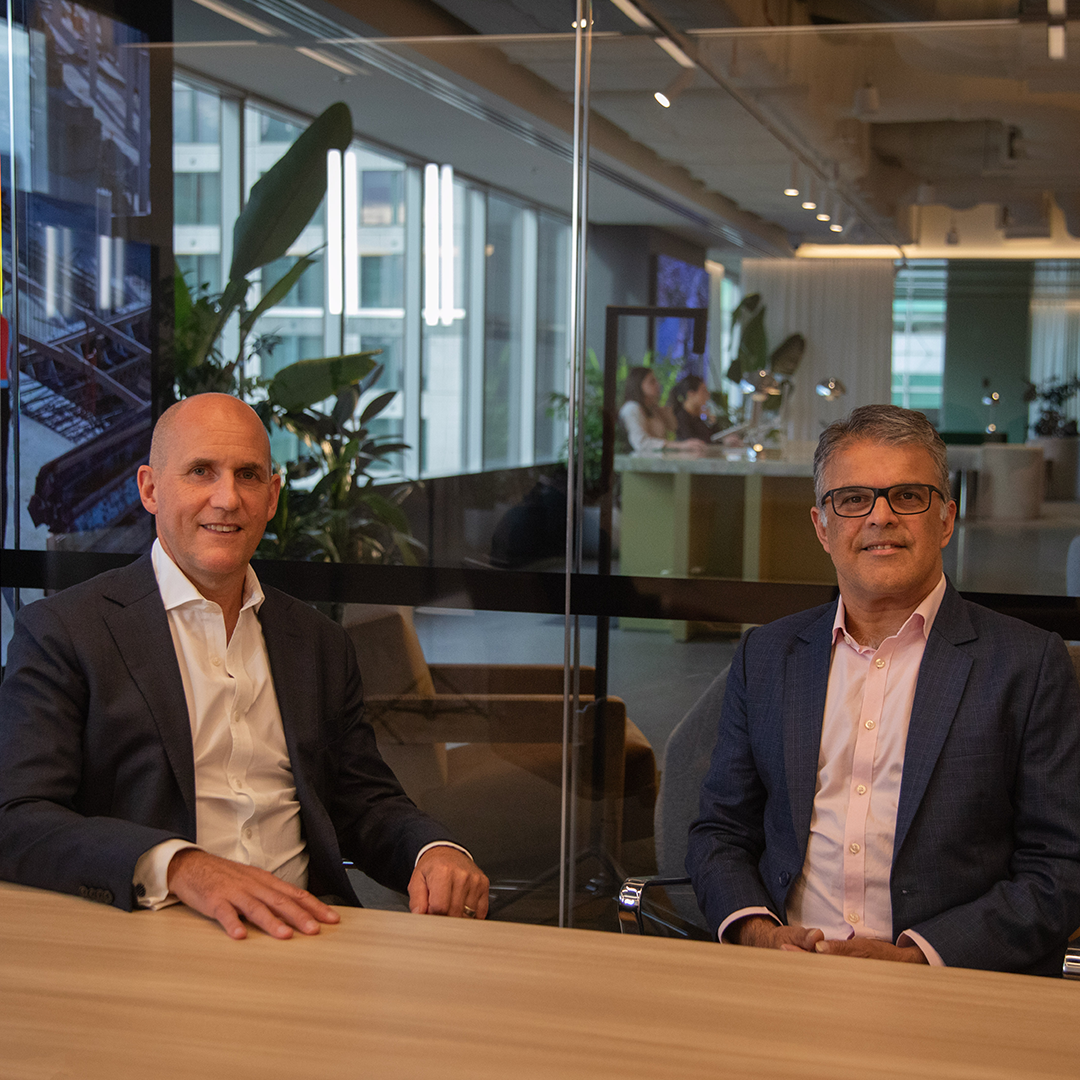
Hello, and welcome to our quarterly Talking Property series, The House View. Together, CBRE's Australia and New Zealand CEO, Phil Rowland, and Head of Research, Sameer Chopra, investigate what's next for the Australian property sector, the potential disruptors, emerging opportunities, and what's top of mind for the industry's major players. We hope you enjoy their conversation.
Phil Rowland
Hello. I'm Phil Rowland, and it is great to be back with CBRE's Head of Research, Sameer Chopra, for our second edition of the House View for 2026. We've brought this episode forward by a week because we've had so many inquiries about how the outlook for 2026 is evolving. A month or even a week is a long time in today's world, and we've seen this play out in full colour with the emergence of war in the Middle East, all the heightened geopolitical tensions that go with this, and of course, increased oil prices and rising interest rates in Australia. And for good measure, you can layer in the impact of AI. So, all this certainly feels like a wall of change to get your head around. So, we're going to do our best to unpack what these dynamics mean for real estate in Australia. Sameer, reflecting on our last conversation, it's fair to say that the wind has come out of our sails since the outset of the year, a bit of a buzz killer really. In the first quarter, the market was very active, and we were talking about positive sentiment, investors ready to really lean into the cycle, we had increased levels of investment activity, and now we're faced with this. Before we go into the detail on it, Sameer, at a headline level, how do you make sense of all this? You know, what are the things that you believe have the most long-term change, and what are the things that you think, you know, hold true?
Sameer Chopra
Yeah. Look. It reinforces in some ways a number of our calls early on in the year. Construction cost will be high. We thought it'll be high. I think it'll be higher than what we'd expected. I'd say, you know, supply will be a lot more constrained, and that helps drive rent growth. But, you know, if you look beyond that, unemployment is still really low in Australia, and hiring activity, particularly with white-collar workforce, has been pretty strong so far. We've got this really good sort of population growth tailwinds in the country. The population is growing at about 250,000ish thousand people. Pre-COVID, it was about 160,000. So, you've still got that big tailwind. And I think, you know, this episode would just reinforce Australia as a safe destination. You know, it was a top three destination for high net worth individuals prior to this. And I think, you know, we'll probably end up seeing more inflows into private wealth. And, Phil, you and I were talking about this earlier that bond yields had already started to move in October and November. So, in some ways, the markets were already priced for a higher rate environment. So, there's some change to the outlook, but for anyone kind of looking, you know, over three years, five years, ten year sort of horizon, I think a lot of this is just noise, and it'll end up reinforcing the value of real estate.
Phil Rowland
Yeah. Well, it's really interesting you say that, Sameer, because for me, it's a great reminder that we've been operating in a volatile and uncertain world for a long time now. And, whilst these events are really significant, and I don't want to make light of them, they are just current examples of how events create windows and cycles that are just so much shorter now. And, of course, the implication being that you need to be realistic and responsive and, of course, alert to the opportunities that sit within these windows and cycles. But as equally important is that your long-term strategy is your friend. Right? You know, holding conviction to your long-term thinking is just so important in times like this to, you know, to your point, look through the noise, look through the uncertainty back to the fundamentals of your long-term thinking. So, look, on a lighter note, Sameer, how was your Easter break? And, while we're on the topic of fuel, you know, did you travel?
Sameer Chopra
Phil, I think that first quarter, most of us just needed to recharge. Right? Like, it was super busy as clients came back into the year with more urgency to transact. For the break, yeah, our family got in a car, and we went up to beautiful Port Stephens. I must admit, though, I was really nervous about the fuel situation in the lead up to the holidays. It's kind of COVID vibes, given some of the localised shortages.
Phil Rowland
Well, I hope you didn't have jerry cans in your boot.
Sameer Chopra
Thought about it.
Phil Rowland
Alright. Well, it was good to have some government reassurances about fuel availability ahead of the break and some relief through the temporary cut in fuel excise. But I know we're all keeping a watching brief on what continues to be an evolving situation around the price of fuel.
Sameer Chopra
Yeah. So, you know, fuel came down by about 25 cents but, you know, it's still about 30% higher than where we're sitting in Feb.
Phil Rowland
Yeah. And, look, just before we started recording, you also mentioned to me that Australia's banks have been publishing some timely insights into how Australians have been spending their money during March and April. So, they're looking at credit and debit card spend to help their clients and help the government navigate the current situation.
Sameer Chopra
It's a really good initiative from the banks. And, you know, the data seems to suggest that about an extra one and a half to two percent of the wallet is being spent on fuel. So, this is out of your credit card spend. One and a half to two percent more is going towards fuel, and there's been some paring back of spending on, you know, holiday accommodation and household items. It's a little bit hard though Phil to decipher how much of this is because, you know, petrol prices have gone up compared to, like, higher interest rates. You got two things in the mix. And, Phil, you've probably also had a chance to meet a number of our senior clients. What are they saying about the early impacts?
Phil Rowland
Yeah. Well, look, it's a fairly similar story. You know, most clients that I've met have said, you know, they were very well set up for an active and constructive 2026 before the, obviously, the moves out due to the conflict in the Middle East and, of course, the associated change in the interest rate trajectory. But I suppose what I would say is those clients with a big exposure to residential and retail have certainly borne some of the early impact through reduced sales, and visitations. And, of course, all of our clients, regardless of the sector, are very cognisant of the increasing challenges in creating future supply. So on that, why don't we dive into that one in more detail, Sameer?
Sameer Chopra
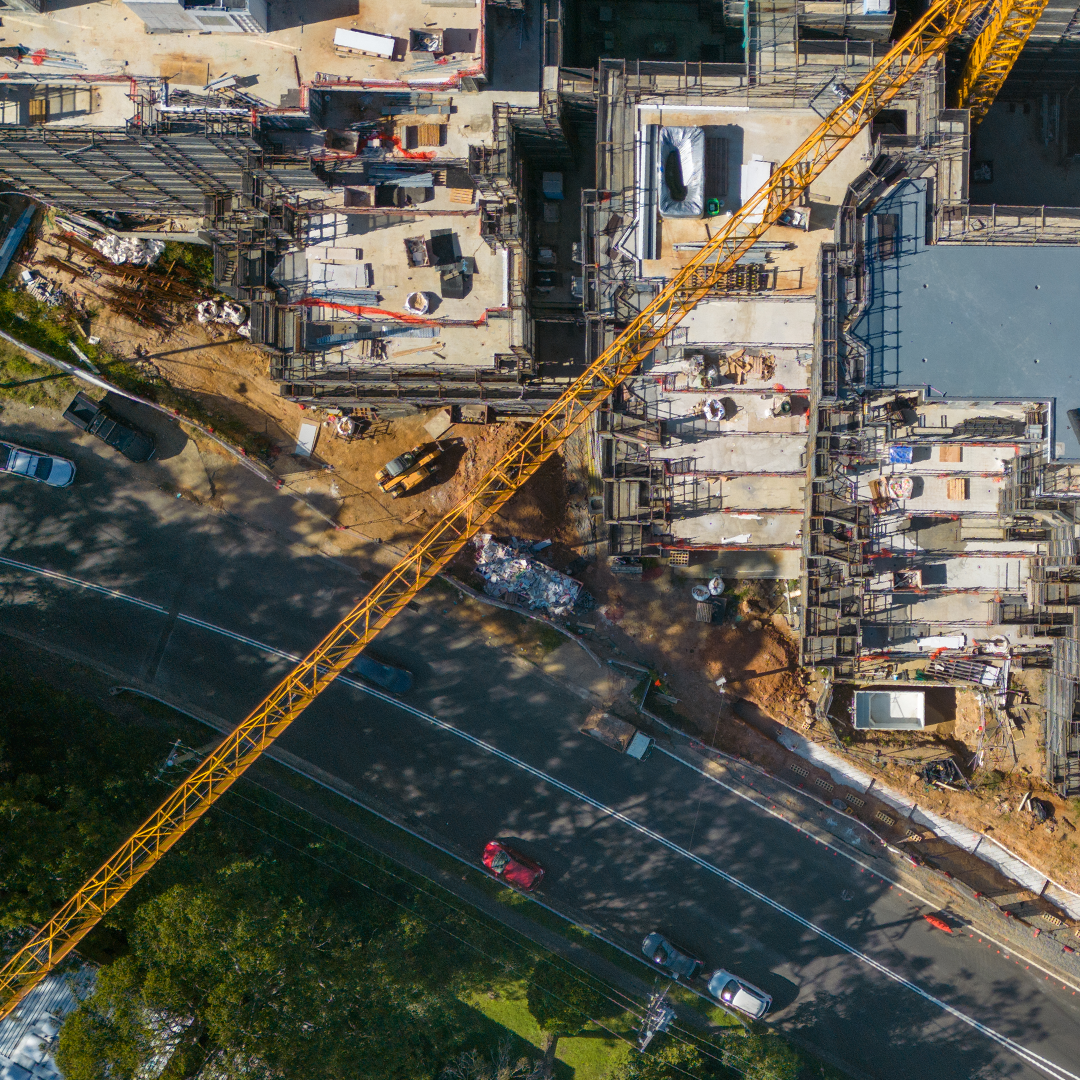
Yeah. I think, you know, on supply Phil, the first thing is, you know, we're bracing for a material lift in construction costs. Just over 50% of the project development costs for a typical project are linked to energy prices. You know, both the raw materials that go into the construction, and then you've got to kind of transfer these materials to the site and then operate the site. These are all linked to energy costs. So, energy is super important.
Phil Rowland
So raw materials like paint, cement, steel, bricks, and glass, because they're all inherently very energy intensive. And, likewise, for plastic-based components like pipes. You know, I was looking at some stats here the other day, for example, nearly half of the cost of manufacturing paint is oil, and twenty to forty percent of the cost of manufacturing steel is energy related.
Sameer Chopra
Yeah. So, you know, this sharp increase in oil and gas prices, you know, like the construction costs. Actually, what I find interesting, Phil, if you look at construction costs over a longer-time horizon, construction was growing at one and a half percent per annum pre-2019. So, you know, that's very manageable. It then started to grow at six percent per annum over the last five years. A lot of this was caused by supply chain pressures and the Russia-Ukraine conflict. And, you know, the prices did not decline as oil prices came off in 2023 and 2025. So they stayed elevated and then continued to grow at around that sort of four percent, five percent sort of pacing. And I think that's a really important point here. You know, once construction cost inflates, it stays there and becomes the new base.
Phil Rowland
Yeah. And other reasons why it sort of holds there. Right? So what kind of construction cost price shock could we reasonably estimate? And when we also have to expect labour costs to inflate rapidly driven by, I suppose, the timelines and just the sheer scale of work that's associated with big programs like AUKUS and the Brisbane Olympics.
Sameer Chopra
Yeah. Phil, look, I would brace for an 18% increase in construction cost, you know, the course of 2026 and 2027. So 18% in total over that two-year period. That's a big number. And then we're assuming four and a half percent per annum towards the end of the decade and into the 2030s. Big jump.
Phil Rowland
It is a big jump over the next two years. But I suppose we've seen that before during 2021 and 2022. And the infrastructure works associated with, as I said, AUKUS and Brisbane Olympics will play into, strong demand for that scarce construction workforce. And we'd said in the last quarter that one of our biggest predictions is that supply will keep facing headwinds. And where possible, investors and developers who started construction early will be in better shape than deals where construction is starting later in the decade. Sameer, is there any sense on how high construction costs and high bond yields will impact development?
Sameer Chopra
Well, we've done some initial modelling. You know, and our sense is that economic rents needed for projects that are completing later in the decade have risen by six to eight percent. Put another way, rents need to move above trend by six to eight percent to offset this higher cost of construction and the higher bond yields. You know? And that's getting six to eight percent higher rents in perpetuity to offset the shock during this development phase.
Phil Rowland
That's pretty compelling. Right? And so just to play devil's advocate then, Sameer, does this mean that there are new developments being planned that could just stop completely?
Sameer Chopra
That's a tough one, Phil. Look. In some locations where rents are already shooting higher, like Brisbane as an example, a developer could still move forward with more conviction and particularly for smaller developments. But a number of speculative developments that don't already have tenants in place, I think that's where we'll see postponement. And I expect, you know, we'll start to trim supply forecast for industrial and residential through the second half of this year. Hotels, office, retail had already assumed, you know, very subdued outlook, 40 to 50% below the last 10 years. But I think this now spreads into industrial and residential.
Phil Rowland
Yeah. And just as the market is focused on the impacts of higher interest rates and higher energy costs on demand, you know, fundamentals will continue to be shaped by these added supply-side constraints. So, you referred to this as TINA in our early 2026 market outlook, you know 'Their Is No Alternative' as supply dwindles. But just shifting gears and focusing on the near term fundamentals, let's look at how rents travelled through the first quarter of 2026.
Sameer Chopra
Yeah. Look. In most markets, net effective rents have surprised positively in the first quarter. So, you know, if you look at prime office, you know, we saw strong net effective rent growth in Brisbane of, you know, about 13% year-over-year, like 13% rent growth year-over-year. Sydney was, 8% rent growth year-over-year. Both of those were much higher than I'd expected at the start of the year. You know, and Perth and Melbourne were sort of plus 5 and plus 3%. What we're seeing, Phil, here is that, you know, incentives are starting to compress off their high levels of recent years.
Phil Rowland
And this is for prime assets located in the CBD where there's a, I suppose, a better balance of power between landlords and tenants. What about industrial and retail?
Sameer Chopra
Yeah. It's a reasonably positive story for retail rents in regional shopping centres. So, Sydney and Perth rents, you know, are pacing at plus 7%, year-over-year. You know, Melbourne and Brisbane are plus 3 to plus 5. These are all positive numbers, and, you know, we're talking mid-single to high single digit growth. Retail is now, you know, slowly recapturing the ground lost during those COVID lockdowns.
Phil Rowland
Yeah. Certainly an asset class that continues to carry favour from investors both domestic and increasingly offshore. Of course, retail benefits from the lack of new supply for shopping centres, you know, the vacancy is below 5%. And there's always that tailwind that you're always constructive on Sameer, of the growing population with higher wages.
Sameer Chopra
Yeah. So, you know, retail looking good, but out of all of the sectors, industrial is the one I think that deserves the most acute attention in the near term. You know, here we saw net effective rents decline by two and a half percent in both Sydney and Melbourne, and higher incentives have been the culprit here as kind of new supply comes on the market, and, you know, there's a search for tenants. On the flip side, Brisbane logistics saw net effective rent growth of nearly 9%, and Perth was also strong at plus six. So industrial right now is the most bifurcated market out of all of the sectors that we cover.
Phil Rowland
Good. Good. And just to round it all off, Sameer, on the capital markets side, we had a good first quarter. This was most evident in office and retail. And I should qualify the strength of office was concentrated in Sydney. But, Sameer, interest rates have increased across all durations, the cash rate, three-year bonds, and long-term bonds. How could this impact pricing? I know it's a moving beast, and most clients will look through short-term interest rate cycles, but, what's your view?
Sameer Chopra
Yeah. We're keeping an eye on the three-year bonds right now, Phil. That's most important in deal activity. Clients borrow for three years. They kind of hedge it if needed. And, you know, these three-year bonds have increased by around 0.3% in the first quarter. But the credit spreads, which is the margin on top, has compressed slightly. So, yes, there is some headwind where previously, we were expecting around 10% growth in transaction volumes, I think now, you know, it might be closer to 5% growth in transaction volumes. And, you know, there could be some upward pressure on cap rates, and that'll be probably most pronounced in industrial and office. For now, you know, we're penciling in, call it, 10 to 15 basis points of cap rate expansion in office for this year, around 25 to 35 of expansion in industrial, and so 10 to 15 in shopping centres. That's taking a very sort of conservative view on pricing. Living sectors will probably be flat, you know, maybe five bps of expansion. So just a modest move higher in 2026, then kind of leveling out in early 2027, and then we get back into compression from 2028. That's kind of how we're modeling it for now.
Phil Rowland
Coupled with rent growth that we just spoke about, the cap rate expansion could limit how prices move for prime assets. As we've been also discussing, investment cycles are becoming shorter in duration. You know, that window to buy and sell requires a lot more agility in decisions.
Sameer Chopra
Yeah. Yeah. Right. And just on that, Phil, I fielded an interesting call from a client. It was during one of those dark days of, you know, market volatility earlier this month, and we were chatting about cap rates. And he just reminded me that one should not capitalise on the downside. Basically, what he was saying is, you know, just because earnings and valuation metrics are depressed or elevated at any one point in time does not mean that that's going to be the case in six to 12 months. It's just a reminder that, you know, stay alert to market events, but also be sort of level-headed, you know, what you were saying at the start about future scenarios.
Phil Rowland
Yeah. Well, talking about being alert to events, let's move our conversation to AI. To me, it wouldn't be an edition of this without covering that. You know, we've been proactively experimenting with AI tools across segments of our business. But when you meet with investors and tenants, there is clearly some uncertainty around the potential longer-term impact on the type of space required in the future in an AI adopted world.
Sameer Chopra
It comes up in every meeting, Phil, with clients, not just office, but also the impact on income and jobs and, you know, hence, the impact it could have on retail and residential. Most topical.
Phil Rowland
Well, let's tackle, you know, these questions head on through what we're observing in the short term and then some views over the medium to longer term.
Sameer Chopra
Yeah. You know, I love data. And, one of the most important pieces of data that came out recently was on, you know, where are the jobs being created and lost in the most recent quarter in Australia. So it's really cool data. Much to my surprise, Phil, the sector with the highest growth in jobs was professional services. Professional services added 69,000 jobs in the last quarter. There's been a lot of chatter about, you know, how AI could impact, you know, legal firms, accounting firms, consulting jobs. So it's really fascinating to see that that sector posted a big and the biggest jobs gross number.
Phil Rowland
And guess what? That sector is probably one of the most advanced around how they're kind of adapting and embedding AI in their business models. And to be fair, a number of firms in the sector have active roles in advising on AI deployment, like, you know, the consulting firms. So it's a new growth practice, but you do raise an interesting point about it having the strongest growth of any sector. What about other types of white-collar employment?
Sameer Chopra
Yeah. Look. We saw financial services added 3,000 jobs in that quarter. Tech and media lost 10,000 jobs, and public admin exited about 21,000 positions. You know, to bring it all together, just over 40,000 white-collar jobs were added in the last quarter. And, you know, that should provide some comfort around net absorption for office in the near term. It's also encouraging news for retail and residential, which rely on these high-paying jobs. But, you know, just taking a longer-term view, Phil, the number of jobs in finance and professional services has grown from around 750,000 back in 1990 to 2 million currently. 750,000 to 2 million. And this is despite all the rapid technological changes, you know, all the business process outsourcing, you know, the disruption around the GFC and COVID. So, yeah, roles have changed, but the number of jobs and the volume of office employed jobs has grown significantly. So, you know, I am optimistic that this will continue.
Phil Rowland
Yeah. I agree, Sameer. Look. I'm sure this will pick up materially through the course of 2026, particularly as organisations build greater clarity around their AI strategies. You know, the obvious implication is that over time, tenants will want more flexibility in their leases to expand and contract. But equally, you know, that does bring a challenge with higher fit-out costs. You know, the longer term lease terms allow both sides to upgrade and amortise the premium fit-out sort of just so important in today's world.
Sameer Chopra
Yeah. Look. And when we look at all this tech, our overarching belief is that, you know, access to power and energy is vital. And it's not just data centres, but also office, residential, industrial, health care, and retail, right across the spectrum. You know, as AI, electric cars, robotics gain traction, real estate that is already sort of pre-provisioned with access to these higher power loads should do well. You know, there's some studies around Phil that suggest that the power needs increased by two x to three x for a warehouse using robots. Just like we've experienced this flight to quality, I think, you know, we could see premiums emerge for flight to power.
Phil Rowland
That's a good point. Well, to wrap it up, the recent oil price spike and prospect of more aggressive interest rate hikes could certainly impact transaction volumes and development activity. But this needs to be balanced with scope for further rent growth as supply becomes increasingly challenged and at a higher construction cost. So looking at the coming quarters Sameer, any other material things that you think we should be mindful of?
Sameer Chopra
Phil, the final thing I'm just keeping an eye on is, property related taxes. So, you know, I'll be keeping a very close eye on the state budget cycle in May and June. That's, I think, hopefully, the only last hurdle in 2026.
Phil Rowland
Well, well, we'll see. As I say, a month is a short time. Alright. Well, I think that wraps us up. Thank you, Sameer. And to our listeners, I hope you enjoyed this latest edition of the House View. As always, please send us any questions you might have via
[email protected]. And make sure to subscribe to Talking Property to ensure you don't miss any of our fortnightly talking property episodes. Until next time.