Kathryn House
Hello and welcome to Talking Property with CBRE. I'm your podcast host, Kathryn House, and today we're going to be checking in to explore what's been happening in the luxury lodge sector. These boutique, experience driven accommodation assets have been the strongest performing hotel segment in Australia and New Zealand, buoyed by demand from affluent domestic and international visitors. Post pandemic, the rebound in luxury tourism has been phenomenal. A recent CBRE analysis shows total room revenue has risen 59% with margins up by 54% following a rise in the number of high-net-worth individuals seeking more personalised private holidays with a focus on nature. In tandem, a broadening demographic of aspirational millennial and Gen Z travelers is helping to drive interest in properties like Southern Ocean Lodge on South Australia's Kangaroo Island, Huka Lodge in New Zealand, and Capella on Lord Howe Island, a property widely regarded as the pioneer in Australia's luxury lodge sector. I must admit, I developed a serious case of FOMO after reading CBRE's luxury lodge report and I needed to find out more.
Michael Crawford
Being in these places that no one else can get you to, front row centre, to World Heritage sites or national parks or animal life. The world is really wanting these experiences now. And luxury, a place to come back and have a great meal and have it be very familiar and very comfortable is a key part of that.
Kathryn House
That's Michael Crawford, the CEO of ultra luxury accommodation group Bailie Lodges. Baillie has six top end lodges in Australia and New Zealand, including the three I've already mentioned alongside properties in Canada and Chile.
Tom Gibson
Almost half the world's population now is Gen Z and Millennials. And in terms of luxury spend, both of those combined account for almost two-thirds thirds of the luxury travel spend globally. The market itself in 2020, going into Covid was worth about $4.5 trillion. And in the next three years, that's expected to double up to $9 trillion.
Kathryn House
And that's Tom Gibson, a senior director in CBRE's Australian hotels team. I hope you enjoy our conversation. Michael, thanks for joining me today on Talking Property.
Michael Crawford
Great to be here. Thanks for having me.
Kathryn House
And Tom, thanks for making your Talking Property debut.
Tom Gibson
Great to be here, Kathryn. Thank you.
Kathryn House
So, Michael, you're a seasoned hospitality industry executive who was recently appointed as CEO of Baillie Lodges after roles with Hall of Fame Resort and Entertainment, Four Seasons and Walt Disney Company. Can you tell us a little about the history of Baillie and how you came to join the group?
Michael Crawford
Yes, an incredible history. To be honest, I knew the lodge names very well, like Huka and Capella and others. I had visited a few before joining and was just completely overwhelmed. I was really excited about the actual product and more importantly, the people and the culture. And so when I got to meet James and Hayley, I really understood that a bit better where all of that came from, and it was just so genuinely authentic. It sort of also drew upon my experience in luxury hospitality a bit, and I was excited to come back and really help a group, I think that has potential to have an impact, not only in Australia, New Zealand and Chile, but worldwide, grow and become a brand that people know across the world is someone that can, or a group that can deliver really customised and personalised experiences. So that was exciting. That was the impetus for me to join.
Kathryn House
So you mentioned James and Hayley. For people who don't know the history of Baillie, can you tell us a little bit about how that deal came together and I guess the KSL acquisition of Baillie?
Michael Crawford
Sure. Well, that was pre me, but, you know, for a period of time, James and Hailey Baillie, the founders of two or three of the first lodges that we held and were approached by KSL Capital Partners here in Denver. They saw what I saw, which was an incredible opportunity, both in terms of product but culture and experiences, and worked closely with them to acquire those three. And then we've added six other lodges, two in Chile, one in Canada, and others in Australia and New Zealand. I think all of them have complemented what James and Hayley were originally trying to found, which was this connection with nature and culture, wildlife, and really the spirit of mateship, this giving and a communal sort of feel of luxury, which is really impressive and one that I think we carry very well with the new assets that we've acquired over time. But it's been lovely to get to know them more, and I'm excited about working with them more in the future as well.
Kathryn House
Absolutely. Because they still have such a strong connection, don't they, with the brand?
Michael Crawford
They really do. And, in fact, I just spoke to James about a week ago, and we have some really interesting new things that we're doing and some potential things that we're going to acquire. And I've said to him, look, you have such an eye towards product, product quality. I'm a product guy myself, so does Hayley. And so we've gotten along just famously. And I've said to him, I want to include you, I want you to keep going on this journey with us. And thankfully, he's been willing to do that. And he does reviews for us of our product and helps with design. And so we're fortunate to have both Hayley and James stay involved.
Kathryn House
So, Tom, I was really interested to read the luxury lodge report that came out from CBRE. Give us your take on what makes for a successful luxury lodge. I mean, the report talked about things like curated holistic experiences, exceptional dining, wellbeing offerings. Give us your take on it.
Tom Gibson
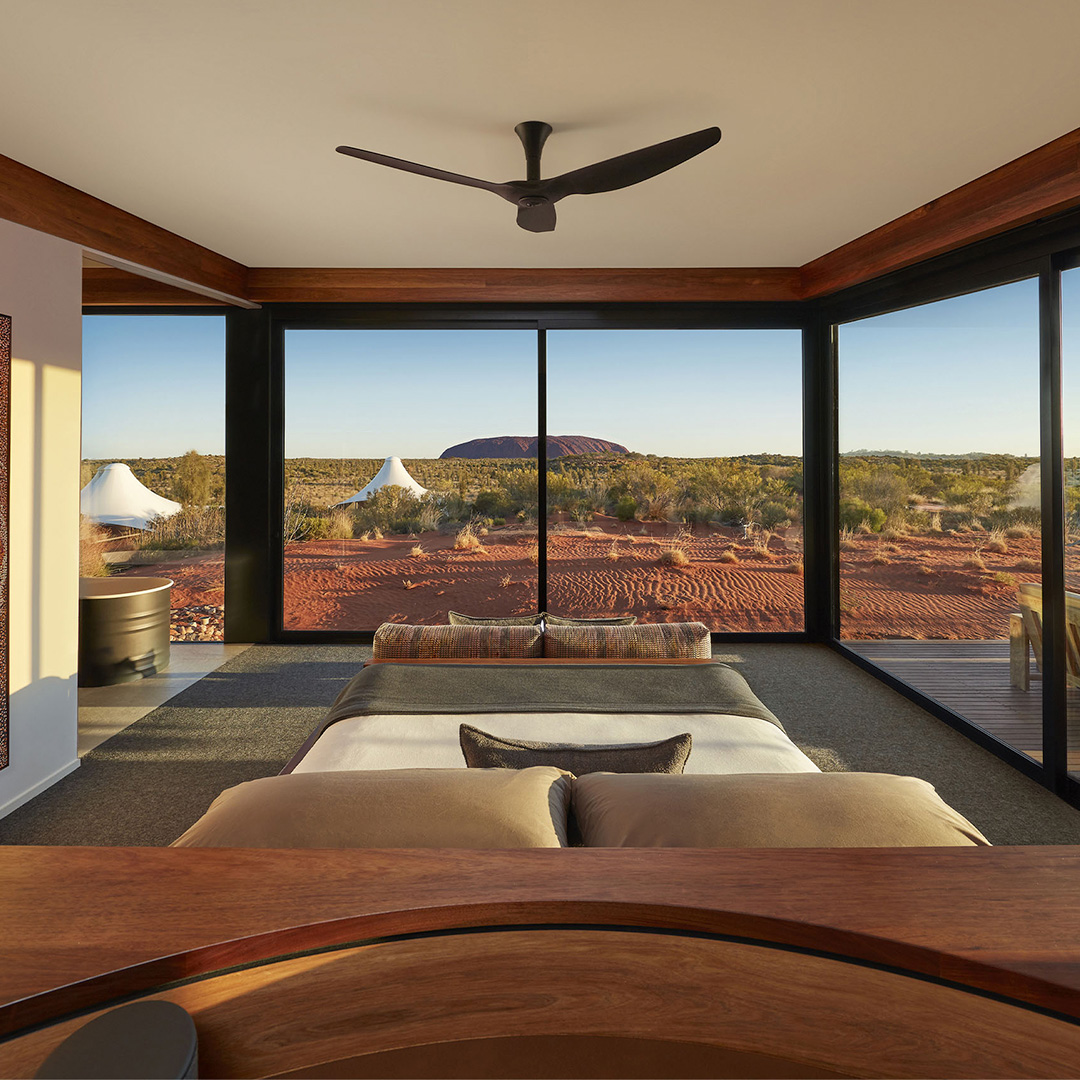
Yes, certainly. I think there's a recipe for making it work. And the most critical elements to that are having an exceptional location, you know, something that is almost irreplaceable somewhere that, like with the Baillie Lodge's front row seats to Ayers Rock, you're going to have some kind of element and connection to nature that's a big factor. And then also offering a world class, truly unique experience that the guests can enjoy and go home and be enamored by when they look back at the photos. And the second is world class hospitality. It's that service from all layers of staff, from the chef all the way to the front house team. The food and beverage, excellent comfy bed, that's the most important part as well.
Kathryn House
Comfy pillow.
Tom Gibson
And I think if you get those two right in the right location with the right hospitality, blend them together with, with a bit of exclusivity, you have yourself a luxury lodge.
Kathryn House
Yeah, it was interesting. I was reading a story about Capella, which was Baillie's first lodge, and it was talking about James and Hayley's vision and it was things like, you know, first name service, barefoot luxury, spirit of generosity. So it being very much an ethos of guests enjoying this feel at home, sense of being at their own effortlessly glamorous holiday home. Michael, can you talk us through that Baillie philosophy?
Michael Crawford
Well, I'll tell you, I was just on Lord Howe island not too long ago and it's exactly as you described. You know, there are nine rooms, nine suites, right? So you're not talking about hundreds of guests, you're talking about tens and twenties of guests. That the number of staff that we have, I think Tom's spot on. You have to create this environment where people feel very much at home, but it's also got to be luxury. These are folks that are used to having things at a certain level and I think we've done a great job there. You show up, you have drinks with the GMs and the team is there. And I was talking to one guest and they said something that just struck me. The comment was, I actually look forward to coming down to breakfast and talking to Sarah. I look forward to coming and talking to Libby. You very rarely get to create Those kinds of environments, you always have luxury service. You have the white glove. You put the forks and knives down in the right place, and you serve from the right side and everything. This is about really emotional connection. And I think what James and Hayley have been able to do, we've kept the environment small enough where we can tailor the experiences, but we can get to know them, the guests, on a personal level, and then we can connect with them while they're there. And we make them feel very much at home. This is their luxurious sort of second home in all of our lodges. And I think that spirit, that connection, by the way, being in these places that no one else can get you to and get you sort of front row centre to the World Heritage sites or national parks or animal life, all of these things. The world is really wanting these experiences now. And luxury, a place to come back and have a great meal and have it be very familiar and very comfortable is a key part of that.
Kathryn House
And it keeps people coming back because you have those return visitors.
Michael Crawford
Yes. And look, I think it also allows them to say, where else are you? And it's amazing to me, you know, once we have you in one of our locations, the next comment is, where else can we go and stay with you? Right. And I find that with a lot of luxury experiences, but I find it usually because you give them points and you sort of entice them to come back with some sort of loyalty program. We entice them to come back because we're loyal to them and we treat them as an individual and we make them feel special, like they're in their own breath, they're in their own photograph, their own footsteps, versus having to wait for hundreds of other people around them. So it's a unique opportunity to create that for guests and those emotional moments that they'll take with them for a lifetime.
Tom Gibson
And what you do well, Michael and the Baillie Lodges team is between each of the assets. When you're setting up the itinerary for the guests, they might go to Longitude and then to Southern Ocean Lodge and The Louise. It's sharing between management teams intel on the guests. So that way when they arrive at the next lodge, you are two steps ahead of where they would expect you to be.
Michael Crawford
Yes, I think it's a great point, Tom. And you know, one of the things that I've brought in is we want to enhance that slightly with more technology. But technology behind the scenes, seamless to guests. Right. And people always ask me about artificial intelligence and other things. I just want to make sure that wherever the guest goes, we can understand their preferences and their behaviours. So that to your point, every time we get smarter at serving them the way they want to be served, and that's a crucial point of that emotional connection.
Kathryn House
So Tom, one of the things I found particularly interesting in CBRE's report was that while luxury travel demand is strongest in the 40- to 50-year-old age bracket, there's also this broadening demographic of aspirational luxury travellers. So your millennials, your Gen Z. Can you talk us through that shift?
Tom Gibson
Definitely. The millennial market together with Gen Z's been a large focus across not just the luxury lodge sector, but also the luxury brand sector across all major hotel platforms. And trying to get into that Gen Z millennial market early because they are heavily driven by loyalty. Loyalty can be defined in many factors. As Michael said, it could be by service or it could be by points. And if you get that market early, they'll be loyal to you. So it's a large opportunity for the luxury brands to target. But if we're speaking in terms of numbers, I think almost half of the world's population now is Gen Z and Millennials. And in terms of luxury spend, both of those combined account for almost two-thirds of the luxury travel spend globally. So it's a low hanging fruit target for a lot of these brands and they are naturally heading in to over service this guest clientele being through enhancing wellness facilities for instance. I mean that's been a big focus the last three years. That growth of that market has been a record focus for a lot of the large hotel groups. And the market itself in 2020 going into Covid was worth about four and a half trillion dollars. And in the next three years that's expected to double up to nine trillion dollars. So you know, we're seeing a lot of assets evolve around that and you know, adhere to that demand. Michael and his team have done well, very well with the renovation of Huka Lodge and incorporating more wellness facilities there. We're seeing ROKI Collection in Queenstown has a dedicated wellness facility. It's definitely a priority for assets and developments, mindsets moving forward.
Kathryn House
Yes, Michael, can you talk us through what you're seeing on that front, that shift in where these travellers are coming from?
Michael Crawford
Yes, look, I think Tom is spot on. We've talked a lot about the largest transfer of wealth in the world's history. Going from the Gen Xers and others that are baby boomers, Gen Xers holding that wealth to the millennials and Gen Zers. And I think there's also a shift from male to female in terms of who are going to be inheriting a lot of that wealth and making the decisions. Look, the fortunate thing for us is we're in the experience business. And a lot of those folks, that's what they value, the social currency that they carry. And I don't mean this to sound sort of flippant, but the ability to post and talk about where they're at and what they're doing and the uniqueness of every aspect of what they're doing versus somebody else, we provide that. And we're not in the mass luxury business. We're in the individual luxury business. And so when they come and they have a tailored meal or a cocktail that's specifically blended for them, or even an experience with wildlife or nature or an art experience, we like to talk about the fact that we put them in the experience versus around it. And I think that's very much valued for these individuals. Tom spoke about wellness. I like to talk about that. And regenerative is something that we really want to focus on, not just sustainability. These millennials and gen zers are very focused on value-based travel as well. And so they like to go to places where they can have an impact with their spend. Right up our alley. We do things in all of our lodges that are really about not just sustaining our own footprint, but adding back to the communities or the geographies that we're in. And we're very proud of that. So I think we've positioned ourselves well. We're not technology heavy, but we leverage it in a way that allows us to become more familia with the guest needs and the experiences that they want.
Tom Gibson
I'd be interested to ask this question in terms of what you're seeing for trends in the US, especially in the luxury sector. Are there any emerging trends coming through the technology sector or even in wellness that you think will come down to this market in the world?
Michael Crawford
Yes, it's a great question, Tom. I do think wellness is something that is here to stay. I think there is this not only a trend, but there is a desire that as people, it used to be you go on vacation and you splurged, you never thought about your wellness, you ate, you drank, you did all these things and then you worried about the outcome when you came back. Now people want to embed that into their travel. And drinking has gone down significantly. So I'll use mocktails as an example. That's something that a younger clientele is very much focused on, where we actually focus on that for them as well. But again, wellness as an experience versus wellness as a destination, I think is going to be core to what we do. I think there is, you know, for us travellers, we've seen an uptick in more of the hard-to-reach exclusive destinations versus mass travel destinations. And that's a strategy that we want to deploy as we think about new acquisition as well. We're not going to probably go after the metropolitan markets, we're going to go after places that are really unique, experiential destinations that are much harder to get to, but once you're there, much more rewarding. So those are the kinds of trends we're seeing coming out of the US and look, the US is a significant market for us in all of our locations. 30, 40% of our guests are coming out of the US and we've seen no impact in terms of the dreaded T word, the tariff and everything else. They've still, our clientele are still very much willing and needing to travel to have that sort of release.
Tom Gibson
It's the tyranny of distance for Australia, isn't it?
Kathryn House
Oh, I know. Well, that's a good segue probably, Tom, because CBRE's report pointed to travellers engaging in slower, more immersive travel experiences. Is that what you're kind of seeing play out in terms of where your investors are looking at where they park their dollars?
Tom Gibson
Definitely. And Michael nailed it. You know, the hardest thing about this asset class is typically getting to the physical assets. Anything else around the investment sector for luxury lodges is looking at the fundamentals. As I said before, it's location. You need to have the underlying experience and connection to nature and something authentic about the area that plays into the operation. And from there you can craft this incredible experience that attracts all walks of life from all generations. So to be able to cater for that is critical. But no, it's not about trudging through a jungle and climbing ladders to get to the lodge. It's got to be easy for everyone and it's got to suit everyone. So there's always a solution for that. But when it comes to the design and looking at how you build and deliver these products to market, you've got to look at what the generational demand is and what they're looking for in their own respective experience. And that could be your mocktails or it could be really high-end wine and Baillie Lodge's guys are best in class at being able to provide for all of that and cater for each market respectively. You know, and I think what is the most critical part moving forward is to be able to provide an all-inclusive experience that literally the guest shows up to the hotel. I don't need to put my hand in my wallet. I know that I'm going to get world class food and beverage, I'm going to get the best service,that every staff member is going to remember my name. And if I want to stay in my room and eat in my room, I can. But if I want to go outdoors and talk with other people, then I also can. And it's that flexibility, I think is most important. And the younger generation is evidently looking for more of those type of experiences.
Kathryn House
So let's take a little step back and maybe the million-dollar question, Michael. How much does it cost to stay in a luxury lodge and is there price resistance from the clientele that you're targeting?
Michael Crawford
Well, look, I think it depends on where you're going and time of year. In some of our lodges, in fact many, it is an inclusive experience. In others it's inclusive, but not all inclusive. And as an example, when you go to SOL, all of the meals are included, the wine and the mini bars and things like that. Of course, experiences are a big part of what we do, but we offer buy up opportunities, as you would expect, spa treatments or buy up experiences. Then if you take a, you know, a short trip away and you go to some other experiences when you're at Silky Oaks, there's a lot that's included, but you're also taking trips to the Great Barrier Reef, you're going out to. So a lot of things happening during the day where maybe a lunch is not included anymore. So the experiences can range from depending on time of year, depending on how much we include 3 to 4000 Australian and also by the way, the type of room that you're enjoying. We've differentiated even small environments the type of room product that we're offering because we're also seeing guests say, hey, I'd like an even higher end treatment or even more customised or private opportunity. So we've offered cottages and suites in a lot of the lodges that we have. But you know, the traditional suites that we offer are going to be three to 4,000 a night. And then if you go down to some of the less inclusive destinations, it could be 15, 1600 a night. Still a very great experience, but not quite as all-inclusive as some of the others might be.
Kathryn House
So this year Baillie welcomed back two lodges from major renovations as you continue to grow your platform. So Huka Lodge in New Zealand and Tierra Atacama, I hope I pronounced that right, in Chile. Can you share any key learnings from those two projects?
Michael Crawford
Well, it starts with what Tom was talking about, and in both cases, authenticity, original design integrity, using elements from the region to make it even more authentic to guests coming. That's what people want. They don't want to walk into a genericized building eating the same types of food they could get anywhere. So we're leveraging local designers, local artisans, chefs, the cuisine that we're serving, you know, regional and seasonal, which is really incredible. We're fortunate that where we're at in all of our locations have some of the best wines in the world between Australia, New Zealand, Chile, Canada. And so the point here is that as we're thinking about the types of redesigns or even adding new concepts, we want it to be authentic to the destination. And we're trying to incorporate that through the design of the lodge, the catering of the menus, the beverage selections, the experience selections. And I would tell you, at both of these locations, I think we've done an absolutely fantastic job. We've had guests come back to Huka and say, I was really nervous about this expansion and redesign. You guys not only have kept the integrity of the original look and feel, you've made it even more luxurious. And remember, this was a lodge where the Queen of England stayed multiple times, and it was a white glove service. But we've taken it now and created a very accommodating, luxurious environment that built off of what that was about and that experience. The same with Tierra Atacama. You know, you walk in and we've really created wonderful vistas to the volcanoes that are there. Talk about wellness. The spa is very integrated with hot, cold, plunge, hot, cold experiences in terms of heat and wet experiences, fitness. So this is a space that both of these now have differentiated room product, but draws upon what those locations are about. And again, design, authenticity, down to landscaping, food. All of this has been incredibly done, and it's what's allowed us to be in the top 50 hotels on the planet. From the Robb Report’s, that's not an easy feat. And SOL, you know, the Southern Ocean Lodge the same way last year as we reopened that.
Kathryn House
So, Tom, do you see any challenges for the luxury lodge sector in reading the report? There was that talk about, you know, you really need to strike that balance between how you restrict guest numbers, so you've got that genuine exclusivity, but you need to maintain enough capacity for streamlined operations. How do you see the challenges moving forward for the sector.
Tom Gibson
Yes, I mean, Capella is nine rooms, right? I mean, that's a highly profitable asset. So it's all about getting the fundamentals right. And then if you nail the fundamentals, the rest will come. Your guest return rate will increase. You know, Michael, I believe your guest return rate across your portfolio, if I'm not incorrect, is probably best in market globally as a portfolio. I think, you know, the amount of people I've been to almost all of your assets and the amount of people you speak to in the hotels, that this is their fourth time, fifth time going back there, it's just incredible to see. And you know, 3, $4,000 might sound when you see the first number, okay, that's a high number. But when you experience it and you go through and you leave the destination, you're thinking about, when can I get back there? Because that was excellent value. In terms of the challenges, as I noted before, the challenge I see in this industry is only getting to the physical property. It is recession proof. We've seen that. We've seen the kind of record ADR growth that was experienced through Covid. And you know, what was the correction through Covid is that these luxury lodge assets are the experts in social distancing. And that's what the younger generation want. They want to go somewhere where they feel like they're in the middle of nowhere. They're getting the best experience and they know they're getting. most importantly, value for money. And as an asset class, it's so hard and I've done a lot of work with KSL over the years to try grow their portfolio further than what we set up as. And it's challenging to find other assets that are available that you can acquire because if you look at the ownership profile, most of these guys have gotten really early into the piece and they don't want to sell. They know the value. It's a long approach and there is no better emphasis on getting into a sector when you look at the return profile across what has otherwise been one to two transactions per year. So the quickest way to get into the sector is to build. And traditionally that's not the case, right. I mean, to go through the planning authorities and push design and to get the approval to build as construction costs. Well, and most often even on the kind of CBD market basis, especially in Australia and quite often globally, is the cost of construction to build a hotel quite often doesn't stack up in CBD markets is what we're seeing. But as you kind of go up the luxury scope and you head towards that ultra luxury and you can really deliver in luxury. It makes a lot of sense. And Southern Ocean Lodge was a great benchmark for that. The guys delivered a high-quality product and they're going to see the upside from that and that's where we're seeing real growth. But it comes back to, you know, securing the land. That's the hardest part of this asset class is finding the location that can deliver the experience.
Kathryn House
That's probably a good point then to put to you, Michael, because I was, you know, just to ask about that future vision for both Baillie Lodges and KSL. I read that KSL recently took a majority interest in Soneva Group, which is a sustainability driven luxury brand in the Maldives. So what's the future for KSL and Baillie?
Michael Crawford
Yes, and look, I'd say the pipeline for growth has never been better for us right now. Tom's spot on. These are not assets that just come along every single day. And we have to be very careful that we add the best of the best because our guests are going to expect that. They're going to expect us to be in destinations by world Heritage sites, national parks, really unique cultural, indigenous people, animal-based locations where they can have experiences that they've dreamt about their whole lives. And so the future for us is to continue to focus on where we can be, where our guests would want us to be. You could draw circles on a map and say, here's some really great locations that are going to offer one-of-a-kind experiences, memorable experiences. But being patient to get the right assets, executable assets, is going to be critical for us. Also, we want to be careful not to create something at the top of the globe that's going to be so hard for us to operationally service. So I talk a lot about clustering and taking control of the full guest journey from the time they leave until the time they come home. I'd love to be in a position where I can start clustering assets, start planning the destination, the tours for these guests beyond just one asset. And you know, I start to refer to our reservation hosts and hostesses as curators and experience versus just taking a reservation. And so that's the next phase, the evolution of where we want to go. I think there's a business vertical out there for us potentially as operating tours with and without our own assets. Because if we translate what we do really well, which is get to know you as an individual, curate top quality, everything you want, assets, lodging, food, experiences, I think we can do that with our own assets. And I think we can do that without our assets that get us into other markets, get guests more familiar with who we are and then that translates into business, of course where we're located. But look, I think at our own lodges it's continuing to level up the experience that we offer our guests. Finding the unique ways to touch upon wellness or regenerative tourism. You know, voluntourism is another space that we're in. You know, we're doing a lot, I think in the geographies that we live in, reside in to add back and be better corporate citizens versus just take from where we're at. And then the last thing is preserve our culture as we grow. We are a people first culture. And I can tell you, having lived in the worlds of the Walt Disney companies and the Four Seasons, the people we have, the empowerment, the thrill, the excitement that they bring, as I said earlier, having a guest say they look forward to having a genuine conversation with one of our team members, numbers, that's pretty unique. And I want to be careful that as we grow we continue to preserve that as well.
Kathryn House
I love that term curators. It's such a great way to look at it. Probably. Tom, one of the last questions I wanted to explore with you was just about the ownership models that we're seeing in this luxury lodge sector. It's been dominated traditionally by your high-net-worth investors. But are we seeing that changing now and how people view luxury lodges as an investment?
Tom Gibson
Yes, I think the last decade we've started to see a shift towards non ultra-high net worth ownership. Traditionally over the years it's always been private owners. And as the transactions have started to been a bit more fluid in the last decade we've seen the introduction of sovereign wealth funds like GIC with the Spicers Retreats. We’ve got private equity with KSL Capital obviously and Baillie Lodges, you’ve got Crestview Partners who have Sal Salis and Canyon Equity with the Amangiri in the US. So seeing more private equity get into the space, which has been quite active and on our books. You know, most of these transactions are done off market and direct between buyer and seller. And what we're seeing in terms of requests from the buyer type has been lately private equity, that's been a big growth point. They're trying to get into this sector that evidently is hard to get into and we know that. And it does take patience, as Michael says, to get into this asset class. Otherwise you have to build. And you ask private equity shops if they like building, they'll typically say the same answer. Yes. So we're definitely seeing a shift. But I mean ultimately the ultra-high net worth market are the controllers of this asset class and for good reason. It's a long focus for them and they have no intent to sell. Even if they would sell, it's a number that probably doesn't make sense for private equity. So there's been this resistance for some time. But even on the global front, some of the larger groups that are coming into this space are still owned and controlled by an ultra-high net worth. So you've got LVMH Group, for instance. I mean sure, it's a company, but there's one person saying yes or no. And it's quite a diverse ownership profile as it stands now. It's definitely shifting, but the ultra-high network market still prevails as the most prominent ownership group.
Kathryn House ] So it's very much playing the long game. So, last question for both of you and I know this is a bit like nominating your favourite child, which you're not supposed to do. But which is your favourite luxury lodge globally and why? Michael?
Michael Crawford
It's one of the nine of ours and it's usually the one I'm staying at. That's the right answer. Look, I think it depends on where you want to be and what you want to do. But I say that sort of jokingly, but there's not one that I would favour over the other. And the reason why is they're all so unique and different and they have so many different aspects of the experience and the food and the accommodations that they offer. I mean you can go from a luxury tent at Longitude 131 to a beautiful cliffside Southern Ocean Lodge to staying in these wonderful suites at the Daintree Rainforest. So long winded way of saying you're not going to get a favourite out of me. It's the one I'm at. And I think the things that I'm focused on are really how do we continue to add those favourites and how do we continue to be very discerning and we're really lucky with KSL. I think KSL, Tom would probably agree, they've held our portfolio for a while and they're looking to hold it for an even longer while to really build it up into something special that's unique in the private equity space.
Kathryn House
And Tom, give us your favourite.
Tom Gibson
That's a good CEO response. Michael, I'll give you a good broker response and my favourite is the one I'm selling. And outside of your nine, which sit equal first for me, it's the cubby house at home with the two boys in it. That's my favourite one. Equal close is Huka Lodge. I love that asset.
Kathryn House
I love it. Great answer. Well, thank you so much for joining Talking Property, Michael. I now have a bucket list of luxury lodges to visit.
Michael Crawford
Yes, we'd be happy to have you.
Kathryn House
And Tom, thank you for all of your insights.
Tom Gibson
Thank you very much for having me.
Kathryn House
To our listeners., thanks for tuning in. And if you want to read CBRE's Luxury Lodges report, you can find a link in our episode notes. Also, make sure to subscribe to Talking Property so you don't miss our upcoming episodes. And if you get a chance, I'd love it if you could rate or review Talking Property to help others find us. And you can reach me with any podcast ideas by emailing
talking [email protected]. Until next time.