Kathryn House
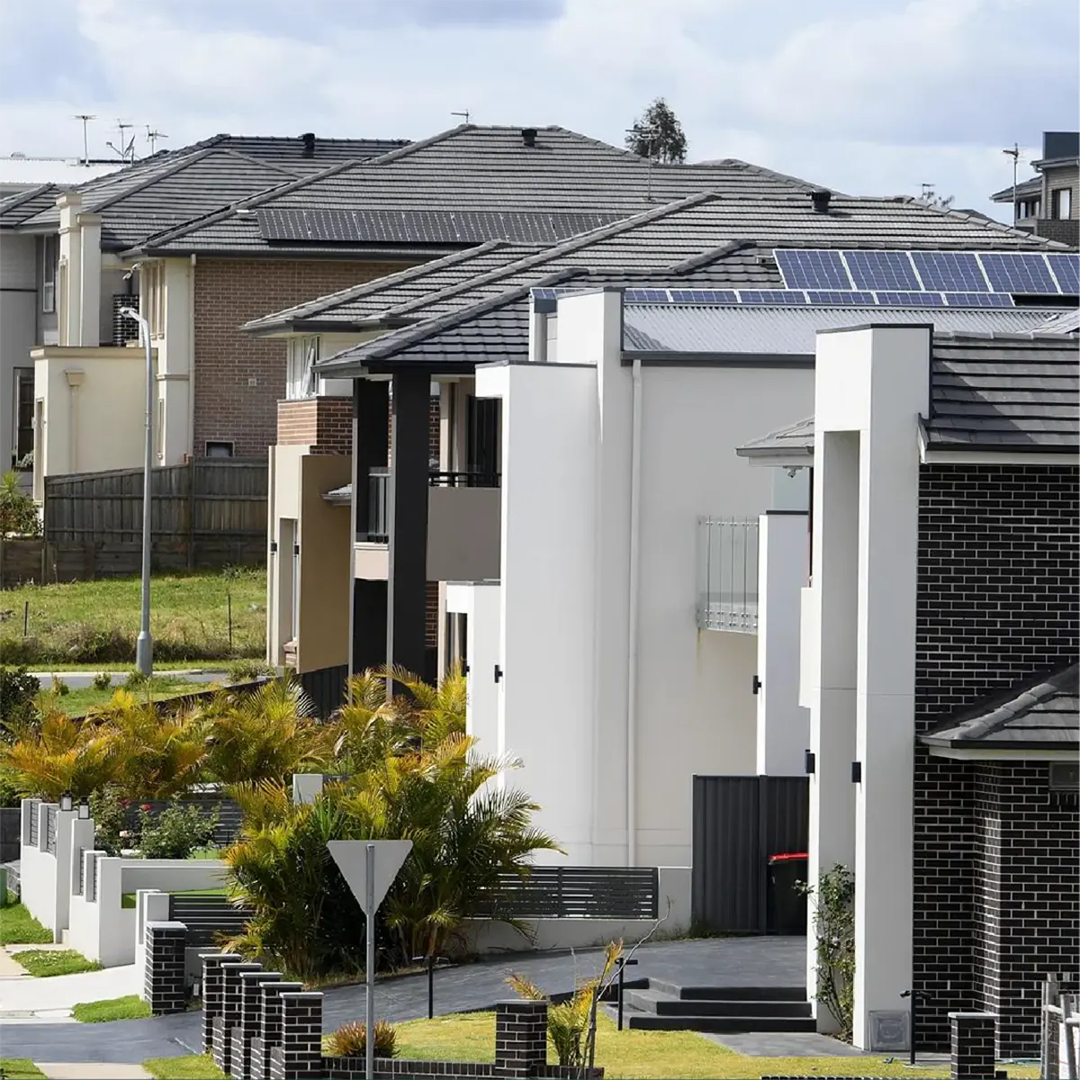
Hello, and welcome to Talking Property with CBRE. I'm Kathryn House, your podcast host, and in this episode, we'll be doing a deep dive into the psyche of private property investors. For generations of Australians, residential property has been one of the most familiar paths to building wealth. But recent changes to negative gearing and Capital Gains Tax have prompted a question. Is it time to think beyond the traditional residential playbook? Today, rather than getting lost in the tax mechanics, we'll be looking at what the recent changes could mean for investor sentiment, portfolio construction, and the movement of private capital. Purely from a sentiment perspective, CBRE recently completed a residential valuer survey, which points to a fairly swift reaction. Eighty-three percent of the valuer respondents indicated they expect changes to Capital Gains Tax will place downward pressure on residential prices over the next 12 months. And investor activity has fallen to its lowest level since the survey began. But are investors really turning their backs on residential property or simply broadening their horizons?
Phillip Almeida
I think these are going to be the best buying conditions over the next two to three years. So cashed up, high net worths that can buy development sites right now, the smart ones, are out there. We're starting to advise them to start looking at these particular sites.
Kathryn House
That's Phillip Almeida, the Co-Founder and Director of Strategic Partnerships for Performance Property, a data driven property firm that helps clients build multimillion-dollar property portfolios. Phillip brings over two decades of property investment expertise to strategic portfolio growth for medical professionals, farmers, and high net worth investors. And he's managed more than $3 billion in property acquisitions.
Ingrid Filmer
We saw 13 interest rate rises in a row, and yet we saw, let's say, fast food, like your KFCs, etcetera, held their yields at the exact same level. So quality will always win out over short term interest rate movements.
Kathryn House
And that's Ingrid Filmer, who leads CBRE's Capital Markets Private Wealth business, working with commercial property investors across Australia. I hope you enjoy our conversation. So, Phillip, welcome to Talking Property. I'm looking forward to unpacking how investor mindsets are evolving.
Phillip Almeida
Thanks very much, Kathryn. Thanks for having me on the show.
Kathryn House
And, Ingrid, we've been talking about doing a Private Wealth podcast for such a long time now, so I'm delighted that we've finally lined up today's recording.
Ingrid Filmer
Thanks, Kathryn. So enjoying being here.
Kathryn House
So, Phillip, let's start by chatting about residential investment. What has shifted most in the conversations that you're having with clients?
Phillip Almeida
It's a great, great question, Kathryn, and it's a discussion that we continue to have with our client base. Look. A lot of our clients that have been with us for 13 years are looking through the noise. Obviously, cash flow is going to be very imperative. I think residential probably still plays a very important part of a client's portfolio, but it all depends in terms of where they're at in terms of their portfolio growth. And, look, from our end, we're building sort of 20 to 30 year portfolio plans with our client base. So I think cash flow has been a main topic that we've been talking through. But if we look at supply and demand, we look at value at the moment. We look at confidence, which is at all time lows across the market. There are still value propositions nationally across the market. So we look past the noise, and when we're building a portfolio, we need to make sure there's a residential exposure in their portfolio and commercial exposure. So they both play a very important part in their portfolios.
Kathryn House
One thing I was interested in from the valuer survey that we did was that it points to first home buyers remaining active, but investor activity continuing to retreat. But when we did chat before the podcast and you've talked about it just now, you're still advocating for residential investment, and you said that it's actually opened up some pretty attractive opportunities for cashed up investors. Can you talk us through that?
Phillip Almeida
Yeah. So when we look at supply and demand, and we look at value, when we look at markets on a granular level where we've had sort of four to five years of very strong rental growth occurring in those markets, what does that do in terms of the pressure on rents nationally? Then we look at the cost of construction in terms of what it costs you to build a two-bedroom unit. Ingrid, in Melbourne, what are we looking at? Sort of 14 to 16,000 a metre in the middle ring suburbs of Melbourne?
Ingrid Filmer
I think we know, Phil, that the entire of Melbourne can be bought for less than you can build it for.
Phillip Almeida
Correct.
Ingrid Filmer
Which is playing value across many markets that replacement cost is well and truly higher than your actual initial capital investment.
Phillip Almeida
Absolutely spot on. So you can actually buy 50 percent below replacement cost. So right now, for the educated investors out there, you can buy really good quality development sites if you've got the capacity to hold them for the next sort of three to five years and ride this through. So for our high net worth families that are building, say, a $50 million portfolio with us that have had, say, existing residential assets where the net yield is 1 percent or 0.5 percent, it no longer makes sense for those particular types of families to be holding those residential assets, and then we're moving them naturally into commercial assets. But if you're a young doctor or a young business owner and you're starting out with your portfolio, I think residential investment still is a great stepping stone into getting into commercial property. But what we're seeing is we're doing a lot of debt consolidation, debt recycling with their portfolios. And those larger Portsea, those larger Sorrento assets, those larger Bellevue Hill assets in Sydney, we're starting to sell them down because the net yield and the land tax on those particular assets is just too great. It no longer makes sense for that family or that high net worth to hold that asset anymore. So it's a pretty loaded question because I think there's a number of different strategies that we can go down. But, if the net yield is too low, then we're moving to commercial. It's pretty simple.
Ingrid Filmer
But the other issue, Phil, is that REA economists have come out and said that in Victoria, specifically, in the last five years, 80 percent of residential properties purchased are either at the value they'd purchased for or less than what they'd purchased for. So the capital story doesn't exist in residential in the same way that it does in commercial. In those same five years, commercial yields have contracted as rents have also become, you know, economic rents as a result of construction costs. So I think there's some very strong leaning towards the commercial property side as a result of that. People just aren't seeing the historic returns that they expect from residential.
Phillip Almeida
Yeah. You're spot on Ingrid in Melbourne. But if we look at Perth, we look at Adelaide, and we look at Brisbane, during COVID, those capital values in Perth did a 110 percent, Adelaide did 108, and Brisbane did 104. So in terms of that cycles, we've now got a sell recommendation in some of those markets, and we're exiting out of those markets and looking at residential opportunities in Melbourne. So you're spot on for Melbourne, and that data is very, very strong for Melbourne right now.
Ingrid Filmer
And it creates a buying opportunity, but I think the thing that I see between residential and commercial is that investment seeks certainty. And for so long as we have uncertainty, which is created by constant legislative rhetoric, you know, like, I mean, last year we had the, you know, we're going to stop people from putting rents up. We've had changes to maintenance obligations. We've had changes to bonds and securities. It's more difficult to remove a tenant. Those factors, those legislative changes in residential make investors find it quite nerve wracking, and they're at the mercy of the government to change those laws. And that's where I think there's a huge shift from residential to commercial. And again, the REA stats are saying that right now in Australia, there's over 680,000 investors looking to specifically move from residential to commercial. And of those, a large chunk of those still are sitting in that lower echelon, that sub $2 million, sub $3 million space. So I think that really points to that resi to commercial move because otherwise if it was commercial people looking to buy more commercial you'd be seeing that at a much higher price point, but because it's that lower price point that's that massive shift. But what I found really fascinating was that they also surveyed those investors on how easy it is to buy commercial, and this is where your role comes in. On a scale of one to seven, you know, one being bonds, term deposits, most simple of investments, to seven being cryptocurrency, commercial property rated as number six as the most complicated to get into. And in actual fact, in our world, it's not complicated. But I think that because it's not as accepted commercial investment in the way that residential is, people don't know where to start, and that's, I suppose, where, you know, certainly companies like yours and mine come into play in helping people navigate and get into commercial because the returns are better, the yields are better, the tenant got a longer lease with tenants who actually are going to do the works, maintain the property, and they're wed to you as a landlord, you know, especially in retail environments where they literally need your location, your shop size, your specific offering, there's a much stronger wedding between landlord and tenant as well.
Phillip Almeida
Yeah. And I think, you know, to your point, Ingrid, is a lot of these sort of, we've tried to bring sort of institutional grade advice to the private investor market. And the issue is that, you know, Chamoun Malki obviously runs our commercial department. He comes from Frasers, so he's got that institutional mindset. But from our end, there's a number of different angles. You can look at a commercial property, and you can look at a $50mil portfolio. And you've got your passive, your food, which form the basis of the portfolio structure. Then we might look at some farmland that potentially could be rezoned in twenty or thirty years' time. So this is not just looking at an exit in five to seven years. These are sort of twenty to almost intergenerational plans that we're putting together that they can pass on to their kids. So a four or five percent net return on an asset now to an institutional might make sense. But if it's a private investor and we're taking a longer term view, we've got the capacity to hold it for different reasoning. And this is where we differ when we're building sort of a $5mil, $10mil, $20mil, and they all differ. So there's a different type of allocation when we're building that those commercial portfolios.
Ingrid Filmer
But when you talk about length, I think that is the trick to private wealth. They're not mandated to sell at any point in time. They often have a generational viewpoint of the property. They can be very, very flexible and creative in their approach to property because the way that they will use SMF to borrow or may not and whether or not they actually syndicate within the family and things like that. So, you know, Kathryn, I see in private wealth a far more innovative, flexible approach to property, but also the undersupply of construction in all states, bar Canberra, means that development sites are with income of some sort are absolute gold mines in the future because we have an incoming undersupply.
Phillip Almeida
Yeah. So if you were, and we've created funds along the way over the years, and we've done some pretty interesting stuff over the years. But those distressed development sites right now, if I was going to go out there and create a sort of a $200 million distressed fund right now and we've been approached. I think these are going to be the best buying conditions over the next two to three years. So cashed up, high net worth that can buy development sites right now, the smart ones are out there. We're starting to advise them to start looking at these particular sites. But you've gotta you've gotta have the holding income.
Kathryn House
How do you do that in this current environment? It has to be someone who's got a really long, long term view.
Phillip Almeida
Yeah. Our clients that are running into liquidity events of, say, $50 million, we're saying gear the asset at 50 percent. So, you know, they might borrow 50 percent, and then they're holding income on that particular asset will basically get them through this very difficult period. So we need a minimum income, but they need to be diversified across four or five assets, you know, not just relying on that one and going really aggressive on that one asset. You can buy great distressed development sites where developers are over leveraged. They have to get out of that particular asset type. You can buy them at $3, $5, $10 million dollar sort of price points. You don't have to spend $20, $30, $40 million dollars on these assets. And I think you have your passive, you have your good quality food retail assets that are just generating that passive income. And then one of these assets is your development site, which is the long term plan, which is where we probably differ to an institutional investor, and we can actually mold that portfolio over the next ten, fifteen, twenty years and take our time growing it.
Ingrid Filmer
And you're right, Phil. That's where institutions have a mandate. Like, they're going to have to spend a certain amount on a certain type of property, whereas private wealth doesn't have any of those mandates. Private wealth can shift and move and diversify and borrow money however they see fit.
Phillip Almeida
Yeah. Correct. And you just want to be careful. When we're building out, say, a $20 million portfolio for a client, the end income target is about a mil for us. You know, that is the usually the end target that we get to. But you want to build that out over four to five years so you can actually understand market cycles and where they're going. You don't want to be aggressive and go out and buy three or four in the one year. We just time it. We catch up with the adviser. We keep them accountable. We do the asset management like you do, Ingrid, and we want to keep the investor where they're coached to make sure they're making the right decision every year and keep them accountable.
Kathryn House
I'm presuming you wouldn't be suggesting that a first time commercial property investor buy a development site, a distressed development site.
Phillip Almeida
Look. Our investors have been with us for 13 years. They've already got their industrial site. You know? They've got some rental reversion. They've got a couple of food assets. They've got a nice mixture of passive income growth supporting the growth of the portfolio, and then we might look at potential farmland that can be rezoned or looking at distressed development sites. But our ultra high net worth families that we're representing, they've got the cash and capability to actually start acting now. So I think buying conditions are probably going to be the best buying conditions that we've seen over the next two to three years looking at the office cycles, looking at distressed development cycles, shopping centres, food. You're looking at paying sort of a four to five percent net yield. Take the hit if it's passive, good quality tenant profile. If they're well located, put them into your portfolio, and that'll create the base. But for more of our aggressive investors that have been with us for a long time, they're prepared to take a little bit more risk, and I think those conditions are looking quite attractive right now.
Kathryn House
So you talk about fast food, and I know, Ingrid, that's one of the types of commercial asset that seems to be, you know, really high in investor list. You've got it as quite a focus for CBRE's October auction campaign. Why do you think fast food assets have continued to resonate through different economic cycles?
Ingrid Filmer
So I absolutely love fast food assets, and the reason I love them so I think price point, they're bite sized price point. I mean, they can be anywhere from $1 - $8 million, but they're they're reasonably bite sized. Secondly is your quality of tenant, and there's quite a scale and all the tenants it's actually quite easy to work out where your tenant is in the scale. So McDonald's derive the sharpest yields, you know, all the way through to Red Rooster, etcetera, and then there's the drive through component. When we're talking about drive through, they sit on large lots of flat land, often with dual access. Love that. The average lease will be between ten and fifteen years. If it's McDonald's, it's twenty years. So absolutely love that too. But also, the actual tenants are doing so much work now to investigate these sites. When these tenants decide to locate, they do so with with the scientific and the strategic backing of those decisions. And so you've got a tenant who wants to be on your site. So I think all of those things together, the leases are generally net. Now not all the time, but generally net. And certainly, if it's a McDonald's, which is a listed entity, they're paying land tax as well. So I think for all of those reasons, I love fast food. Now, obviously, there is also retail fast food, and that's your Subways and your pizza shops and things like that. Again, generally located in really great strip locations. They have been supported by the expansion of things like Uber Eats, so it's not just that they're making money from the actual physical location. Their ability to connect to a much wider geography of customers has been increased by the likes of Uber Eats, but moreover as well, these are often businesses that have multiple locations and spent a lot of time, you know, getting their menu right, their marketing right. So you're really investing in a structured tenant, whereas if you're talking about, let's say, a one off florist shop, you don't necessarily have that same level of investment. The other piece, obviously, is capital intensive fit outs, which attract depreciation, and in commercial, depreciation is still completely accessible to your overall investment needs, so again, you've got exhaust fans and mechanical and flooring and shop fronts and all those kind of things. So for that reason, I really like the depreciation. Whenever I'm looking at a commercial property, I'm looking at how capital intensive the fit out is and how sticky that tenant is. So also think dentists. They have X-ray equipment. Same with vets. They've got very capital intensive fit outs.
Phillip Almeida
Radiologists as well is a great health care type investments because we've got the property for doctors business, and 50 percent of our client base are medicos. Looking at health care asset where there's significant amount of CapEx going into that building and equipment, you know they're not going anywhere. So you've got your lease tenure pretty much locked away. We know who often the tenant is, so they are brilliant investments to put into a client's portfolio to consider. We obviously haven't done if you're trying to talk to us into sort of service stations, we haven't quite got there sort of yet. You might get it across the line one day, but we are looking into it. We haven't bought a service station so far, and we don't buy gyms. There is certain type of tenant profile that we tend to stay away from. And, you know, we can have the discussion offline around the typical type of tenant to stay away from. But we love health care. We love industrial. The minimum entry point for us is around that $2 million dollar price point. We tend not to go below $2mil. Just the tenant profile for us is a little bit too risky. So we like good quality tenants going in, and then we'll take the risk on the development sites when they've built their portfolio and the portfolio is almost neutral yield or servicing itself.
Ingrid Filmer
The property I do like, though, is we've got a lot of new developments in Wollert, Truganina, new areas with huge housing demand, and quite often, we're selling things like that in that kind of $1 - $2 million range. The benefit there is they're often on a ten year lease or an eight year lease, and I find our investors there will own that for maybe two or three years, and then they'll upgrade. So sometimes it's a stepping stone into commercial, and it's their first foray, you know, where they're kind of comfortable at that point in residential, and so they're comfortable at that stage. But I find that every single person who buys one of our our lower price point properties at auction, they come back. And they're back within a year, and they're like, I know what I'm doing. I'm on and I'm back now to upgrade because they they get a sense of comfortability from that.
Phillip Almeida
Yeah. And I think from our end, we have sort of foundation assets in a client's portfolio, which are twelve year holds. And then we have our trading plays, which are sort of six to nine year holds. And maybe some of those sub $2 million dollars could play a part, but we've never, the entry point for us has always been two. Resi, unit blocks, good quality, you know, to replace a unit in Melbourne, you're buying a fifty percent replacement cost. So put two units in the portfolio, then build up to that commercial portfolio when they're ready.
Kathryn House
Ingrid, where are you seeing the majority of interest at the moment? Is it at that higher end of the private wealth market, or is it at that sort of $ 2 million dollar mark?
Ingrid Filmer
So, certainly, we have very, very high investor inquiry on properties that are higher yielding or lower priced. But, generally, our average auction sales sits at about three and a half million dollars. At auction, we'll bring anything from as low as seven hundred thousand and all the way up to $23 million under the hammer over the three day event. So what I love about commercial property is there is something for everyone. There's something for everyone depending on your risk profile, you know, the industry profile, geographically. So I have a lot of clients now, I'm sure you do too, Phil, who they might say, I love fast food. I'm going to look in South Australia because there's no stamp duty. And so the other piece is that they are geographically agnostic. That's not the problem. They're more looking at what's the industry I want to be, what's the return I'm looking for, and then they're finding the properties because the other great thing is people are very, very comfortable buying interstate within Australia because the laws are so clear, our rules of engagement are so clear, You know, we've got federal tax systems as well. So I think that people are quite happy to buy at all different price points and also all over Australia.
Phillip Almeida
Yeah. You're spot on. Like, with our $10mil plus portfolios, we don't have any single asset, more than two assets in one state. Obviously, there's land tax obligations across res and whether or not that tenant stamp duty in Adelaide's spot on. $3mil, you're there. So a health care asset sitting or an industrial asset sitting in their portfolio. So a lot of our clients have assets all across the country. It's really imperative that you get the asset management. And as a result of these CGT changes and, you know, file compliance is going to be a big one. So you're probably experiencing Ingrid with, you know, some of the stuff that our clients that have been with us for sort of thirteen years plus. File compliance is probably not one of their strongest points, you know, so we've gotta really make sure we keep them accountable on the asset management. Yearly valuations are done. All that compliance, you know, they can't just put a figure in the line in terms of the valuation work. I don't know. It's it you've gotta be file compliant for the ATO, and it's going to be an ongoing issue.
Ingrid Filmer
And it's a big issue next year. So valuations, I think, is the hottest topic at the moment. But, also, I know that if I'm getting a valuation to set my ATO capital gains tax, you're going to need to get that from a quality provider because the ATO if people are trying to get real estate agent letters and all those kind of things, the ATO is going to come after them. But the other thing I find that people forget to do when they do their valuations is get a replacement valuation as well to make sure your insurance is correct. But, also, I find that so many times landlords will do deals with tenants. They might do a refit or they do some landlord works and contributions, and they do not update their depreciation report. So you're right. File compliance is so important, but they are things that actually move the dial on what is your actual net income in your pocket at the end of each year.
Phillip Almeida
Yeah. So the asset management part of our business, we're putting twenty-five year maintenance programs on that asset. When any form of CapEx is done on that building, it needs to be recorded. And I'm seeing it will be an ongoing issue over the next two to three years because these landlords that are self managing, their own portfolio is going to run into a lot of trouble. So accountants and valuers are going to be the best ones. They're going to do really well as a result of these recent changes. Valuers were a dying breed twelve months ago. Now they've come right into the forefront. And accountants, in terms of how you're structuring your portfolio, whether it goes into a company, whether it goes into your personal names, trusts. You know, we're midway through building a $30mil portfolio for a client, and we're going to have to start pivoting in terms of how they structure their next commercial investment. It's really important.
Ingrid Filmer
Absolutely. So often in companies things like that is a massive shift that needs to be dealt with, and that then has, you know, reverberations on their wills and things like that. But the other big one I'm seeing, Phil, is next year, land tax notices are going to come out, and we have had, a marked devaluation of these properties. So there's a really big space, and, again, we have a team who actually just do land tax and council rates objections, but you've got 28 days to object from when that notice comes out, and there is huge opportunity that's going to also happen. There's going to have to be a whole repricing of the land tax valuations.
Phillip Almeida
Well, the issue is if an investor's overpaid for an asset or they've upgraded their residential home, you know, in terms of their gearing ratios on their entire portfolio, that is going to impact their position to continue to invest. And I think it's really important that they get ahead of this so the next twelve, twenty four months, we start doing some planning on both sides.
Ingrid Filmer
And the other piece I see is, obviously, people ask me all the time, oh, can I buy a property in my SMFS? And it's, like, well, wait a second. Have you actually got the right advice there? Like, have you actually set that up correctly? Because a lot of people don't understand commercial property in self managed super funds. And, again, the file compliance is even increased when you get to that area.
Phillip Almeida
And commercial property within the SMSF, a lot of our doctors are buying their practices right now. There was a panic, almost result of them shutting down on the resi side, and all these investors were trying to get in. And I I don't think necessarily getting in and buying property for tax purposes is the right way to go when you're setting up a ten, twenty million dollar portfolio. And I talk to our investors all the time. You know? Buy it for the asset quality and where it fits in your long term objectives, and these are twenty, thirty year plans that we're putting together for our clients. And they're not acting in the right way. They're just almost panicking, and now is not the time. There are fantastic buying opportunities to start considering right now. And those educated investors, the ones that know what they're doing, have been investing for a long time. What we're saying is they're starting to get back into the market, and I think buying conditions are very strong.
Kathryn House
How much is the, you know, looming interest rate increases? How is that affecting the investment psyche at the moment?
Phillip Almeida
Yeah. Great question, Kathryn. So what we're probably seeing from our end is that when we're talking to an investor, you know, you don't really want to be running your debt to income at seven, eight times income. I think during these sort of pandemics and changes, you really want to have a fifteen percent cash buffer. So during COVID, our investors had a ten percent cash buffer across all the debt that they held. During these periods, we're pushing that up to fifteen percent. So our clients, we've educated them over a number of years in terms of how to manage cash flow, and I think that's a really important topic. And there's been this natural gravitation to commercial because the cash flow requirements for you to go and buy a Melbourne house now is eighty thousand to a hundred thousand dollars a year. Now why would you be paying that when you can go and buy a $3 million dollar commercial investment right now where the out of pocket expenses are fifty thousand dollars a year to run the debt on that asset? So for us, it's just a very simple modeling their portfolio, managing their cash flow, telling them what they should or shouldn't be doing, and then just building their portfolio over the long term.
Ingrid Filmer
And I'll add to that, Phil, is that private wealth also is not necessarily interest rate sensitive because they have a long term view. And so it's not about next year or next month's costs. Everyone knows that interest rates will come up and they will go down. And when the interest rates are at their lowest during COVID, prices were at their highest. And so I think there is a correlation that is very accepted by private wealth that obviously with these slightly higher interest rates that you are actually going to get better returns and that prices have come down. But also with commercial property is they don't come down in a direct correlation. I mean, we saw thirteen interest rate rises in a row and yet we saw, let's say, fast food, like your KFCs, etcetera, held their yields at the exact same level. So quality will always win out over short term interest rate movements.
Phillip Almeida
Spot on, Ingrid. And some of the stuff that we're doing with our portfolio remodeling, they've got, say, $8 - $10 million dollars worth of resi property. The net yield on it's one percent. I'm saying, well, why don't we go and sell this particular portfolio down? They go and use because and there's no debt. They've all been paid off because it's the grandparents that have done all the hard work. They've done all the heavy lifting. Then you've got the second generation that have held the portfolio, and the third generation is saying, grandparents, we've got this portfolio. We're going to inherit this portfolio. The net yield's terrible, and I don't have the capacity to maintain these residential assets. And so we're now telling those families to sell down their residential holdings, and go on, just shift to commercial. So those generational families are moving out of residential into commercial, and we're seeing that naturally happening now. And those conversations are getting stronger. Because what is the point of holding that portfolio if it doesn't make sense anymore?
Kathryn House
So, Phillip, one probably last thing, because I think we could talk all day on this subject, but, one thing we talked about in our planning call, Phil, which I thought was really interesting, maybe just to finish this off was talking about unconventional property and some of your out of left field investments that you're involved in with your clients. Can you talk us through the example that you and I spoke about where, you know, it wasn't immediately obvious as a conventional property play, but is working out pretty well for your clients at the moment.
Phillip Almeida
Yeah. So this is a very interesting one because we're always looking at different ways that we can disrupt certain industries. And, we looked into the funeral industry as a model, and, we met the two cofounders, Warren Roberts and Luke Roberts, visionaries, very creative, but we basically set up the debt for a memorial fund down in Mornington. So it's called Mornington Green, and we provided the debt on that asset. It was an old golf course. So if you look at it online, great concept, eight thousand trees, memorial trees. So when you die, you get infused into this tree, and you create this family tree. There's fantastic recurring income. There's eight thousand trees that are planted on each memorial park. You want to be within sort of one hour commuting distance, and we want to really grow this concept as when you die, it's a different way of dying rather than going into a cemetery plot. So they own the patent and technology for your ashes to be infused in these trees, and then your family can go and visit these. So green wedge zone land, different, you know, highest and best use in terms of the change, in terms of what you can do with that land. And I think it's a very positive way of going back to that memorial park. So we've created some governance for Warren and Luke. It's a great concept, and it's a bit left of centre. So if we're creating a fund or looking at something different, we're happy to look at outside the box type investments as well.
Kathryn House
And are you seeing, Ingrid, that there's a bit of out of the box thinking with the investors that are coming into your auctions?
Ingrid Filmer
Absolutely. Investors are becoming more and more savvy. I mean, when investors turn up at the auctions, they've already been on ChatGPT. They've downloaded reports. They've got so much information. The only thing I would warn is that sometimes that information is actually incorrect. And so using experts and getting the right advice. I think the biggest thing that people don't realise is that you can reach out to any of us, and we're actually happy to just help. So it's ask the questions of people because there are a boundless amount of opportunities. You know, we have so much knowledge and information out there, and everyone's absolutely happy to help. And I just think we should be demystifying commercial property. It should not be sitting at number six in the most perceived complicated asset class and sitting above crypto. It should be something that, as an industry, we should all be working together to demystify it and to bring these opportunities to all Australians looking to invest for their long term generational wealth.
Phillip Almeida
Absolutely spot on. And it's the education process and, you know, a lot of the commercial assets that we see on face value look fantastic. But when you look under the hood and when you start doing the due diligence on these assets, on face value, they look great, but, that's where it really pays to get that education process. By all means, use AI if you want to, but you really need to look at the lease. You really need to understand the tenant profile. You need to really understand the DD requirements that you go through. You know, in every sort of ten assets that we look at, probably three or four will fail, DD, and it's a common occurrence. So just educating and helping, that's what we're here for, making the right calls.
Kathryn House
Well, Phillip, it was great to have you join today. I have learned a lot from this conversation. Unfortunately, I probably don't have the money to invest in the large portfolio.
Phillip Almeida
Start in resi, Kathryn House, and then build your way up. We'll get you there.
Kathryn House
I don't think Ingrid would agree with you there.
Ingrid Filmer
I just don't want to be fixing window locks and doors. Thanks.
Kathryn House
And thank you too for joining today, Ingrid. It was worth the wait to get you on Talking Property.
Ingrid Filmer
Thank you so much, Kathryn. We've really enjoyed it.
Kathryn House
Well, I think today's conversation has shown that investors aren't turning their backs on residential property. Instead, they're broadening the way they think about building property wealth from fast food investments through to value add opportunities and more unconventional real estate plays. To our listeners, thanks for tuning in. If you'd like to read CBRE's latest residential valuer survey, I'll include a link in today's show notes. Until next time.