Kathryn House
Hello and welcome to Talking Property with CBRE. I'm Kathryn House, podcast host and in this latest episode, we're going to be charging our glass to talk about the ongoing evolution and flurry of investment activity in Australia's pub sector. CBRE recently issued a new pub research report called Raising the Bar and I've shamelessly stolen that title for this podcast - imitation being the highest form of flattery! I'll be drawing on some of the report's key findings while unpacking the current market opportunities and challenges. To do so I'll be joined by one of the Australian pub industry's power couples and by a senior CBRE pub valuer.
Danielle Richardson
Looking at what customers were looking for, hospitality was stepping up and it was stepping up really quickly. So we felt that it all came down to not just opening the doors of a pub and running them efficiently. There is very much a role to connect with what your consumers are looking for. And putting that lens on over a pub operation is really, really important. And we do it now with every single pub.
Kathryn House
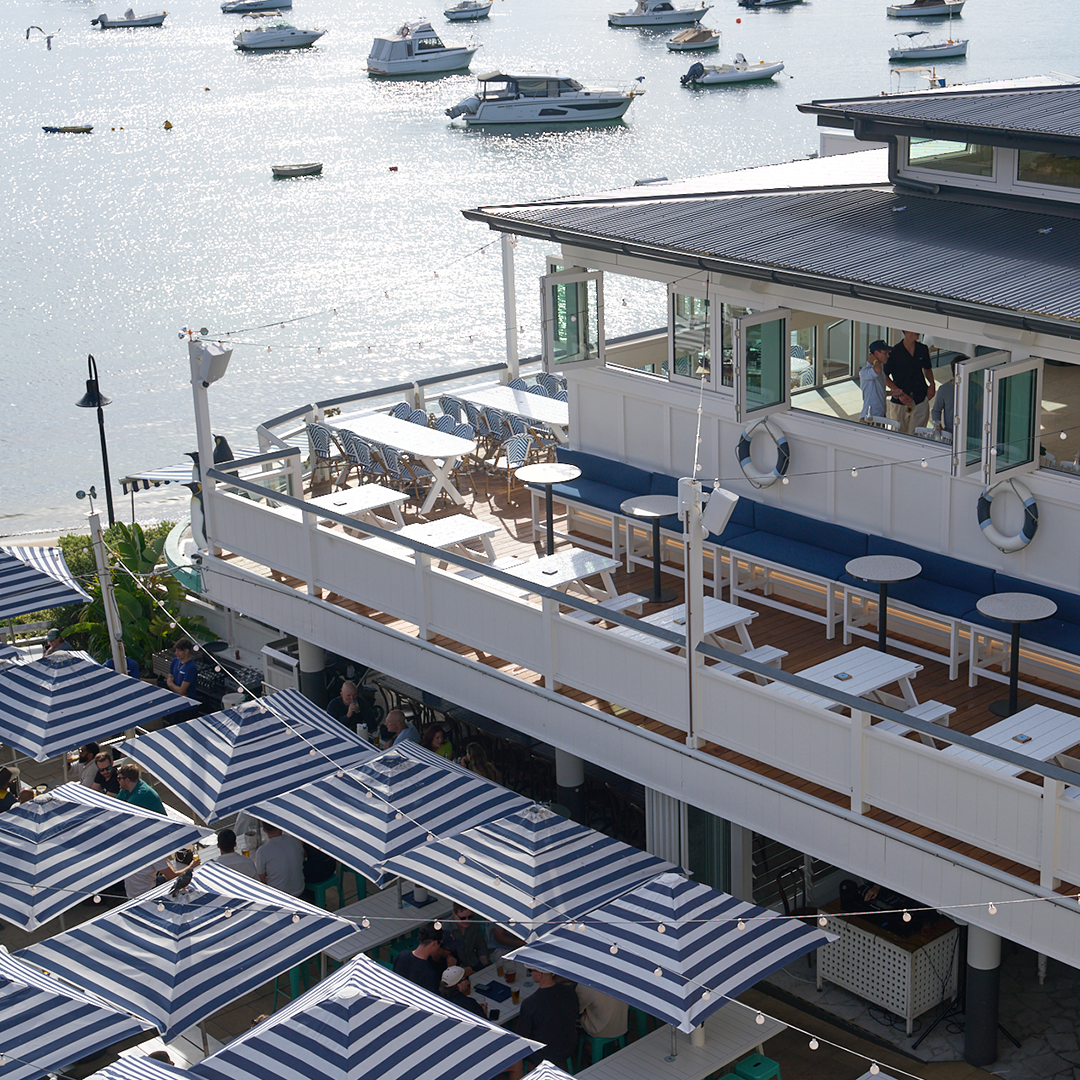
That's Danielle Richardson, the daughter of Laundy Hotel's patriarch, Arthur Laundy. Danielle and her husband Shane run the Sydney operations of the 90 strong Laundy Hotels group, which is the largest private pub owner in Australia. The group's prominent Sydney venues include the newly refurbished Watsons Bay Hotel on Sydney Harbour, Northies at Cronulla and the hatted Log Cabin in Penrith.
Adam Nadile
Coastal assets will always be popular no matter what. There's a halo, you know, being on a beachfront or being near a beachfront that I think will always attract attention no matter what. But ultimately I think too the attraction is if you're chasing a high yield or a higher return on your investment, even at quite a large ticket price, your initial return will be more attractive. So I think that also is a key part of why the area remains attractive to operators. And you'll still see large Sydney-based groups will enter the regions for the right property.
Kathryn House
And that's Adam Nadile, a director within the Valuation & Advisory Services division of the CBRE Hotels team. I hope you enjoy our conversation. Danielle, thank you so much for joining Talking Property.
Danielle Richardson
Thanks, Kathryn. It's lovely to be here.
Kathryn House
And Shane, I'm so pleased you could also join us.
Shane Richardson
No, great to have us. Thank you.
Kathryn House
And to round us out. Adam, great to have your perspectives given your recent work on the Raising the Bar report.
Adam Nadile
Thanks, Kathryn. It's great to be here.
Kathryn House
So, Danielle, perhaps to kick us off, you grew up in the pub industry as did your father, Arthur. In doing a little research I read that Arthur started tapping kegs when he was eight and took over the family hotel business in his 20s. When you were growing up I read that you and your siblings would run around the bars while Arthur was readying to open the pub doors. Do you think you were pre-destined to be in the pub sector?
Danielle Richardson
I guess you could probably say that. I think it's certainly a long time that I've had exposure to the pub sector, to hospitality, and I'm incredibly passionate about it. I worked in the pubs probably I started in about the age of 16 at every holidays going and stocking bottle shop shelves, you know when I couldn't serve and then throughout my university degree worked in the bars and, and got a great feel for the industry. But dad was also very supportive of me choosing to not join the family business immediately and I went out into the corporate world and most of my career, 30 years or so of it, has been in the corporate world but still with that finger on the pulse I guess for hospitality because I was in the supplier side and worked for a lot of those companies so I got a great exposure to what other groups, what other people were doing and a really lovely career, but yes, I think you probably could say I was destined to come back to the family eventually.
Kathryn House
Yes, it was always going to draw you in.
Danielle Richardson
Yeah.
Kathryn House
And so Shane, prior to joining Laundy Hotels you were managing director of Coca Cola Amatil's alcohol and coffee division until 2019 and I read a key figure in the acquisition of Feral Brewing. It seems that you were also blooded in the industry.
Shane Richardson
Yeah Kathryn, I think similar to Danielle I've spent a lot of time of my career dealing with the hospitality sector and I'm 30 plus years as well. I was Coca Cola Amatil, I was CUB, I worked for the breweries for quite a stint of my career. So I loved seeing what this industry had been doing and being a part of it. But coming over to being on this side of the fence and running hotels, it's just a fantastic industry so I was excited to come this way.
Kathryn House
And I guess to round us out. Adam, what drew you to specialise in the pub sector?
Adam Nadile
Well, yeah, like a lot of things in life it sort of happened by chance to be honest, It didn't happen by design. I was in valuations for about 10 years prior to landing in the pub space. I was at CBRE at the time and there was an opportunity to join the hotels team and I just saw an opportunity to specialise. It wasn't so much about pubs at the time. But I think what attracted me always was, I mean they're such a uniquely Australian asset pubs, particularly on the eastern seaboard. What we have on this side of the country is very uniquely Australian. And you know, growing up in Australia, who doesn't love a pub? And I just enjoyed the excitement of this sector, the characters in the sector. It's very sophisticated sector these days but I still think it's underpinned by a lot of family businesses and entrepreneurial minds and I just, I've always found that fascinating and I'd like to think it suits my character as well.
Kathryn House
So we're going to be touching a little today on the new CBRE Raising the Bar report. One of my key takeaways from reading that was about the sector's resilience. Can you give us your take Adam, on why you think the sector has been so resilient through what's been a pretty turbulent period?
Adam Nadile
I think pubs in general have always since the birth of modern Australia. I think pubs have been resilient just because of what they are and what their fundamentals are. They've always at heart been a community-centred asset. You go back to, you know, many, many years ago and they were the traditional old boozer and they've morphed now to family friendly, in large format venues like our guests own. They've had the ability to be dynamic and change to what the community needed at that point in time. Whether it was gastro-style pubs of good food or gaming and what gaming's brought to the industry in the last 30 years. They've just been able to shift and meet whatever the communities needed at that point in time. And moving into more recent times and we've had some difficult economic periods. I think the beauty of a pub is, unlike our traditional real estate sectors where you've got passive income, industrial, retail, office, passive rental income that doesn't really adjust beyond fixed increases or CPI. Pubs have the ability to be dynamic. You can change the way you're operating, can change your pricing, you can change your labour resourcing to suit whatever the economic conditions are. Further, the world's changing and the latest generation isn't drinking as much as the generations past. But pubs don't seem to be suffering. I think they're adjusting to what the new generation wants and it's just that dynamicism to basically just meet the needs of the day. And I think that's also underpinned by really good quality, entrepreneurial minds. Publicans are very bullish people and I mean that in the nicest way possible. They're not shrinking violence, they're always looking to maximise their asset and get in front of the trend.
Kathryn House
So, a good segue about resilience, I think Danielle, because you joined the family business just before COVID struck. So a really sort of tough period.
Danielle Richardson
Great timing, wasn't it?
Kathryn House
So in those lockdown days you had to keep the wheels turning. What were some of your key learnings during that period?
Danielle Richardson
Well, it was a really interesting and tough time for the industry as a whole and for all of our people particularly. I guess we just bought into the Red Lion with dad. So that was our first foray into owning a pub. So I had the perspective of I had direct staff as well as then the whole group needing to be on Jobkeeper and making sure that everybody knew their rights, what they deserved, how it was. So I guess the key learning was communication. We had to be incredibly strong on how much we communicated with our team, how much we checked in on them and made sure that they were okay. And because we are quite far reaching, that then became quite a challenge on how we had our systems set up. Could we actually, you know, make sure that we reach them? We would do zoom courses of cooking classes with our teams where it was optional on a Friday night for them to jump on and we'd have our exec chef and our chef team leading the way and everyone at home was interacting and making the meal with their families. So communication was really key. I guess also another really big learning for me is I got a great understanding of our systems. Because I was new into the business and I hadn't been in the business since leaving university, I very quickly needed to understand our payroll system and our backend, our ATO. We weren't on MyGov, would you believe. And we were coming to the point where, you know, we needed to. I had to set the whole business up with my dad at the age of 80 on a system that he essentially only had the rights to be talking to the, you know, the ATO and the government to get it all set up. But it was critical that we did it and we did it quickly. But I think that's a really good outcome for me. You know, the payroll system is probably one of the most important systems to know if you're a publican. And so the learning and then how I could then apply some efficiencies from my background, I guess, and look at how we move forward as a group. So mainly our people. Definitely our people and then our systems and our efficiencies.
Kathryn House
It was such an interesting period. I remember friends and we'd go for cocktail walks. So some of the small bars you could get a takeaway cocktail and we'd take the dogs and people were sitting in their front yards in deck chairs and shouting out to you. And it's sort of, it's so bizarre to think about that now.
Danielle Richardson
And we had to pivot. We opened a lot of our hotels as bottle shops because you were allowed to sell retail. So we've got the Woolwich Pier which doesn't have a retail. A lot of the pubs don't have a bottle shop and we would be getting stock, putting it on the floor, selling it. We were doing a lot of meals for Father's Day out of Marsden Park. One year we did home packed meals and you could order them online and we would have them all ready and delivered out to everybody in the local area. Because you were still very much about keeping communities in touch because it was quite isolating.
Kathryn House
Yes. So Shane, if we fast forward to today, there seems to have been a little bit of a recalibration occurring at Laundy Hotels. I read that you this month sold the Settlers Tavern on the New South Wales Central Coast as part of a strategy to redirect cash into upgrading some of your other venues. What's driving that focus on upgrades versus new acquisitions?
Shane Richardson
So the first thing, and it's fundamentally, it's a potential return. So we look at each opportunity as a bespoke opportunity when we have the opportunity of venues coming onto the market. In the last year we've bought the Light Brigade Hotel in Paddington, we bought the Lord Nelson Brewery in The Rocks. We saw both of these assets as venues that we could take into the portfolio and grow and we saw a good upside return opportunity out of those venues. But at the same time we look across the portfolio of hotels and we've got a lot of hotels that when we reinvest into venues we see great initial uplifts. Take Watsons Bay Hotel. We've just finished a great renovation in what we call our top deck and mid deck. And what we find is that if you provide a great facility to the community, it returns. So that goes with what we offer from a food and a beverage perspective, what type of entertainment. So we don't have a straight line strategy on our investments into either new or refurbishments. It all comes down to which is the next pub within the list that we think either is a great asset to join the portfolio or when we look at some of our venues, we've got a lot of venues that we know that, you know, investment into those properties will deliver absolute growth. However, it's just what's the best use of capital at the time.
Kathryn House
Well, I am looking forward to checking out the Watsons Bay renovations. I love getting the ferry over there. So Adam, if we're looking at deal activity, I was reading today that the top 10 national pub deals in Australia totalled around $580 million. So an incredibly active period. Can you give us a little flavour on the primary buyer types? And there seems to be some really strong lender support for the sector at the present time.
Adam Nadile
Yeah, the second half of 2025 has been very, very active. Probably caught us a bit by shock in the sector. Buyer profile, speaking from a Sydney perspective and a New South Wales perspective because that's where I do most of my work, it's a market that's very much dominated by private families, not all families, private groups but a lot of them are family businesses that are multi-generational. Danielle and Shane are members of one of the largest ones of them we have. And in terms of activity, there's still a lot of publicans who own maybe one or two pubs, particularly down that lower end of the of the spectrum. But that higher end of the spectrum where we're seeing a lot of deal activity at the moment, I feel over the last few years that is increasingly consolidating. There's a select group of privates, there's still a number of those, but that is consolidating more and more as they build on their portfolios. These families have significant, significant portfolios but they're still fundamentally running it themselves from home, in their kitchen. From a lender point of view, I feel there's been an increased appetite with the traditional banks in recent times and I think that just again speaks to everything we've just mentioned earlier. The resilience of the sector in difficult economic periods. The ability for the asset class to pivot and always be in front of things and change what needs to be changed to still maintain strong income profile that other sectors don't have the ability to d pivot on I think is ultimately from a risk point of view adds a bit of surety to the asset class.
Kathryn House
So Shane, we've talked about the acquisition activity that's been happening and this big uptick but are there some real barriers to entry for people wanting to get into the pub sector?
Shane Richardson
Kathryn, absolutely. I think the fundamental one is the cost of entry. Our sector is quite, as Adam was talking through, it's hotly contested and although there is good returns, we have to work harder in our businesses to be able to deliver those returns. Danielle and I do a lot of work with our banks and keeping them informed on how we trade, about what the performance is like, where we're thinking about taking the business, what are the new opportunities we see out of them and then keep coming back with what's the, I suppose, the delivery of those results. So it's a high cost of entry. It's also, when you look at operational costs, our operational costs, we've heavily dominated in our cost profile with people and we have something just under 2,000 staff that we look after at Laundy Hotels. And the staff costs, we have to provide a good quality experience to the customer and we have to pay our staff to be able to do that. So you've got higher operational costs, you've got higher cost of entry and then finally you've got regulation. We continually see more and more regulation in our sector. Even the small little changes puts pressure on costs. We're seeing next year even as simple as our garbage, which we have separation of recycle versus normal garbage waste or general waste. We're now going to have to go a step further and separate food scraps. So by any of these regulations, the flow on effect is a higher cost profile for us to run our business. So we work very, very hard on trying to bring our operational costs or efficiencies up, so our cost down. We're fortunate because we can put programs in across the group and really drive operational efficiency where, you know, a person coming in today with a single pub, they're going to have to do that themselves and you know, it's a big barrier.
Kathryn House
So real benefits from that economies of scale.
Shane Richardson
Absolutely. I think economies of scale in our sector are things that we can actually bring a better return and that's as we look at assets in a potential acquisition, we can see what operational efficiencies we could bring because of the scale that we've built within the organisation to improve on what people have done. So, absolutely.
Kathryn House
So moving away from say investment activity. Danielle, I've seen you quoted in the past about the understanding that you gained in your prior roles about the importance of brand, food and beverage when it comes to pubs and the importance of delivering not just a product but an experience. Can you talk us through that?
Danielle Richardson
Yes, I guess my background is marketing. So I had a lot of exposure throughout my career to understanding consumer trends, what people want, what's happening in the market and how you adjust and provide to what they're looking for. When we came in to the business, a lot of our pubs traditionally were called the local pubs. So it'll be called the Wood Tavern or Jordan Springs. We felt that looking at what customers were looking for, hospitality was stepping up and it was stepping up really quickly. So we felt that it all came down to not just opening the doors of a pub and running them efficiently. There is very much a role to connect with what your consumers are looking for. And putting that lens on over a pub operation is really, really important. And we do it now with every single pub and it was done innately, but we are very focused on actually looking at that. So for the Lord Nelson, it's an English-style pub. Our menu fits that offer. Our drinks very much fit the offer of what consumers are looking for when they come into our pub. We're focusing on Sunday roast because of the traditional English roast and how important that is and featuring that. You know, the Log Cabin in Penrith had an amazing history that we've bought into every experience within the pub when we built it. There are timelines on the walls, there's an understanding of when it burnt down and what happened and now that we've rebuilt it. And that's really important in connecting into your community because for them to connect and be your favourite local, which is what we say we want to be, we want to be everyone's favourite local, that means a different thing for every community. So how we look at the history and the region and we make sure that that offer always leads to a much better customer experience and engagement with your hotel.
Kathryn House
I mean on that F&B front and you mentioned the Log Cabin, I saw that it recently received a one hat award from the Good Food Guide. So the first hatted restaurant in that area. And you also bought in a sixth generation French chef, Manu Feildel to you know, really sort of bring a whole new enhancement to your Red Lion Hotel in Rozelle. It was interesting in our report we did a 'pub grub' indices and it's definitely not grub anymore in some of the hotels. How much is that shift, you know, it's not just your bangers and mash anymore. How much does food play a part in a really strongly operating pub?
Danielle Richardson
It's critical. It's absolutely essential now. And it was one, you know, Sinclair's out at the Log Cabin that you referred to. We got the hat, that was such a big achievement for our staff and it was a journey that we took and we did it very intentionally. We source all local produce. There was a real story behind Sinclair's and why we went about what we did with the chef's table. How do we interact with that community? And they really bought into it, and it's a beautiful restaurant and the team are very passionate about it. So there's also that engagement with your staff and they are so proud that they received a hat. Food in every one of our hotels is absolutely our core focus, along with the beverage offer. But I guess how we can differentiate our food offer within each hotel is important and that's why we did look at Rozelle and we've brought Manu in and we've got a great partnership with him and it's thriving. But we're competing against restaurants now. And pubs, while traditional pub grub is never going away, our schnitzels, our steaks, our base offer is absolutely still the priority for when people come into our pubs because that's what they want when they get in there. However, we are very, very strong on the quality of that. So it's about stepping up our offer in food and making sure that the schnitzel, we crumb it by hand. I actually had a girlfriend, we were at dinner on Friday night at the Red Lion. She's like, this is one of the best chicken schnitzels. And I'm like, oh, yeah. She goes, where do you buy it from? I'm like, no, no. We hand crumb it. She's like, what? And I'm like, yes, it's one of our things. So in answer to your question, food is and will be continually the focus of the hospitality group and everyone across Australia is doing a really good job on it. And so it does keep us competitive and we're still accessible for families. And that's really, really important, that we have great food that is accessible to the local community and the families to come and enjoy within our beautiful pubs.
Kathryn House
Shane, what about events. In our recent pub report, it talked about it being a critical demand driver in the hospitality industry these days. Is that driving an uplift for your pubs?
Shane Richardson
Definitely. We love events. Whether they're events that are created outside of our hotels or whether we create those events ourselves. Just to give a few examples, recently with the British Lions tour, we have the Locker Room at Homebush and we're just across the road from Accor Stadium. And we housed pretty much two and a half thousand people in the Cathy Freeman Park. We put out a celebration we thought of our venues, and as Dan was just talking about, we love the food side of our business. So we showcased the fish and chips from Watson's Bay, the chicken pieces from Red Lion, it was the pies from Woolwich Pier. So we had a good offering across a number of our venues that provided an ability to get people engaged with not just the event there, but also across some of our other venues that aren't around. But when those sort of things happen, the drive of demand that we see from people wanting to be entertained in spaces, it's fantastic. Another really good example is we do a very, very big Anzac Day out at Log Cabin, and we create some of these events. We bring in a little stadium, and people just come out to have fun. And when you've got community events where people want to socialise, they want to be entertained, but they also want to be interacting in your venues, creating events are just a fantastic part of the business.
Danielle Richardson
The other thing I was going to say is creating events is absolutely key, but also having an offer for if you have a wedding or a birthday or any sort of event that you want to have in one of our hotels, we've worked really hard on the event space and continue to. It's a really challenging part because people are so emotionally connected, obviously, to their events. But one of the big opportunities for Watsons Bay with that renovation is weddings. And we're seeing the uplift of weddings in pubs that have beautiful event spaces. And it's always making sure that, you know, we have packages and offers that if you're turning 21, 50 or you're getting married, we have a beautiful offer for you.
Kathryn House
Adam, another sectoral trend appears to be growing interest in regional pubs, driven by urban decentralisation, potentially lifestyle relocations. How are you seeing that play out?
Adam Nadile
Yeah, it's still definitely a market with appetite. I think a little bit of the heat in that market in that market may have come out from sort of the pandemic period. There was a real surge in activity in regional and coastal regional at that period of time, which correlated with a lot of city dwellers moving to the regions. There's definitely still interest in that area. I think the fundamentals are still larger regional towns with good diversified revenue streams. We've seen some big sales this year. The Gem Hotel is one of them in Griffith, which, you know, it's got pretty much every revenue stream available to it. It's a large asset, but I think they're the fundamentals that still attract investors. Speaking to the barriers of entry point of view that Shane mentioned. I think regional assets offer an opportunity for some groups or individuals who have barriers entering the Sydney market to go and explore the regional markets. Coastal assets will always be popular no matter what. There's a halo being on a beachfront or being near a beachfront that I think will always attract attention no matter what. But ultimately I think too the attraction is if you're chasing a high yield or a higher return on your investment, even at a quite a large ticket price, your initial return will be more attractive. So I think that also is a key part of why the area remains attractive to operators. And you'll still see large Sydney-based groups will enter the regions for the right property.
Kathryn House
Are you interested in the regions, Shane and Danielle?
Shane Richardson
We have a number of our hotels actually in the regions, so whether they be north, we've got a couple in Port Macquarie and then we're also at Wagga, Dubbo. But in those assets we have partners. And I think one of the things we'd also say as part of our group is that we're not arrogant enough to think that we can run everything. So when we've got a partner that's in a local community that is part of that local community, we hand the keys over and they have autonomy to run those hotels. We work with them closely on the backside of the business, however, we see that, as Dan sort of said, we want to be everyone's favourite local and if we haven't got the ability to really be part of that community, we want someone who can be. So it's an area that we still really like, the regional areas.
Kathryn House
So I think we've talked a little bit about some of the challenges already, but are there any other challenges coming up, do you think, for the industry that you're focused on. Danielle?
Danielle Richardson
Yes, I think there'll always be challenges. The biggest one would be the compliance and regulation and workers compensation and all of the world that is the red tape that we have to go through but is really important. We do absolutely know why these regulations, well, most of them, are in place but again it does take a lot of your time. Cost of labour is challenging for us and we're constantly assessing the efficiencies that come with that and the costs and how do we keep going and making sure that our people are well looked after and that we stay efficient in how we run the pubs.
Shane Richardson
I'd say one thing, that our customers are expecting more and they're continually expecting more. So a big challenge for us is to keep reinventing and finding opportunities to, whether it be to entertain them or provide them a better service, will be continually the challenge that our sector faces. And, you know, we've just got to keep finding ways of making people still feel that the pub is the local heart of the community and it's a place you go to socialise.
Kathryn House
Yes. So, Adam, maybe a final question for you. What's your outlook for the pub sector in the next 12 to 24 months?
Adam Nadile
Yeah, I'm still relatively, I'm still quite optimistic on the sector. We're in a really, really strong period at the moment that's, you know, we're seeing a lot of large transactions in the last few weeks. I think that demand will remain. I think there's an investor appetite out there that isn't quite satisfied at the moment. Ultimately there isn't a lot of A grade stock on the market or available. So when that does become available, I think the lack of supply, an unsatisfied investor demand and this is illustrated by the amount of competitive processes, those sales incurred. You know, from what I understand there were under bidders that were very close. So there is demand there. So I think that coupled with a lack of supply, gaming revenue is up across the board, there's no denying that. And that in part may be due to the vibrancy reforms that we're seeing in the industry where the appropriate hotels are getting extended trading hours, which is clearly benefiting the industry. I don't see any of that changing. I see all that all combining to basically create a strong level of demand, maybe not further compression in yield. I think we've seen quite a material compression in yield in the recent, in the last six months, I should say. I don't know if we're going to get much more compression, but I think we'll get some maintenance in that regard. So I'm very optimistic that whilst we might not get the volume levels we're getting right now, I think the demand will be there when something's available in the market, it's going to get a real competitive sale process, which will result in very strong values and strong investment metrics. Challenge wise. Look, I think it's the challenges, as the guys have just said, they're the same challenges. There's going to be challenges dealing with ILGA and reforms and always making sure you're compliant with the ongoing changes in the regulations of the industry. Cost of living and making product available for guests and still creating good value for money. And labour. Labour is always going to be a challenge. But ultimately I'm very optimistic on the next 12 months for the sector gaming.
Kathryn House
It's a good point. I didn't ask you about this, Shane, but you did recently sign a big gaming deal with Tabcorp. How important is gaming to your operations?
Shane Richardson
Oh, look, gaming is a very important part of our business. But then again, so is food, so is beverage, so is entertainment, so is even kids play areas these days. So we don't look at gaming as being the area just for focus because if you don't have a really well rounded business, you don't get your customers through the door. So we want to make sure whether it is a great gaming room. We're just doing up Northies gaming room right now, providing a great space for people to come in that is very important to that business. But as I said earlier, so is having a great range of beverages, a great food offering. We even won the kids best play area at Marsden with the recent awards. So all those sort of areas are important because we don't just attract one person, we attract everyone in the community into a hotel. Adam talked about the challenges and positives, but the vibrancy reforms that are coming through in New South Wales are fantastic for our industry. I think we went through a period where we just didn't want people to socialise and we're putting more and more restrictions into our industry. What's now happening and the rebirth of live music. We've just had a weekend of some outstanding live music across our portfolio. Danielle and I need a few days off after having to be at so many of our pubs over the weekend.
Kathryn House
Well deserved days off.
Shane Richardson
We had dueling pianos play at Northies Hotel in Cronulla, which was super fun for the, you know, we had a great mix of younger people and older people who just love coming along and getting entertained. But with the help of the New South Wales Government at the moment, they're doing a fantastic job on really trying to provide Sydney and New South Wales to be a place that has not just a daytime economy but we're a world class city that should be able to offer people, you know, great places, great entertainment and a great place to visit.
Kathryn House
So maybe to wrap us up, Danielle, we started the episode talking about Laundy being a generational business and I understand that one of your daughters is now waitressing alongside her cousins at one of your hotels and coordinating some of your events. Can we assume that there's a new generation that will take Laundy Hotels forward?
Danielle Richardson
Absolutely. I think being a super proud mum, Molly just got the highly commended at the awards as the industry rising star, so she's already been recognised as passionate. My nephew Charlie's been with us for years and has, you know, run multiple of our hotels, is now in our head office and our finance team looking after so many parts of the business. And it's a great industry, as I did, that you can come and go. So as each of them go through university or TAFE or whatever they're doing to find their path and their own careers, we love having them in the business behind the bar, talking with customers. You know, their Pa loves coming in and seeing them when they're working. So, yeah, I think we've got a really positive future with the next generation coming through because they are incredibly passionate and, like us, have very much been brought up in the industry. You can't get away from hospitality talk in our family, unfortunately, so having the children as a part of it is exciting and there are lots more to come. Heaps of them are still too young to even be in the industry.
Kathryn House
Well, yes, well, you've got a long time left to go, Danielle and Shane. But it's nice to know that it is going to be carrying through for more generations.
Danielle Richardson
Yes, absolutely.
Kathryn House
Well, thank you so much for joining, Danielle. I really appreciated all your insights today.
Danielle Richardson
Thanks so much for having me. It's been a pleasure.
Kathryn House
And thank you too, Shane. It was great to have a chat about what's, you know, driving the industry at the moment and some of the Laundy Hotels initiatives.
Shane Richardson
Really good to have a chat, Kathryn, thank you.
Kathryn House
And Adam, great to have you on. I've been wanting to do a pub episode for a while, so really good to have you on Talking Property.
Adam Nadile
No, I really appreciate it and yeah, I could talk pubs all day.
Kathryn House
To our listeners, thanks for joining our latest episode of Talking Property with CBRE. If you like the show, make sure to subscribe so you don't miss our upcoming episodes, including one on the outlook for capital markets activity in 2026. We'd also love for you to rate or review the show to help other people find us. Until next time.