Kathryn House
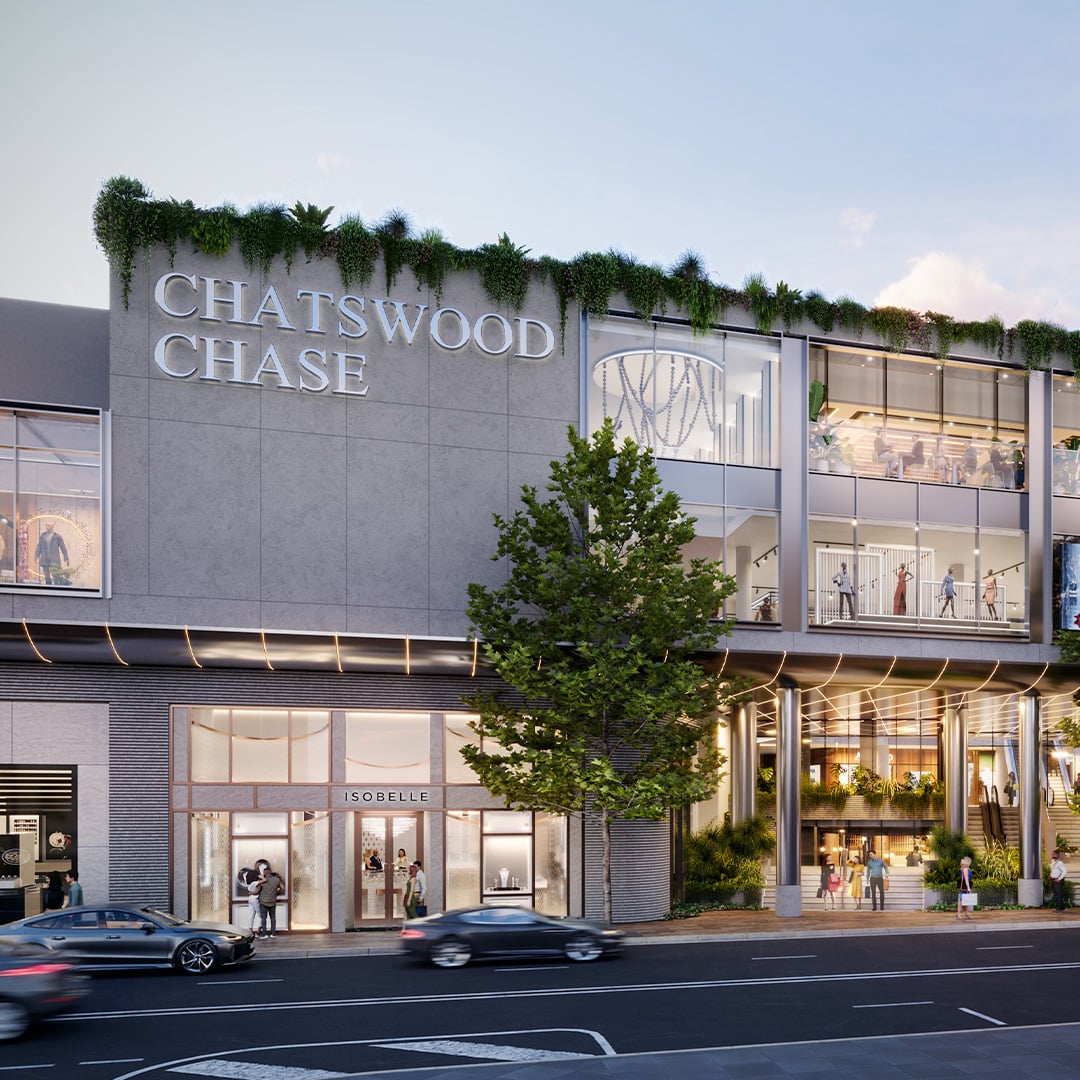
Hello and welcome to Talking Property with CBRE. I'm Kathryn House, your podcast host, and in this latest episode, we'll be doing a deep dive into what's happening in Australia's premium retail sector. We recently explored the athleisure sector, where fitness becomes fashion, with CBRE's Australian Head of Retail Research, Kate Bailey. Given the interest in that episode, we thought we'd widen the net to talk about premium retail as a range of top shelf brands from the LVMH stable prepare to open at Sydney's Chatswood Chase Shopping Centre.
Ross Siciliano
For us, it's a combination of things that bring shoppers and customers alike to the centres for multiple reasons. So along with the traditional shopping experience, we can then add a relative context to food and beverage, entertainment, leisure and all of those things that provide customers with the opportunity to dwell longer, stay longer and actually create a lifestyle and experience out of it.
Kathryn House
That's Vicinity Centre's General Manager of Premium & Luxury accounts, Ross Siciliano. Vicinity is one of the country's leading retail owners, with flagship assets such as Melbourne's Chadstone Shopping Centre. Ross has been with the group for the past decade overseeing its premium offering and is currently involved in the much-anticipated revamp of Sydney's Chatswood Chase, which just secured an unprecedented 12 flagship LVMH brands for its $625 million Chatswood redevelopment.
Kate Bailey
Since, you know, around 2008 or so, we've had about 4.8% growth each year on our spend on food and bev. The flip side to that is discretionary retail sat at just over 3%, so it is absolutely outpacing the market. It has changed how we spend our money and really savvy landlords are now starting to say, hey, how can we capture some of this and putting in some really great offerings into their centres?
Kathryn House
And that's Kate Bailey, who'll be giving her take on the latest retail trends and why the premium end of the retail market has been outperforming. I hope you enjoy our conversation. Ross, thanks so much for joining Talking Property. I know it's a very busy time right now with the ongoing lease negotiations at Chatswood Chase.
Ross Siciliano
Thank you, Kathryn. I'm thrilled to be here.
Kathryn House
And Kate, great to have you back on Talking Property to help us explore some of the current retail trends.
Kate Bailey
Really great to be here. Thanks, Kathryn.
Kathryn House
So Vicinity's Chief Executive, Peter Huddle, has talked about his conviction that premium, fortress-style assets located in great trade areas have the potential to deliver superior and sustained income and value growth over time. Ross, before we dive into the details, perhaps you could give us a brief outline of the strategy Vicinity, one of Australia's largest retail landlords, is executing at present.
Ross Siciliano
Sure, Kathryn. Vicinity is one of the largest retail mall owners in the country as you say. We've got flagship assets such as Melbourne's Chadstone Shopping Centre. That's one that's touted as a top five retail asset globally. We also own the country's preeminent CBD retail portfolio. If you think of centres like the Queen Victoria Building and the Strand Arcade in Sydney, we have Emporium in Melbourne, Queens Plaza in Brisbane. In addition to that, we also have the largest collection of premium outlet malls across the country, which provides a bit of a distinct advantage and competitive edge as part of our portfolio, along with a smaller collection of regional and sub regional convenience-style assets that play different but important roles in their catchments. So across the country we have over a million customer visits in our assets every single day.
Kathryn House
So Ross, you've talked us through the broader strategy for Vicinity. You're really actively repositioning the portfolio to premium assets and that end of the market seems to have been really outperforming. Can you talk us through what you're seeing in Vicinity's portfolio?
Ross Siciliano
Because we know that premium assets are, and will continue to be, a key source of superior and sustained income value growth for the foreseeable future, we obviously want to continue to invest in this asset class. This is backed by recent results where it once again demonstrated the strength of this particular category. Our comparable MPI growth sat at just under 5%, which is a far superior outcome compared to the rest of our portfolio average of 3.7%. And the retail sales productivity coming out of these properties was also 25% higher. With that came leasing spreads of over 6% greater than prior and almost nearly two to two and a half times the actual average for that category. So for us we have great belief in the category.
Kathryn House
So Kate, the premium end of the retail market has been outperforming. Is that just an Australian phenomenon or are we seeing this play out globally?
Kate Bailey
No, it is definitely a global trend that we've been seeing and we've been seeing it for probably quite some time. It's probably twofold. So one, we've got this sort of demographic change. So younger people, we know that they're really interested in social media and they want to sort of show off where they've been and where they're shopping and how they spend their time. But there's also a focus as well, I guess, on sustainability and purchasing quality items that last rather than, you know, that sort of movement away from fast fashion. And I guess we've seen retailers really respond to this as well and kind of change their delivery and what they're providing. So with e-commerce we're sort of seeing groups say, okay, well maybe we don't need quite as many stores, but the stores that we have, we want to make sure that they're of a really high quality. We want to make sure they're in the right location, they've got a great fit out, it's a great experience. And as a result, you know, we're seeing the market really lift and that shift towards premium brands as well. So it's absolutely a global trend that we're seeing playing out all over the world.
Kathryn House
So Ross, how does luxury retail fit into the premium category and what are you observing on that front? Obviously, the LVMH deal was a huge win.
Ross Siciliano
Yes, it's a good question, Kathryn. I think what we've seen, particularly coming off some very strong growth through the Covid and immediately post-Covid period is there's no doubt that luxury has played a big part in what we're now seeing in terms of their strategic direction in markets such as ours. Australia is definitely viewed upon as a growth market for a lot of these groups in terms of performance, albeit that there has been a softer period over the last 12 to 18 months globally, which has been well documented and well known across the market. In rough terms, luxury sales have come off around about 10% in that period, but with varied sort of category performance within that. That said, within that performance period, it's important to note that across our assets the category still remains highly productive at greater than $60,000 a square metre in total sales. But also the pre-Covid performance versus current is also vastly superior. So from the point of view of longevity and sustainable growth, it's certainly something that we see as a stronghold for positioning the premium end of the market in terms of our retail centres and also anchoring luxury-led redevelopments such as that at Chatswood Chase, which we'll talk about in greater detail later.
Kathryn House
So Kate, give us your views on the luxury sector and its resilience.
Kate Bailey
Yes, I think that's interesting. Ross is absolutely right that we have seen the luxury market. You know, we had that time post Covid when it all just kind of went crazy. We saw so much growth and it's come off the boil a little bit. But I guess what we're really lucky about in Australia is we're still sort of at the beginning of the journey, really. So we don't have the full suite of brands that a lot of other countries do. So there's a lot more opportunity for growth, whether that's rolling out across specific cities across the country with new brands coming on board. So we are still seeing a fair bit of resilience in that market as well. And we are seeing a lot of luxury retailers look for opportunities to grow their footprints across Australia. So we have been pretty resilient in that space.
Kathryn House
So, Ross, not every premium centre needs to be luxury led. And I think part of Vicinity's success has been in creating destinations. Chadstone is a really prime example of that being the largest integrated retail and lifestyle destination, I think, in the Southern Hemisphere. So when we chatted a few months back, you said to me something that I thought was really interesting, and that experience is the new product.
Ross Siciliano
Yes. And I think when we look at the overall makeup of a premium destination, or whether it's luxury led or otherwise, what we try and create, are destinations that are beyond just that one experience. That one experience is a very important piece to the puzzle. But on the overall balance of what we try to create as a destination, it involves many different aspects. For us, Chadstone, even what we're doing at Chatswood Chase, the CBD centres and even the smaller assets that are relative to their own catchment. For us, it's a combination of things that bring shoppers and customers alike to the centres for multiple reasons. So as long as we can provide more than the obvious, which is to shop and do that in a way that is aligned with the product, but then also make sure that along with the traditional shopping experience, we can then add a relative context to food and beverage, entertainment, leisure and all of those things that provide customers with the opportunity to dwell longer, stay longer, and actually create a lifestyle and experience out of it, we see that as being the formula that actually creates those destinations.
Kathryn House
And so I think one of the things that I've heard Peter Huddle talk about is great retail being a virtuous cycle that creates more visits, longer stays, higher sales, greater retailer demand. I think that's what you've been speaking to right now, and it seems to be playing out in the success you're having with Chatswood Chase at the moment.
Ross Siciliano
Yes, look, it sure is. I mean, in terms of the way that we have comprised that development over the last few years and leading into some exciting openings later this year and next, it's a combination of multiple facets. So the lower level, which is already underway and trading in anticipation for the rest to follow, is essentially a food-based offer where it provides a curated offer of very, very unique and independent brands and menus that are tailored to the specific catchment and market that it sits within. It's also very, very well and heavily aligned to the product overall in terms of positioning and quality that's expected from that client base. And then that leads into the broader sort of retail offer that then forms part of the main trading floors along with a rooftop execution that ties in the lifestyle offer, which brings in longer dwell time uses such as day spas and health & wellness clubs, kids play environments, et cetera.
Kathryn House
Yes, it's interesting because Kate, we did our recent athleisure podcast and a lot of that was about the role that experience plays. Give us your view on that as well.
Kate Bailey
I think everything Ross said is absolutely spot on. You know, we have seen it time and time again. We're seeing landlords say, okay, well how can we compete with online? What are we offering different? How can we get people to come into these centres? And you know, the way to do that is by curating an experience, a point of difference to bring people in. And you know, Ross is absolutely right. A different mix of uses. Put a gym in there, get people in there in the morning, having a great entertainment offering, can that bring people in there through into the evening as well. All of a sudden you're increasing footfall throughout the day. And when you have the opportunity to sort of create an experience, whether that's an activation in the centre or whether it's even, you know, just a fabulous fit out in a shop or it has, you know, something a bit different, an element of tech, you know, a certain line that you can only get within that specific store. All of a sudden you're creating a real point of difference and that is absolutely bringing a lot of people through the door.
Kathryn House
So Ross, if we move to rents, when we were chatting a couple of months back, you mentioned that you're seeing a bifurcation, with retailers prepared to pay higher rents for premium opportunities. How's that playing out at the moment.
Ross Siciliano
With the diversified asset portfolio that covers a full spectrum of retail asset types, there's always been a bifurcation in rents. The fight for space in terms of retail assets is very real and I guess is demonstrated in our occupancy rates being improved over recent time. The portfolio segments that we cover, including CBD premium centres as well as other centres such as Chadstone and Chatswood Chase, which will come online very shortly, obviously add to the ability to provide that sort of offer. And there's certainly been a move to more quality as far as the strategic direction that a lot of brands and groups are now taking, particularly to break into the market and come into the market as their first representation. And from the perspective of how they are positioned in key capital cities to start off with, and predominantly that will be a Sydney, Melbourne rollout, along with probably Brisbane to be the third city to follow. If they are new to market, the ability to house those best labels, whether they be luxury or international, in an asset class such as the premium centres that we're curating, is really paramount for what those brands are looking for to come to market.
Kathryn House
So, Kate, what are CBRE's forecasts showing when it comes to retail rental growth and what influence is this lack of new supply having? It was a huge point of discussion at the AFR's Property Summit recently. How much is that playing into it?
Kate Bailey
It's huge. It's huge. And I guess, you know, we talk a lot about this population growth and how that plays into residential demand and we've got a housing shortage, but we know that for every million people that move to Australia, we need 800,000 square metres of retail space and we just have not been supplying that space at all. In fact, most of the space that we've added into the market have either been in that LFR space or maybe it's a neighbourhood centre in a growth area. We just haven't really been building new large regional shopping centres at all. So that is finally starting to move the needle when it comes to rents. We saw some pretty solid rent growth numbers last year and our forecasts have got rents for regional centres sitting up at around 3% per annum for the next three or so years. Which, maybe if you're used to sort of industrial rents doesn't sound huge, but considering it's spent the past 10, 15 years hovering around that 1% per annum, that's pretty massive. So it's a really exciting time, I think, in that space. And all of a sudden we're seeing a lot more investor interest in shopping centres because of that rent growth story.
Kathryn House
So if we switch back to look at what's happening, say, with Chatswood and the whole premium category. Ross, I recently did a walkthrough of your new fresh food Market Hall at Chatswood Chase and you recently opened the Market Pavilion at Chadstone. Can you tell us a little about the way in which food retailers fit into the premium category?
Ross Siciliano
Sure, Kathryn. I think the launch of the Market Pavilion for Chadstone introduced a really interesting range of iconic food outlets who really have chosen Chadstone as a destination. Some in some cases were their first to open in a shopping centre environment. This includes the likes of Brunetti, Flowers Vasette, Champagne & Oyster Bar, alongside other categories that complement the overall offer. And this sort of goes back to a little bit of what we were saying before about providing an offer that is far more than just your traditional shopping experience and having multiple reasons for visitation. That, alongside with delivering another 20,000 square metre office tower called One Middle Road as part of that project was another significant component to complement that food offer, along with recent additions to the mall which included The Social Quarter earlier in 2023, Chadstone Hotel, which was a just pre-Covid execution of 2019. So I think when you look at the combined experience, the F&B, particularly when positioned at the right level relative to the destination that we're trying to create, provides again that lifestyle experience component that means that people are essentially able to come where they previously probably weren't going to choose to come to that destination, but also provides the opportunity to have dwell time that lasts a whole lot longer and to have a broader spectrum on trading hours for them all.
Kathryn House
Well, I think champagne and oysters would definitely get me to a shopping centre. Kate, what's our research been showing when it comes to F&B and how important do you think that is as a shopping centre draw card?
Kate Bailey
Oh, it's massive. It seems funny, doesn't it? If you think about, you know, 10, 20 years ago, the idea of saying, hey, let's go and have champagne at a shopping centre or let's go out for dinner or lunch at a shopping centre, you'd think you were kind of mad. I mean, it was something that we talked about happening in Asia, but it wasn't really sort of a cultural thing in Australia that we'd kind of go out for dinner at Chaddy, for example. But that has absolutely changed now. You know, we've had a real shift in attitudes towards the type of F&B we expect in our shopping centres. But we've also had a shift in how we spend money as well. So if we think about growth in our spend on food and bev, since, you know, around 2008 or so, we've had about 4.8% growth each year on our spend on food and bev. The flip side to that is discretionary retail started at just over 3%. So it is absolutely outpacing the market. It has changed how we spend our money. And really savvy landlords are now starting to say, hey, how can we capture some of this and putting in some really great offerings into their centres.
Kathryn House
So looking at another shift, and if we look at luxury retailers, particularly in Sydney and Melbourne, many of those luxury retailers traditionally targeted strip shopping locations. Ross, how do you compete with those strip locations for these luxury premium retailers?
Ross Siciliano
It's a good question, Kathryn. It probably links back to my earlier comments around having a mix of assets that are aligned with, I guess, the future direction of where a lot of these groups are now looking to expand. Strips traditionally have been very strong and they've probably been curated over a very long period of time as destinations as an address and Collins Street in Melbourne is a really good example of that. But I think one of the sort of advantages that we in our malls have is the ability to be quite malleable and quite creative with the spaces and the overall customer experience and amenity that we provide. So when you consider the expectations for customers has really increased over recent times, particularly - not just on the shopping component - but even going back to the comments that Kate previously made about the F&B and other experiential components to the offer, such as the hotel that I mentioned before at Chadstone, I think all of these things come together to form an ecosystem of multiple different ways that customers can enjoy that experience. And then within that, the space for the luxury retailers themselves that we are able to sort of adapt and curate as concepts and brands evolve and grow, means that we can be quite nimble and flexible to deliver the next generation of store footprint that they are looking for within the various markets. Ultimately, with strip retailing, it becomes a bit challenging just through different ownership structures. Obviously beautiful, but heritage buildings that can bring some challenges towards how you can create experience through that space in a way that you would like. So we are able to work a whole lot more creatively with the developments that we can curate.
Kathryn House
Kate, are you seeing much of a difference in retail strip vacancy rates and rents relative to shopping centres?
Kate Bailey
Yes, I mean, Ross is right. It's that kind of fragmented ownership that sometimes can create really interesting little pockets, but can also sort of have a bit of a challenge, I guess, for a lot of retailers. So, in general we would say that vacancy rates in shopping centres are more than likely lower than the average that we see in strip retail. And, you know, that's due to a number of reasons, really around the curation of the different styles of shops you have. So we've really seen it I guess in the past few years this sort of creation of micro precincts within individual shopping centres. So you know, it's no longer you're either up near the food court or you're near Myer. Now it's an athleisure precinct or it's a luxury precinct, or it's a premium Australian brand precinct. And so you're able to curate the right brands to go in the right locations and consumers love that. And they're able to sort of have this one stop shop, which is fabulous. And it also helps, you know, obviously based in Melbourne where it's pretty cold and pretty grim at times at this time of year. So not being out in the open air, being able to go to a shopping centre as well is always a draw card for a lot of shoppers as well, particularly on a rainy weekend.
Kathryn House
And Ross, what role does the department store play in shopping centres?
Ross Siciliano
Look, department stores still hold some major relevance in our malls, albeit probably in a remodelled sort of a way. The traditional footprint of a department store, most of those leases are very old and were locked in for a very long period of time as we know are either coming to an end or even if they're not, discussions around how they can be right sized or downsized to accommodate I guess the more contemporary version of what that could look like in and amongst our malls is probably the discussion at this stage with those groups. And we've got some great examples recently with David Jones, who will also form part of our Chatswood redevelopment that launches later this year. They downsized from what was about a 20,000 square metre footprint to about a 12,000 square metre footprint, from three floors to two. And that allowed them to create their new store of the future as part of the evolution of what we're doing to the greater mall. So it's certainly a changing landscape but delivered the right way, I think there's still some relevance there to the right mallscape.
Kathryn House
And one other thing I was really curious about were fit out costs. Obviously premium retailers demand a higher standard of fit out. How are you managing that in your malls?
Ross Siciliano
It's certainly a challenging point of discussion, Kathryn. I think fit out costs, and you can even extend that further to just general cost of construction in its totality, whether it's from our developer base build to create the spaces that then the brands come in to create beautiful fit outs within, labour costs and fit out costs have certainly escalated quite a lot. We saw that phenomenon through Covid and obviously coming out of Covid it hasn't seemed to slow down as much as we would have liked it to. So for us, it's really more a case, and it goes back again to the alignment with the strategic direction of a lot of the brands, whether they be international, premium, luxury. But it's sort of getting in ahead and forming part of their plans as early as possible so that the capital requirements and the capex arrangements that they need to secure, along with our own for our malls, is built into a plan that means that we can execute over a period of time. And what that's generally done is it means that what we're delivering is well planned and well curated. But it does take that little bit longer to ensure that we can all accommodate that within our capital plans for the next two to three to four to five years in the foreseeable future. I mean, some of these stores within our malls, depending on which brand we are talking about and the size of the boutiques, they could be ranging from anywhere between 5 to 20 million dollars of execution just on the fit out. So what used to probably take somewhere around the range of 12 months to complete an agreement on probably has at least doubled at this point in time. And that's purely around making sure that these types of things can be managed and then lead times and procurement, et cetera, to deliver the executions is actually also enabled.
Kathryn House
And I guess, Kate, those higher construction costs are one of the factors that has been crimping new supply.
Kate Bailey
It's so tricky at the moment. It's really hard to get a lot of these new projects to stack. Rents are just not where they need to be to be able to get a return as a developer. And unfortunately, with a lot of infrastructure projects still underway, a lot of housing projects still underway, we're not really expecting construction costs to come back anytime soon. That's more challenging in parts of the country. So up in Queensland, particularly Southeast Queensland, where, you know, they've got the Olympics, there's a lot of population pressures. We think that construction costs will probably rise a bit higher there. To Ross's point, that's off the back of labour costs that really, it's a national thing that we're seeing that's slowing construction everywhere across all sectors.
Kathryn House
So, Ross, as we're closing off, I would really like to know a little bit more about Chatswood Chase and dare I ask, are there any hints you can give us as to new deals you're pursuing?
Ross Siciliano
I think we might leave it for the grand reveal later next year, but I think what we can tell you is that we're creating, definitely I mean, going back through all the topics that we've discussed and the themes that we've talked about on this podcast, we're creating a destination and it's a destination that brings together definitely the best in luxury, which is going to be the feature act that opens as a part of the final stage next year from April onwards. Within that, we have recently announced a large partnership with LVMH Group, who we have a major partnership across not just the Chatswood Chase development we're talking about now, but also strong partners existing in Chadstone Shopping Centre and even at Queens Plaza in Brisbane. So we've extended that, they will incorporate 12 of their brands within this project, which is a phenomenal achievement for the centre. And then in addition to that, there'll be at least another 15 odd brands that will be forming what is going to be a world class luxury floor at opening. In addition to that though, the mall is not only about luxury. There's also a large degree of international, premium and flagship-style assets that range from all sorts of different categories that will form part of our ground floor and in some ways level two as well, along with some beautiful contemporary, local, Australian and designer brands to sort of really complete the piece to the puzzle. So we have a huge delivery coming up in less than two months. So towards the end of October we'll launch the next big phase, which is two of those floors coming into next year. From April onwards, as I said, we release the final stage to market, which is the luxury floor, and by then we'll have a beautiful world class asset that is anchored by some of the best brands in the world.
Kathryn House
I did a podcast earlier this year with Australian Financial Review columnist Rob Harley and he made the comment that the mall is back. It sounds like it really is.
Ross Siciliano
Yes, look, it sure is. I think when you look at all the strengths that we've talked through about the nimble nature of malls, the ability to be very creative with what you can design and build when planned properly, and also when you hold the right, long-term strategic partnerships with key groups forms a very important part to that recipe. I think that makes a huge difference to developing these locations and destinations for the future. They're fortress malls, as we call them in our business, and clearly the areas that we want to keep on investing in. But for us, the way that you can curate an overall experience for your customers and the brand's customers alike, the way that you can incorporate all the different facets that form the overall experience, including food and hotels and office and all of the other mixed-use sort of destinational offers that bring people for greater reasons than just shopping, I think are all a key part to continuing to evolve the shopping mall a lot further than the way we once knew it.
Kathryn House
Well, Ross, it was really great to have you on the show.
Ross Siciliano
Thank you. Thank you very much. It's been a pleasure to be here. Appreciate your time.
Kathryn House
And thanks for taking time out to join Talking Property once again Kate, I always love your retail words of wisdom.
Kate Bailey
Great conversation. Thanks Kathryn. Thanks Ross.
Kathryn House
Now I have to confess that I haven't ever been to Chadstone, so that's now top of my list when I next visit Melbourne. And as someone who has until recently lived on the north side of Sydney, I am really looking forward to seeing Chatswood Chase take shape. To our listeners, thank you for tuning in to this latest episode of Talking Property with CBRE. If you'd like the show and want to check out more, you can follow us wherever you get your podcasts and we'd love for you to rate or review the show, which will help other people find us. Until next time.