Article | Intelligent Investment
Business Insights | Australia's living imperatives and navigating a transformative housing landscape
September 11, 2025
Connect with our Living Sectors team
Click Here
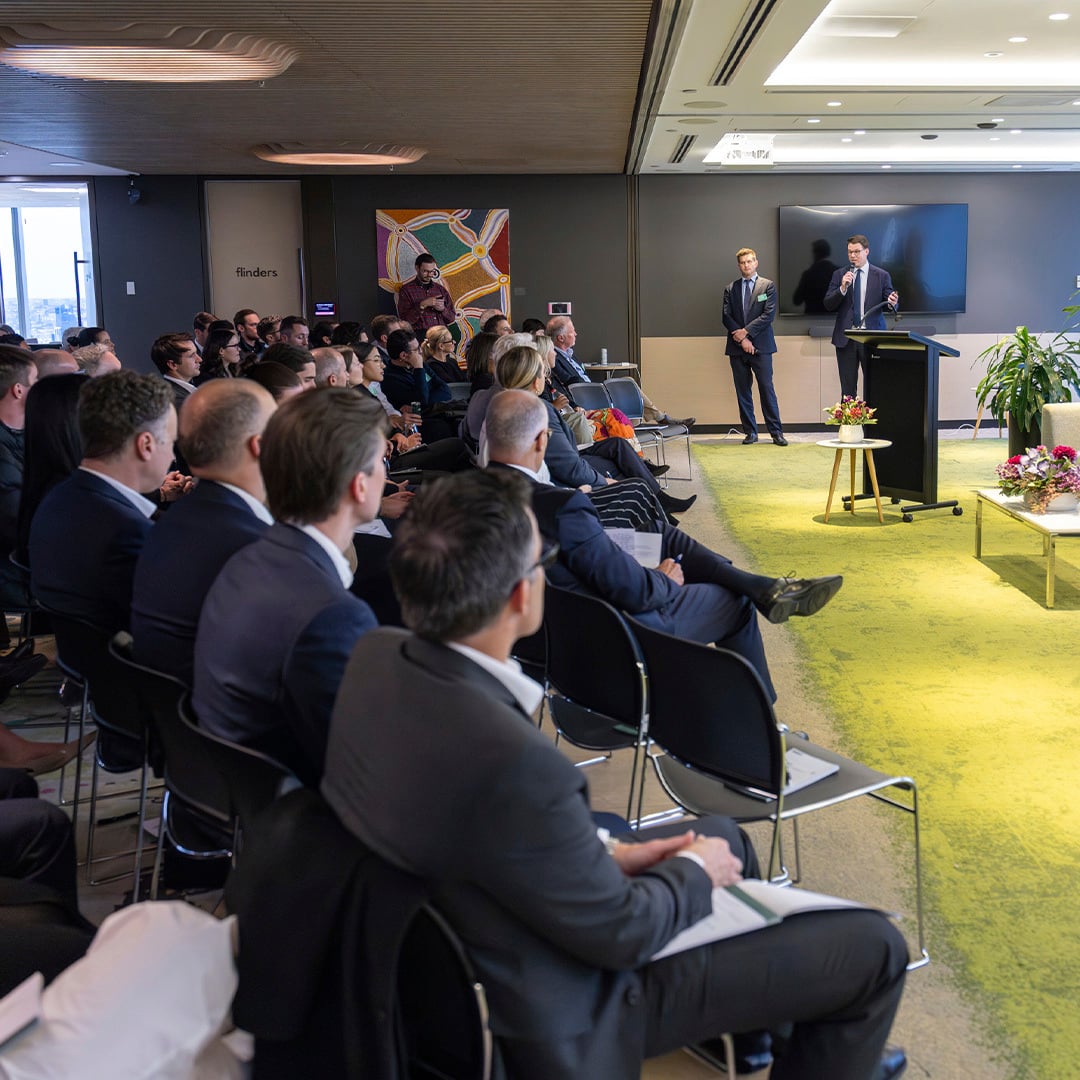
Our very first ‘Living Imperatives’ event brought together leading industry experts to dissect the multifaceted challenges and opportunities defining Australia's rapidly evolving living sector.
The consensus was clear: Australia is grappling with a significant housing supply shortage, driven by unprecedented population growth, but this imbalance is simultaneously creating compelling investment prospects across diverse housing types.
Jarrod Frazer, Executive Managing Director for CBRE Victoria, set the tone by highlighting the urgency and collaborative spirit required.
"We're here to forge new partnerships and shape strategies that will define the future of living solutions in Melbourne and across Australia and New Zealand" he said, underscoring CBRE's commitment to providing end-to-end solutions.
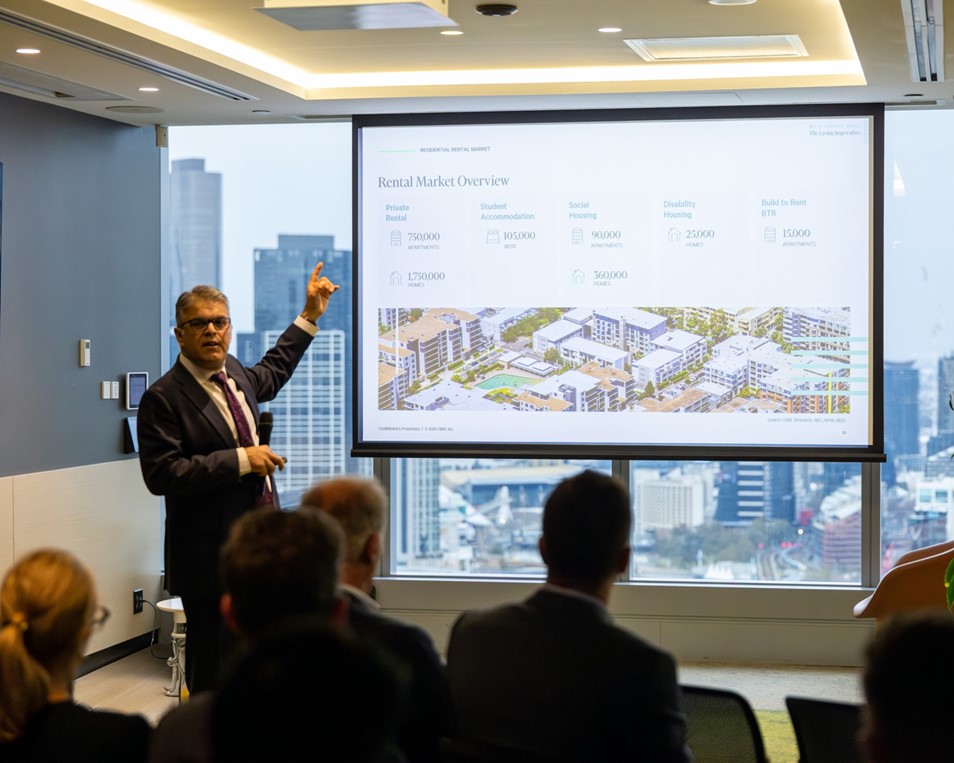
Sameer Chopra, CBRE's Pacific Head of Research, emphasised the scale of this demographic shift.
"Our population's growing faster than India; it's growing faster than Singapore, faster than the US."
Sameer also likened the projected growth between 2022 and 2027 to be an additional 2.5 million people. This is equivalent to adding a city the size of Brisbane to Australia.
This rapid expansion has led to a critical housing deficit. Australia's housing supply has plunged to its lowest level in decades, with a projected shortfall of 262,000 homes against the 1.2 million target by June 2029.
It's a chronic undersupply that’s a key driver for the sector's outlook.
"Rents and capital values are going to shoot up, shoot up very significantly in Australia," Sameer predicted, attributing this to the insufficient real estate being built to accommodate the burgeoning population.
He anticipates residential prices could rise by 20% to 30% in the current cycle.
Built-to-Rent (BTR): The BTR sector is experiencing rapid expansion, with a national pipeline valued at $30.1 billion across 113 projects and 39,316 apartments, marking a 41% increase in sector value year-on-year. Victoria leads the BTR market, followed by New South Wales and Queensland.
Andrew Purdon, CBRE's Regional Director for Living Sectors in Capital Markets Pacific, noted the sector's evolution.
“BTR is a great cheaper option when compared to PBSA,” he said, indicating its growing appeal.
He also highlighted that the UK market, which Australia often mirrors, saw institutional BTR penetration rates increase from 0.1% to 2.0% over the past decade, demonstrating significant growth opportunity for Australia.
Student Accommodation (PBSA): Despite tighter international student regulations, demand for PBSA continues to outstrip supply.
Sameer highlighted the severe undersupply, estimating an unmet demand for 25,000 to 30,000 PBSA beds in Central/Inner-West Sydney and 15,000 to 20,000 in Melbourne CBD/Inner-North. The sector is projected to see an 18% uplift in new supply (19,000 beds) between 2024 to 2027.
Affordable Housing: Steph Harper, CBRE’s National Director of Living Sectors, Valuation & Advisory Services, highlighted the critical need and evolving models for affordable housing at the event.
“We are very, very pro the development and the evolution of the affordable housing market in Australia," she said.
The government has committed to support the delivery of 10,000 new affordable dwellings, with states and territories matching this commitment for a combined total of up to 20,000 affordable homes.
Downsizer market: The downsizer market is gaining significant traction, with a record number of Australians planning to downsize to free up equity and reduce living costs. Sameer observed a "huge demand in three bedrooms" for this demographic, who are often willing to pay a premium for low-maintenance, secure properties.
The potential of modular construction was also raised as a solution to reduce building costs and timeframes.
The Australian government has recognised this need, setting a target of 1.2 million new homes by 2029 and incentivising states to boost supply.
Mark Granter, CBRE’s Executive Managing Director for Alternatives Capital Markets and Client Care, underscored CBRE's integrated approach.
“What I picked up was the adjacencies that come with living sectors," he said, highlighting how diverse areas like retirement living childcare and self-storage feed into the broader living ecosystem.
Jarrod concluded by reiterating CBRE's deep commitment to addressing all the challenges.
“As you've seen today, we are investing heavily in the living sector at CBRE, partnering with you all as we navigate what are no doubt challenges, but also some significant opportunities in this space.”
The event served as a powerful testament to our unmatched end-to-end services, from market intelligence and capital advisory to development solutions and valuations – all that is crucial for navigating Australia's transformative housing landscape.
The consensus was clear: Australia is grappling with a significant housing supply shortage, driven by unprecedented population growth, but this imbalance is simultaneously creating compelling investment prospects across diverse housing types.
Jarrod Frazer, Executive Managing Director for CBRE Victoria, set the tone by highlighting the urgency and collaborative spirit required.
"We're here to forge new partnerships and shape strategies that will define the future of living solutions in Melbourne and across Australia and New Zealand" he said, underscoring CBRE's commitment to providing end-to-end solutions.
The macro picture: Population growth and persistent undersupply
Sameer Chopra, CBRE's Pacific Head of Research, emphasised the scale of this demographic shift.
"Our population's growing faster than India; it's growing faster than Singapore, faster than the US."
Sameer also likened the projected growth between 2022 and 2027 to be an additional 2.5 million people. This is equivalent to adding a city the size of Brisbane to Australia.
This rapid expansion has led to a critical housing deficit. Australia's housing supply has plunged to its lowest level in decades, with a projected shortfall of 262,000 homes against the 1.2 million target by June 2029.
It's a chronic undersupply that’s a key driver for the sector's outlook.
"Rents and capital values are going to shoot up, shoot up very significantly in Australia," Sameer predicted, attributing this to the insufficient real estate being built to accommodate the burgeoning population.
He anticipates residential prices could rise by 20% to 30% in the current cycle.
Diverse living sectors and finding opportunities amidst scarcity

Built-to-Rent (BTR): The BTR sector is experiencing rapid expansion, with a national pipeline valued at $30.1 billion across 113 projects and 39,316 apartments, marking a 41% increase in sector value year-on-year. Victoria leads the BTR market, followed by New South Wales and Queensland.
Andrew Purdon, CBRE's Regional Director for Living Sectors in Capital Markets Pacific, noted the sector's evolution.
“BTR is a great cheaper option when compared to PBSA,” he said, indicating its growing appeal.
He also highlighted that the UK market, which Australia often mirrors, saw institutional BTR penetration rates increase from 0.1% to 2.0% over the past decade, demonstrating significant growth opportunity for Australia.
Student Accommodation (PBSA): Despite tighter international student regulations, demand for PBSA continues to outstrip supply.
Sameer highlighted the severe undersupply, estimating an unmet demand for 25,000 to 30,000 PBSA beds in Central/Inner-West Sydney and 15,000 to 20,000 in Melbourne CBD/Inner-North. The sector is projected to see an 18% uplift in new supply (19,000 beds) between 2024 to 2027.
Affordable Housing: Steph Harper, CBRE’s National Director of Living Sectors, Valuation & Advisory Services, highlighted the critical need and evolving models for affordable housing at the event.
“We are very, very pro the development and the evolution of the affordable housing market in Australia," she said.
The government has committed to support the delivery of 10,000 new affordable dwellings, with states and territories matching this commitment for a combined total of up to 20,000 affordable homes.
Downsizer market: The downsizer market is gaining significant traction, with a record number of Australians planning to downsize to free up equity and reduce living costs. Sameer observed a "huge demand in three bedrooms" for this demographic, who are often willing to pay a premium for low-maintenance, secure properties.
Innovation and financing solutions
The discussion also focused on innovative approaches to tackle the supply crunch. Andrew pointed to the emergence of private credit as a crucial alternative financing solution for developers. Matt Lawrence, CBRE’s Senior Director, Debt & Structured Finance, noted that private credit currently accounts for approximately 26% of residential development debt and is growing significantly. This provides developers and investors with a range of funding options including with funders who have a different risk/return appetite than traditional banks. These funders often have significant experience in the sector offshore which allows them to provide alternative structures and terms. CBRE has well established relationships with these lenders both in Australia and overseas.The potential of modular construction was also raised as a solution to reduce building costs and timeframes.
Call for collaboration and end-to-end solutions

The Australian government has recognised this need, setting a target of 1.2 million new homes by 2029 and incentivising states to boost supply.
Mark Granter, CBRE’s Executive Managing Director for Alternatives Capital Markets and Client Care, underscored CBRE's integrated approach.
“What I picked up was the adjacencies that come with living sectors," he said, highlighting how diverse areas like retirement living childcare and self-storage feed into the broader living ecosystem.
Jarrod concluded by reiterating CBRE's deep commitment to addressing all the challenges.
“As you've seen today, we are investing heavily in the living sector at CBRE, partnering with you all as we navigate what are no doubt challenges, but also some significant opportunities in this space.”
The event served as a powerful testament to our unmatched end-to-end services, from market intelligence and capital advisory to development solutions and valuations – all that is crucial for navigating Australia's transformative housing landscape.
Our Living Panellists
Andrew Purdon
Head of Living Sectors – Capital Markets, Pacific

Steph Harper
National Director, Living Sectors, Valuation & Advisory Services, Australia

Trent Hobart
Head of Development – Capital Markets, Pacific

Matt Lawrence
Senior Director, QLD, Debt & Structured Finance, Australia