Kathryn House
Hello and welcome to Talking Property with CBRE. I'm your podcast host Kathryn House and in this latest episode we're going to be talking about tax, specifically the current taxation impacting global investment into the Australian property market. It was one of the key points of discussion at the recent Property Council of Australia Congress in Perth, where ex Foreign Minister Julie Bishop emphasised the foundational role of foreign investment in Australia's history and future. To quote Julie, "Australia was built on the back of foreign direct investment. The size of our population, the size of our domestic consumption, the standard of living that we expect and deserve, means that we need foreign direct investment." In a separate session, Brookfield Properties' President and Co-head of Real Estate in Australia Danny Poljack said tax certainty was crucial as investors looked to countries with stable tax regimes. He noted, "Investors require stability on that taxation outlook in order to have conviction." Charter Hall Office CEO and Property Council National President Carmel Hourigan meanwhile noted that taxation was impacting capital flows, particularly in Melbourne. In her words, "Victoria has traditionally been a magnet for global capital. We need to see urgent tax reform to ensure it remains a powerhouse of Australia's economy."
Kathryn House
So I know that was a long preamble, but I wanted to set the scene for what we're going to be talking about today, which is the new Mandala Report commissioned by the Property Council.
Torie Brown
The government expecting to bring in $295 million. If they cut the tax, they would only have a shortfall on that of $79 million because of the uplift to the overall economy and to the tax takes from different receipts that would flow in. So the overall offset would be a 10 to 1 ratio. And we've seen government make decisions for less than a 10 to 1 ratio return before.
Kathryn House
That's the Property Council's Capital Markets Executive Director, Torie Brown.
Pete Menegazzo
One of the most important things that attracts capital is that liquidity. What creates liquidity is confidence, certainty and stability in the markets in which they're operating. So when government make decisions in isolation or by surprise, it impacts on confidence. That creates sovereign risk, it reduces the capital flows. The less people you have interested in a market impacts on its liquidity.
Kathryn House
And that's Investa CEO Pete Menegazzo, who also serves as President of the Property Council's Capital Markets Divisional Council. I hope you enjoy our conversation.
Kathryn House
Torie, thanks so much for joining Talking Property.
Torie Brown
Thanks for having me.
Kathryn House
And Pete, we've had you on the program once before. Thanks for taking the time out to join us again.
Pete Menegazzo
Yeah, thanks for having us. We're really looking forward to talking about this important issue.
Kathryn House
So, Torie, to kick us off, can you give us some background on what the Mandala Report is and why it was commissioned?
Torie Brown
So the report really does three things. It makes the case for the role that global institutional investment into property has played in Australia's history. It also then looks at the impact that surcharges levied against global capital via land tax has had in particularly Victoria and Queensland. And then the final part of the report is we look at what would happen if we were to remove the surcharges applied to global capital in property in Victoria to look at the impacts that would have on the economy overall. So it makes a case for foreign investment into property. It looks at the impact that different taxes levied against foreign investors have had in property and then it looks at what would happen if we were to remove those taxes levied against foreign investors in property.
Kathryn House
So talk us through some of the real high level findings.
Torie Brown
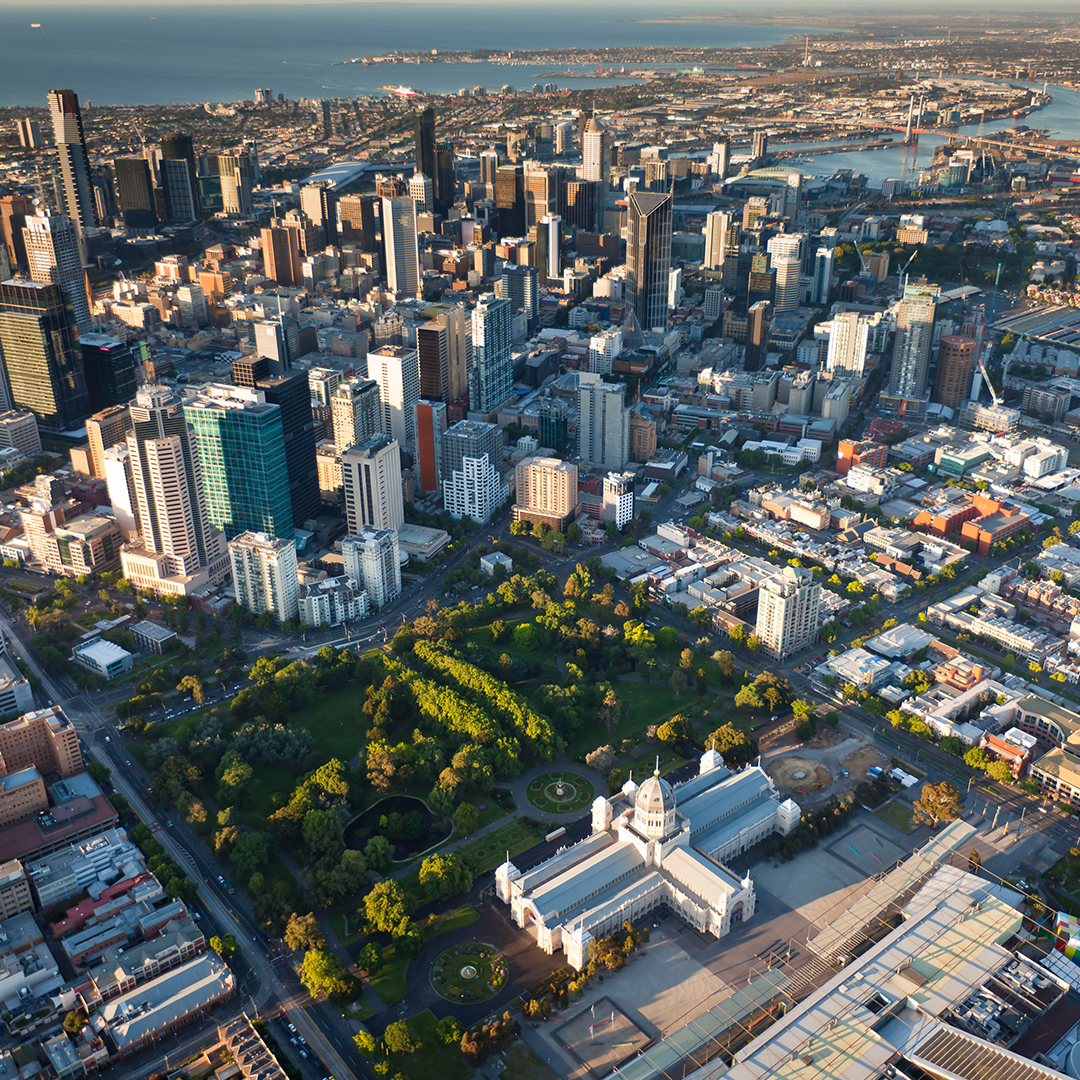
We found that since the foreign investor surcharge, which in Victoria is called the absentee owner surcharge, was doubled, the amount of foreign investment flowing into property in Melbourne has dropped by 53%. So it's had a huge impact in that market in particular. What we also found was that in Queensland, which is a market that has some really strong fundamentals, it's got great population growth, pro investment government, it's got the Olympics coming up. The increases to their foreign investor surcharges have really flatlined investment flowing into that state where we would have expected to see an increase going into their property market there. So the report found that the taxes are having a real impact. The report also found that removing these taxes would unlock $8.1 billion in new investment into Australia nationally. It would unlock $3.6 billion in GDP increases and unlock around 8,400 jobs nationally.
Kathryn House
They're quite big numbers. The 53% is quite staggering. And also I think there's this view that will it create a hole in these state budgets? But the report seems to have found, you know, that it's actually going to create quite a bit of value. Pete, what was one of your key takeaways from the report?
Pete Menegazzo
Thanks, Kathryn. If I start at a high level, I'd say the Mandala report was a really critical piece of work. We knew the surcharges were having an impact on the market, but we really didn't have the evidence. And what the report has really done now is given us the evidence. And that evidence is really demonstrating that it's properly affecting the health of the capital markets and liquidity in those markets. And as we just heard from Torie, the most severe effect of that is happening in Victoria where there's some staggering results as a result of the increase in absentee owners surcharges. And it is without doubt weakening the capital market environment down there. And if we want to continue to grow our cities, we just need to make sure that we've got the right settings to welcome all forms of capital. So, you know, it's really the evidence-based outcome which has now been provided through that important report.
Kathryn House
I was really interested in your comment at the recent Capital Markets Forum that capital creates liquidity. Can you talk us through that and how this interplays with the role of foreign capital?
Pete Menegazzo
Yeah, sure. Look, one of the most important things that attracts capital is that liquidity. What creates liquidity is confidence, certainty and stability in the markets in which they're operating. And that's just not confidence from market conditions, but it's things like transparency in policy settings and rules of law, et cetera, et cetera. So when government make decisions in isolation or by surprise, it impacts on confidence. It has choices as to where capital can be deployed. And when investors sit there saying, I don't know what comes next, that creates sovereign risk. It reduces, as we've seen in these numbers, it reduces the capital flows. The less people you have interested in a market impacts on its liquidity. So you have, you know, again, in the case of Victoria, not to sort of point fingers, but you know, what we've got is a lot of people who want to get out and not a lot of people wanting to get in and that's creating this liquidity drag.
Kathryn House
So Torie you've talked through some of the numbers in terms of what this could mean for, you know, investment, jobs, GDP growth. So it's this idea of not creating, I guess, huge holes in state budgets, but there is a ripple effect. How important is that for people to, I guess, understand?
Torie Brown
Yeah, that's right. I mean, when Pete speaks about liquidity, that's one of the things that these taxes tend to impact because with less buyers and less confidence in the market, you end up with lower transactions flowing into government coffers, regardless of whether that money is from overseas or it's domestic. We're seeing less transactions, so less stamp duty going into government coffers. But when you speak to government, particularly in Victoria, they're very concerned around having policy impacts that have no net impact to their budget. So they've got their forward estimates. They're hoping to bring in, in 2026, $295 million in the surcharge payments. So one thing that we did in the report is looked at how you could recoup the costs by getting rid of the tax. So you cut the tax $295 million that they were expecting to get in from that tax, they're not going to get. However, we found that you'd see more stamp duty, you'd see more of the surcharge applied to stamp duty for foreign investors, you'd have more of that. You'd then see property prices increase because there's more people able to bid for property, it drives up property prices, there's more liquidity in the market. That then increases land tax for everybody. So by the time we put in all the different inputs into the economy that would be advantaged and grown by cutting the tax, you end up with a shortfall of only $79 million. So the government expecting to bring in $295 million, if they cut the tax, they would only have a shortfall on that of $79 million because of the uplift to the overall economy and to the tax takes from different receipts that would flow in. So the overall offset would be a 10 to 1 ratio. So it would cost, by the time we reach 2029, even though there would be a cost to the government budget, the overall economic impact would be 10 to 1, which is a huge ratio. And we've seen government make decisions for less than a 10 to 1 ratio return before. And I think one of the things that we found when talking to our members and we interviewed through this process, through this report, we wanted to speak to a lot of people that had capital, a lot of people that were investing or had looked at investing or owned assets across Australia. Capital is very aware of the markets where government acts unpredictably. And Melbourne, Victoria has been very unpredictable. There's been 14 new taxes over the last 10 years on property, either increases to taxes or new taxes entirely. And that's a market where investors think there's just no predictability in that market. I would rather look at New South Wales. I would rather look at, you know, WA or South Australia, because at least those governments are acting in a way that's predictable. If I buy something, I'm going to be paying the same taxes on that in two to three years. Whereas in Melbourne, it's just been this constant moving of the goalposts that's really eaten away at the confidence in that state, which is really upsetting to see because Victoria should be booming.
Kathryn House
So, Pete, which sectors have been most impacted by these taxes. You made a comment at the Forum about it being an unlevel playing field.
Pete Menegazzo
Yeah. So I think it's fair to say all sectors are being impacted just at varying levels. And that's just because of the different sort of settings. But if you start with retail, the levy can't be recovered through outgoings, so it can't be passed on to tenants. If you talk about commercial, from a commercial perspective, leases allow the recovery of it, so you can pass it on to the tenants. But that's quickly becoming not the norm. So you know, being able to kind of recover is becoming harder. And then in industrial, because of the high land component, the impacts are quite severe. And so everyone is, all the major sectors are being impacted, you know, to the point where it is affecting valuations and it is affecting confidence. And I know of international owners that are actually just looking to get out at any cost because they've just lost confidence and the value reduction has been significant. So the unlevel playing field not only happens across the sectors, but it also happens between the sort of foreign and domestic capital in that the domestic capital has an advantage because it doesn't have these taxes imposed. The taxes reduce the cash flow. Therefore you can pay less for an asset, you can afford to pay less for an asset. And so the domestic buyers really have an advantage. Now that unlevel playing field just creates distortion in the market. And that's not good for capital markets, it's not good for liquidity, it's not good for confidence and it just drives away capital. And as we said at the outset, we need a lot of capital in this country to keep building and growing, which is going to be great for our nation.
Torie Brown
And we see some asset classes as well that in Melbourne in particular have been very reliant on international capital to really build and invest in world class assets. Office, it's over 51% previously has been reliant on international capital into the Melbourne market. We know Purpose Built Student Accommodation, it's more like 99% international capital. So you see these asset classes that have been underpinned by global investors, by pension funds that are now, because of the really high surcharges, you're not seeing that investment flow into those asset classes which is devaluing the whole market.
Kathryn House
So at the Forum, one of the questions from the audience was around the fact that it's not just foreign capital flows that have dipped in recent years, that it's happened across the board, but has that drop in foreign capital been disproportionate Torie?
Torie Brown
Absolutely, yes, it has. So we looked at other states. We often heard, well, construction costs have gone up, interest rates, all of these things are having impacts. And that is true. And there was definitely a peak that we reached in Australia in 2022 when it came to large transactions and international capital flowing into domestic property. But that impact has not been uniform. So when we looked at New South Wales, we've not seen anything like a 53% drop in foreign investment flowing into property. We haven't seen that in any other state except for Victoria. And it aligns perfectly with when the tax was doubled.
Kathryn House
So Pete, at the Forum, your fellow panellist Carmel Hourigan said that while Victoria and Queensland were clearly the most impacted by taxation, there was concern about a contagion and other states being impacted. What are your thoughts on that front?
Pete Menegazzo
Oh, look, there's always risk of contagion. I mean, the states are always fighting for, you know, the marginal dollar if you like. But I think the smart states are actually sort of definitely looking at the big picture and it's this kind of small thinking versus the big picture thinking. And Torie's just mentioned New South Wales, who, you know, where there is a lot of confidence and we've seen the capital flows reduce, but reduce slightly relative to the other jurisdictions. You know, I think Queensland, clearly there's a very good conversation going on with the government. They are absolutely listening and the smart states will listen. They'll understand the impacts and try and do something about it. And when you think about what is happen in Queensland and the infrastructure needs and the building needs that they have with the migration and the Olympics coming up, they need to open their arms to all forms of capital. So, you know, we certainly hope that the other thing this report does is actually highlight the real impact on the capital flows from international investors and therefore people A, don't follow and B, you know, other states actually sort of make changes to ensure that they're attracting the capital to their state over others. Because the reality is that capital will go where the settings are best.
Kathryn House
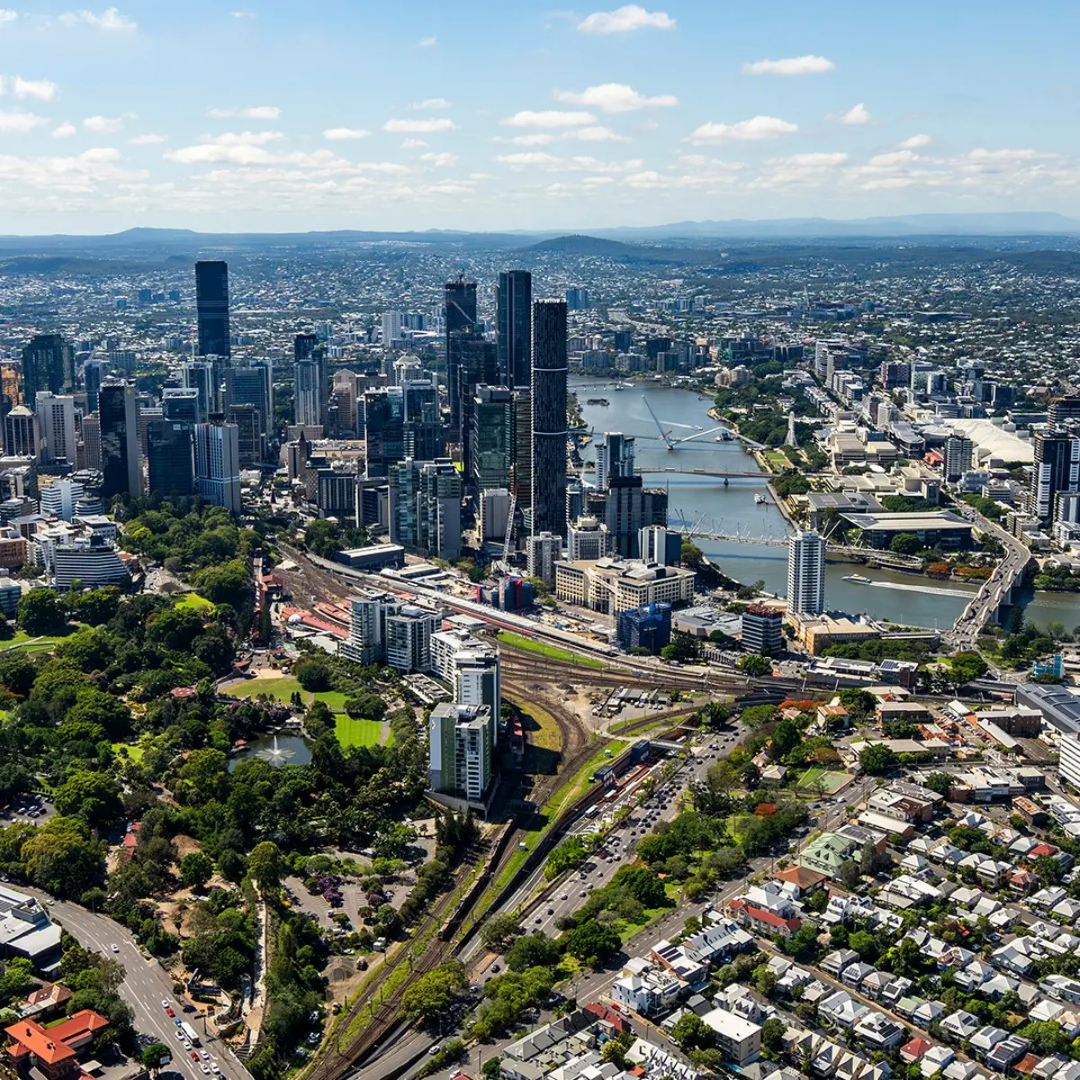
Yes, and there was a really interesting comment at the forum about Brisbane keeping on that Queensland front and that if Queensland was to change its taxation stance, it could potentially overtake Melbourne to become Australia's second property gateway market behind Sydney. Pete, do you think that's a possibility?
Pete Menegazzo
Absolutely, I think it does. And I made a comment on a panel I was at in Brisbane maybe six months ago. It's got a tremendous opportunity. What is happening in that state in the next 10 years can set it up for decades. You know, I truly believe that it is on the world stage. It's got the global eyes on it and with that opportunity will bring capital. And if the confidence is there, there is absolutely no reason why it can't be thought of alongside Sydney as another Australian global gateway market, if you like, the way maybe Victoria was once held in that regard, but is probably no longer, given the challenges it has at this point. So it's all about getting those policy settings right.
Torie Brown
Yeah. And we know that the government in Queensland absolutely has an appetite to be the second big city for Australia when it comes to investment, when it comes to size, population. So we think, and as part of the research, we modelled what would happen if you cut the tax and it showed an extra billion dollars would flow into Queensland with investment. However, if Queensland was the only one to cut the tax and Victoria didn't cut the tax, you'd expect to see a much higher flow of investment and GSP growth into Queensland because there'd be that first mover advantage. So we're really hopeful that it's a new government, it's a pro investment government. They're already talking to industry and looking at reform options. We would be really hopeful that they would use this opportunity to really unlock international capital to grow and build the city that they need in order to be an Olympic city.
Kathryn House
So another discussion point around these foreign levies has been the whole idea of unintended consequences. Pete, what have some of those consequences been?
Pete Menegazzo
Well, I think there was probably an underestimation about the impacts it would have on the market. You know, and clearly what this tax has found is it's found its threshold pain level and that's being shown through the numbers. You know, there was a world, as I said before, where Sydney and Melbourne were really sort of interchangeable when it came to global gateway city destinations. Now Victoria's just on the radar and it's very few that even want to have a conversation on it, such is the low level of confidence. The other impact that it's having is whether the government kind of realises it or not, it's causing lower valuations and it's driving valuations lower because cash flows are lower. And so it's not just international capital that is being impacted, it's actually all property owners. As we said before, some of these levies are able to be passed on to tenants, so therefore the tenant pays. You know, the consequences are quite widespread and I think a lot of that has actually just been completely underestimated.
Torie Brown
And there's a housing impact too, which given these taxes were originally implemented to try and stop foreign nationals buying up established homes and living in them, it's wild to me that the impact they're actually having is disincentivising pension funds from building homes for Australians, from building student accommodation, for building built to rent. So there's certainly this sort of disproportionate unintended consequence where effectively it's a housing policy, but really what it's doing is stopping the housing that we need in order to build rooms, beds at scale, which, you know, a mum and dad developer is not building an 800-bed student accommodation development, they're not building a build to sell project of, you know, 50 apartments. So the intent of the taxes versus what it's actually doing are completely at odds.
Kathryn House
So unfortunately I don't think anyone's expecting quick change and this is going to be a long period of advocacy. How can the industry support this, Pete?
Pete Menegazzo
Look, I think the way we continue to shine a light on the issue, so, you know, we definitely ask that a lot of the owners contact the Property Council to make sure that they are giving real life examples about kind of where these issues are impacting either future investment, existing investment, development, because we need to continue to have this evidence base, because that's the way our politicians will listen. And so having more and more evidence that is sort of coming to the table from existing property owners, I think is the way that industry can continue to shine a light on this issue. And at the same time we just need to continue to advocate the governments of the day to make sure that they understand the impacts and actually the doors that they are closing to the growth of their states because of these very short-term minded policies.
Torie Brown
Exactly right. And this research is a baseline that we can now grow from and we can prove now every couple of years the impacts that these taxes are having. Whereas previously we had to really go on the gut feel and we'd say to governments, we're hearing this, we're hearing whispers like uninvestable, you know, sovereign risk, but now we can actually show the impacts. So it sets a baseline. It's a long conversation, but it's a long conversation that we're all willing to have. And as an industry we really need to lean into this because it benefits Australia's entire economy if we can see more global investment flowing into property.
Kathryn House
So I might get one final thought from you both. Some of mine was from the Forum that capital goes where it is welcome. And I think you said something similar Pete, earlier and the other was a recent Property Council column I read from Mike Zorbas where he talked to the fact that global investment was a prosperity rocket. Torie, one final thought from you?
Torie Brown
Australia has always spent more than it saves. The only thing that pulls the Australian economies back into black is international capital. We're in a very privileged position to be so popular and at the top of the wish list for global capital. We really need to make sure that we continue to allow it to flow into property to build the Australia we all want to live in.
Kathryn House
And Pete, final thought?
Pete Menegazzo
Yeah, look, I completely agree with Mike. I think his comment was spot on. The reality is investors have choices. They weigh a range of factors when they're deciding where to allocate capital and it makes a real difference where countries and states really sort of make the settings very clear, very transparent, which is, as we've heard today, exactly what investors are looking for and it makes a very welcoming place to invest. The final point I'd make is that the states can't tax themselves to prosperity. The settings and having that long term vision absolutely will. So we need to get rid of this kind of populist policy and make sure that the settings are right to continue, as Torie had mentioned, to continue the great growth of our cities and our country.
Kathryn House
Pete, thank you so much for your time and insights. I really appreciate you joining Talking Property.
Pete Menegazzo
Thanks for giving us the opportunity to talk about this important issue.
Kathryn House
And Torie, great to have you on. You've obviously spent a lot of time on this report. Great to see the actual data and you know, put some rubber on the road.
Torie Brown
It's exciting to have it. Thanks Kathryn.
Kathryn House
To our listeners, thanks so much for tuning in. If you like the show and want to hear more, make sure to follow Talking Property wherever you get your podcasts. And if you want to find out more about the Mandala Report, we'll include a link in our show notes. We'd love it if you could also rate or review the show to help other people find out us. Until next time.