Kathryn House:
Hello and welcome to Talking Property with CBRE. I'm Kathryn House, your podcast host, and today we'll be exploring a bit of a different topic: land lease communities. If you tuned into our reporting season podcast back in early March, you might recall we briefly discussed the growing investor interest in this type of housing product, which allows buyers to purchase a new home on land for which they pay rent. It's something that's become an increasingly sought after option for retirees and for some first home buyers with around 130,000 Australians living in these estates. In fact, this $12 billion sector has been tagged as the fastest growing solution for downsizers in Australia. But what exactly is a land lease community? What are the pros and cons of buying into them. How much growth is likely in this sector and why is it rising on the radar of local and offshore institutions and developers? To find out, I've invited Kate Melrose from the Ingenia Communities Group onto the program. Ingenia has been working in this market sector for many years now and is recognised as one of the pioneers. Kate joined Ingenia in 2014 and is responsible for stakeholder engagement and innovation. Welcome Kate.
Kate Melrose:
Morning Kathryn. Thank you for having me on.
Kathryn House:
Our other guests are CBRE's Liam Greentree and Kat Hale. Liam recently joined CBRE as a director within our Alternative Assets Valuations team and is a leading national expert on land lease communities. Great to have you join us Liam.
Liam Greentree:
Thanks Kathryn. Glad to be here.
Kathryn House:
And Kat was recently promoted to head CBRE's Residential Valuations team in Australia ... congrats Kat ... and is going to give us a download on a recent CBRE valuer survey which shines a light on the ever-pressing need for more affordable housing options. Nice to have you with us.
Kat Hale:
Thanks Kathryn. Great to be here.
Kathryn House:
So Kate, maybe I could start with you. What exactly is a land lease community? How different is it, if at all, to a manufactured housing estate or caravan park, dare I say trailer park? Or entering an over 55s development or retirement village? I've heard the Ingenia model being described as lifestyle rental.
Kate Melrose:
Yes, Kathryn I think the land lease space over the last 10 years has seen tremendous growth and change. When I started with Ingenia some 10 years ago, we'd not sold a land lease lot. When I look at the massive growth in the sector over the past 10 years and the maturing of the product being brought to market and the level of sophistication of that product as a lifestyle offering, it really has transformed in the last 10 years, not only from its offering to the consumer, but from an institutional investment perspective. Investors have really seen it as a very viable, plausible solution for affordable housing and as an attractive asset class. We've seen Stockland and Mirvac come into the space seeking really proven resilient income streams, long yielding tenants, 100% occupancy and it's underpinned by compelling market fundamentals.
Kathryn House:
So exit fees. That's one thing with the over 55s type of development isn't it? You do have to pay an exit fee?
Kate Melrose:
Look, if you're comparing it with a traditional retirement community, the retirement sector in Australia has a 6 -7% penetration rate, it's quite a complex structure and what I would say is Australian downsizers need more choice. So we need more retirement communities, we need more land lease, the consumer needs more options. But the land lease sector really provides a very simple solution where you only pay what you want to pay for your home and your rent. So homes in the sector generally vary anything from $300,000 at the very affordable end, up to well over $2 million at the more sophisticated end of the sector. And your rents generally are in the high hundreds to low two hundreds a week. So there's no exit fee, no entry fee, no stamp duty. If you're comparing that with the retirement community under the Retirement Villages Act, it has in-going contributions, ongoing contributions, exit. You may not keep 100% of your capital gain subject to your contract. So it presents a very simple solution from a legislative or a contractual perspective for the consumer, but it also provides a very strong lifestyle. It's really targeting a baby boomer who is pretty discerning. They're really focused on yes, I want to know there's a continuum of care solution if I need something in the future but I just want to get on and live life, I want to cash out, get some more money in the bank, help the kids onto the property ladder and really get on and start living a really enriched fun life.
Liam Greentree:
And I think the key word is lifestyle. Basically, the target demographic is people, who might still be working part-time or on a casual basis, but it allows them to free up capital by selling their home so they can enjoy their retirement years. You know, they're still active. There's a lot of facilities which are provided on site, being tennis courts, bowling greens, pickleball courts, swimming pools, and they might provide aqua aerobics, yoga classes, pilates. So there's a number of key benefits they wrap into these communities to allow these retirees to really enjoy the golden years.
Kat Hale:
I agree with that Liam. And also a lot of these people may have been coming from an older home that needed the maintenance and everything they need to look after into something that is new and and low maintenance so they can go and enjoy the lifestyle and all the wonderful things that are offered in these communities.
Liam Greentree:
That's exactly it Kat. I'm blown away walking into some of the display homes at the moment, now I get a bit envious of the people moving in.
Kathryn House:
I was about to say that, I'm feeling really envious <laugh>
Kate Melrose:
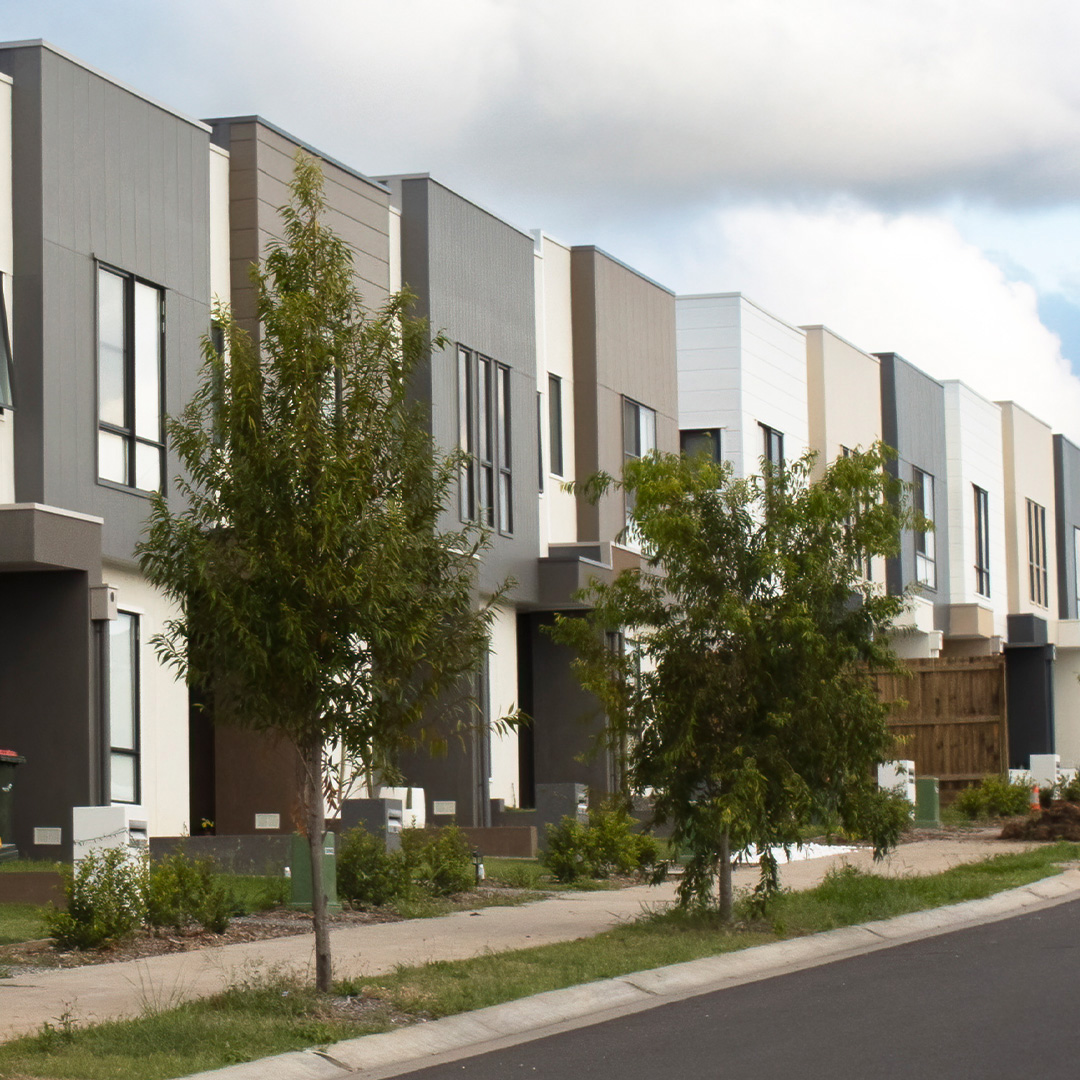
And I think Kathryn to your point, you know the sector has evolved. Yes, there is the highly affordable caravan park, conversion style housing solution and it continues and needs to continue to service at the affordable end of the market. But the level of sophistication of the lifestyle offering. These are resort-style communities, with rich, engaged community activities and social programs. So the impact of that is we've got really strong preventative health, health and wellness, really good mental health implications for the residents. They're living in a caring connected community that underpins our wellness, our wellbeing and longevity.
Kathryn House:
I was going to say too, it seems to have been a sector that has flown under the radar and there have been some recent big deals, among them Mirvac Group’s partnership acquisition of one of Australia's leading land lease operators for just over a billion, and HMC Capital and Canadian Pension Plan Investment Board have recently increased their stakes in Ingenia. Liam, why do you think this sector is becoming so attractive to some of these local and offshore groups?
Liam Greentree:
Great question Kathryn. I think it really became evident of how appealing this asset class was due to Covid. So during Covid there was a big shift from these funds looking into alternatives because there were some impacts to cash flow and returns on the traditional property asset classes like office, retail, industrial and so forth. But during Covid you still had 100% occupancy in these communities, you still had your rent paid. So there was no impact to the cashflow at all. And when you look at the thematics behind land lease communities, it effectively is a build-to-rent or BTR project but you are making a minor development profit along the way. So, Kate and I over the past couple weeks have just been referring to it as horizontal BTR so it is incredibly appealing. It's an annuity style income, you have annual rent increases for these retirees and they get a portion of that rent paid by the Commonwealth Government. So it's pretty much a win-win for everyone.
Kathryn House:
I think it's interesting too, there's a Living Sectors summit in Sydney later this year that's going to feature land lease and that summit previously focused purely on the build-to-rent sector. So I guess that will help broaden this understanding of the product.
Kate Melrose:
Yes Kathryn, I think that really does demonstrate that the land lease sector is part of the housing solution and not only is it potentially freeing up the downsizers from their homes, it really is starting to provide a very quick speed to market horizontal solution. It's underpinned by institutional capital, it provides a hybrid build-to-rent build-to-sell. Each individual home is a combined sale and lease and in that it needs to start to be considered as part of the great housing solution and part of the puzzle to solve the housing crisis in Australia.
Kathryn House:
Like so much in housing, supply in land lease looks like it's still falling short at the moment. I was reading a report this year which flagged that if land lease communities accommodate just 2.5-3% of those aged 50 to 84, the sector's going to need another 2,800 to 3,800 homes every year until at least 2041. So, how do we get that extra supply going in the land lease sector?
Kate Melrose:
Kathryn, I think as the sector has matured and awareness has increased, it's proven itself as a really popular and in demand product. It continues to attract institutional capital and I think government is starting to catch up and realise that there is real need for planning reform and to appropriately zone land for this. It is a complex legislative framework and probably doesn't reflect the new era of lifestyle communities that are being offered in this space. So across the states, there are discussions happening and reviews, but I think it's really time to start to look at how we get more land lease supply coming through because to meet the 2-3% penetration rate we're falling well short with current supply.
Liam Greentree:
And just on that, that's just to maintain that penetration rate of circa 3%. If market appetite and interest increases on that, we need to double our supply straight away to 6%. So I've seen some data coming out in the States and around 8% of the US population lives in these communities. So that's over 20 million people, and the majority of those are actually in all age communities. So it is available for people 18 to the retirement years. So there's definitely demand on both a retiree framework as well as an all-age framework.
Kathryn House:
Do you have many young people coming in to these estates, Kate? I know we've talked a lot about the the grey tsunami, but is there a young population coming in?
Kate Melrose:
Look, Kathryn, in the US only 50% or 40% of land lease communities are actually purchased by over 55s. So it really is a housing solution that plays to seniors and all ages. In Australia, it's predominantly played to a downsized market because of the limitation in providing funding for a land lease home in Australia. Now you do have new finance providers, land lease home loans looking to provide mortgages in the space, and I think as the sector now comes onto the radar we're going to see a lot more solutions and we need to be having conversations around, is it a solution for all ages in Australia? Is it a way if we can bring together creative thinking from banks and institutions and look at potentially expanding this to all ages. I do think that conversation needs to mature in Australia.
Kathryn House:
It's interesting that you talk about the mortgage side of things. I was reading a couple of recent Financial Review articles. In one of them Mirvac's Campbell Hanan was talking about the need for a product that allows you to buy a house only, with no land. So you're effectively divorcing the land from the cost of building the house. His argument is that it would make first home buyer purchases cheaper and in theory that would let first homeowners start building equity, which I think is a real issue right now with our affordability crisis. And with no land or security it would be like a car loan, but cars depreciate in value, unlike land which appreciates. Stockland CEO Tarun Gupta also raised the topic at a recent UDIA conference questioning why buyers in the US could get a loan for a home in a land lease community but in Australia that's quite difficult. Liam, give me your thoughts and I'd be keen to hear from you on this front also, Kate.
Liam Greentree:
I think Campbell and Tarun make a great point that there's really only one mortgage product available in the sector at the moment, which was started by Andrew Ralph, an ex ANZ banker. But basically he's just providing sort of a bridging loan for some retirees to cover a minor portion of the entry into this. But really I think there is unlimited potential to bring in a suitable mortgage product and they make the great point of, if you can get a loan for a car, which is a depreciating asset, you're effectively getting a loan on the home but it's still sitting on the land which will appreciate over time. And typically you have a contract which allows you to occupy that home on that land for a 99-year tenure, which is not too dissimilar to buying a house in the ACT for example. So there is still security of tenure for the home being located on the land which will appreciate over time. And even operators such as Lifestyle Communities in Victoria have a lot of data on this, which actually shows house price appreciation within their communities and they've been tracking the market for over 20 years. So there's some great data which is starting to come out on that.
Kate Melrose:
I think there's two very important points there, Liam. One is that the inherent value of the home is on the land in the context in which it sits with the inherent community facilities and lifestyle proposition. Unlike a car, and although it is fundamentally a chattel, unlike a car, you can't drive it away, it can't just drive off down the street. So the level of security of tenure for the mortgage is far more substantial. I think the second thing is yes, across our experience at Ingenia we've seen constant price growth for the same dwelling and there's many, many examples where people have purchased into a community, call it $500,000 and sold out at $800,000. There's been really substantial price growth across the sector in the last couple of years on same dwelling. And I think you will see that in the US there's a common thread in that as well. So although Australia has a mindset that unless you own the land, the asset will depreciate, the asset of these land lease assets are in the context of the environment in which they sit. And so they are seeing capital growth quite substantially and I think that will be true if it's to expand to be a major sector.
Kathryn House:
So financing, I guess one of the cons potentially. Are there any other cons that people should consider when they're buying into these communities? Some of the areas I've seen raised are the potential for additional fees on top of lease costs, needing to ensure that if you want to live in the home past the end of the lease, that that option actually exists and potentially regulatory or planning issues. What should people be considering, Kate when they do go to move into one of these communities?
Kate Melrose:
We often say you need to go and try and buy, you need to go and feel the community, because you're purchasing a home but you're also purchasing a lifestyle and the community in which it sits. So I think you've got to be mindful of the legislation. The legislation is very simple. It's a simple land home contract with a land lease attached and when you compare that with other housing solutions for downsizers, it is very, very simple. Is there a downside? Probably the downside is that many people are wanting them in more inner urban locations and they just don't exist. There's not an opportunity for them to exist from a planning framework and we're constantly getting inquiries for people who really aspire for a lifestyle experience but want to stay in the community that they know and love and that's one of the challenges that the sector's facing at the moment.
Kathryn House:
So Kat, we've talked a lot about affordability on the podcast and that really came to light, the issue of affordability, out of our recent residential valuers’ survey. t's the first time we've done it, you polled 190 of our valuers and 78% of them said that they expect house values to increase over the next 12 months with the highest growth expected in Perth, Sydney and Adelaide. It really does show that need for more diverse affordable housing options. Perhaps could you talk us through some of the key findings?
Kat Hale:
Sure, thanks Kathryn. We were so excited to launch our residential valuation survey and I think the key thing about the survey is that it was conducted by our valuers that are on the ground seeing what's going on in their local markets every single day. Now our valuers work really tight geographical patches and they know their markets really, really well. That 78% is a pretty scary stat. Sydney has always been a really popular place to live, you know, work, lifestyle, transport. So it doesn't really surprise me that we expect to see continued growth here, but affordability remains a key issue. I think worth highlighting that seeing the growth in Adelaide and Perth doesn't really surprise me. They haven't had the same levels of growth in comparison to say Sydney over the last few years. But they're definitely seeing more activity there. So people that may be priced out of Sydney or Melbourne are now looking at more affordable options.
So maybe Perth or Adelaide where they can maybe buy a freestanding house over an apartment. Or we might even see that we've got investors from say Sydney, that are then going, okay, well I can go and buy an investment property in Perth. But what that does is it drives up the market for the locals that are already living there because you've got your purchasers from the east coast, which look at Perth and Adelaide as being more affordable, that then end up driving up the market. So yes, affordability remains a really, really big problem for residential property. We're gearing up to launch our Q2 survey so it'll be really interesting to see the comparison between the Q1 and the Q2 findings.
Kathryn House:
Hopefully not such a scary figure next time around.
Liam Greentree:
I agree with everything you said Kat and I just feel like it's going to be a perpetual cycle of this being an issue and probably what we're talking about now is going to be far worse in the years to come and that's why I think a land lease product can ease some of these issues on a macro level.
Kathryn House:
So why do you think that government isn't more focused on the land lease sector as one of the solutions for the affordability crisis that we're in?
Liam Greentree:
I just feel like it's been flying under the radar for a couple of years and basically in Sydney, for example, there hasn't been really any development of this product within the Sydney metropolitan location. However, it has boomed in places like the central coast of Newcastle. I do believe it still is an education piece, but like anything, see how the home and the education of this product has developed over the past five to 10 years. It's only going to improve year on year from here on in.
Kate Melrose:
And I think Liam, as the next generation of land lease communities are delivered in all their glory, I think that will really start to transform the misconception that these are trailer parks, caravan park conversions and it's going to really start to become a mainstream housing solution. I do think government is suddenly realising that, hang on, there is something over here that we need to be considering and having conversation about. And it is a hybrid build-to-rent, build-to-sell, horizontal model which does provide real speed to market solutions, so this housing crisis needs speed to market. We've got build-to-rent conversations about vertical villages, which is fabulous and institutional ownership of land, but it takes a long time to get a vertical village to market to build it, to deliver. At the end of the day, as a community broadly, we all need to be focused on getting more heads on beds, more affordably, more quickly. And land lease really provides an opportunity to deliver housing both through modular and more build on site solutions. But the land lease space has speed to market capability, it has real expertise in modular housing and is really expert at running and operating communities that deliver a great experience for the occupants. So I think we are coming onto the radar both from a consumer, from a government and from an institutional investment perspective. And I think with Stockland coming into the market, the sector is really poised for quite rapid growth and capability to deliver solutions.
Kathryn House:
Heads on beds. I like it. So Liam, you mentioned rent assistance earlier, Kate, can you talk us through that and what that involves with land lease communities?
Kate Melrose:
Yes, certainly Kathryn, it's one of the unique factors with land lease communities because the purchaser leases the land, if they qualify for a pension, they may also qualify for Commonwealth Rent Assistance, which is a contribution to cover a portion of their weekly rent. We talked earlier, weekly rents may vary between about $180 to maybe $220 a week. And if you qualify for the pension your Commonwealth Rent Assistance will cover a portion of that subject to whether you are a single or a couple. The other factor about Commonwealth Rent Assistance is from an investor's perspective, your rental income, which at the moment is largely a hundred percent occupancy is underpinned by government payments. So it really gives greater certainty to that rental annuity stream that investors are so looking for.
Kathryn House:
One final question I did want to explore was, we have talked about this as being an affordable product, but when I was doing a little bit of research, I'm seeing you can buy in from say $400,000, but some of the premium resort style facilities are now selling, the homes are selling for over $2 million. Where you're getting access to your facilities like theatres and bowling greens and gyms and pools. So where do you see the biggest growth in the sector? Is it at the affordable end or is it at the premium end?
Kate Melrose:
Kathryn, I think as the sector matures, you'll see growth right across the pricing spectrum. You'll see there's real demand at the affordable end. As it's becoming mainstream and people are becoming aware of the lifestyle proposition, you're seeing really deep downsizer wallet freeing up capital. Now while we're saying $2 million is expensive for a land lease home, it's relative. If you are selling out of a $3 million home, you are cashing out a million dollars, often that's going to helping the kids onto the property ladder and you've got some money in the bank. If you're purchasing in the land, Ingenia average prices in the $500,00-$600,000 price band. So a lot of those people are cashing out at $800,000. So it's about relative affordability and enabling people to cash out. So I think you're going to continue to see as this sector matures, real demand at all levels of the spectrum. Some of the operators are really focused on playing in the mid-market and I think you'll see real growth right across the pricing spectrum.
Liam Greentree:
And just adding on that Kate, I think the key factor for this being an appealing product is it literally caters for everyone at a large range of the price point. So basically, you can have people buy in at $400,000 or $2 million. It allows a lot of people to consider this as a retirement option.
Kat Hale:
And I think what's great is if it's already built, you don't need to go through the whole individual building process. You know, there's delays with construction, getting planning permits through and all of that. You're moving into this wonderful community that's already built with all these incredible facilities. So I can see this being a way to help solve our housing affordability problem. We're getting people out of the homes that they're in, into these new lifestyle communities, which then frees up more supply of the existing homes that might be close to the city centres where you've got people that do very much want to live.
Kate Melrose:
There's an added social economic and health impact too Kat and that is you've got the operators operating these communities that are taking on board a lot of the services that councils sometimes provide to residents in a community. So they're providing really strong social programs around health, wellness, preventative health, and you’re seeing the social connection and the impact of that on health and wellness. The reduction on mental illness as well as the increased exercise program has really strong health benefits as well. So I think we need to look at, and BDO did a great research piece last year looking at the social and economic impact that this sector has. It's now a $12 billion sector, it's coming into focus and it has a great opportunity to grow and deliver solutions for the housing sector.
Kat Hale:
Kate, do you think there's any hesitancy from people to sort of go, oh I'm not sure about this, this land lease, the great Australian dream is to always buy your own plot of land. Is it hesitancy? And then the whole awareness piece and the education piece will help people to understand how it all works because it all sounds amazing. I'm in.
Kathryn House:
I'm in too!
Kat Hale:
Wellness and yoga. I'm in. But do you think generally in the market that traditional sense of the great Australian dream, is there resistance or hesitancy?
Kate Melrose:
Absolutely. There has been over the last 10 years in conversations with downsizers, there's concern, "well, hang on, I don't own my land". The minute they walk into a community, they meet with people that are living this engaged life with a sense of belonging and purpose, all of which are basic fundamental principles that, you know, according to Blue Zones underpin our longevity, health and wellness, is really compelling. And at the end of the day, they're also tangibly seeing where the price growth in this sector is going. That's a function of supply and demand. We cannot get enough communities to market to meet the tidal wave of downsizers. So the supply demand equation is continuing to drive price growth. So it's almost proven itself that sense of, I have to own my land to have price growth. The market's proving that it's still compelling and it really is, is offsetting that traditional concern and it's now become a very mainstream solution.
Kathryn House:
Well it's certainly going to be an interesting area to watch. Thank you so much for your time, Kate, Liam, and Kat. I've got a much better understanding of the sector and Kat I'm really looking forward to seeing the results of the next valuer survey. So thanks everyone for tuning into this latest episode of Talking Property with CBRE. If you want to find out more about the recent valuer survey we mentioned, you can find a link in our show notes. If you like the show and want to check out more, visit
cbre.com.au/talking property or subscribe through
Spotify,
Apple Podcast or your favorite podcast hosting platform. I'd also love to hear from you with questions, feedback, or ideas for future podcasts. You can email me via
talking [email protected] and we'd also love it if you could rate or review the show. Until next time.