Kathryn House
Hello and welcome to Talking Property. I'm your host, Kathryn House and thanks for tuning in to the second installment of our 2026 Property Prediction series. In this series I'm canvassing the views of four distinct groups. A major superannuation fund, a global investor, an Australian fund manager and developer, and a group with a big private wealth following.
Ruban Kaneshamoorthy
There is a lot of interest in Asia at the moment, just given geopolitical uncertainty, trading, where growth is kind of coming through and so a lot of capital wants to be in Asia. You then sort of break that down and you go, well, okay, where is the real investable part of Asia? For most people it's Australia, Japan. For certain platforms, you can add India to that. But if you look at then what's happening in Japan, with interest rates sort of rising, Australia is going to continue to become more and more attractive.
Kathryn House
That's Ruban Kanashamoorthy, co-head of Australia for Brookfield's Real Estate Group. In this role, Ruban is responsible for investment and portfolio activity in the country as well as fundraising and key client relationships across Australia. As a global alternative asset manager, Brookfield invests across a wide range of long life assets and businesses, including real estate, infrastructure, renewable power, private equity and credit.
Jason Huljich
The issue, what a lot of investors are scared about, is catching a falling knife. So if I buy now, even though it's cheap, if values keep going down, how is my investment going to look? I think what you've seen and why we're seeing so much demand for assets at the moment across our investors, but also on the transactions we're bidding on. We're seeing multiple parties bidding even on some of the unloved sectors and there's going to be more and more transactions as we ramp up.
Kathryn House
And that's Jason Huljich, Centuria Capital's co-founder and joint CEO. Centuria is an Australian-based investment manager specialising in real estate and investment bonds with a focus on helping investors grow wealth through commercial property. The firm manages over $20 billion in assets across listed and unlisted funds. I hope you enjoy this second installment of our Property Prediction series. And if you missed Part 1, make sure to tune in to hear from Mirvac's Campbell Hanan and Aware Super's Anjana Moran.
To kick off part two of our series, I'm joined by Ruban Kaneshamoorthy. Welcome to Talking Property Ruban.
Ruban Kaneshamoorthy
Thanks Kathryn. Great to be here. Thanks for having me.
Kathryn House
So Ruban, I've already spoken to Mirvac and Aware Super for Part 1 of our series to find out where they see the best property market opportunities in 2026. I'd love to find out what's on the Brookfield radar.
Ruban Kaneshamoorthy
As a pretty broad based investor, we can invest in any parts of the sector. Our general playbook is we want to buy the best quality real estate as a deeper discount to intrinsic value and we want to use our operational value add to really drive and pull out returns from those investments. From that perspective, I think it's a great time to be buying for a multiple amount of reasons. I think the first one being that the fundamentals are very strong. You know, in most markets in Australia and most sectors, real estate is just simply under supplied, which is going to lead to really great long term growth. And I think the second part is there's a real scarcity of capital. So how do we think about spending our time wisely? And from that perspective, we're really shifting our focus towards the alternative sectors where we think we have a natural advantage both being able to create and build platforms to be able to develop and also to be able to use our operational expertise. And a combination of all three often leads to mispricing and people not understanding or not being being willing or able to do the work. So from that perspective, we've spent a lot of time in the living space. We spent more time in things like storage, hospitality. We continue to be quite interested in logistics, while not necessarily an alternative, but that scale and growth perspective. But I think across the board a lot of opportunities and really not as much capital able or willing to compete in things with a bit more scale, a bit more complexity, where we're really finding it a really interesting advantage at the moment.
Kathryn House
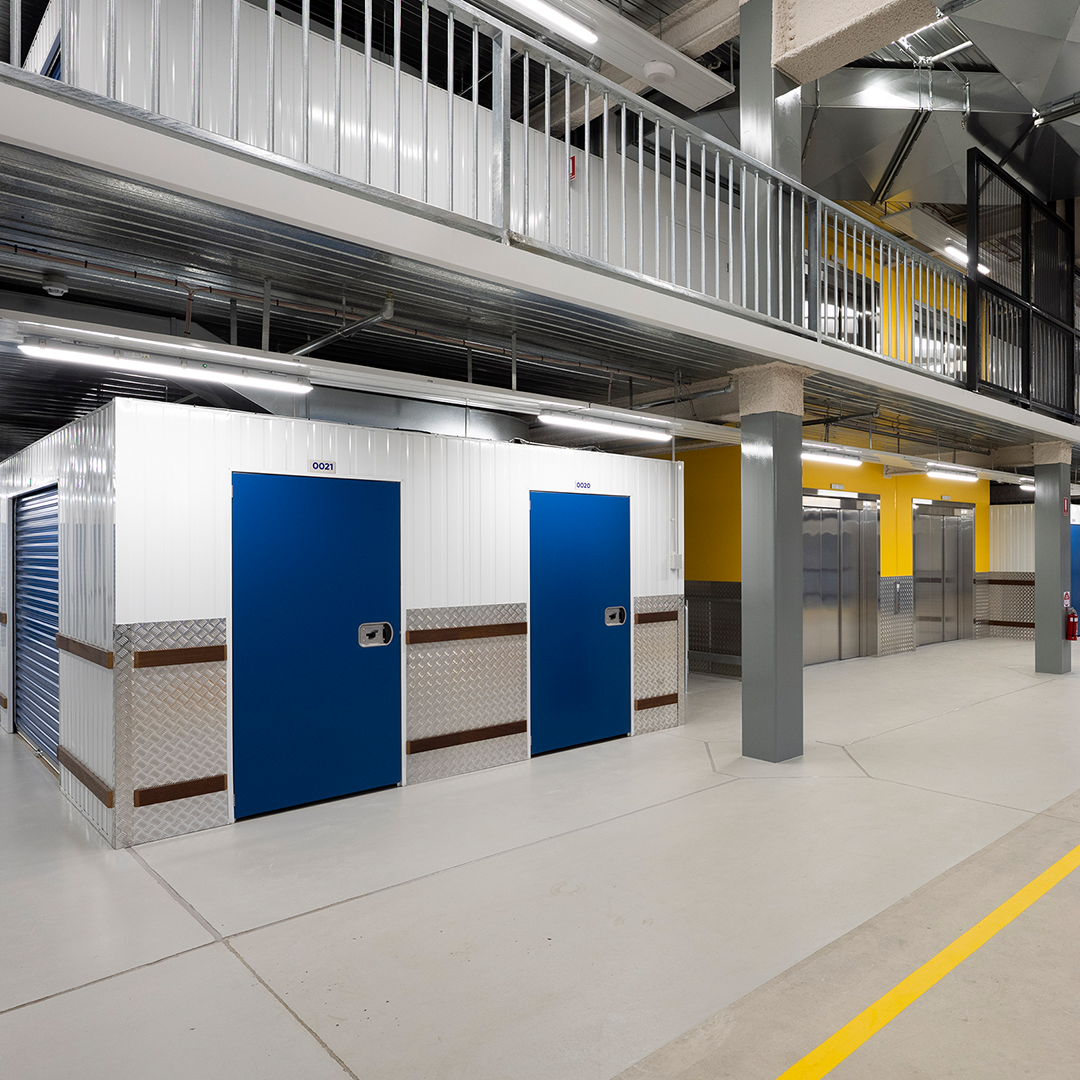
And I guess we couldn't, if we're talking about alternatives, not talk about your $4 billion deal which closed out the year to buy out National Storage REIT with GIC. A really exciting deal for the industry.
Ruban Kaneshamoorthy
Yeah, look, I mean I think obviously that is still a public deal, subject to shareholder vote, but it is something we're really excited about. You know, it gives us an opportunity to continue to grow that business, which is really what we want to do in a sector where we think the market is generally undersupplied and underpenetrated with great long term demographics. We really are looking to try and continue to just build on what the team has done in a listed environment, but with a much more efficient form of capital.
Kathryn House
And just to close out on that alternatives theme. I did see you quoted to say that alternatives aren't alternative anymore. What did you mean by that?
Ruban Kaneshamoorthy
Oh, look, I mean, I think it's more just they're getting more and more mainstream. We're seeing capital really wanting to invest in that sector and grow. And I think from that perspective, what people would have thought were alternatives five or six years ago are really forming the front of key investment decisions. So things like the living sector, things like, for example, storage, which we just went into, data centres, all of that, the level of capital that is going into and really creating a sector and growing it quite quickly means that it is going to be a much larger part of the real estate landscape going forward.
Kathryn House
So, Ruban, as an industry, we're always looking for the game changers. Is there anything that you've identified as a potential game changer in the next 12 months? Or on the flip side, something that could be a key industry challenge?
Ruban Kaneshamoorthy
I mean, look, I think it probably links to what we just talked about in the first topic, which I think it really is, I would use the word private capital and how that is going to play and shape the industry. I say this in the context of, you look at where demand for capital is going. There is a lot of interest in Asia at the moment, just given geopolitical uncertainty trading, where growth is kind of coming through and so a lot of capital wants to be in Asia. You then sort of break that down and you go, well, okay, where is the real investable part of Asia? For most people, it's Australia, Japan. For certain platforms you can add India to that. But if you look at then what's happening in Japan, with interest rates sort of rising, Australia is going to continue to become more and more attractive. Now the issue with Australia is while we have a very developed real estate landscape, most of it is held, or most of the traditional asset classes, are held in institutional hands and therefore the ability to trade and kind of play out of that isn't really happening. What we're now seeing though is with the rise of private capital, whether it be private equity, whether it be the super funds getting a lot more active, whether it be the traditional sovereign funds, they're all getting a lot more active and involved and really wanting to play in differentiated ways. And the scale of capital which they bring and, and the flexibility of that capital makes it very different to listed capital, more traditional forms of institutional capital that are in play and whether that be things like take privates, whether that be things like capital partnerships and direct JVs, whether that just be asset sales, I think that's going to be a really important part of the next 12 months and how that shapes and reshapes our industry really working in that partnership to unlock value for both parties and players, but becoming a lot more collaborative in that space to really work with different mindsets and different mentalities to solve problems.
Kathryn House
So transformation is also another area of focus for our industry. Do you see any transformational opportunities in the short and long term?
Ruban Kaneshamoorthy
Yeah, look, I mean it's really interesting. Like the real estate industry has generally been, I would say traditionally more slower to change than a lot of other industries., you know, we've at least been exposed to. I think, not wanting to be sort of cliche about it, but I think AI and sort of automation digitisation is going to be a really big game changer. And I think the rate of adoption and, and the level of change that is occurring in a short period of time is probably the most that I've seen in my career. And I think really it is becoming the forefront of how people are thinking about it. Not so much from what can we do with an operation sense, which I think is really important, but as much so the data and the ecosystem of being able to collect information, which is really going to drive a lot of change. I mean, you know, a good example is we were at our annual investor conference and we've invested in this business called Figure AI, which is effectively humanoid robots. And you know, I think the level of change and how quickly they grow, whereby if they learn one thing or however many million in the fleet learn at the same time, so that rapid adoption. So you can think about the different practicalities and how does the workforce change and create. So I think a lot of that is really going to be taken up by how do people think about what happens, how do things get implemented. But that growth and the change that will happen off that will be a big part of it. I think the other part of that though is really the shift in demographics that are occurring. You know, we had a large investment in a retirement living platform. A lot of that was driven by demographics. But the rate of change, of how the baby boomers are reacting and what's going to happen and frankly not having enough product I think is also going to be a big shaping point. So if you kind of marry those two causes, you've got a real window for changes amplifying, not necessarily in the next 12 months, but over a period of time that I think is really going to shape how the industry evolves and the type of investment product that does get created.
Kathryn House
And there's that real shift in wealth from that baby boomer sector as well.
Ruban Kaneshamoorthy
Absolutely. I mean, they control a lot of wealth, they know a lot more about what they want. And it's not so much about what do they have. It's about the experience, it's about the place making. It's about flexibility and frankly, just relatability, right? They have a much stronger voice than previous generations and the money and sort of therefore the choice to be heard.
Kathryn House
So to close us out, what market trend or issue has been building momentum that you think everyone will be talking about in 2026?
Ruban Kaneshamoorthy
I'd say it's probably more a trend which has been playing out, which I would put it on the bucket of the blurring of asset classes. So we've seen a lot of players really start to merge the real estate and the infrastructure parts of their business and put it under a real assets umbrella. And I think there are a lot of pros for that in terms of skillset, ability to deploy at scale. Frankly, as we talked about more of these asset classes becoming operational and therefore having the skillset to do that. So I'd say that's the pro. I would say the con is they can be very different asset classes. And while there are some that merge in the middle, that go close to social infrastructure, they are very different. They do need to be thought out. You know, things like Aveo for example. We both had infrastructure buyers and real estate buyers look at it. And the reality is, while the infrastructure buyers probably had a cheaper cost of capital, they price the risk very differently. And if there wasn't that certainty and that steadiness about it, they sort of hit the assumptions and kind of the growth quite hard. Whereas the real estate players were able to price growth, price development, take a view on a much more flexible operational business plan. So I think there are pros and cons to that. It'll be interesting to see how it shapes out. But you are seeing that trend more and more, whether it's the super funds, whether it's some of the broader asset managers shift towards that as they try to centralise it. But I think that'll be an interesting thematic that defines us and simply also where people invest and how they invest in asset classes.
Kathryn House
Well, Ruban, it was so great to have you on Talking Property and all the best for 2026.
Ruban Kaneshamoorthy
Thanks, Kathryn, very much appreciate it. And same to you.
Kathryn House
To complete our lineup, I'm joined by Centuria Capital's Jason Huljich. Welcome to the show, Jason.
Jason Huljich
Thanks for having me.
Kathryn House
So, Jason, a few months ago I attended the Property Council's annual Capital Markets Forum, and what I found really fascinating was some of the stats about the growth in private capital. You spoke on a panel that delved into the significant rise in the number of family offices in Australia and the massive transfer of wealth that's occurring as the boomers retire and the next generation looks for higher returns. So particularly with your private capital hat on, but also with an institutional lens, I'd love to hear where you see the best property market opportunities in 2026.
Jason Huljich
Sure. Yeah look, Centuria, we invest across seven different sectors. About five, six years ago we brought in a strategy of diversification. At one point we were basically just office investors and 2017, 18 we started diversifying into other sectors such as healthcare and ag and retail, industrial, non bank lending and the latest one was data centres or AI factories. So we're really diversified and we're seeing really good opportunities across a lot of those sectors. If you see what we've been buying recently, we've been buying a lot of industrial, we've been buying retail, we've been buying ag as well. And if you look across the different sectors, I think the tailwinds you've got, you've sort of got immigration, which is obviously leading the demand side of the equation and then you've got lack of supply in most sectors just because of cost of construction. So things aren't getting built. And other than what's being built at the moment, particularly in office, there's not going to be much supply going forward. And I think the stats are there's probably going to be about 20 to 25% new office built in the next five years than was built in the last five years. So you're going to have continued demand and supply really tightening up. So I think a lot of sectors are going to look pretty good, even office, which you know has been pretty tough since COVID. We're making offers on office buildings for the first time in probably three or four years now because we think there's value and we think these medium term dynamics are going to actually show some pretty good value for office real estate if we can buy now. Industrial, obviously the growth's come off a little bit. It's still very strong. We're still seeing value there. We've still got really good demand from our investors, that private capital we talked about. We recently raised for a fund, it was a single asset industrial fund for a property down in South Australia, Port Adelaide Industrial Estate. So it was a 32 hectare property, 14 buildings, 17 tenants. We went out to raise about $117 million of equity and we got more than $300 million in the door. And so we were quite surprised by that. I think the thing that the private capital liked was one, it was industrial, two, it showed really good forecast returns, had some really good potential exit strategies and people are starting to see valuations stabilise across nearly all sectors and head the right way. So, yeah, I think there's a number of sectors that are looking pretty good throughout 2026.
Kathryn House
It's interesting on that industrial front, we completed our latest Lender Intentions Survey and there's been no waning in interest there. The lenders still all want to be lending on industrial almost to the point of being double the other sectors. So it'll be interesting to see.
Jason Huljich
Yeah, the bank's appetite at the moment across all sectors is huge. You know, we've got about 26 different banks across our platform. You know, we've got a really well diversified book across all the 400 odd assets and all the different funds we have. And we've probably never seen bank appetite better for their larger, established clients. It's not just industrial that, it's all the sectors that they really want to lean to at the moment, which is great.
Kathryn House
So, Jason, I'd also love to get your views on what you think could be a game changer or, on the flip side, a key challenge for the industry.
Jason Huljich
So, look, everyone's talking about it, but AI is the one that is the focus of most people at the moment. I think if you look at real estate historically, there hasn't been a lot of transformation over, you know, it's bricks and mortar. There hasn't been huge disruption across the board and we're starting to see it on some AI opportunities at the moment. I've never had so many interesting sort of prop tech opportunities brought to us for both use and for capital investment. And we're looking at quite a few at the moment that are, you know, they really are game changers for the commercial real estate industry. So I think you'll see that AI theme really play out. There's a lot of groups out there that are trying to do some pretty interesting things with AI. Look, some will get off the ground, some won't, but it's definitely the most opportunities for disruption I've seen in my real estate career over 30 years. On the whole data centre point, we do own data centres we invested into, so we've got a couple of the traditional data centres. We've got Telstra's big one in Clayton, in Victoria, we've got another data centre in Perth, but you know, we invested in August last year in a group called Reset Data, which is a AI factory business. So bit different to the traditional data centres. Reset Data builds AI factories. So these are data centres filled with Nvidia chips for compute power, basically. And we built our first one down in Melbourne in one of our office buildings actually. We took some vacant space from that office building and built Australia's largest sovereign AI factory. And that's really interesting. So we're trying to play on that side of things as well as a lot of groups are. We're a Nvidia cloud partner, so we're one of three in Australia where we work with Nvidia to build these platforms where Nvidia's customers can lease that compute power. So I think between AI and data centre, it's definitely the hot topic at the moment, but it is the one that could, it could be huge for the industry.
Kathryn House
Yes. I was reading a story in the Australian Financial Review and it was talking about, you know, the choke points and you know, we've got this huge opportunity in Australia, but it's, you know, whether we can get things right when it comes to, you know, the energy that we need and the planning that we need.
Jason Huljich
Yeah, the big thing is power, as you said. Everyone's trying to secure as much as they can. We're doing it across our portfolios, both our industrial portfolio and some of our metro office portfolios. And you know, there's not enough to go around. So that is one of the big issues going forward for the data centre sector, definitely.
Kathryn House
So what about transformational opportunities for the property sector? Are you seeing anything on that front?
Jason Huljich
Look, one thing that I think is quite interesting and we're doing a lot of work on is digital twins. They have been around for a while, but I think they're really, they are getting a lot more sophisticated than what they were, say five years ago. We're mapping a lot of our portfolio and establishing these digital twins for a lot of our assets. And what you can do with those digital twins now is quite incredible. We use the Nvidia Omniverse platform for these digital twins. And the other thing is, I think they're quite cost effective from where they were a while ago as well. So you can run all sorts of simulations once you've loaded in your plans of your asset and created that digital twin. You know, simple things like we're doing a solar rollout at the moment. The digital twin can show us how many panels we can get on the roof, how much can the structure take, what is the ideal location for those panels, how much power will actually come off those panels, how much money we'll make, so forth. So it's quite incredible. We use it for mapping pallet racking within the building sprinkler systems. The big one's preventive maintenance. If you have all the services within the digital twin, you can use a lot of different platforms to work out that preventative maintenance scheduling as well. So I think that's something that is going to definitely take off in the sector as the costs come down and the more things you can do with it increases as well.
Kathryn House
There are some very smart minds out there who are bringing all this together. So to close us out, what market trend or issue do you think has been quietly building momentum that probably everyone will be talking about in the next 12 months?
Jason Huljich
We've really seen a change in sentiment over the last probably six months with a few things. I think a lot of investors in the market have worked out that valuations are stabilising across all sectors. We've still seen industrial increase over the last three six month periods, but even office has stabilised and headed up in the June vals. So our commercial office REIT, COF, that had the first valuation gain since 2022. Industrial as I said, has been going up for a while. We've seen retail increasing. So what we see with our investors is obviously, you make a lot of money by buying in the real distressful periods. Like if we go back 18 months, two years ago when rates were heading up very, very quickly. The issue, what a lot of investors are scared about is catching a falling knife. So if I buy now, even though it's cheap, if values keep coming down, how is my investment going to look? I think what you've seen and why we're seeing so much demand for assets at the moment across our investors, but also on the transactions we're bidding on, we're seeing multiple parties bidding even on some of the unloved sectors. And there's going to be more and more transactions as we ramp up. I think people have seen, well vals are stabilised. I'm going to come in, vals shouldn't be going down. I can ride the cycle sort of upswing. And you've just seen more and more investors sort of realise it's a really good time to invest in commercial property. So I think you'll see continued strong demand. I think transactional volumes will increase into '27. I think there'll be a lot more deals getting done. You know we're missing out on assets we're trying to go after at the moment jJust because there's a lot of competition and, you know, people wanting to pay more than we are. So I think there's definitely been a swing over the last three to six months in the sector over here.
Kathryn House
And potentially not as many interest rate cuts as people might have liked with where inflation's been heading. But it looks like we're definitely on the right trajectory.
Jason Huljich
I agree. Look, I think as long as interest rates stay reasonably stable, I think those tailwinds of around a lack of supply in most sectors, the demand still coming through. I think the sector will still be very healthy with those tailwinds in place.
Kathryn House
Well, thank you so much for joining Talking Property Jason and all the best for 2026.
Jason Huljich
It was a pleasure. Thank you.
Kathryn House
So that's a wrap for our Property Prediction series to kick off the year. If you like the show and want to check out more, make sure to follow us wherever you get your podcasts. That will ensure you don't miss our Q1 episode of the House View, which will go live on February 12, featuring CBRE's Pacific CEO Phil Rowland and Pacific Head of Research Sameer Chopra. Until next time.