Kathryn House
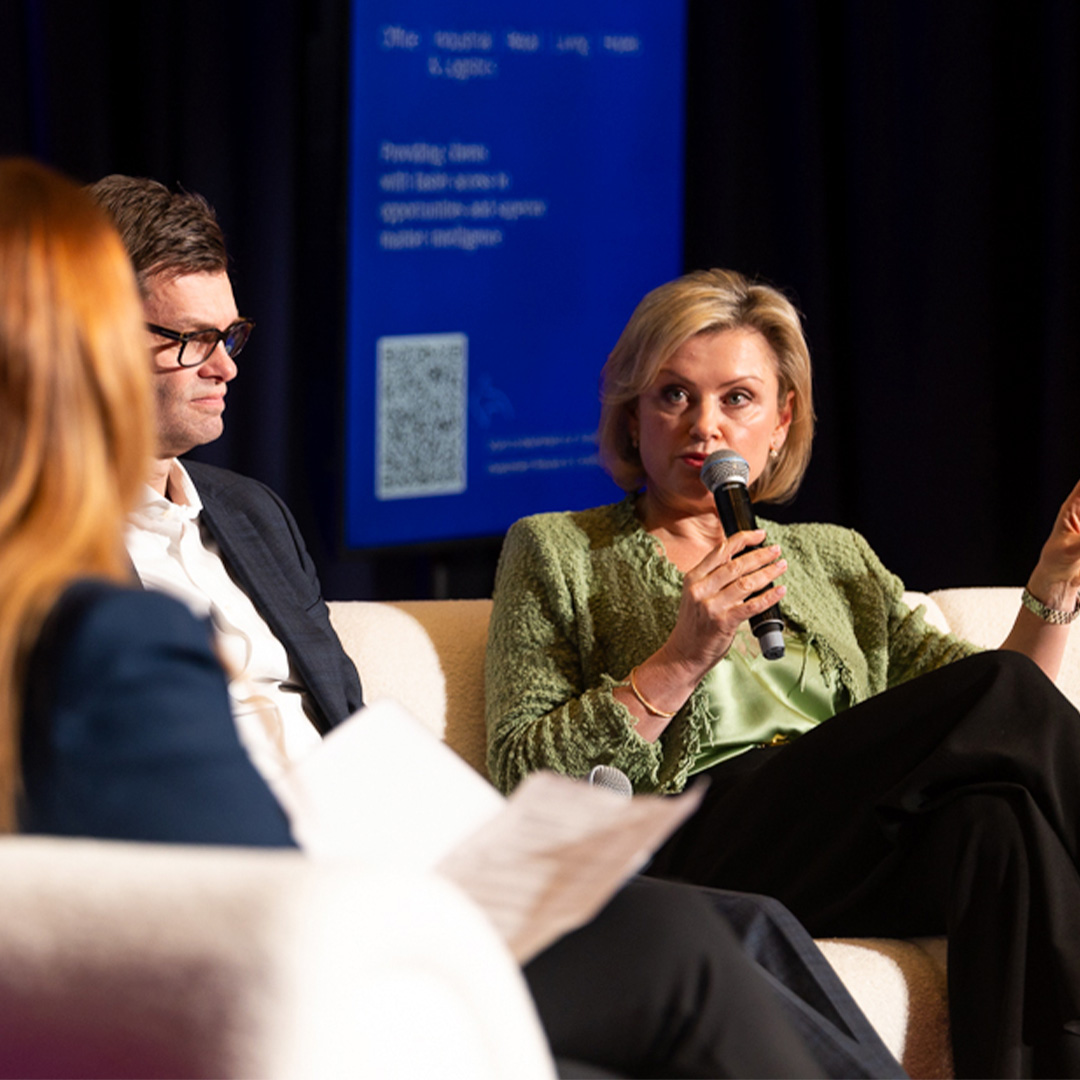
Hello and welcome to Talking Property with CBRE. I'm Kathyrn House, your podcast host and in this latest episode I'll be taking you for an exclusive behind the scenes peek at the Property Council of Australia's Property Leaders Summit. The summit is the hottest property ticket in town. Staged each year at Parliament House, it gives invited senior leaders the opportunity to dissect the factors shaping the property industry and to be very frank in their discussions as they're governed by the Chatham House rule. The summit connects property investment decision makers from around the globe with delegates also given an insider's view of the political landscape by key leaders from all sides of government. So to take us into the tent, I'll be joined by Property Council President Carmel Hourigan and by our CBRE Summit attendees, CEO Phil Rowland, Head of Debt and Structured Finance, Andrew McCasker, and Head of Client Care Kate Heaney. CBRE Investment Management's Head of Indirect Real Estate Strategies, Alex Crossing will also be joining us. First we'll get the helicopter view from Carmel and then it's going to be a rapid fire discussion with our CBRE attendees. So let me take you into the tent. Thanks so much for taking the time out today. I know you have such a busy schedule and I believe you're joining us from Canberra.
Alex Crossing
I am Kathryn and it's always a pleasure to catch up with you as per usual and the CBRA team. Yes, I am joining you from Canberra after pretty much a wonderful two and a half days down here for the Property Leaders' Summit.
Kathryn House
Fantastic. And has the mood shifted much? I spoke to you after last year's summit. It was all about housing. What was the mood there?
Carmel Hourigan
I was really positive after leaving the final function last night. You know, great feedback from all the delegates that attended and it was really well attended this year by a mix of investor groups and managers and foreign investors and the way the agenda was structured. We really started the first day with really setting that scene for where Australia is now on a relative basis versus the rest of the world because obviously the geopolitical risk is probably that was front of mind rather than housing. And how does what's playing out in the us Tariffs and Trump's behaviour and uncertainty generally in the world. How's that going to impact Australia and our performance over the next three to five years? So we sort of started thinking about that and we had a great first three sessions with economists from around Australia who came in and we also had foreign economists come in to talk to us about how they were seeing Australia. And then we also had Demographics. So we talked about standing back from everything. If you just look at Australia at the moment and where population growth is and the way that we are aging and so on in Australia market, we are set for significant growth to continue. And I think that put a real positive spin on the day that we will live through this uncertainty. And we've got a lot to take advantage of as an industry.
Kathryn House
Yes, great to see that positivity really starting to come through. Did you have one or two real key takeaways from the summit?
Carmel Hourigan
Yeah, look, I think my key takeaway is that Australia is likely to see more capital flow so incrementally more capital flow on a relative basis compared to the rest of the world. That the priority market which traditionally has been in the U.S. it's such a gateway large scale market for global investors. Yes. We'll never fall off the list. However, maybe what's going on the US at the moment and with what's happening with the recent announcement on taxes and foreign investor taxes that has really given a lot of confidence that Australia will see more capital flows coming through Asia pac. Asia PAC will turn to be a priority market if it not already is. And Australia will get its share, significant share of that pie. That's the first thing I would say. So we're in a good position. The second I would say is just demographically the population growth and so on. And yes we've had some pretty soft data come out yesterday from GDP forecasts but still on a relative basis we look set for reasonable growth. And I think the third part is that we've had definitely a rebalance and a reset in values across all sectors and we are at an inflection point and we are at a point where most sectors, most managers, we've got pretty sophisticated managers in this country have refi on their capital management strategies and they've had a devaluation across their book and the forward looking returns are looking good around that. You've got declining interest rates so the rate settings are looking positive for us. So that's probably the key message that hey, we've got some real wins that we can take advantage of. It's been hard times over the last four years as we've had those rate sets come through but that's probably turned. And I think the final thing, I'd say there was far more discussion on cash flow and the fact that all sectors are probably going to see pretty solid rental growth coming through because supply constraints through the Australian market. So construction costs have risen to such a level that it is getting very difficult or there's a massive gap in terms of economic rents required across most sectors. So I'd say they're probably some of the property fundamentals.
Kathryn House
It's interesting. I think a lot of our brokers had a mantra of survive till 25 and it looks like 26 is going to be that year when we really do start to see things accelerate.
Carmel Hourigan
Yeah, and I think that's right because when we think about. That was another question that people talked about. Our topic was liquidity and there's lots happening liquidity in the Australian market, particularly in office, you know, we're not blind to that but there seems to be liquidity from a transaction's point of view returning at all different levels, which we think is positive. Just on housing. I'll just touch on that. I think housing remains an absolute generational critical issue in Australia and it is going to take years for us to fix. But our interactions with the government were really based around a few things. The first one was what are the appropriate tax settings that need to be put in place in Australia so that we can get more international capital to fund the things that we need to be doing and how housing is a key component of that. And a lot of the housing that's being done at the moment is being funded, particularly BTR from offshore investors, not domestic. And we're really conscious of that. The tax settings important. We talked about productivity. A lot of talk and it's a bit of a throwaway line and everyone's using it but what does it mean? How do we get moving on this? And we had a number of ministers come and talk to us about how they're going to change and how they're thinking about productivity which in the end if we don't get a productivity change in Australia, it is the only thing that's going to drive our living standards and we'll see them going backwards if we can't get a grip on it. But is a decade long problem which.
Kathryn House
Has been decades in the making. So did you have any aha moments when listening to the sessions or is there one thing that you'd like to see happen this year that could be a real market mover?
Alex Crossing
Look, my. From personal point of view I actually felt pretty good about office. Now I'm an office CEO but you know, I hate to be biased but I had a few. There was a few people on stage who were actually saying actually offices reach that point where we are going to see things pick up and it's starting to look attractive. Particularly the Australian Office market, international investors as well, are believing and can see that Australia is different. And that's taken a long time, as you know, Kathryn, to actually get that sell. And I think it has taken a reset in values as well. So that's, you know, really positive. The other sectors, I think no real aha moments. I think everyone knows they're in a good position, but I think just generally people felt positive. You know, there was a lot of camaraderie in the room. And I thought about that just from my role as president of the Property Council. Geez, we've got a really competitive industry, but actually we can all pull together to get things done. And particularly, you know, when it comes to lobbying the government. And so the one thing that we really hope as an industry that we could see happen this year is the labor government is a massive majority. We talked about that. You know, what's it like to govern and are we going to have a really serious competitor in the coalition? And you know, there was a lot of discussion about to have a really good government, you need a really competitive coalition. And hopefully the Albanese government recognizes the gift that they've been given and will continue to work on, as Chalmers has said, that they'll continue to work on this productivity issue. But the tax settings, particularly in Victoria, I think a lot of people in the room were just, you know, that would be amazing if we could get the government, the federal government to help us with the state government on unlocking some of those taxes which have been put in place. 47% of the budget take is coming from property taxes in Victoria. That is outrageous. And so I think that's an area where everyone is focused. And then one other part I'd say is I don't think this PLS was as focused on housing. Housing is an issue. But the way we're talking about that now at the Property Council is there's really three big areas for us and all the sectors are involved. And one is that those tax settings, appropriate tax settings and investment settings. The second is productivity. What are we doing there? And the third is just making sure that the Property Council itself is being able to have the right services, getting that real value contribution. So that's where we're focused, focusing. And underneath all that, if we get those planning settings right and productivity settings right, we will unlock housing and we'll also unlock industrial land. We'll fix the problems with power supply, water supply, infrastructure. All those things are critical to the members.
Kathryn House
I did a podcast where I talked about the housing summit that you had down in Melbourne and the productivity Commissioner was talking about relating it to Bob the Builder and you know, can we fix this? And her viewers, yes, we can. So it sounds like with the right intentions we really can fix these issues.
Carmel Hourigan
Yeah, look, I think that's right. Everyone's wide eyed, everyone understands it's going to be hard. One of the things that was discussed, which I thought was interesting and probably really true and I think you would agree with this, is that back in the Keating Hawk days where they made those massive gains in productivity, they were Australia wide strategies, I'm going to float the dollar, deregulation, blah, blah, blah, blah, you know, microeconomic reform and all that sort of stuff, the accords, all that, they hit all parts. But now we're a much larger and more diversified economy. The view one of the discussions from one of the ministers was actually we're serious about productivity but it's going to have to be a sector by sector strategy this time. We won't be able to just solve it with 1, 2, 3 or 4 overall policies, which is amazing time in Australia's history.
Kathryn House
Right.
Carmel Hourigan
So it is going to be harder in that respect. And I think as an industry and as you know, people who are leading different companies are really going to have to work with us to try and come together to get the right messages, to get the right policies on different things, which I think we're doing quite well in housing, to be honest. I think the feedback we do get from state Premiers is that and from the Minister Claire o' Neill, who's been very strong in the way she's working with us. She's been great. I think we're doing it, but we're just going to have to keep our eye on the ball.
Kathryn House
Well, it was really great to get your view of the conference, Carmel, and thank you. Thanks so much for joining Talking Property once again.
Carmel Hourigan
Thank you. Good to see you, Kathryn.
Kathryn House
I'm now joined by CBRE's Pacific CEO Phil Rowland, who many of you would know from his quarterly Houseview podcast. Thanks for joining me today, Phil.
Phil Rowland
Great to be with you, Kathryn House.
Kathryn House
So I was hoping you could give us some insights into the session about demographic trends and government priorities. I know it's something CBRE is really focused on through its consulting work with both government groups and private industry. What was the sentiment in the room and what was driving the conversation?
Phil Rowland
Yeah, no, well, it was a great session, Kathryn. It really was. It was very, very insightful. I think the main takeaway I think that I took from that is that all the Demographic analysis reinforced the comparative advantages that Australia has in the world. And of course, it just underpins the long term fundamentals of the Australian property sector.
Kathryn House
Yes, I got that same feeling from Carmel when she introduced this podcast. She said there was a lot of positivity in the room.
Phil Rowland
Yeah, definitely. Well, I think there was a lot of positivity in the room broadly for where we are in the cycle and things. But specifically the demographic session just reinforced, as I said, these things that really are strong tailwinds for Australia. And the main driver of that, of course, is just as the world's population grows, Australia is going to be a beneficiary of that. Our primary industries such as agriculture and commodities, for example, they're going to continue to be a really solid foundation for our economy. Of course, the country's been a great beneficiary of population growth that's going to continue to provide a real strong tailwind for growth and prosperity for the country. And of course, it supports all the asset classes in Australia, particularly in the living sector. Of course, yes.
Kathryn House
Are you seeing anything else that might influence the market moving forward?
Phil Rowland
Look, for me, Kathryn, I think probably one of the biggest takeaways, and of course being in Canberra, you always get a good sense of this. But one of my takeaways from the summit was just the fact that the continuity of government is going to enable us to have progress on some of these really big issues that need two terms of government to be able to make an impact on. Housing is obviously the biggest one. And we had Claire o' Neill give a very engaging perspective on that. But there's obviously big focus on energy transition, big focus on productivity. I think having continuity of government through a couple of terms is going to make a difference. That being said, we do need to have an effective opposition. There are some very concerning policies that are being proposed and I think we're all tuned in obviously to the policy on the super tax, on unrealised gains. You know, that's very, very concerning. We need a solid opposition to be able to fight that. And of course there's still a lot of focus on the debts and deficits that must be tackled, especially at a state level. So whilst continuing government is good, I do think there's obviously some things that do need some work on as well.
Kathryn House
Yes, it was interesting. Carmel said the same thing about having a strong opposition and how important that's going to be moving forward. So any aha. Moments for you? Did you come away with anything that really stuck with you?
Phil Rowland
I'll give you one and that was just the data centre market. I mean, it's. We're number two behind the us. Australia's on the path to be the central hub for data centres for APAC.
Kathryn House
Yeah, I think we just had a data centre report come out that delved into some of that. So it's going to be a really exciting time and obviously a lot of the big Australian groups are targeting that data centre market at the moment.
Phil Rowland
Yeah, absolutely. And so overall, Kathryn, I thought it was a great summit and, you know, really good tailwinds for all sectors in Australia. It's really good.
Kathryn House
Well, great to get your insights, Phil, and I am looking forward to your next Houseview podcast in July.
Phil Rowland
Look forward to it. Thanks, Kathryn.
Kathryn House
Next in the hot seat is CBRE IM's Alex Crossing, who joined me last year for our Talking Property Prediction series. Thanks for coming back on the show, Alex, in our new Sydney podcast studio.
Alex Crossing
It's very impressive, Kathryn.
Kathryn House
I know, I feel very professional, so I'd love to get your thoughts about the session, which looked at real estate investment in an era of disruption, which was all about adapting capital strategies, rebalancing portfolios and identifying opportunity amid uncertainty. Firstly, what sentiment seemed to be driving the conversation? Or did you have any key takeaways?
Alex Crossing
I suppose overall there was a cautious optimism, should I say there was a lot of discussion of the last few years and where we are in the cycle. Obviously the movement in bond yields and cash rates over the last five years has fundamentally impacted valuations and price expectations. But also in some sectors we've seen the return of rental growth where it might have stalled in the past or an acceleration in rental growth. Think about industrial. There was a recognition that also that lovely tailwind that we all had in the late teens with declining cash rates and compressing cap rates, that expectation is no longer there. The forecasts are all for bond yields and cap rates remain pretty stable once they've sort of settled down. So cash rates I think now low threes. Looking ahead for those that were in the session was really about getting the assets in your portfolio to be in the right markets, the right kind of assets that clients or occupiers or tenants want and also being able to really maximise and drive the income profile of their assets. I think there was a lot of talk about why we hadn't seen large scale distress compared to the last time we had a down cycle being the gfc. And I think the view was that coming into this cycle everyone had learned their lessons and bore the scars and were coming in with A lot less leverage.
Alex Crossing
Yes.
Kathryn House
And the banks being a lot more patient.
Alex Crossing
Yes. I think the banks also had learned, we'd all learned our lesson, shall we say. So a lot of people have been able to get through this period and now I think there's a view that values have rebased and looking ahead, probably while we don't have the tailwind of declining cash rates and cap rates, we do have potential benefit of a lack of new supply, just given rising construction costs and the higher holding costs and the implications that that could have for vacancy and therefore potential for larger than expected rental growth if you're in those preferred markets.
Kathryn House
So that whole idea of Samir Chopra, our research are talking about premiumization.
Alex Crossing
Absolutely. If you're not in the place where your tenants need to be, then I suppose you could be anywhere. So your assets need to be where your customers essentially need to be and they need to be there because that's where their customers need to be. So I suppose that has that element of uniqueness. And if you are in a unique location, then you're able to offer something special and therefore you can drive your rents. And with the lack of new supply, that will only intensify. Yes.
Kathryn House
So how else could this influence the market moving forward? What was discussed at that particular session?
Alex Crossing
I think some of the takeaways from that session probably linked into the demography session that we had earlier. And I thought there was an interesting but showing on the census data. Since 96, the percentage of work from home and up until Covid had obviously been around four and a half to five and a half consistent in that consistent range. And then we saw a big jump in 21% over to 2021. And his expectations were that in the 2026 consensus that's probably going to land around 15%. And that probably gelled with what was a lot of the discussion from the panel was really saying that there was a feeling that occupiers now have a sense of what their staff require with regards to work from home and where maybe a few years ago there was a hesitancy because they didn't know how to plan ahead. And what would it look like, this new normal? It seems that a lot of occupiers, particularly obviously office, are feeling more comfortable about making those longer term decisions, which could also help from an investment perspective. You can bring that into the lease negotiations and the amount of space and all that. That extra element of certainty will obviously help to drive performance in the longer term.
Kathryn House
And so this is a question that I've been Asking everyone about aha moments. So was there anything from the summit that springs to mind that was a real aha for you.
Alex Crossing
I think that Bernard Salt one, which I just mentioned earlier. You know, markets hate uncertainty. We've kind of got a lot of uncertainty on the geopolitical front. But at least if people have a sense of whether their employees are going to turn up and how many days, that gives some help to planning. Even if you can't plan whether the tariffs are going to change next week.
Kathryn House
Oh, yes. Or the next day.
Alex Crossing
Yes, exactly. So, yeah, so. Or how everyone's going to react or the spillover effects to GDP and the like.
Kathryn House
Well, thank you for joining me, Alex, and I hope to get you back on talking property soon.
Alex Crossing
Thanks, Katherine. Always a pleasure.
Kathryn House
Next up, our Pacific head of Debt and Structured Finance, Andrew McCasker. Welcome back, Andrew.
Andrew McCasker
Thanks, Katherine. Always good to be back.
Kathryn House
You moderated the Summit's real estate lending session, which delved into the key market risks and opportunities and how to capitalise on emerging trends. So what sentiment seemed to be driving that conversation and what was your key takeaway?
Alex Crossing
Look, Kathryn, it was a very good panel and we had good representation across domestic banks, offshore banks and private credit market as well. And the biggest takeaway for me from that was A, the availability of capital, B, the style of transactions that the banks are doing and then how the private credit space is not only working with the banks, but also complementing the structures that are being put in place for lenders in today's market.
Kathryn House
Yeah, There seems to be a lot in the media headlines about private credit at the moment.
Andrew McCasker
Yeah. And we've seen private credit emerge. I think I opened up the conversation along the lines of we were calling it non bank and then alternate lending, and it's finally landed on a space of private credit. And I think that is actually the name that sits well with what they're doing and they're up and down the full debt stack. So can participate in lowly leveraged development transactions through to quite highly leveraged, highly structured transactions that allowing people to be able to participate in the market, which they may not have been able to do under normal banking circumstances.
Kathryn House
So, from what you heard from the panel, how do you think that we might see the market shifting moving forward?
Andrew McCasker
Look, I think we're very fortunate in Australia that we've got a strong banking market and that was as a result of the GFC and the way that the regulator and the banks work together to ensure that we didn't roll into another one of those situations again. And because of that we're seeing the banks be a little bit more aggressive in what they can do, but also be able to support the market as it continues to grow.
Kathryn House
So million dollar question, did you have any aha moments from the summit?
Andrew McCasker
Look, from the summit in general I thought Bernard Salt's seminar on demographics, as always was very enlightening and truly sort of rammed home. What our Head of Research Samir has been saying is that a number of people that we have coming into Australia and the population growth that we've got going Australia is absolutely set for property boom. We just need more housing on the ground. We also had a very good insight from the government around what the government's support is going to be as they continue to drive out and try to solve for some of this housing problems that we are currently in and potentially will become worse if we don't start to develop and deliver more housing into the market.
Kathryn House
Andrew, I always love hearing your perspectives.
Andrew McCasker
Really good to catch up again Kathryn, and look forward to doing it again shortly.
Kathryn House
To round us out, I'm really pleased to welcome CBRE's head of client Care, Kate Heaney. Welcome, Kate.
Kate Heaney
Thanks Katherine.
Kathryn House
I don't think I've had you in the hot seat before on talking property.
Kate Heaney
I've done a few but they're better now with you leading.
Kathryn House
That's very kind of you to say. So you are closing us out and we're going to be talking about data centres. There was, you know, there's been so much interest from investors, fund managers. The session at PLS was all about the growth potential opportunities and the long term outlook. What was the sentiment at that session and what were people talking about?
Kate Heaney
Yeah Kathryn, it was a fascinating session, amazing lineup on the panel and also a very well attended session, I will say it was amazing how many people did turn up. I think the opening, particularly as Penny Ransom said that but this is the fastest moving train and the more that this team went through the fundamentals, the appetite, et cetera, you left really realising that this is extraordinary and it is fast and as everyone would say a nascent sector and it is in its early stages in every character and trait of what it could be. Rapid growth in innovation. Extraordinary.
Kathryn House
How is this going to shift the market, do you think?
Kate Heaney
Yeah, I think the fascinating elements about it was just some of the facts on when we say shifting market and the scale and that speed. There was a lot about hey about future proofing but at the same time the conflict of that with obsolescence. So if you're Doing something and going at such pace, do you risk obsolescence? And if you look at the characteristics alone, we heard so many stats on the panel about, you know, projected to grow 50% in two years and 170% in 2030, like that's just extraordinary scale through AI, enterprise, digital transformation, etc. And then there are other elements about that too, that if we're going at such pace about the vacancy, everyone sort of tracking a little bit around vacancy, which is operating at the moment below 5% in Australia, 5% globally and below 1% in the US. So this is extraordinary figures. And the need to meet that demand was extraordinary. And if you think about the megawatt demand, you know, one to three megawatt requirements sub five years ago and now we're at 300 megawatts. So I got so excited by the stats and there are some very smart people trying to work out the ways to kind of meet the demands of this market and this asset class.
Kathryn House
Yes, because power is such an issue, as you talked about, but we are seeing so many different people coming at this from, you know, both global investors, local investors. So we're really interesting to see how the sector plays out, particularly in Australia. Earlier in the podcast, talking about the fact that data centres, we're sort of one of the number one markets in the world in terms of attracting attention. So in terms of the summit overall, I've been asking everyone this question. Did you have any aha moments?
Kate Heaney
Had a lot, Kathryn, and some fitting within this data centre arena. A couple things I learned about that, you know, not being a homogenous market and I found that really fascinating from the point of view that we can't keep drawing. You think of data center and cloud and AI and the draw globally, but actually we have to meet demand in market before we can look at the relative draw globally or you know, across the ditch, for example, you have to meet local demand because of either government regulatory position, so many other areas that is in the unknown. I learned so much around the potential for Australia in their scale and influence in the data centre arena and the fundamental screens so well in comparison to any of the other nations. And I think the other part around that meant that, you know, lack of concern really about companies such as Deepseek, because someone like that as a hyperscaler is really forcing and driving the unit cost to compute down in the longer term. So we just need to look at the balance of our concern versus meeting demand and capacity and that therefore that development and deployment and capability at a local level is critical. So we have to work really closely with government on the planning and all the other processes in order to develop this asset class because they themselves is such an incredible driver of demand. It's understanding the needs, addressing elements such as planning, sustainability that probably has a few people concerned. But this is a genuine partnership for investors, for government and for operators.
Kathryn House
I love the idea of partnership and it certainly is going to be a fascinating sector to watch going forward. Thank you so much, Kate. In your role, you always have your finger on the client pole. So it was great to hear your takeaways to close us out.
Kate Heaney
So Kathryn, we also need to make sure that for the customers who are working in this space that when they're investing 1 to 2 billion, we've got to make it as a great experience for them in order to see Australia as a great destination. We are a great hub for the world and particularly for Asia, but we also need to balance that, making sure that it truly is a sustainable industry.
Kathryn House
Kate, what about aha. Moments from the summit overall, Kathryn, you.
Kate Heaney
Know what I love is when the research focus come at the beginning to give some interesting insights and stats or great industry legends such as Bernard Salt. I found it really interesting when he said, you know, the aged care freight train is headed straight for us. And when he looked at the data where we will peak at those above 85 years of age at 2032, it was extraordinary. It's quadrupling the position that we have and also that that really drives the care economy. So it's on the rise. AI may be changing and people are concerned about jobs, but there are so many jobs that really we need to be far more focused and ready for. Obviously we talk constantly about rate cuts. It's so expensive to build, so rate cuts can be great, but at the same time we need to be able to build. And then the other facts that came from PGIM, there are a lot of old buildings, buildings over 20 years of age. It was extraordinary that we're wanting premium and we're wanting sustainability. But if you look at the stats, something like 90% of offices in the US are over 20 years of age. So we've really got to try and look at what the secondary asset class across every sector, how we're going to address that and bring it into a better either the premiumization, I suppose, and sustainable for the future. Easier for a shed than it is for an office tower.
Kathryn House
Well, thank you very much, Kate. Really appreciate you coming on the show and hoping to have you back soon.
Kate Heaney
Thanks, Kathryn.
Kathryn House
Look forward to it to our listeners. Thanks for tuning in. I hope you enjoyed your exclusive access pass to the 2025 Property Leaders Summit. If you like the show and want to check out more, you can subscribe through Spotify, Apple Podcasts or your favourite podcast hosting platform. We'd also love it if you could rate or review Talking Property to help spread the word. And if you have any questions or feedback, you can drop me a note at any time via
[email protected] until next time.