Capital Edge
Business Insights | Looking Beyond the Noise: What Student Policy Changes Really Mean for PBSA
Fresh debate around international student policy has raised questions for Australia’s PBSA sector. However, visa approvals, commencements and future planning allocations suggest demand from higher education students remains resilient and supportive of long-term sector fundamentals.
October 6, 2026

Explore the full report
Click HereWith both major parties proposing reforms to temporary visa settings, headlines have focused on the prospect of lower migration and tighter student numbers. For property investors, the immediate question is obvious: could these changes weaken one of the key demand drivers underpinning Australia's PBSA market?
The data suggests otherwise.
While recent policy reforms have undoubtedly reshaped parts of the international education sector, the higher education market, which forms the foundation of institutional PBSA demand, has remained remarkably resilient.
Looking beyond annual headlines
Short-term policy announcements often create uncertainty, but the longer-term trend is more important.Higher education visa grants have remained broadly stable over the past three years, with approximately 196,000 visas granted in 2025-26, slightly above pre-pandemic levels.
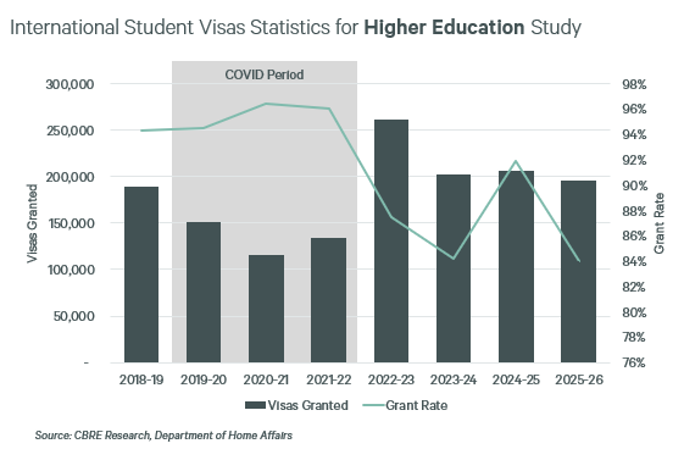
Figure 1: Higher education visa grants have remained broadly stable over the past three years and sit above pre-COVID levels.
Rather than signalling a structural decline in demand, the data points to a higher education market that has largely normalised following the post-COVID recovery period.
The composition of students entering Australia has also remained relatively unchanged. China continues to be the largest source market for higher education students, demonstrating the ongoing depth of demand from one of Australia's most important education markets
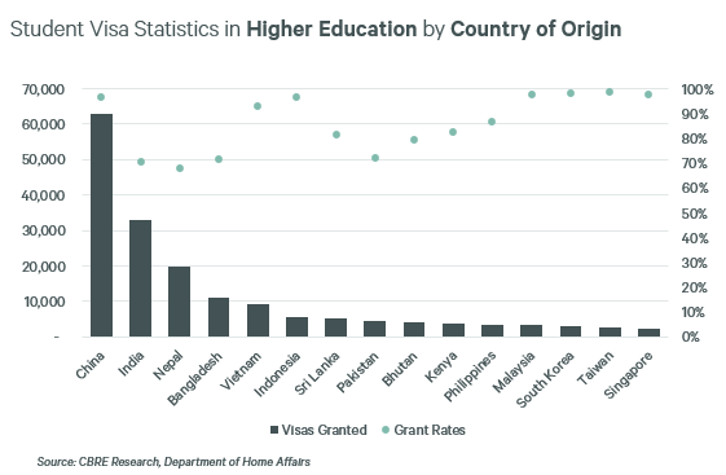
Figure 2: China remains the largest source market for higher education students, with approval rates remaining strong.
For PBSA investors, this consistency is important. Demand fundamentals appear to be holding despite widespread discussion around migration and visa reform.
Demand remains well above pre-pandemic benchmarks
Perhaps the clearest indicator comes from student commencements.While visa approvals provide insight into future demand, commencements reflect students who are actually entering the education system and, in many cases, seeking accommodation.
International student commencements at higher education institutions reached approximately 212,000 in 2025, almost 20% above 2019 levels.
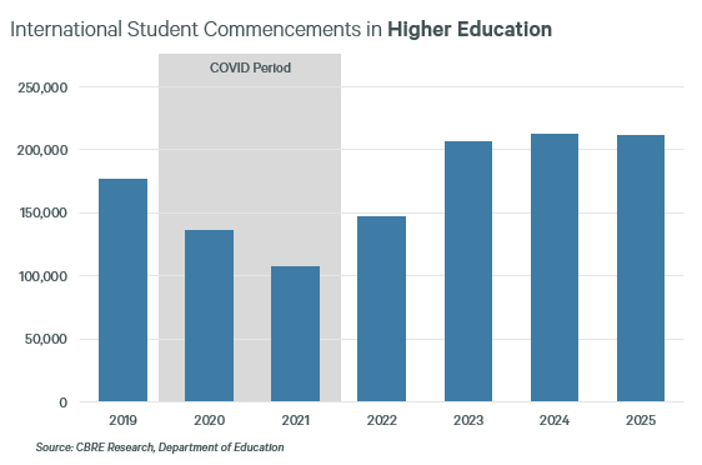
Figure 3: International student commencements at higher education institutions remain well above 2019 levels.
This suggests that the student cohorts most likely to utilise PBSA continue to enter the market in substantial numbers.
At a time when investors are assessing the durability of demand across living sectors, the commencement data paints a relatively clear picture: higher education demand remains healthy.
What the policy changes are actually targeting
Much of the public discussion around student policy tends to treat the international education sector as a single market. In reality, recent reforms have had very different impacts across education categories.The most significant reductions have occurred within Vocational Education and Training (VET) and English Language Intensive Courses for Overseas Students (ELICOS), where visa grants are now more than 50% below pre-COVID levels.

Figure 4: The most significant declines in visa approvals have occurred outside the higher education sector.
These cohorts can contribute to occupancy in some assets, but they are not typically the primary target market for institutional PBSA developments.
At the same time, government planning settings continue to demonstrate strong support for higher education. Under the National Planning Level framework, almost 200,000 international student places have been allocated to higher education institutions in 2027.
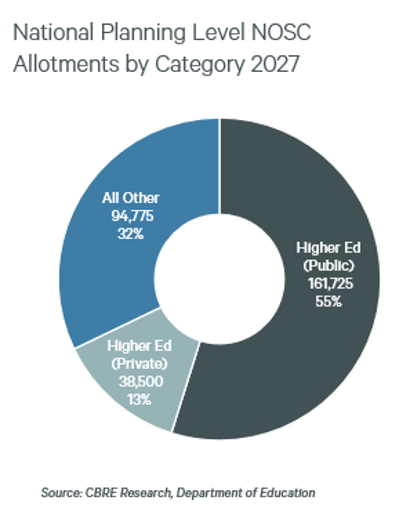
Figure 5: Higher education continues to receive a significant allocation under future planning settings.
The distinction is important. Recent reforms are largely focused on improving quality and sustainability within the broader education sector rather than materially reducing higher education participation.
The investment takeaway
For PBSA investors, the implication is relatively straightforward.The higher education segment that underpins most institutional student accommodation demand remains supported by stable visa approvals, strong commencement activity and substantial future student allocations.
At the same time, accommodation supply remains constrained. Many university precincts continue to experience a shortage of purpose-built beds, while elevated construction and financing costs are slowing the delivery of new stock.
As a result, the sector's underlying fundamentals remain intact.
Policy announcements are likely to continue generating headlines, but the data tells a more measured story. International student demand at higher education institutions remains resilient, supply constraints persist, and the long-term investment case for Australian PBSA continues to be supported by structural demand drivers.
Explore More Insights from Capital Edge
- Article | Capital Edge
Business Insights | Australia’s Apartment Squeeze Set to Deepen as Vacancy Rates Hit New Lows
September 29, 2026

CBRE forecasts apartment rents will rise 24% by 2030 as supply shortages drive vacancy rates to record lows across Australia.
Debt has re-emerged as a key market driver, with higher borrowing costs shaping investment decisions, transaction activity and refinancing strategies.

We modelled what stronger international tourism growth could mean for Australian hotel performance through to 2030.
- Article | Capital Edge
Business Insights | Luxury Hotels Are Setting the Pace for ANZ Hospitality Investment
September 29, 2026

Luxury hotels are outperforming the broader market as strong demand, rising room rates and limited future supply support investment appeal.
- Article | Capital Edge
Business Insights | Trading Below the Cost to Replace: Why Australia's Office Market Faces a Supply Crunch
October 6, 2026
Australian prime CBD office assets are trading well below replacement cost, creating a compelling investment backdrop amid constrained future supply.

Explore three major hotel investment opportunities and transactions driving confidence in Australia's hospitality sector.
Two major office opportunities highlight investment activity across Sydney and Brisbane, spanning a $715m portfolio sale and a Prime CBD asset.
A look at the transactions, financing solutions and development opportunities driving growth across Australia's Living sector.

After seven years advising investors across Hong Kong, Singapore and Sydney, Hugh Thomson reflects on the deals, relationships and capital trends influencing re...
Read the Latest From Capital Edge
In each issue we bring you critical insights, data points, trends, and transactions to help you stay ahead of the curve in the evolving world of Capital Markets.