Capital Edge
Business Insights | Trading Below the Cost to Replace: Why Australia's Office Market Faces a Supply Crunch
A growing gap between office values and replacement costs is reshaping Australia's development pipeline, creating a compelling backdrop for existing prime assets.
October 6, 2026
Key findings
- Australian prime CBD office assets are trading at a significant discount to replacement cost.
- The national average discount is currently 44%, compared with a long-term average of 22%.
- Construction costs are forecast to rise by 5.6% per annum over the next three years.
- Net office supply over the next five years is expected to be 70% below the long-term average.
- Sydney CBD Core and Brisbane CBD are showing the strongest progress in closing the gap.
For much of the past decade, investors have focused on office fundamentals through the lens of occupancy, rental growth and capital markets sentiment. Today, another factor is becoming increasingly important: the cost of replacement.
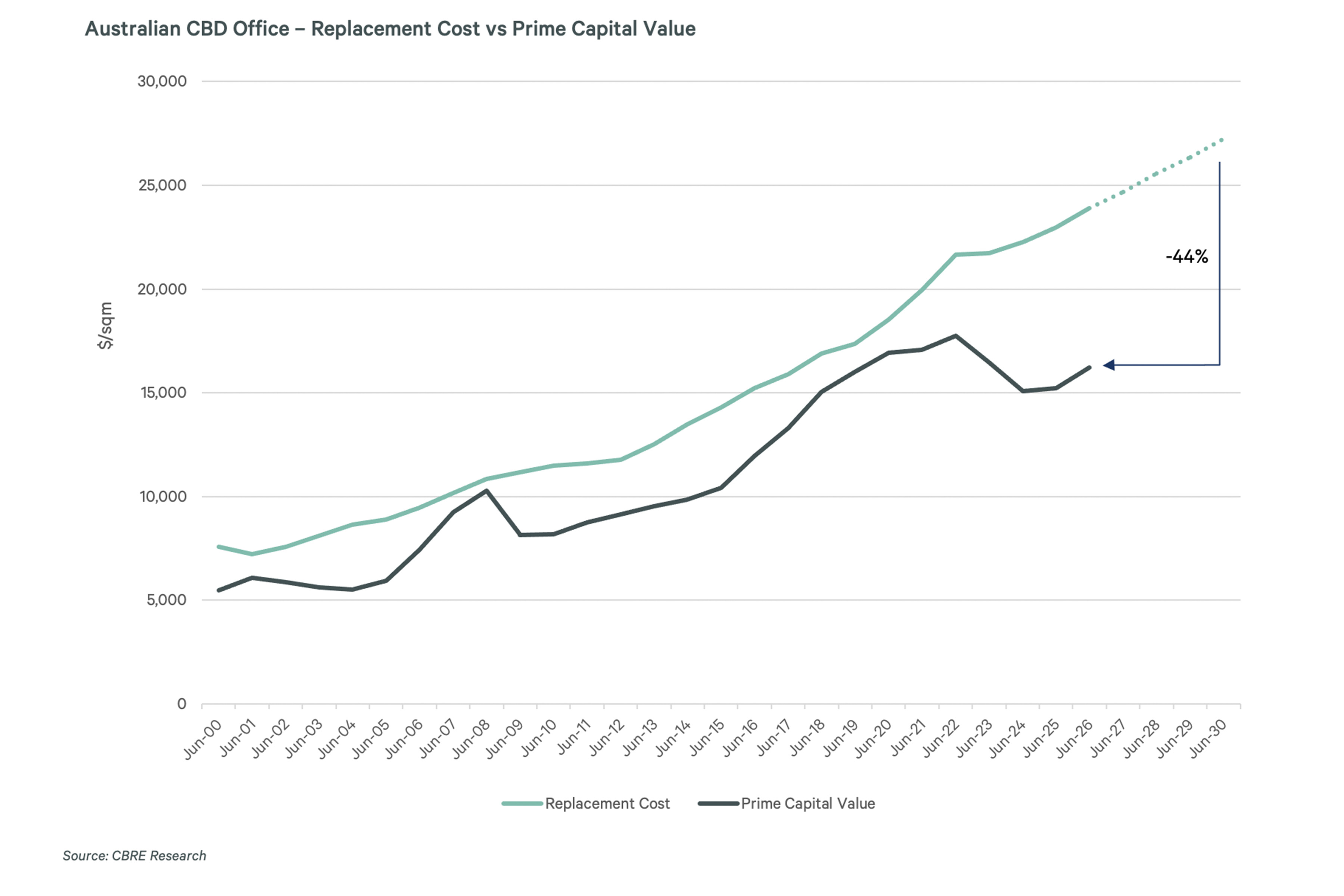
Across Australia's major CBD office markets, a substantial gap has emerged between the value of existing prime assets and what it would cost to build them today. According to CBRE Research, this divergence has widened significantly since 2020 as construction costs have climbed while higher interest rates have weighed on capital values.
The result is a market where many existing office assets can be acquired well below the cost of delivering equivalent new stock.
This disconnect has major implications for future supply.
The report finds that the national average discount to replacement cost currently sits at 44% for a project delivered in 2030, roughly the earliest timeframe in which a new CBD office development commencing today could be completed. By comparison, the long-term average discount is 22%, highlighting how far current market conditions sit from historical norms.
At the same time, development feasibility continues to be challenged by rising construction costs. Turner & Townsend forecasts Australian construction costs will increase by an average of 5.6% per annum over the next three years, pushing replacement values even higher and further raising the hurdle for new projects.
Until capital values improve meaningfully, many developments will struggle to meet viability thresholds.
The impact is already evident in Australia's future supply pipeline. CBRE Research expects net office supply over the next five years to be approximately 70% below the long-term average, reflecting the increasingly difficult economics of delivering new office stock.
For investors, that supply outlook is becoming a critical part of the story. In an environment where replacement costs continue rising and development activity remains constrained, existing prime assets are benefiting from an increasingly favourable competitive position.
However, the national picture masks important differences between cities.
Some markets have made meaningful progress in closing the gap to replacement cost, while others remain firmly constrained.
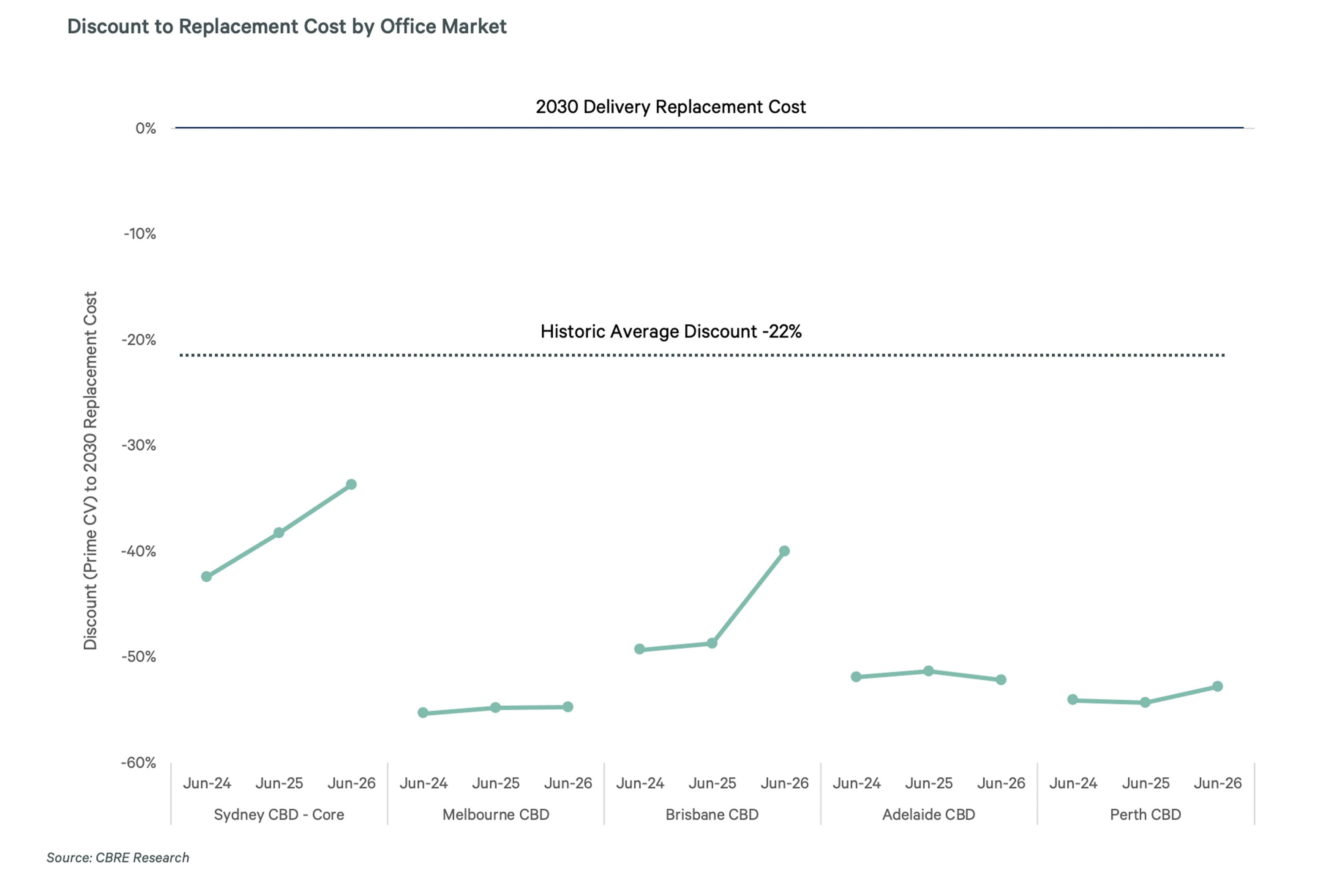
Sydney CBD Core and Brisbane CBD have been among the strongest-performing office markets in Asia Pacific, supported by robust rental growth. As a result, both markets have narrowed their discount to replacement cost over the past two years. Sydney CBD Core improved from approximately 42% below replacement cost in June 2024 to 34% in June 2026, while Brisbane moved from approximately 49% to 40% over the same period.
These improvements suggest Sydney and Brisbane are the most likely candidates to attract the next wave of office development in the early 2030s, should market conditions continue to strengthen.
Other markets remain significantly further away.
Melbourne, Adelaide and Perth continue to trade at discounts exceeding 50% to replacement cost. According to the report, these cities have experienced cap rate softening alongside more moderate rental growth, leaving the economics of new development largely unchanged over the past three years.
The divergence highlights an increasingly uneven national landscape. While Sydney and Brisbane are moving closer to the point where new projects may become feasible, other markets remain some distance from supporting meaningful development activity.
The broader implication is clear: Australia's office market is unlikely to experience a significant supply response in the near term.
With replacement costs continuing to rise, development viability remaining constrained and future supply expected to remain well below historic norms, existing prime assets continue to offer a compelling value proposition.
For investors, the opportunity extends beyond today's pricing. The combination of discounted acquisition costs, limited future competition and improving fundamentals in select markets creates an increasingly attractive backdrop for high-quality office assets.
In a market where constructing new stock remains difficult to justify, the value of well-located existing assets is becoming harder to ignore.
Explore More Insights from Capital Edge
- Article | Capital Edge
Business Insights | Australia’s Apartment Squeeze Set to Deepen as Vacancy Rates Hit New Lows
September 29, 2026
CBRE forecasts apartment rents will rise 24% by 2030 as supply shortages drive vacancy rates to record lows across Australia.
- Article | Capital Edge
Business Insights | Looking Beyond the Noise: What Student Policy Changes Really Mean for PBSA
October 6, 2026

New student visa policies are making headlines, but the data suggests demand for Australian PBSA remains resilient
Debt has re-emerged as a key market driver, with higher borrowing costs shaping investment decisions, transaction activity and refinancing strategies.

We modelled what stronger international tourism growth could mean for Australian hotel performance through to 2030.
- Article | Capital Edge
Business Insights | Luxury Hotels Are Setting the Pace for ANZ Hospitality Investment
September 29, 2026
Luxury hotels are outperforming the broader market as strong demand, rising room rates and limited future supply support investment appeal.
Explore three major hotel investment opportunities and transactions driving confidence in Australia's hospitality sector.
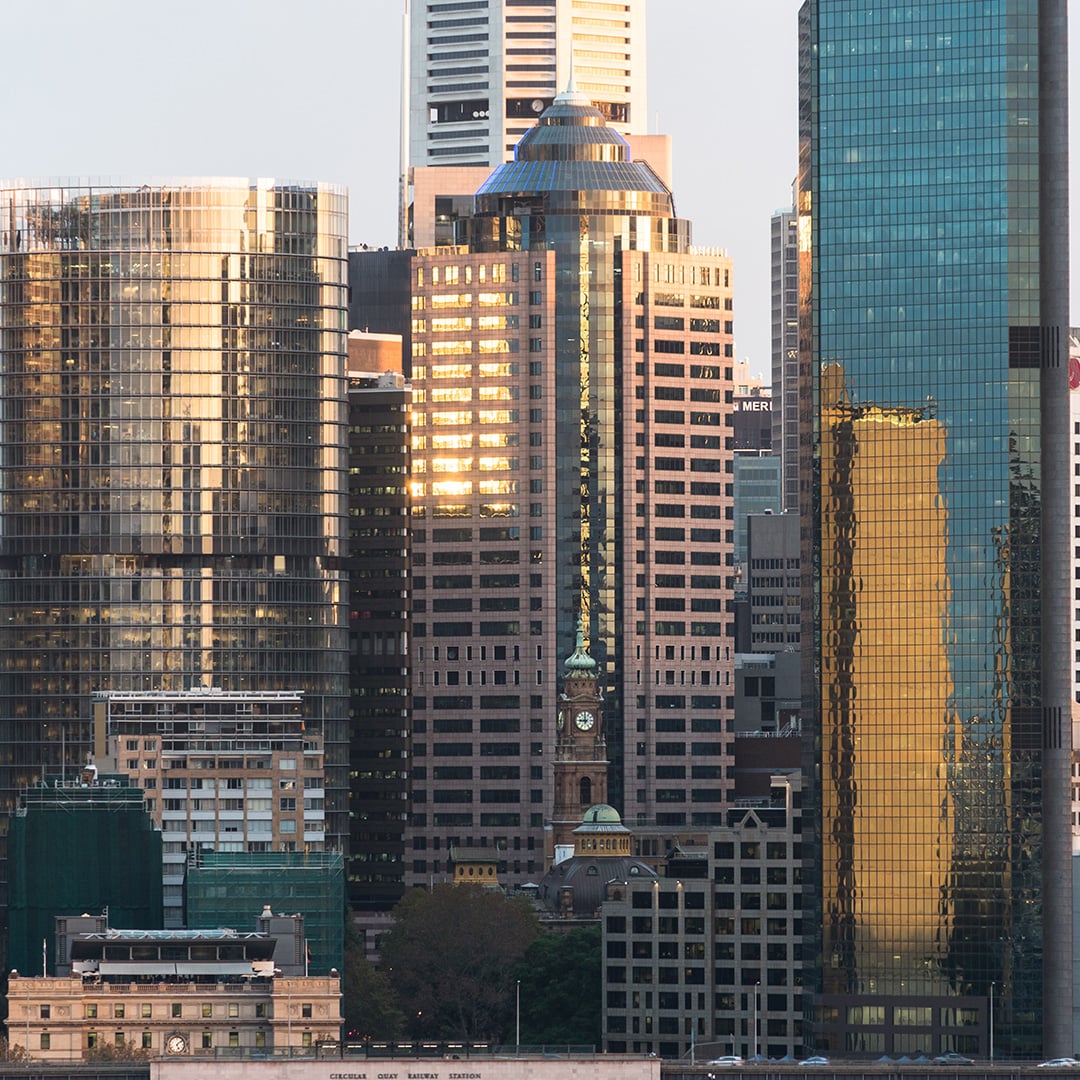
Two major office opportunities highlight investment activity across Sydney and Brisbane, spanning a $715m portfolio sale and a Prime CBD asset.
A look at the transactions, financing solutions and development opportunities driving growth across Australia's Living sector.

After seven years advising investors across Hong Kong, Singapore and Sydney, Hugh Thomson reflects on the deals, relationships and capital trends influencing re...
Read the Latest From Capital Edge
In each issue we bring you critical insights, data points, trends, and transactions to help you stay ahead of the curve in the evolving world of Capital Markets.